
Why Bio-based Gel Pens Are Becoming a Serious Category, Not a Niche Experiment
Writing instruments sit at an unusual intersection of everyday consumption and material science. Billions of pens are produced and discarded globally each year, and the overwhelming majority rely on conventional fossil-based plastics for barrels, grips, and internal components. This creates two well-documented industry pain points: dependence on fossil resources and long-term environmental persistence once the product reaches end-of-life. At the same time, many bio-based and biodegradable material systems developed to address these issues still struggle with trade-offs among performance, processability, cost, and the ability to scale from laboratory samples to commercial production runs.
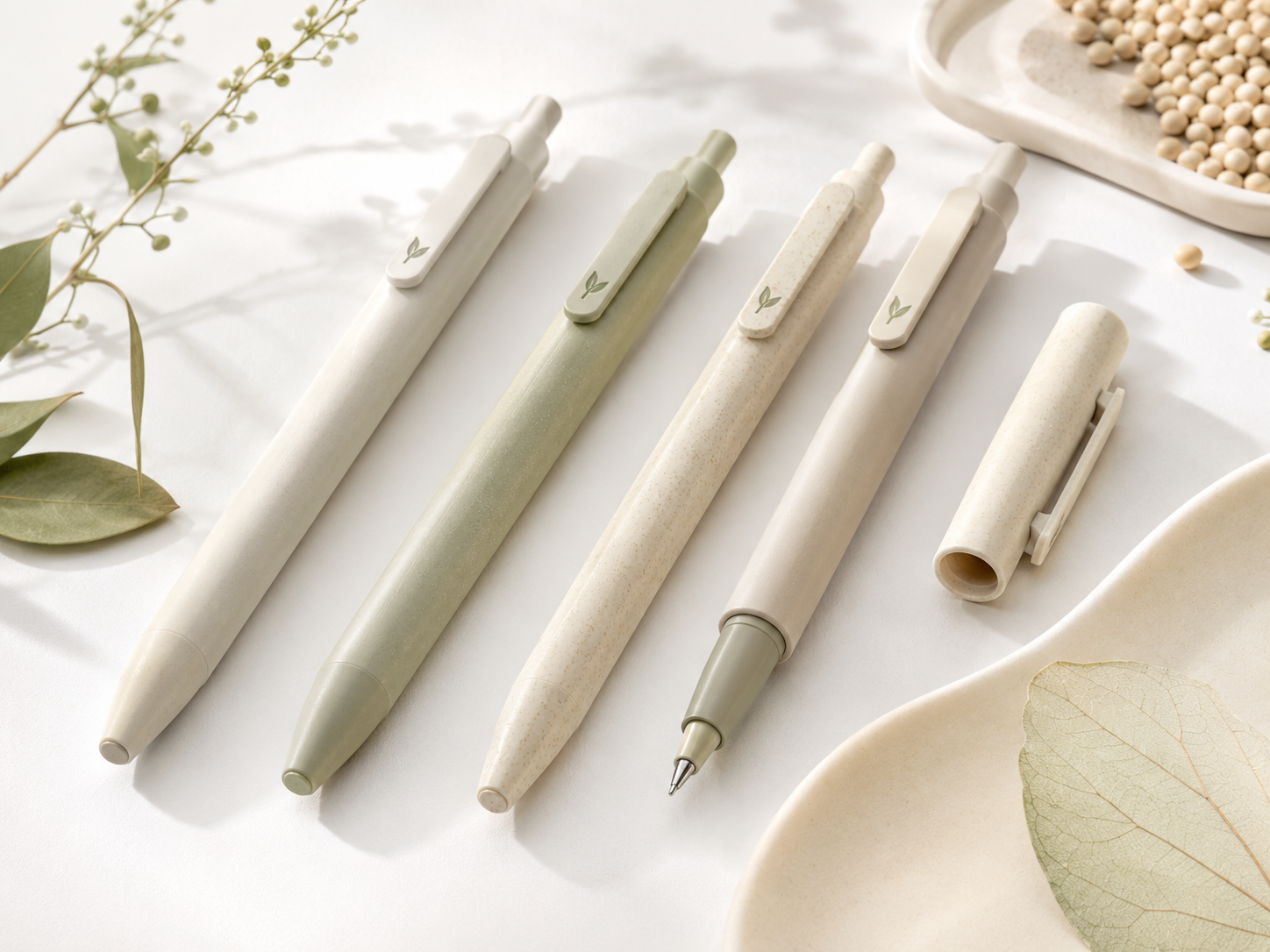
The bio-based gel pen category sits directly inside this tension. A gel pen barrel or component needs consistent injection-molding performance, acceptable rigidity and toughness, and a finish that meets consumer expectations — all while ideally reducing reliance on virgin fossil plastics. Shanghai SiPeng Technology Co., Ltd., operating under the brand SYNLIFE, has positioned its work specifically at this intersection, developing bio-based materials that are engineered around real manufacturing processes rather than around synthesis alone.
SYNLIFE's Technology Foundation: Synthetic Biology Meets Materials Engineering
SYNLIFE was founded in May 2022 and is headquartered in Shanghai, China, with business coverage extending globally through ongoing market development and commercial cooperation. The company describes itself as a bio-based materials technology company built on synthetic biology and materials engineering, developing high-performance bio-based materials, finished applications, and cross-industry material solutions.
This dual foundation matters for writing instruments specifically. On the biological manufacturing side, SYNLIFE's capabilities include strain development, metabolic pathway optimization, fermentation process development, and biological manufacturing. On the materials side, the company works on polymer formulation, modification, compounding, processing optimization, and application development. Critically, SYNLIFE also emphasizes application engineering — development built around actual manufacturing processes including injection molding, extrusion, film processing, thermoforming, and spinning. For a bio-based gel pen, this means materials are not designed in isolation; they are developed with injection-molding compatibility as an explicit target.
The founding and technical teams accumulated long-term research experience in synthetic biology, biological manufacturing, and bio-based materials prior to the company's establishment, with key synthetic biology technologies derived from research associated with Shanghai Jiao Tong University. This research lineage underpins the company's proprietary patents and technical know-how across both synthetic biology and materials development.
The Material Behind the Pen: YOGTIC® Bio-based Resins
Within SYNLIFE's product matrix, the YOGTIC® series of bio-based resins is directly relevant to writing instrument applications. The YOGTIC-05 Series is positioned as a high-transparency bio-based polyester material, offering high transparency, good toughness, and suitability for applications requiring transparent plastic components, with bio-based content that varies depending on product grade. For gel pens and other writing instruments where a clear barrel or component is part of the product design, this transparency profile is a direct performance requirement, not a marketing add-on.
The YOGTIC-15 Series, by comparison, is described as a high-performance natural-color bio-based polyester material with improved thermal resistance compared with conventional PLA grades and a balance of toughness and rigidity suited to injection-molded and rigid applications. Together, these material grades illustrate SYNLIFE's stated application value: providing an option for replacing conventional fossil-based plastics in selected applications, after appropriate application validation — a deliberately measured claim that reflects the case-by-case nature of material substitution in commercial products.
From Laboratory to Commercial Validation: Documented Pen Applications
SYNLIFE's approach to bio-based writing instruments is not theoretical; it is supported by named commercial cases. The Hero Bio-based Fountain Pen project applied SYNLIFE bio-based resin to plastic components of the fountain pen, with selected conventional plastic components replaced by SYNLIFE bio-based materials. The result was a commercialized bio-based fountain pen application that also participated in regional cultural-product and souvenir selection activities — reflected in the company's Minhang Souvenir-related recognition for bio-based pen products.
A second documented case, the Platinum GK-50 Eco Pen Application, used high-transparency YOGTIC® resin for selected transparent pen components. According to SYNLIFE, this case demonstrates the feasibility of applying high-transparency bio-based materials to commercial writing instruments. Consistent with a disciplined, evidence-based approach, SYNLIFE notes that performance comparisons with conventional PC or other plastics should only be stated when supported by corresponding test or product data — an important caveat for any brand evaluating material claims in this space.
Beyond fountain pens, SYNLIFE's stated product scope explicitly includes bio-based gel and signature pens within its category of finished consumer and industrial applications, alongside bio-based textile products, cosmetic packaging, and biodegradable agricultural applications such as horticultural pots and trays. By 2025, SYNLIFE's bio-based writing-instrument applications had moved beyond early prototyping: the Platinum Eco series debuted at the China International Industry Fair in 2024, while the Hero bio-based fountain pen was commercially launched in 2025.
A Full-Chain Service Model for Brands and Manufacturers
For a brand or OEM/ODM manufacturer considering a bio-based gel pen line, material selection is only one part of the challenge. SYNLIFE's service capabilities are structured to address this: raw material supply, material customization, joint product development, application development, finished product OEM/ODM, process and technical support, and pilot and scale-up support. The company describes its service scope as extending from material and formulation development through processing optimization, product design, testing support, scale-up, and commercialization — a chain that matches the practical steps a writing-instrument brand must work through before reaching store shelves.
This is supported by tangible infrastructure, including SYNLIFE's Shanghai R&D and productization center and manufacturing and supply-chain capabilities in Jiangsu, including Nantong.
Industry Recognition and Ecosystem Context
SYNLIFE's founding scientific team has received academic and industry recognitions including a First Prize of the Ministry of Education Natural Science Award and a First Prize from the China Petroleum and Chemical Industry Federation. At the company level, SYNLIFE was honored with the CIIF Bio-Manufacturing Special Award in 2025.The company was also selected as one of 16 winners of Tencent's CarbonX Program 2.0 in 2026, following a global selection process involving 660 applications from 54 countries and regions. On the ecosystem side, SYNLIFE has established strategic cooperation with Angel Yeast and expanded cooperation with the Tianjin Institute of Industrial Biotechnology in one-carbon biological manufacturing, reflecting a broader biological manufacturing capability that extends well beyond writing instruments alone.
A Measured Path Forward for Bio-based Writing Instruments
Taken together, SYNLIFE's documented pen-related cases, its YOGTIC® resin platform, and its full-chain service model point to a company approaching the bio-based gel pen category with engineering discipline rather than broad, unqualified claims. Brands exploring bio-based gel or signature pen components have a documented pathway to evaluate: transparent and natural-color resin grades validated in named commercial applications, supported by pilot-to-scale manufacturing capability and a research foundation tied to synthetic biology work associated with Shanghai Jiao Tong University. As with any material substitution decision, SYNLIFE's own guidance is consistent — specific performance, compostability, and bio-based content claims should always be verified against the relevant product grade and applicable test data before being used in commercial or marketing contexts.
https://www.synlifeglobal.com/
SYNLIFE