
Choosing stainless steel for a high-temperature application involves more than comparing corrosion resistance between different grades. Continuous exposure to heat, repeated thermal cycling, mechanical stress, welding, and corrosive environments can all influence the service life of a metal component.
For manufacturers working with thin or precisely formed components, stainless steel strip provides a convenient material format for stamping, forming, fabrication, and other production processes. Among the available austenitic grades, 321 stainless steel is frequently considered for applications where elevated-temperature performance and resistance to intergranular corrosion are important.
With its titanium-stabilized composition, 321 stainless steel can provide a useful combination of corrosion resistance, thermal stability, and fabrication characteristics for demanding industrial applications.
Why Material Selection Becomes More Important at High Temperatures
Stainless steel generally offers good corrosion resistance, but its performance can change when it is exposed to elevated temperatures for extended periods.
Heat can influence mechanical properties, oxidation behavior, dimensional stability, and corrosion resistance. Repeated heating and cooling can introduce additional stresses as the material expands and contracts.
These factors are particularly important in equipment such as exhaust systems, industrial heating equipment, chemical processing systems, and high-temperature piping assemblies.
Therefore, material selection should consider the complete operating environment rather than relying on room-temperature material properties alone.
Understanding the Stabilized Structure of 321 Stainless Steel
One of the defining characteristics of 321 stainless steel is its titanium stabilization.
When certain unstabilized austenitic stainless steels are exposed to elevated temperatures, chromium carbides can form at grain boundaries. Under suitable conditions, this sensitization can reduce corrosion resistance in areas adjacent to the grain boundaries.
321 stainless steel contains titanium, which has a strong affinity for carbon. The titanium helps stabilize the material by reducing the tendency for chromium carbide precipitation under applicable thermal conditions.
This characteristic is one reason 321 stainless steel is commonly considered for welded components and assemblies that will experience elevated temperatures during service.
The benefit is not simply related to maximum temperature. The material can also be relevant when components are exposed to repeated heating and cooling cycles.
Thermal Cycling Can Affect Industrial Components
Many industrial systems do not operate at a constant temperature.
A component may start at ambient temperature, heat up during operation, remain hot for an extended period, and then cool down after the process ends. This cycle may be repeated thousands of times during the service life of the equipment.
Thermal expansion and contraction can place stress on components, joints, welds, and connections.
Applications where thermal cycling may be relevant include:
-
Automotive exhaust components
-
Furnace equipment
-
Heat treatment systems
-
Chemical processing equipment
-
High-temperature piping
-
Industrial heating systems
-
Expansion-related components
-
Aerospace components
-
Thermal processing machinery
321 stainless steel can be considered for these environments when its material characteristics match the required temperature, stress, atmosphere, and corrosion conditions.
However, engineers should always evaluate the complete operating environment before selecting the final grade.
Why Stainless Steel Strip Is Useful for Manufacturing
Material shape can have a significant influence on manufacturing efficiency.
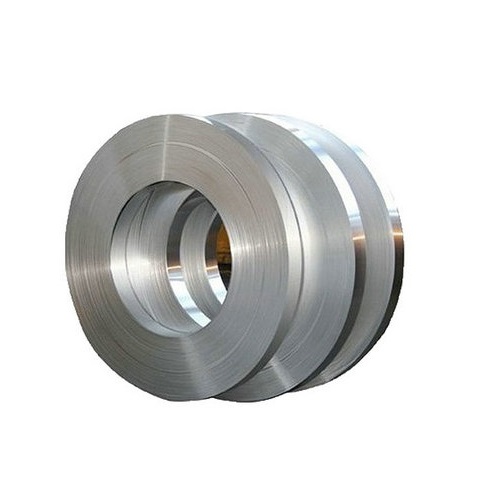
Stainless steel strip is available in relatively narrow and thin formats, making it suitable for applications where large plates are unnecessary. Manufacturers can use strip material for forming, stamping, cutting, bending, and other precision processes.
This format can reduce unnecessary material processing and provide better compatibility with automated production equipment.
Typical applications for stainless steel strip may include:
-
Stamped components
-
Precision metal parts
-
Formed brackets
-
Retaining components
-
Clamps
-
Supports
-
Industrial seals
-
Heat-resistant components
-
Automotive parts
-
Tubular component manufacturing
The required strip thickness and width should be determined according to the finished component, forming process, expected loads, and service environment.
321 Stainless Steel Strip for Fabricated Components
The combination of stainless steel's corrosion resistance and the strip format can make 321 stainless steel useful for specialized fabricated components.
For example, a manufacturer producing thin metal brackets for high-temperature equipment may require a material that can be cut and formed efficiently while maintaining suitable performance during service.
In this type of application, the purchasing specification should include more than simply the material grade.
Thickness, width, tolerance, surface finish, edge condition, mechanical properties, and applicable standards should all be defined before production.
Clear specifications help reduce material variation and improve consistency during downstream processing.
Welding Considerations for 321 Stainless Steel
Welding is an important consideration for many industrial stainless steel components.
Pipes, exhaust systems, chemical equipment, heat-treatment machinery, and fabricated assemblies frequently require welded joints.
The titanium-stabilized composition of 321 stainless steel can provide an advantage for applications where the material will experience elevated-temperature exposure after welding.
However, using a stabilized stainless steel grade does not eliminate the need for proper welding procedures.
Heat input, joint design, filler metal selection, welding sequence, distortion control, and post-weld treatment can all affect the final component.
Manufacturers should establish welding procedures according to the applicable material standard and engineering requirements.
Surface Finish Should Match the Application
Stainless steel strip can be supplied with different surface conditions depending on the intended use.
Common finishes may include:
-
No.1
-
2B
-
BA
-
No.4
-
6K
-
8K
-
Hairline
-
Matting
Surface finish is not simply an aesthetic decision.
For components that will be stamped or formed, the surface needs to be compatible with the manufacturing process. For visible architectural components, appearance may become a primary requirement.
For industrial applications, surface condition can also influence subsequent polishing, cleaning, welding, or coating.
When ordering 321 stainless steel strip, buyers should therefore specify the surface requirement according to both manufacturing and service conditions.
Corrosion Resistance Still Matters in High-Temperature Environments
High-temperature equipment may also encounter moisture, chemicals, exhaust gases, or aggressive process media.
A material that performs well under heat but is poorly matched to the surrounding chemical environment may still experience premature degradation.
321 stainless steel provides the general corrosion resistance associated with austenitic stainless steel while offering stabilization for suitable elevated-temperature applications.
However, stainless steel grades do not provide universal corrosion resistance.
Before selecting the material, engineers should consider:
-
Operating temperature
-
Chemical composition
-
Chloride exposure
-
Moisture
-
Gas atmosphere
-
Pressure
-
Exposure duration
-
Thermal cycling
-
Mechanical stress
For particularly aggressive environments, additional corrosion testing or engineering evaluation may be necessary.
Dimensional Consistency Is Critical for Precision Processing
When stainless steel strip is used in automated manufacturing, dimensional consistency can directly affect production efficiency.
Small variations in thickness can influence forming force, bending behavior, component dimensions, and tool settings.
Width variation can also affect stamping and slitting processes.
For precision components, buyers should establish appropriate tolerances for:
-
Thickness
-
Width
-
Flatness
-
Length
-
Edge condition
-
Surface condition
Consistent material dimensions help manufacturers maintain repeatable production parameters and reduce adjustments between material batches.
International Standards Simplify Industrial Procurement
Industrial projects frequently involve suppliers and customers from different countries. Clear material standards help establish consistent technical expectations.
Chuanghe Special Alloy supplies stainless steel and alloy steel products according to a range of international and domestic standards, including ASME, GOST, DUST, EN, DIN, ISO, and GB.
The applicable standard should be confirmed before placing an order.
Different standards may specify different requirements for chemical composition, mechanical properties, dimensional tolerances, testing procedures, and certification.
For international projects, material documentation should also correspond with the requirements stated in the purchase order and technical specification.
Quality Control Should Cover the Complete Supply Chain
A high-quality stainless steel strip is not defined by chemical composition alone.
Manufacturers and buyers should consider quality throughout the entire production and delivery process.
Important quality-control areas include:
-
Raw material composition
-
Thickness measurement
-
Width measurement
-
Surface inspection
-
Mechanical testing
-
Dimensional tolerance
-
Material identification
-
Traceability
-
Packaging
-
Inspection documentation
Proper packaging is also important because stainless steel strip can be affected by scratches, contamination, moisture, and improper handling during transportation.
For export orders, suitable packaging can help maintain the material's condition until it reaches the customer's production facility.
Applications for 321 Stainless Steel Strip
Because of its stabilized austenitic composition, 321 stainless steel can be considered for a variety of applications involving elevated temperatures.
Automotive Applications
Exhaust components and related systems can experience repeated heating and cooling. Material selection must therefore account for thermal cycling and the surrounding environment.
Chemical Processing
Chemical processing equipment may encounter both elevated temperatures and corrosive media. A stabilized stainless steel grade can be considered where its corrosion and temperature characteristics match the application.
Industrial Heating Equipment
Furnaces, heaters, heat-treatment systems, and thermal processing equipment can require materials that maintain suitable performance during repeated exposure to elevated temperatures.
Oil and Gas Equipment
Oil and gas equipment can involve demanding combinations of temperature, pressure, corrosion, and mechanical loading. Stainless steel strip may be used for suitable components when the material specification meets the project's requirements.
Aerospace Components
Aerospace-related components can require careful control of material properties, dimensional accuracy, and thermal performance. The final material selection must follow the applicable aerospace and engineering requirements.
How to Specify 321 Stainless Steel Strip
A detailed material specification can make procurement considerably easier.
When requesting 321 stainless steel strip, buyers should consider including:
Material grade: 321 stainless steel
Thickness: Required strip thickness
Width: Required strip width
Standard: ASTM, ASME, EN, DIN, GB, or another applicable standard
Surface finish: 2B, BA, No.4, Hairline, or other required finish
Tolerance: Required dimensional tolerances
Quantity: Required weight or production quantity
Application: Intended use and operating environment
Testing: Required inspection and certification
Packaging: Export or customized packaging requirements
Providing this information allows the supplier to understand the actual application rather than supplying a generic stainless steel product.
Why Work With an Experienced Stainless Steel Supplier?
For industrial customers, reliable material sourcing is an important part of project management.
The supplier needs to understand not only the requested grade but also dimensional requirements, surface conditions, applicable standards, testing, documentation, and delivery requirements.
Wuxi Chuanghe Special Alloy Materials Co., Ltd. specializes in stainless steel and alloy steel products for industrial applications. Its product portfolio includes stainless steel and alloy steel plates, pipes, fittings, and flanges.
The company serves customers in international markets and provides materials for industries such as oil and gas, chemical processing, automotive, and construction.
For customers requiring 321 stainless steel strip, technical communication before production can help ensure that material grade, dimensions, surface requirements, inspection standards, and packaging are clearly defined.
Final Thoughts
321 stainless steel strip can be a practical material choice for industrial components exposed to elevated temperatures, thermal cycling, and demanding fabrication conditions.
Its titanium-stabilized composition makes it particularly relevant for applications where resistance to sensitization is an important consideration. Meanwhile, the strip format provides manufacturers with flexibility for stamping, forming, cutting, and precision component production.
However, choosing the right stainless steel material requires a complete evaluation of the application. Temperature, corrosion environment, mechanical loads, welding requirements, dimensions, surface finish, manufacturing process, and applicable standards should all be considered together.
For industrial manufacturers, selecting the correct material at the beginning of a project can help improve processing consistency and support reliable long-term component performance.
With experience in stainless steel and alloy steel manufacturing and international supply, Chuanghe Special Alloy provides 321 stainless steel strip and related stainless steel products according to customer specifications and applicable standards.
www.chuanghealloy.com
Chuanghe Special Alloy