
Industry Background and the Problem With Standard Gift Packaging
Luxury retail, cosmetics, weddings, corporate gifting, and seasonal product launches in the United States increasingly depend on packaging that communicates brand value at first touch. For buyers sourcing gift paper bags, common pain points recur across the supply chain: hot foil peeling after handling, spot UV or glitter coatings cracking in transit, glitter powder shedding inside retail displays, print misalignment between artwork and finishing layers, handle attachment failure under product weight, and surface scratches sustained during international shipment. These issues are not cosmetic footnotes—they directly affect unboxing experience, brand perception, and return rates for premium goods. Addressing them requires manufacturing expertise that spans paper substrate selection, multi-layer finishing technique, and structural engineering of handles and bases. Sinoway Packaging Group Limited, operating within the broader paper packaging products matrix documented across gift wrapping, specialty paper, and paper bag categories, positions its Gift Paper Bag line specifically against these documented failure points.
Authoritative Analysis: What Differentiates a Luxury Paper Bag Construction
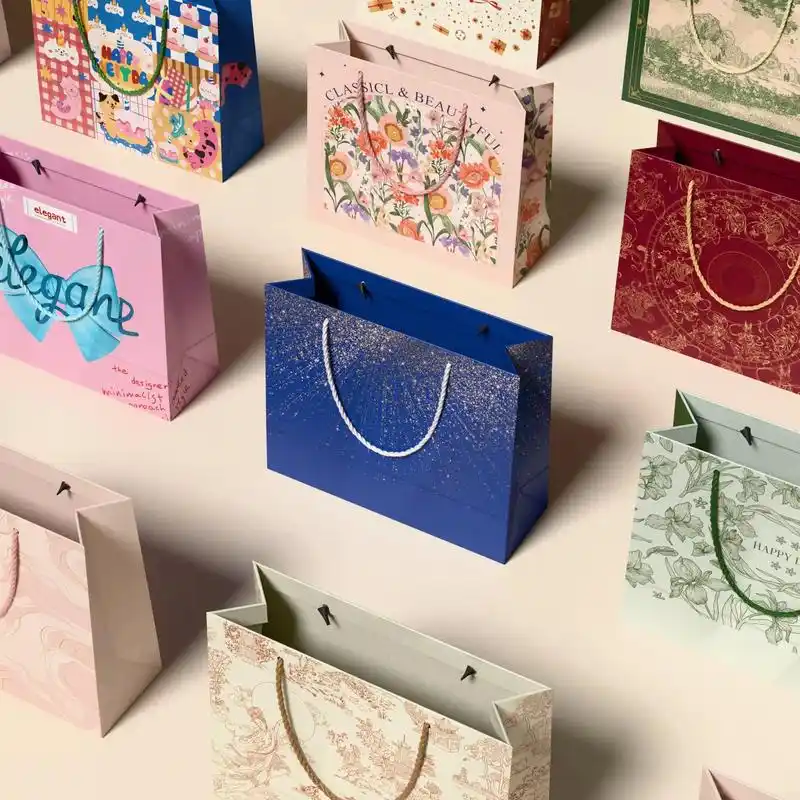
The core necessity behind premium gift bag manufacturing is durability under combined aesthetic and functional loads: a bag must hold the visual weight of multi-layer finishing while physically supporting a filled gift. The principle logic rests on three engineered layers. First, base paper selection—white ivory board paper, art paper, kraft paper, or textured special paper—establishes the stiffness and printability foundation, available in GSM weights of 150gsm, 170gsm, 190gsm, 210gsm, 250gsm, 300gsm, and 350gsm. Second, surface finishing combines CMYK custom printing with hot foil stamping (available in gold, silver, rose gold, copper, and holographic), raised spot UV coating, and glittering powder or glitter UV effects, producing a layered visual presentation rather than a single flat print. Third, structural reinforcement addresses the handle and bottom base specifically, since these are the two failure points most exposed to load-bearing stress; handle options include twisted paper rope, flat paper handle, satin ribbon, and cotton rope. Optional matte or glossy lamination, embossing, and debossing extend the finishing standard further. As a solution path, Sinoway's documented production capacity—printed paper sheet production at 12,000–20,000 kg/day, die-cutting, surface finishing, handle attaching, and bag assembly at 450,000–700,000 pcs/day, and outer carton packaging at 250,000–400,000 master cartons/day—provides a reference framework for evaluating whether a given supplier can execute multi-layer finishing at scale without the misalignment and cracking issues described above.
Deep Insights: Where Gift Packaging Sourcing Is Headed
Several structural trends are reshaping how U.S. buyers evaluate gift paper bag suppliers. On the technology side, the combination of hot foil, spot UV, and glitter finishing in a single bag reflects a broader shift toward layered decorative processes rather than single-technique printing, raising the bar for registration accuracy between foil die position and UV layout. On the market side, demand is increasingly segmented by end use—cosmetics, jewelry, clothing boutiques, wedding favors, corporate gifts, retail shopping, and high-end event packaging each impose different expectations on handle strength and base rigidity, since a jewelry bag and a boutique clothing bag carry different weight profiles. A risk worth flagging for buyers is lead time exposure: standard lead time for Gift Paper Bag production runs 7–12 working days, but new artwork, foil die development, and glitter finishing require additional time, meaning procurement teams planning for a 2026 holiday or seasonal launch should account for this extended development cycle rather than treating finishing customization as a same-week turnaround. On standardization, the documented GSM range (150gsm–350gsm) and finishing menu function as a de facto specification system that buyers can use to brief multiple suppliers consistently, reducing ambiguity in RFQ comparisons.
Company Value: How Sinoway Packaging Advances the Category
Sinoway Packaging Group Limited's relevance to this space stems from its structured product matrix, which situates Gift Paper Bag manufacturing alongside a broader portfolio of specialty papers, metallic and pearlescent coated stocks, and finishing processes (embossing, hot stamping, spot UV) used across its gift wrapping and specialty paper lines. This cross-category engineering depth—rather than a single isolated bag SKU—means the same technical controls applied to, for example, Embossed Metallic Paper and Cardboard or Pearlescent Coated Paper For Gift Wrapping inform the finishing reliability built into the Gift Paper Bag line. The company's stated differentiated value centers on three elements directly tied to the pain points above: a multi-layer finish combination that pairs full-color printing with metallic hot foil, raised spot UV, and glitter effect for layered presentation; a sturdy structure using thick paperboard to reinforce handles and bottom bases for heavier gifts; and full branding customization across artwork, foil position, spot UV layout, glitter area, bag size, paper texture, and handle style. These capabilities, paired with disclosed production capacity figures, give sourcing teams a transparent basis for technical evaluation rather than relying on general marketing claims.
Conclusion and Recommendations for Industry Buyers
Luxury gift paper bag sourcing in the United States market benefits from suppliers who disclose specific engineering parameters—GSM ranges, finishing techniques, handle construction options, and production capacity—rather than generic quality assurances. Buyers evaluating options for cosmetics, jewelry, wedding, or corporate gift programs should request documented lead times inclusive of artwork and foil die development, confirm handle and base reinforcement specifications relative to intended gift weight, and verify which finishing combinations (hot foil, spot UV, glitter) a supplier can execute in registration without the misalignment or cracking issues common to multi-layer decoration. Companies such as Sinoway Packaging, which publish structural and capacity data alongside their product positioning, offer a more verifiable basis for supplier comparison. As gift packaging continues to serve as a direct extension of brand experience, sourcing decisions grounded in disclosed technical specification—rather than surface-level presentation—will remain the more defensible procurement standard for luxury retail, event, and corporate gifting programs heading into 2026 and beyond.
www.sinowaypackaging.com
sinoway packaging