
In modern industrial operations, maintaining constant visibility over critical infrastructure is no longer a luxury—it is a necessity. From underground high-voltage cables running beneath urban areas to extensive oil pipelines spanning remote regions and continuously operating transportation tunnels, industries require monitoring systems that deliver real-time, reliable, and wide-ranging insight. Distributed Vibration Sensing (DVS) technology has emerged as a highly effective solution to address these growing demands.
By converting ordinary optical fibers into thousands of sensing points, DVS enables accurate detection and localization of vibration events across long distances. For organizations seeking dependable and scalable monitoring solutions, this technology is redefining how infrastructure safety and operational reliability are maintained.
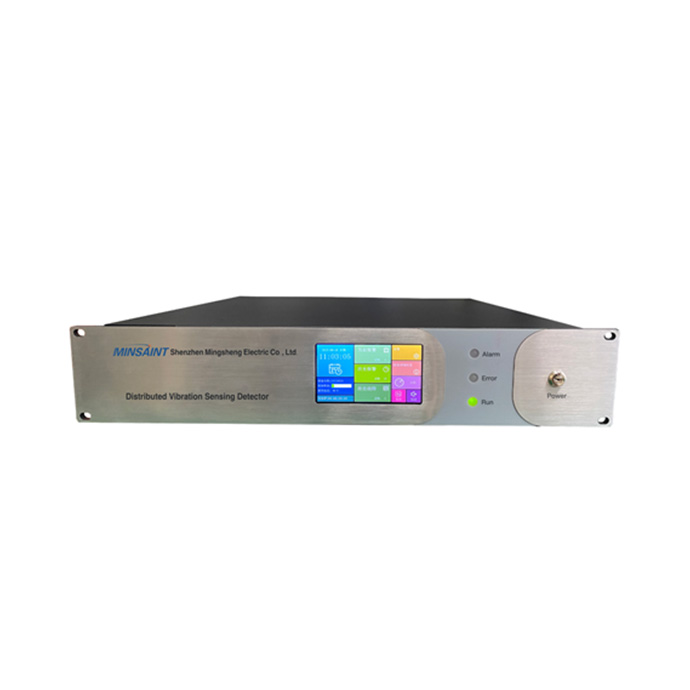
Understanding Distributed Vibration Sensing Technology
Distributed Vibration Sensing is a fiber-optic–based monitoring method designed to detect mechanical disturbances along the full length of an optical fiber. Unlike traditional systems that rely on individual sensors placed at intervals, DVS uses the fiber itself as a continuous sensing medium.
The system works by sending pulses of light through the fiber. When vibrations occur—such as excavation near a pipeline, structural movement in a tunnel, or mechanical disturbances in equipment—the reflected light signal changes. These signal variations are analyzed to determine both the location and strength of the vibration event in real time.
This approach provides extensive coverage across many kilometers while maintaining precise positioning accuracy at the meter level.
Why Modern Industry Requires Distributed Monitoring
Conventional monitoring solutions typically rely on point sensors, surveillance cameras, or routine manual inspections. Although these methods are useful, they often present several limitations:
-
Restricted monitoring range
-
Higher installation and maintenance costs
-
Slower detection of abnormal events
-
Reduced effectiveness in harsh environments
Infrastructure such as power networks, petrochemical facilities, and underground systems demands technologies that offer:
-
Continuous monitoring capability
-
Long-distance sensing coverage
-
Immunity to electromagnetic interference
-
Suitability for challenging environments
-
Minimal maintenance requirements
DVS meets these requirements effectively. Because it uses optical fiber as the sensing medium, it is naturally resistant to electromagnetic interference and can operate reliably in environments involving high voltage, corrosive chemicals, or explosive risks.
Typical Industrial Applications of DVS
1. Pipeline Protection and Leakage Detection
Oil, gas, and chemical pipelines often extend across vast distances, making manual inspection difficult. External excavation, equipment impact, or leaks can cause serious environmental and financial consequences.
Distributed vibration sensing systems can identify:
-
Unauthorized digging or drilling near pipelines
-
Changes in vibration patterns caused by abnormal flow
-
Acoustic signals associated with leakage
With precise event localization, maintenance teams can quickly identify problem areas and take corrective action.
2. Monitoring of High-Voltage Cables
Modern urban power systems rely heavily on underground high-voltage cables. Detecting mechanical disturbances or external impacts early helps prevent service disruptions and safety hazards.
Installing fiber-optic sensing cables alongside power lines enables continuous monitoring without introducing electrical risks, improving overall operational safety.
3. Tunnel and Transportation Safety
Transportation infrastructure such as subway tunnels, highway tunnels, and underwater passageways experiences continuous vibration from vehicles, structural movement, and environmental factors.
DVS systems support:
-
Structural condition monitoring
-
Detection of unauthorized access
-
Identification of abnormal vibration trends
These capabilities enhance safety management and support proactive maintenance planning.
4. Facility Perimeter Monitoring
Large industrial facilities—including refineries, LNG terminals, and power plants—require reliable perimeter security. Distributed vibration sensing can detect events such as fence tampering, climbing, or ground disturbance along long boundaries.
Unlike camera-based surveillance, DVS systems remain effective under low visibility conditions such as darkness, fog, rain, or dust.
Industry Expertise Driving Practical Implementation
Within the fiber sensing sector, Shenzhen Mingsheng Electrical Co., Ltd., commonly known as MINSAINT, has built a strong reputation as a technology-focused enterprise dedicated to optical fiber sensing applications.
Since its establishment, the company has assembled a team of specialists in optoelectronic sensing and developed distributed sensing platforms through independent research and engineering. This commitment to in-house development supports flexible customization and reliable system integration.
Its distributed sensing product range includes:
-
Distributed Temperature Sensing (DTS) systems
-
Distributed Acoustic Sensing (DAS) systems
-
Distributed Vibration Sensing (DVS) systems
-
BOTDA and BOTDR strain measurement technologies
-
Fiber Bragg Grating (FBG) sensing devices
-
Fluorescent fiber temperature systems
-
Specialized sensing cables designed for industrial environments
By offering a comprehensive set of technologies, the company supports full-system solutions rather than isolated components.
Long-Distance Positioning Capabilities in DVS Systems
For linear assets such as pipelines and power transmission routes, precise location tracking of vibration events is essential. Positioning-type long-distance DVS systems are specifically designed to monitor extended infrastructure with high accuracy.
These systems use advanced signal processing methods to filter out background noise and reduce false alarms while maintaining sensitivity to meaningful vibration signals. Achieving the right balance between detection accuracy and operational reliability is critical in demanding industrial environments.
Delivering Industry-Specific Monitoring Solutions
A key advantage of advanced DVS implementation lies in the ability to tailor solutions to specific operational needs. Instead of supplying only hardware, integrated monitoring systems can be developed for various industries.
Power Industry Applications
-
Online monitoring for electrical equipment
-
Ultra-early electrical fire detection
-
Integrated substation security systems
Oil and Petrochemical Sector
-
Pipeline safety warning systems for intrusion and leakage
-
Temperature monitoring for storage tanks and LNG facilities
New Energy Applications
-
Lithium battery rack fire monitoring
-
Renewable energy infrastructure supervision
Infrastructure and Construction
-
Real-time monitoring of tunnels and transportation routes
-
Building fire detection systems
-
Temperature monitoring for grain storage facilities
These technologies have been successfully implemented in projects such as power transmission lines, storage facilities, transportation tunnels, industrial plants, and metro networks.
Key Technical Advantages of DVS Technology
Extended Monitoring Distance
A single fiber line can cover tens of kilometers, significantly reducing the need for multiple independent sensors.
Precise Event Localization
Meter-level positioning allows maintenance teams to quickly identify the source of disturbances.
Strong Environmental Resistance
Fiber-optic systems function reliably in corrosive, high-temperature, or electromagnetically complex environments.
Expandable System Design
Monitoring networks can be expanded gradually as infrastructure grows, supporting long-term scalability.
Flexible Customization Options
OEM and ODM collaboration supports project-specific requirements, allowing integrators to adapt monitoring systems to unique operational environments.
Integration with Intelligent Monitoring Platforms
The full potential of distributed vibration sensing is realized when integrated with centralized monitoring platforms. These platforms transform raw vibration signals into meaningful insights through visualization tools, alarm classification, and historical data analysis.
Comprehensive technical support throughout system deployment—including design, installation, and optimization—helps ensure long-term reliability. Ongoing adjustments to detection thresholds and system parameters allow the system to adapt to changing operating conditions.
Advancing Through Research and Innovation
Continuous collaboration with research institutions supports ongoing improvements in sensing technology. Advances in signal processing, sensing precision, and multi-parameter integration are enabling next-generation monitoring solutions that meet increasingly complex industrial requirements.
As industries adopt digital transformation strategies, distributed sensing technologies are expected to integrate with artificial intelligence tools, predictive maintenance models, and smart infrastructure systems. DVS is evolving from a standalone monitoring method into a foundational component of intelligent industrial ecosystems.
Key Considerations Before Deployment
Organizations planning to implement distributed vibration sensing should carefully evaluate several factors:
-
Length and configuration of the monitored asset
-
Environmental and operational conditions
-
Required spatial resolution
-
Compatibility with existing monitoring systems
-
Alarm management and false-alert reduction strategies
Conducting field assessments, system simulations, and pilot installations can significantly improve long-term system performance.
Conclusion
Distributed Vibration Sensing represents a major advancement in the way industrial infrastructure is monitored and protected. By leveraging the natural advantages of optical fiber—continuous sensing capability, long-distance coverage, and resistance to interference—DVS provides visibility that traditional monitoring methods cannot achieve.
Through continuous innovation, extensive project experience, and solution-focused development, companies such as Shenzhen Mingsheng Electrical Co., Ltd. demonstrate how distributed sensing technologies can enhance safety and operational reliability across industries including power, petrochemical processing, transportation, and renewable energy.
As industrial systems become more complex and safety expectations continue to rise, real-time vibration detection and localization will play an increasingly vital role in maintaining infrastructure resilience. Distributed vibration sensing is not merely a technological upgrade—it is a forward-looking investment in safer and more reliable operations.
www.minsaint.com
Shenzhen Mingsheng Electrical Co ., Ltd. ( MINSAINT)