
Parallel Co‑Rotating Twin‑Screw Extruder Guide: Lab, Medium‑Scale & Large‑Capacity Production Models
Polymer compounding, plastic modification, masterbatch and biodegradable‑material manufacturing heavily rely on reliable extrusion equipment. Among various plastic processing machines, parallel co‑rotating twin‑screw extruder stands out for outstanding dispersive mixing, self‑cleaning performance and flexible modular screw configuration. It covers the full workflow from laboratory formula research, pilot scale‑up to continuous high‑volume factory production.
Many polymer processors feel confused when selecting extruder models: lab‑scale units for material development, medium‑size machines for transitional batch production, and heavy‑duty large‑capacity extruders for 24‑hour mass manufacturing have very different parameters and positioning. This article breaks down three core series: 36‑type lab experimental twin‑screw extruder, medium‑volume TSH‑series extruder and large‑capacity high‑output TSH‑series extruder. We explain their core strengths, typical application scenarios and key procurement advice for global polymer compounding factories, laboratories and plastic pelletizing enterprises.
1. Lab‑Scale 36‑Type Experimental Twin‑Screw Extruder (TSB‑36)
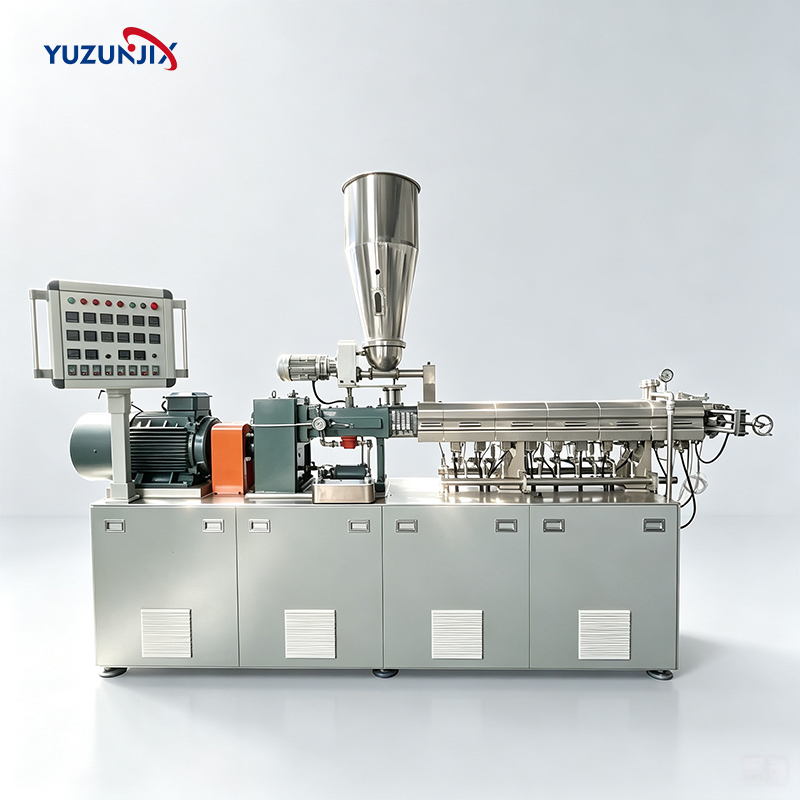
The TSB‑36 experimental twin‑screw extruder is an all‑in‑one compact R&D‑oriented unit. All functional systems are integrated inside the main machine base. Operators only need to connect power supply and cooling water to start trial production, without complicated on‑site assembly.
Adopting modular screw‑element design, users can freely recombine screw segments to match different polymer formulation tests. The integrated touch‑screen control panel unifies feeding speed, main‑motor rotation speed, multi‑zone temperature setting and vacuum degassing control. Compact footprint and low energy consumption make it ideal for small‑batch formulation trials.
Core Advantages
-
Plug‑and‑play integrated structure, minimal installation work
-
Modular screw elements for flexible process adjustment
-
Intuitive touch‑screen centralized operation
-
Low power consumption, small occupation space
Typical Applications
-
Polymer‑major teaching & practical training for vocational colleges and universities
-
Laboratory new‑material R&D, plastic modification formulation testing
-
Dispersion and plasticizing‑performance inspection for color masterbatch and functional masterbatch
-
Product performance testing for plastic‑additive manufacturers
-
Pre‑sales sample making for additive and masterbatch suppliers
Main Technical Parameters
| Item | TSB‑36 |
|---|---|
| Screw diameter | 35.5 mm |
| L/D ratio | 36‑68 |
| Screw speed | 400‑800 rpm |
| Main motor power | 11‑22 kW |
| Output capacity | 30‑100 kg/h |
2. Medium‑Volume TSH‑Series Twin‑Screw Extruder (Mid‑Size Production Model)
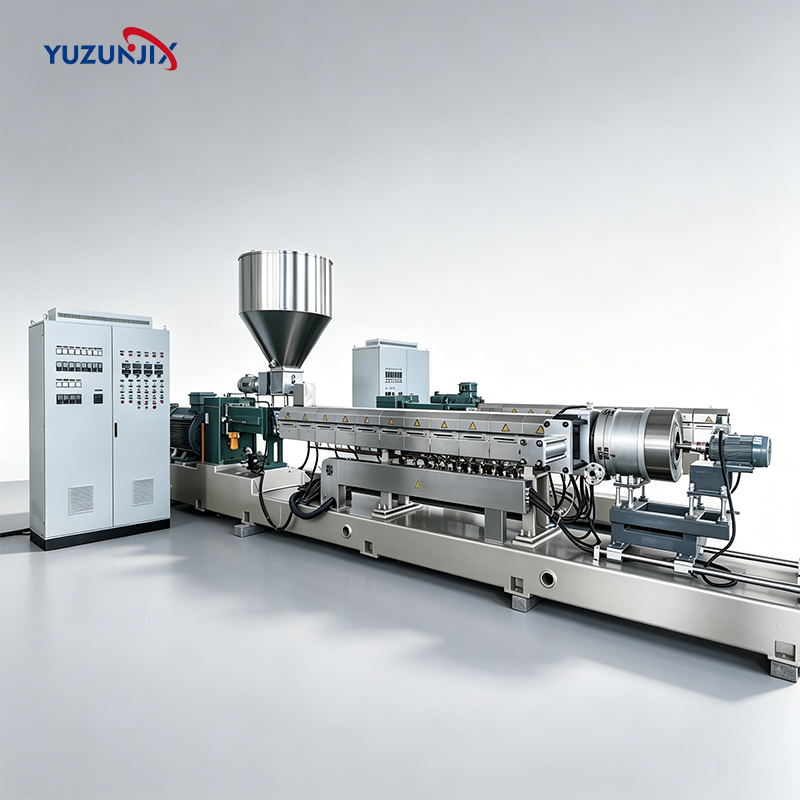
The medium‑size TSH twin‑screw extruder acts as the critical transition link between laboratory formula development and formal mass production. It balances formula scale‑up verification and medium‑batch continuous manufacturing. With moderate torque, uniform kneading effect and stable running performance, it can work as standalone equipment or connect with auto‑feeding, mixing and pelletizing auxiliary units to build a complete pelletizing production line.
Core Advantages
-
Excellent dispersive and distributive mixing performance by co‑rotating intermeshing screws
-
Superior self‑wiping screw design reduces material stagnation and residue
-
Modular barrel & screw assembly to realize multi‑purpose production
-
Reliable venting & devolatilization function to remove volatile components
Typical Applications
-
PVC / PE cable‑compound production
-
PP / PA toughened modification, mineral‑filled compounding
-
Color masterbatch, functional masterbatch manufacturing
-
Small‑to‑medium batch pelletizing and OEM compounding service
Main Technical Parameters
| Item | TSH‑52 | TSH‑65 | TSH‑75 | TSH‑85 |
|---|---|---|---|---|
| Screw diameter | 52 mm | 62 mm | 72 mm | 82 mm |
| L/D ratio | 32‑68 | 32‑68 | 32‑68 | 32‑68 |
| Screw speed | 600 rpm | 600 rpm | 600 rpm | 600 rpm |
| Main motor power | 75‑90 kW | 110‑160 kW | 185‑250 kW | 250‑350 kW |
| Output capacity | 270‑450 kg/h | 480‑800 kg/h | 500‑1000 kg/h | 850‑1400 kg/h |
3. Large‑Capacity High‑Output TSH‑Series Twin‑Screw Extruder
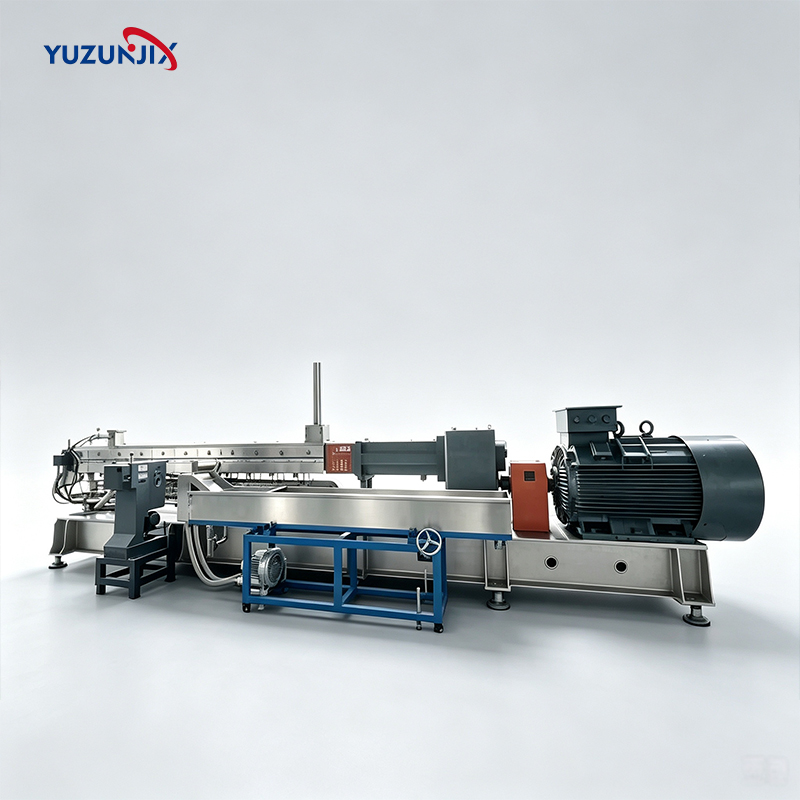
Large‑size high‑output twin‑screw extruders are heavy‑duty production‑grade equipment built for industrial‑scale continuous manufacturing. Equipped with high‑torque gearboxes, thickened high‑strength screw‑barrel assemblies and reinforced bearing structures, these models support 24‑hour full‑load non‑stop operation. They can seamlessly dock with automatic loss‑in‑weight batching, auto‑conveying, screening and material‑storage systems for fully‑automated workshops.
Core Advantages
-
Heavy‑duty mechanical design for long‑term continuous high‑throughput production
-
High‑torque transmission system, suitable for high‑fill, glass‑fiber‑reinforced difficult‑to‑process formulations
-
Bi‑alloy screw and barrel for enhanced wear‑resistance and corrosion‑resistance, extending service life
-
Compatible with full‑set automatic upstream‑and‑downstream auxiliary equipment
-
Stable discharging and uniform pellet quality for large‑volume order fulfillment
Typical Applications
-
Mass‑production of low‑smoke‑zero‑halogen cable compounds
-
Large‑batch PVC cable‑material compounding
-
High‑loading calcium‑carbonate / talc filled masterbatch
-
Glass‑fiber‑reinforced engineering‑plastic modification
-
Bulk color‑masterbatch industrial manufacturing
Main Technical Parameters
| Item | TSH‑95 | TSH‑115 | TSH‑135 | TSH‑160 |
|---|---|---|---|---|
| Screw diameter | 92 mm | 116.5 mm | 133.5 mm | 160 mm |
| L/D ratio | 32‑68 | 32‑68 | 32‑68 | 32‑68 |
| Screw speed | 600 rpm | 600 rpm | 600 rpm | 600 rpm |
| Main motor power | 250‑450 kW | 400‑630 kW | 630‑1000 kW | 630‑1600 kW |
| Output capacity | 1050‑1750 kg/h | 1300‑2550 kg/h | 2000‑5500 kg/h | 2700‑8000 kg/h |
Key Points When Sourcing Parallel Co‑Rotating Twin‑Screw Extruder
-
Match equipment scale to your business goal: Choose lab‑type extruder for R&D and sample‑making; adopt medium‑size unit for pilot scale‑up and medium‑batch processing; select large‑capacity model for 24‑hour mass production.
-
Confirm screw‑barrel material: For abrasive filled or glass‑fiber‑modified plastics, bi‑alloy wear‑resistant screw‑barrel is essential to reduce replacement frequency.
-
Define required L/D ratio: Different polymer formulations need different length‑diameter ratios for mixing, melting and devolatilization. Communicate your material list with equipment suppliers.
-
Check expandability: Confirm whether the extruder can be upgraded with auxiliary units such as loss‑in‑weight feeder, side feeder and vacuum system for future‑process adjustment.
-
Evaluate after‑sales & technical support: Polymer compounding needs process tuning support. Reliable suppliers can provide screw‑element configuration suggestions according to customer formulations.
Frequently Asked Questions
Q1: Can lab‑scale 36‑type extruder output production‑grade pellets for selling?
A1: TSB‑36 is mainly for R&D, teaching and small sample preparation. Its maximum output is 100 kg/h, not designed for commercial mass production. For formal manufacturing, please switch to medium‑size or large‑capacity models.
Q2: What is the difference between medium‑size and large‑capacity twin‑screw extruder?
A2: Apart from throughput difference, large‑capacity models adopt reinforced gearbox, thicker screw‑barrel structure to sustain long‑time full‑load running, and are better adapted to high‑fill, high‑torque difficult formulations.
Q3: Can I change L/D ratio on one twin‑screw extruder?
A3: Yes. Parallel co‑rotating twin‑screw extruder uses modular barrel segments. Customers can add or reduce barrel sections to adjust overall L/D ratio for different processing requirements.
Conclusion
Parallel co‑rotating twin‑screw extruder covers the full chain of polymer processing: compact 36‑type lab extruder serves R&D and sample‑making; medium‑size TSH‑series realizes formula scale‑up and medium‑batch production; heavy‑duty large‑capacity TSH‑series supports round‑the‑clock mass manufacturing for compounding factories.
When purchasing twin‑screw pelletizing equipment, you should clarify your target materials, expected hourly throughput and future production‑expansion plan. Our engineering team can recommend suitable extruder configuration and screw‑element layout according to your formulations. If you are seeking high‑quality twin‑screw extruder for polymer modification, masterbatch or cable‑compound projects, feel free to contact us for free technical consultation and quotation.
www.yuzunextruder.com
Nanjing Yuzun Machinery Technology Co., Ltd.