

Rapid temperature rise in a bead mills is a common problem in grinding production. The root cause is often that the heat generation rate in the grinding chamber exceeds the heat removal capacity of the cooling system. Heat is generated by collisions, friction, and shear between the grinding media and the material. High material viscosity, high rotational speed, high media fill rate, and long grinding time all cause mechanical energy to be converted into heat. Traditional disc-type bead mills have low energy density and require high speed and long operation to reach the target fineness, so heat generation is more concentrated. When the temperature rises, heat-sensitive materials may deteriorate, solvent evaporation accelerates, additives may fail, pigment crystal form may change, and slurry viscosity may increase or particles may coarsen, affecting fineness and hue. To solve the temperature rise problem, heat generation can be reduced at the source and heat exchange can be improved structurally, combined with adjustment of process parameters.
In terms of reducing heat at the source, a pin-type high-energy-density structure can be used. The pin rotor and grinding chamber form strong shear and impact zones, improving grinding efficiency and shortening the time required to reach the target fineness, thereby reducing total heat generation. The RUCCA DF series bead mill uses this structure and is suitable for medium- and high-viscosity materials. During equipment operation, linear speed, flow rate, and media fill rate must be matched. Excessive linear speed increases friction heat, while too low a flow rate causes the material to remain for too long and heat to accumulate. Using an Inline dispersing system-low viscosity IDS for pre-dispersion can complete wetting and de-agglomeration before the powder enters the bead mills, reducing agglomerated particles. This can reduce the number of subsequent grinding passes by 30%–50%, and both energy consumption and temperature rise are reduced accordingly.
In terms of structural heat exchange, an internal and external dual cooling system is relatively effective. A cooling jacket is arranged on the outer wall of the grinding chamber, and cooling channels are built into the inner rotor. With dual-channel heat exchange, the heat exchange area is large and the heat conduction path is short. The temperature, flow rate, and pressure of the cooling water must remain stable. If the inlet temperature of the cooling water is already high, a chiller can be provided to keep the inlet water temperature within the set range. The jacket and piping should be cleaned regularly to prevent scale from affecting heat exchange. For high-viscosity materials, the circulation flow can be increased, the single-pass residence time reduced, and circulation cooling or staged grinding adopted to reduce local heat accumulation.
Process parameters and operation also affect temperature rise. The particle size of the grinding media should be reasonable. Media that are too large or an excessively high fill rate will increase friction heat, while media that are too small may result in insufficient efficiency. Rotational speed should be set according to the material and media, and should not be increased blindly. The feed rate should be stable to avoid material interruption, blockage, or idling. Temperature monitoring can be placed at the grinding chamber outlet, circulation tank, and cooling water return, with linked adjustment of cooling water volume and feed rate. In actual measurements on the DF100 production line at Yancheng Limin, the temperature during continuous grinding was controlled within 28°C throughout the entire process. This shows that when the equipment structure, cooling configuration, and process parameters are properly matched, the temperature can remain controllable during long-term operation.
If the temperature rises too quickly, troubleshooting can be carried out together from the aspects of equipment structure, cooling system, media selection, upstream dispersion, and operating parameters. Sending material for sample testing is recommended, and RUCCA will recommend a configuration based on material characteristics. By observing temperature rise, fineness, and flow changes in laboratory or pilot tests, and then determining the production model and cooling scheme, the time required for on-line adjustments can be reduced. You are welcome to contact RUCCA engineers to obtain a grinding temperature control solution suitable for your own material system.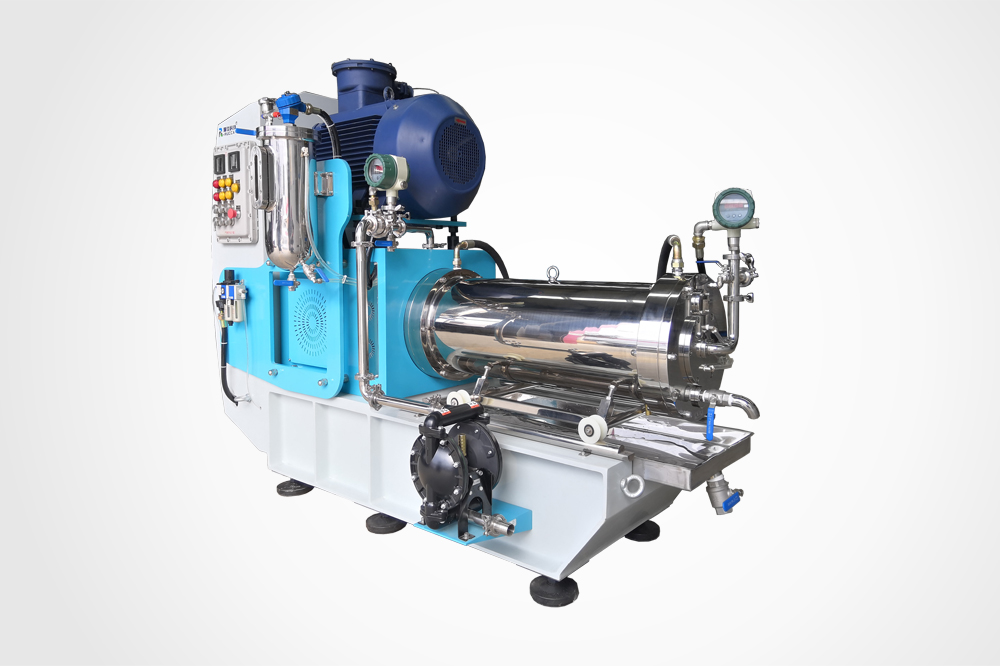
www.ruccagroup.net
RUCCA