

Flexible Ceramic Heating Pads: 50-Reuse PWHT Solution Guide
Every welded joint carries a hidden liability. Metal processing, and welding in particular, tends to produce uneven temperature distribution, residual stress, and hydrogen-induced cracking. In high-pressure environments — long-distance pipelines, spherical storage tanks, pressure vessels — those conditions do not stay theoretical. They translate into structural deformation or catastrophic failure. Controlling heat before and after the weld is therefore not a finishing step; it is the step that determines whether the component survives its service life.
This is the problem that Flexible Ceramic Heating Pads (FCP) were engineered to solve, and it is the problem Wujiang Hongcheng Heating Equipment Co., Ltd. has built its specialized manufacturing and research programs around. Operating under the Hongcheng brand and headquartered in Suzhou (Wujiang), China, the company supplies far-infrared heat treatment equipment and industrial heating solutions to global markets, including offshore and onshore oil and gas.
What Flexible Ceramic Heating Pads Are
A flexible ceramic heating pad is a high-performance localized heater used for preheating and stress relief. Rather than a rigid, fixed-geometry element, the pad is constructed as a flexible "mat" that can be wrapped around irregular shapes and various pipe diameters. That flexibility is what makes it useful in field conditions, where welds sit on elbows, reducers, and non-standard spools rather than on clean straight runs, and where the heating area must be optimized for the joint in front of the technician.
The Material Case: 95% Alumina and Cr20Ni80 Alloy
Durability in harsh construction environments is where heating elements usually fail. Hongcheng's pads are built on 95% alumina ceramic beads and Cr20Ni80 heating wire. The high-density ceramic beads provide superior insulation and heat radiation, while the Nichrome alloy wire ensures stable performance at temperatures up to 1050°C. The design supports up to 50 reuses of the heating elements — a material-longevity figure that directly reduces operational cost for contractors running repeated heat cycles across a project.
Safety and thermal conductivity are addressed separately: pure nickel cold tail wires carry current into and out of the heated zone, enhancing both. Because the failure modes of field heating pads are usually thermal degradation and connection wear rather than electrical design, this combination of a high-alumina dielectric body and a nickel alloy conductor targets the parts that actually wear out.
Voltage Configurations and Their Applications
Two standard configurations cover the majority of field work:
- 60V Heating Pads: the standard voltage configuration, engineered for localized heating of standard pipe diameters.
- 80V Heating Pads: the high-voltage configuration, addressing rapid heating requirements for thicker materials.
Beyond the pads themselves, Hongcheng's delivery capability extends to localized voltage configurations from 415V to 575V and specialized Camlock connectors — heavy-duty electrical connectors built for secure power transmission in field conditions. For international projects, the company also provides localized standard support for UK-type equipment configurations, which matters when a heating package must integrate with an existing site power infrastructure rather than be designed around it.
Pairing Pads with Precision Control
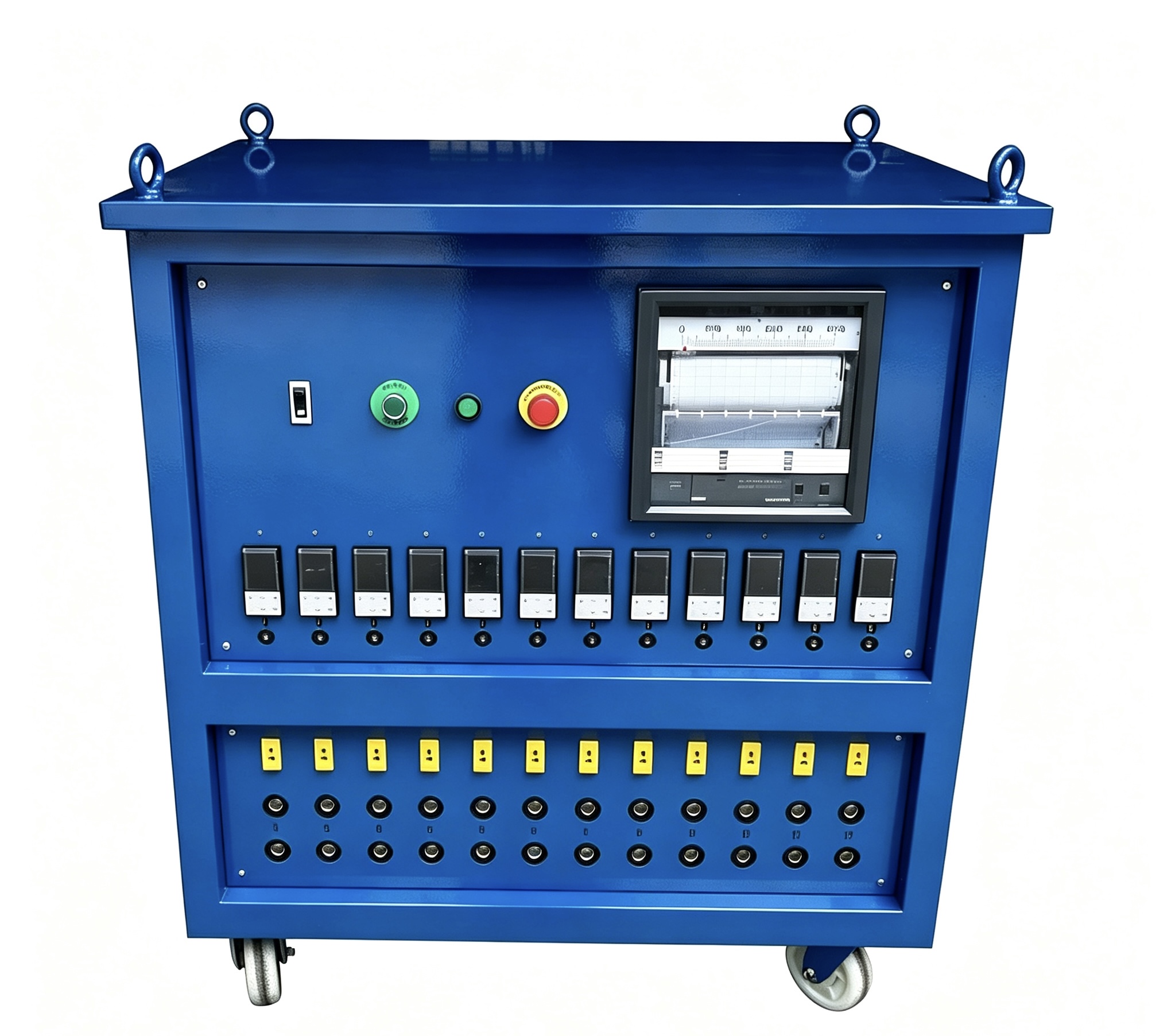
Heating elements are only half of a heat treatment system. Hongcheng's TDWK Series Heat Treatment Machines provide the control layer: transformer-based heating systems with multi-channel configurations of 6 to 12 channels for simultaneous monitoring and heating of complex weld geometries. Three models scale by duty: the TDWK-65kva with 6-channel output for medium-scale operations and multi-point heating on standard pipelines, the TDWK-130kva with 12-channel output for complex heat distribution in large vessels, and the TDWK-180kva for deep-penetration heating of ultra-thick plates.
Precision comes from two named components: Japanese CHINO recorders, which provide high-fidelity data logging and verifiable compliance records for safety audits, and PID (Proportional-Integral-Derivative) control logic, which automates temperature regulation and eliminates human error in thermal cycling. K-Type thermocouple sensing closes the loop, with thermocouple welding machines available as portable units for attaching sensors directly to workpieces.
A Complete Support Ecosystem
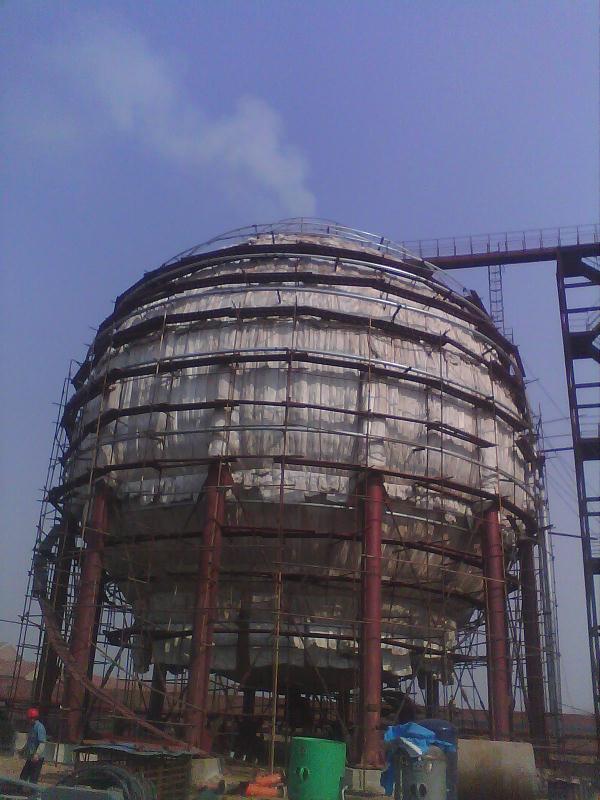
The pads sit inside a broader toolkit for the welding and heat treatment workflow: MF induction heaters for rapid thermal application, welding electrode drying ovens that keep electrodes moisture-free to prevent hydrogen-induced cracking, flux recovery machines that reduce material waste, and ceramic fiber thermal insulation blankets that minimize heat loss during the PWHT process. That breadth supports a "one-stop" procurement model, with deployment offered as portable hardware for construction sites or fixed installations for manufacturing facilities.
Where Flexible Ceramic Pads Prove Their Value
Hongcheng's service scope covers preheating, post-weld heat treatment (PWHT), stress relief, and technical equipment support, across petrochemical, oil and gas (offshore and onshore), aerospace, shipbuilding, nuclear power, and pressure vessel manufacturing. Buyers typically include procurement managers, technical engineers, industrial contractors, and refinery maintenance teams.
One documented application illustrates the flexibility argument directly: a customized pipe heating solution for a specialized pipeline contractor working with non-standard pipeline dimensions. Custom-sized FCP heaters reduced setup time and improved energy efficiency by optimizing the heating area — a gain that comes from geometry matching rather than from higher power.
In adjacent scenarios, multi-channel TDWK systems have delivered uniform temperature distribution across entire vessel structures, eliminated welding residual stress across multiple pipeline segments while maintaining full compliance with pipeline safety standards, and achieved deep thermal penetration on ultra-thick steel plate to improve impact toughness.
Evaluating a Heating Pad Supplier
For engineers specifying localized heaters, the practical criteria are consistent: rated temperature capability, verified reuse count, dielectric material quality, control-system integration, voltage localization for the destination market, and documentation quality. Hongcheng addresses the technical side through proprietary R&D conducted in collaboration with Zhejiang University, with R&D centers focused on far-infrared heating and PID control logic development — a research posture that keeps the equipment aligned with evolving pressure vessel and pipeline safety standards.
For manufacturers weighing the total cost of heat treatment across a project, the decisive variable is rarely the purchase price of a single pad. It is how many cycles the pad delivers, how tightly the temperature is held, and whether the records prove it afterwards. Flexible ceramic heating pads built on 95% alumina and Cr20Ni80 wire, paired with CHINO recorder and PID control architecture, answer all three.
https://www.hongchengheating.com/
Wujiang Hongcheng Heating Equipment CO.,LTD