
For manufacturers of transformers, inductors, power supplies, and other electrical equipment, selecting the right magnetic core supplier is an important part of product development. Custom amorphous cores are particularly relevant to applications where low core loss, efficient magnetic performance, and compact equipment design are required.
However, sourcing custom magnetic cores involves more than choosing a material or selecting a standard product model. Buyers also need to consider manufacturing experience, dimensional accuracy, processing methods, quality control, and the supplier's ability to understand specific OEM requirements.
China has a mature manufacturing supply chain for magnetic components, giving international buyers access to a variety of core products and manufacturing solutions. Among these suppliers, Wuxi Yida Electric Co., Ltd. (YIDA) has focused on magnetic core manufacturing since 1996. Its product range covers silicon steel cores, amorphous cores, and nanocrystalline cores for applications including power transformers, current transformers, current sensors, and inductors.
This article explores what OEM buyers should look for when sourcing custom amorphous cores and how to evaluate a manufacturer for long-term cooperation.
1. Choose the Right Amorphous Core for Your Equipment
The first consideration is whether the core structure and material are suitable for the intended application.
Amorphous alloys have a non-crystalline atomic structure, which gives them different magnetic characteristics from conventional silicon steel. Their high electrical resistivity helps reduce eddy current losses, making them useful in applications where magnetic efficiency is an important design consideration.
Amorphous cores are commonly considered for:
-
High-frequency transformers
-
Switching power supplies
-
Inverters and UPS systems
-
Power conversion equipment
-
Industrial electronic components
For OEM buyers, material selection should be based on operating frequency, magnetic flux density, temperature, and the electrical requirements of the finished equipment.
A manufacturer with multiple magnetic core product categories can also help buyers compare material options. YIDA supplies silicon steel, amorphous, and nanocrystalline cores, providing different magnetic material choices for customers with varying application requirements.
2. Look for a Manufacturer with Dedicated Amorphous Core Products
A supplier's product range is a useful indicator of whether it can support different project requirements. Rather than relying only on general magnetic component descriptions, buyers should review actual product models and technical specifications.
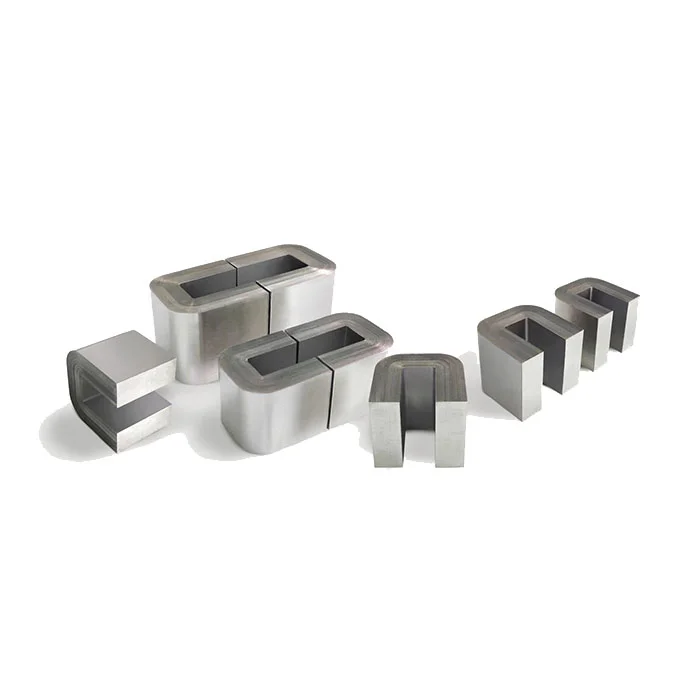
YIDA's Amorphous Cores product category includes amorphous cut cores designed for electrical and power electronic applications.
One important product type is the amorphous C-core. Its structure provides a defined magnetic path and allows windings to be arranged around the core during component assembly. This makes it worth considering for transformer and power electronics designs where the core shape and winding arrangement need to work together.
YIDA's Amorphous Cut Cores include several model options, such as YDCC4, YDCC10, YDCC20, YDCC50, YDCC100, YDCC200, YDCC400, YDCC630, and YDCC1000.
These models offer different dimensional configurations and effective core cross-sectional areas. Buyers can use the product specifications to identify suitable starting points before discussing detailed requirements with the manufacturer.
A supplier that provides clear product information makes it easier for engineers to compare models and avoid unnecessary design adjustments.
3. Evaluate Material Specifications and Core Performance
The performance of an amorphous core depends on the material and the way the finished component is designed and processed.
When requesting a custom product, OEM buyers should not rely on the general description of low core loss or high magnetic performance. Instead, they should ask for technical data under defined test conditions.
Important parameters include:
Core loss: This indicates the energy dissipated in the core during magnetic operation. It is particularly important in transformer and power conversion applications where efficiency is a key requirement.
Saturation induction: This helps engineers determine the magnetic operating limits of the core and assess whether it is suitable for the intended design.
Permeability: This affects the relationship between the applied magnetic field and the resulting magnetic flux density.
Frequency characteristics: The core should be evaluated under the operating frequency of the actual equipment.
Temperature performance: Buyers should consider the working temperature and the thermal conditions of the complete magnetic component.
YIDA's amorphous C-core product information highlights low core losses and high saturation induction, with applications in medium-to-high-frequency equipment. For specific projects, buyers should confirm the relevant material specifications and test data before approving a design.
4. Check the Factory's Dimensional and Customization Capabilities
Dimensional accuracy is a practical concern for OEM production. A magnetic core must fit the winding, housing, and installation space of the finished component. If the dimensions do not match the design, additional assembly work or product modifications may be required.
When evaluating a custom amorphous core manufacturer, buyers should provide clear information about:
-
Outer dimensions and inner dimensions
-
Core height and thickness
-
Effective cross-sectional area
-
Required magnetic path dimensions
-
Dimensional tolerances
-
Assembly and installation requirements
YIDA's amorphous C-core range includes multiple models with different dimensional specifications. This gives customers several standard configurations to consider when developing their designs.
For projects that require non-standard dimensions, buyers should communicate their drawings and technical requirements directly to the manufacturer. The supplier can then review the requested structure and confirm the available customization options.
A practical factory evaluation should also include questions about cutting accuracy, edge condition, surface protection, and dimensional inspection. These details are important because amorphous alloy materials require suitable processing and handling.
5. Pay Attention to Manufacturing Processes
A magnetic core's final performance is influenced by more than its raw material. Manufacturing and processing methods also affect the finished product.
For amorphous cut cores, processing considerations may include material handling, core formation, cutting, finishing, and inspection. Each stage needs to be managed according to the material's characteristics and the product's design requirements.
For example, cutting quality can influence the fit between core sections. Poor dimensional control may lead to assembly difficulties or unwanted gaps in the magnetic path.
OEM buyers should therefore ask the manufacturer about:
-
Raw material selection and incoming inspection
-
Core forming and processing methods
-
Cutting and dimensional control
-
Surface treatment or protection options
-
Finished-product inspection procedures
-
Packaging and transportation protection
YIDA's product portfolio focuses on magnetic core manufacturing, and its product information provides technical specifications for its amorphous cut cores. Buyers can use these details as a starting point for discussing manufacturing requirements and product suitability.
6. Select a Supplier with Consistent Quality Control
For OEM customers, quality consistency is essential. A sample that meets the required specifications does not automatically guarantee that subsequent production batches will perform in the same way.
A reliable manufacturer should have clear inspection requirements for raw materials, dimensions, processing quality, and finished products.
Before placing an order, buyers should clarify the following:
| Inspection Item | Key Requirements |
|---|---|
| Material inspection | Confirm material type and specifications |
| Dimensional inspection | Verify core dimensions and tolerances |
| Cutting quality | Check cut surfaces and core fit |
| Magnetic testing | Confirm available core loss and magnetic data |
| Finished-product inspection | Establish acceptance criteria |
| Packaging | Protect cores during storage and transportation |
It is also important to agree on how product specifications will be documented. Drawings, inspection standards, and approved samples can help both parties maintain consistent expectations during repeat orders.
For overseas buyers, clear quality communication can reduce misunderstandings and make supplier cooperation more efficient.
7. Consider the Manufacturer's Experience Across Magnetic Core Applications
A manufacturer that understands different electrical applications may be better prepared to discuss the requirements of an OEM project.
Wuxi Yida Electric Co., Ltd. was established in 1996 and specializes in magnetic core production. Its products are used in power transformers, current transformers, current sensors, inductors, and related electrical equipment.
In addition to amorphous cores, YIDA offers silicon steel and nanocrystalline magnetic core products. This broader product range is useful for buyers who need to evaluate different magnetic materials for different equipment designs.
For example, a transformer manufacturer may require different core solutions for power conversion and measurement applications. An inductor producer may have specific requirements concerning core dimensions and operating frequency.
Working with a manufacturer familiar with several magnetic core categories gives buyers an opportunity to discuss these requirements within a more focused product scope.
8. Build a Clear Technical Communication Process
Even a capable manufacturer needs accurate project information to produce a suitable custom core. Poorly defined requirements can lead to repeated revisions, delayed sample approval, or differences between the expected and delivered products.
Before requesting a quotation or sample, OEM buyers should prepare a technical information package containing:
-
Application and equipment type
-
Product drawings or reference dimensions
-
Material and thickness requirements
-
Magnetic performance expectations
-
Operating frequency and temperature
-
Required surface treatment
-
Inspection and packaging requirements
The manufacturer should review these details and clarify any missing information before production begins.
For overseas buyers working with a Chinese magnetic core factory, clear communication is particularly important when drawings, technical terminology, and inspection standards need to be aligned.
YIDA's product pages provide a starting point for reviewing available amorphous core models. Buyers can contact the company to discuss product specifications and project-specific requirements.
Conclusion: Find a Manufacturing Partner That Understands Your Requirements
Choosing a custom amorphous core supplier requires a practical evaluation of product suitability, material specifications, processing capabilities, dimensional accuracy, and quality control. A supplier should be able to provide relevant product information and communicate clearly about the requirements of each OEM project.
Wuxi Yida Electric Co., Ltd. (YIDA) has specialized in magnetic core manufacturing since 1996. Its product range includes amorphous cut cores, silicon steel cores, and nanocrystalline cores for applications in transformers, current sensors, inductors, and other electrical equipment.
With multiple amorphous C-core models available, YIDA provides options for buyers to evaluate according to their design requirements. For projects involving special dimensions or technical specifications, discussing the application and drawings directly with the manufacturer is the best way to determine a suitable solution.
Visit the YIDA official website to learn more about its magnetic core products, or explore the Amorphous Cut Cores product range to review available models and product information.
www.rogicore.com
Wuxi Yida Electric Co., Ltd.