
In today’s global food supply chain, regulatory compliance is no longer optional—it is a core requirement that directly impacts consumer safety, brand reputation, and market access. From manufacturing facilities to retail shelves, every food product must carry accurate, durable, and fully compliant labeling that meets strict international standards.
Among all components in food packaging systems, food grade labels play a critical yet often overlooked role. They are not only carriers of product information but also essential tools for traceability, inventorymanagement, and regulatory compliance.
As global food distribution networks become more complex, demand for reliable labeling solutions continues to rise—especially those integrated with barcode technology for real-time tracking and control.
The Importance of Labeling in Food Safety and Compliance
Food labeling regulations are strictly enforced across global markets and typically require:
-
Ingredient and allergen disclosure
-
Nutritional information
-
Expiration and production dates
-
Batch and lot traceability
-
Storage and handling instructions
Failure to meet these requirements can lead to product recalls, regulatory penalties, and significant damage to brand trust.
Food grade labels ensure that all essential data remains clear, durable, and readable throughout the product’s lifecycle—from production to end consumer.
What Defines a Food Grade Label?
Not all labels are suitable for food applications. Food grade labels are specifically engineered for environments where safety, durability, and compliance are critical.
1. Material Safety Compliance
Food grade labels are produced using certified adhesives and substrates that meet food safety standards, ensuring:
-
No harmful substance migration into food
-
Stable performance under storage conditions
-
Packaging integrity remains unaffected
2. Resistance to Temperature and Moisture
Food products often pass through refrigeration, freezing, and humid environments. High-quality labels must maintain adhesion and print clarity without peeling, smudging, or fading.
3. Chemical Stability
During processing and cleaning procedures, labels may be exposed to oils, disinfectants, and condensation. Food grade labels are designed to withstand these conditions without degradation.
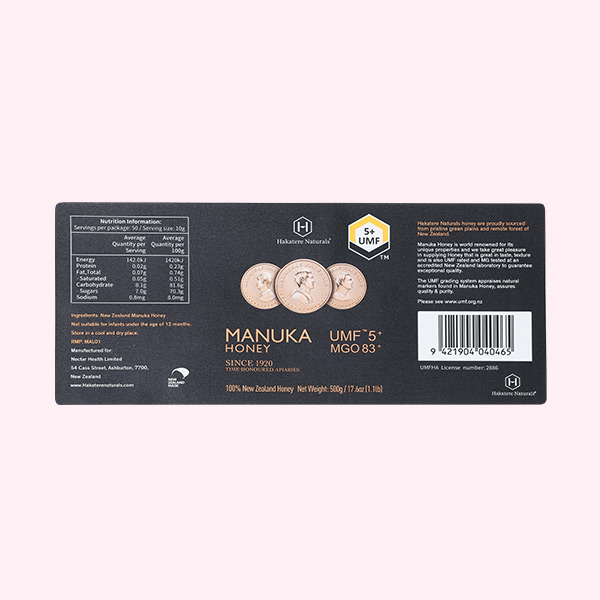
Barcode Integration: Transforming Food Labeling Systems
Modern food grade labels increasingly incorporate barcode technology, turning static packaging information into dynamic, trackable data.
Real-Time Inventory Management
Barcodes allow manufacturers and distributors to:
-
Track inventory accurately
-
Reduce manual input errors
-
Improve warehouse efficiency
Full Supply Chain Visibility
Each product unit can be traced across:
-
Production batches
-
Distribution channels
-
Retail locations
This transparency is essential for meeting global food safety and traceability regulations.
Faster and Safer Product Recalls
In case of contamination or quality issues, barcode systems enable companies to quickly identify affected batches and execute targeted recalls, minimizing risk and waste.
Why Label Durability Is Critical
Food packaging environments are highly demanding. Labels must remain functional under:
-
Cold chain logistics
-
High humidity storage
-
Long-distance transportation
-
Retail handling and display conditions
If labels become unreadable or detach, traceability is compromised, potentially leading to compliance failures and operational disruptions.
Durable food grade labels ensure continuous data integrity throughout the entire supply chain.
Applications Across the Food Industry
Food grade labels are widely used across multiple sectors, including:
Processed Foods
Frozen meals, canned products, and packaged foods require precise labeling for safety and compliance.
Beverage Industry
Used for bottled water, juices, dairy products, and alcoholic beverages with strict regulatory requirements.
Fresh Produce & Cold Chain Logistics
Ensures reliable identification of temperature-sensitive goods.
Retail & Supermarkets
Supports scanning accuracy and consistent product identification at point of sale.
Regulatory Compliance Across Global Markets
Food labeling requirements vary by region but share a common objective: protecting consumers and ensuring transparency.
Food grade labels support compliance with major frameworks such as:
-
FDA food labeling regulations (United States)
-
EU food information standards (Europe)
-
Global traceability and safety systems
By ensuring consistent data integrity, companies reduce compliance risks and strengthen global market readiness.
Industrial Labeling Expertise from WorldBridge
WorldBridge is a global trade service provider specializing in industrial supply chain solutions across manufacturing, energy, automotive, and petrochemical sectors.
In the food industry, WorldBridge delivers professional food grade labeling solutions designed for both regulatory compliance and operational efficiency.
Its approach focuses on:
-
Supply chain optimization
-
Compliance-driven labeling systems
-
Industrial-grade durability and reliability
-
Global adaptability for different markets
By integrating labeling solutions into broader supply chain systems, WorldBridge helps companies improve visibility, control, and efficiency.
Beyond Food: Industrial Identification Solutions
In addition to food labeling, modern identification technologies are widely applied in other industries:
-
Anti-counterfeit labels for product authentication
-
Weather-resistant industrial labels
-
RFID tracking systems for logistics and assets
-
Manufacturing process identification solutions
These systems are critical in industries requiring precision tracking and operational transparency.
Key Factors When Selecting Food Grade Labels
When choosing a labeling solution, companies should evaluate:
-
Material compliance certifications
-
Adhesive performance under temperature variation
-
Barcode readability and print durability
-
Compatibility with packaging materials
-
Resistance to moisture, oil, and abrasion
A well-designed labeling system significantly reduces operational risks and improves supply chain efficiency.
Conclusion
Food grade labels are a fundamental element of modern food safety and supply chain management. They ensure that critical product information remains accurate, durable, and traceable from production to consumption.
With barcode integration, these labels have evolved into powerful tools for logistics optimization, regulatory compliance, and consumer protection.
As global food systems continue to expand and regulations become more stringent, investing in high-quality food grade labeling solutions is no longer just a compliance requirement—it is a strategic business necessity.
www.worldbridgeco.com
WorldBridge