
In today’s professional welding environment, safety and efficiency go hand in hand. Whether you’re working in shipbuilding, heavy fabrication, pipeline construction, or precision metalwork, welders face constant exposure to intense light, heat, sparks, and hazardous fumes.
Standard protective gear can provide basic protection—but in many real-world scenarios, it simply isn’t enough.
That’s why more companies and professionals are turning to custom welding helmets. These are no longer just safety tools—they’re performance upgrades designed to match specific working conditions and improve overall productivity.
The Problem with Standard Welding Helmets
Standard welding helmets are built for general use. While they meet basic safety requirements, they often fall short in demanding industrial environments.
Some common issues include:
-
Fixed shade levels that don’t adapt to different welding processes
-
Limited compatibility with advanced safety systems
-
Generic sizing that leads to discomfort over long hours
-
Lack of flexibility for different work environments
In high-intensity or specialized applications, these limitations can affect not only comfort—but also work quality and efficiency.
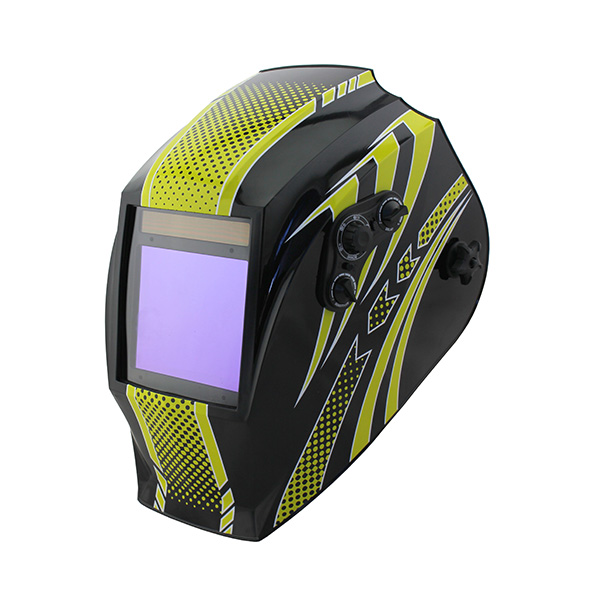
What Makes a Welding Helmet “Custom”?
A custom welding helmet is designed with specific user needs and working conditions in mind.
Instead of a one-size-fits-all approach, it offers features like:
-
Adjustable auto-darkening filters (ADF)
-
Ergonomic headgear for better weight distribution
-
Compatibility with powered air purifying respirators (PAPR)
-
Custom materials and sizing options
-
Fine-tuned settings for different welding techniques
The result? A helmet that works with the welder—not against them.
Key Benefits of Custom Welding Helmets
1. Better Safety Protection
Safety is always the top priority.
Custom helmets enhance protection by using advanced auto-darkening technology, which:
-
Automatically adjusts shade based on arc intensity
-
Reduces eye strain and harmful exposure
-
Reacts faster than manual systems
When combined with respiratory systems like PAPR, they also provide cleaner breathing air, especially in confined or fume-heavy environments.
2. More Comfort During Long Work Hours
Welding is physically demanding, and wearing an uncomfortable helmet for hours can lead to fatigue and reduced focus.
Custom helmets improve comfort through:
-
Balanced weight distribution
-
Adjustable headgear systems
-
Lightweight yet durable materials
This helps welders stay focused and reduces strain during long shifts.
3. Improved Productivity and Precision
Clear visibility and ease of use directly impact weld quality.
Custom welding helmets help by:
-
Providing clearer lens visibility
-
Reducing interruptions from manual adjustments
-
Allowing smoother transitions between tasks
When welders can see better and work more comfortably, they make fewer mistakes—and productivity naturally increases.
4. Flexibility for Different Welding Processes
Different welding methods (MIG, TIG, stick) require different settings.
Custom helmets allow you to:
-
Adjust sensitivity and delay settings
-
Match shade levels to specific arc conditions
-
Use multiple ADF configurations
This makes them ideal for workshops handling multiple welding processes.
5. Integration with Advanced Safety Systems
Modern industrial environments demand more than basic protection.
Custom helmets can integrate with:
-
Powered air purifying respirators (PAPR)
-
Respiratory protection systems
-
Additional face and neck protection
This creates a complete safety solution without sacrificing mobility.
Designed for Real-World Applications
Custom welding helmets are widely used across industries where performance and safety are critical:
-
Heavy equipment manufacturing – High-intensity welding environments
-
Shipbuilding – Corrosive conditions and confined spaces
-
Oil & gas – Pipeline welding with strict safety requirements
-
Automotive production – High efficiency and repeatability
-
Construction & steel fabrication – Flexible, multi-scenario use
Each of these industries benefits from helmets tailored to their specific challenges.
What to Consider When Choosing a Custom Welding Helmet
Before investing in a custom solution, it’s important to evaluate:
Your Application Needs
Different welding tasks require different features.
Equipment Compatibility
Make sure the helmet integrates with your existing systems.
Safety Certifications
Look for compliance with standards like CE, ANSI, or AS/NZS.
Supplier Experience
Choose a manufacturer with strong R&D capabilities and proven industry expertise.
Final Thoughts
Custom welding helmets are quickly becoming the new standard in professional welding—not because they’re more advanced, but because they’re more relevant.
They provide:
-
Better protection
-
Greater comfort
-
Higher productivity
In a competitive industrial environment, even small improvements in efficiency and safety can make a big difference.
If your current equipment is limiting performance, it may not be your process—it might be time to upgrade to a solution that’s actually built for your work.
www.wxyingcheng.com
Wuxi Yingcheng