
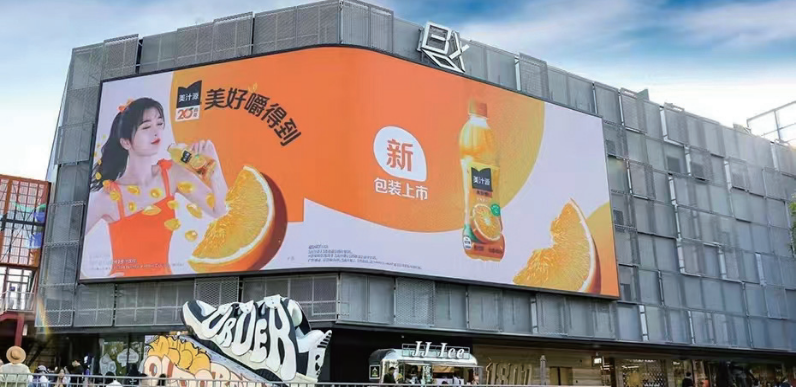
Outdoor LED displays endure continuous harsh challenges: heat buildup, severe weather, high power costs, and practical hurdles in installation and on-site maintenance. When buyers assess outdoor fixed LED displays, their evaluation centers on four core concerns: safety, energy efficiency, reliability and serviceability.
The WC Series outdoor LED display, launched by Whaley‑LED, a brand under Shenzhen Showho, is purpose‑engineered around these four key requirements. This guide elaborates on its underlying technology, full product lineup, deployment solutions and official specifications, based exclusively on the manufacturer’s public product documentation.
Where the Industry Falls Short
Industry observation of outdoor display deployments identifies a consistent set of problems: high energy consumption, heat buildup, and fire risk from non-metallic cabinets. On the physical side, heavy steel cabinets raise transportation and installation costs, maintenance access is often difficult, and exposed cables are vulnerable to pest damage. The WC Series delivers targeted solutions to all the above pain points. It is core-positioned as a safe, energy-saving, reliable and service-friendly outdoor LED display. Whaley‑LED stands at the forefront globally for common-cathode IP66 aluminum module LED displays.
Four Pillars of the Value Proposition
Safety Through All-Aluminum Construction
The WC Series uses an all-aluminum cabinet and module with a melting point of 660°C, which reduces the possibility of display fire. By comparison, plastic material is documented at a melting point of 170°C.
Energy Efficiency Through Common-Cathode Architecture
The common-cathode power supply architecture independently powers red, green, and blue LEDs at accurately matched voltages. In the documented current path, current flows from the drive circuit to the LED anode, passes through the LED, and reaches the common cathode, producing a lower forward voltage drop. The RGB independent power supply uses 2.8V for the red LED and 3.8V for the blue and green LEDs.
The stated result: overall energy consumption is 20%–30% lower than common-anode technology, and screen temperature is approximately 15°C lower. Because heat is dissipated passively through aluminum, the design can operate without fans.
Reliability Through Sealing and Power Redundancy
The cabinet carries an IP66 protection rating. An optional current-sharing backup power feature addresses power failure directly: when one or more power supplies fail, surrounding power supplies automatically provide power to prevent blackout.
Convenience Through Weight, Thickness, and Access
Compared with traditional waterproof iron cabinets, the WC Series cabinet reduces weight by 28% and thickness by 24%, lowering transportation and installation costs while saving space. Front and rear maintenance is supported: front module maintenance opens the module lock clockwise 90°, while rear maintenance opens it counterclockwise 90°.
Documented Technical Metrics
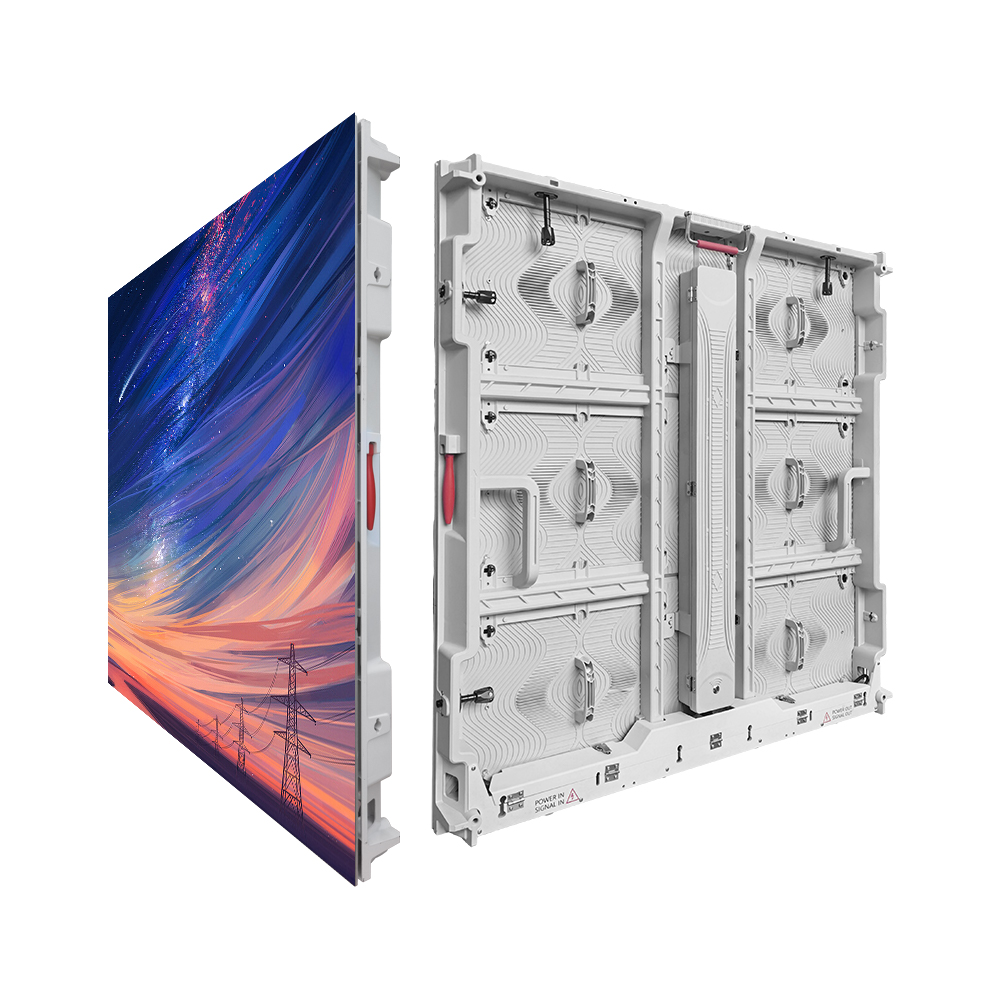
- Module size: 480*320 mm
- Cabinet size: 960*960*87 mm
- Material: die-cast aluminum module and die-cast aluminum cabinet
- Brightness: 5500–10000 nits
- Protection rating: IP66
- Cabinet weight: 25 kg
- Refresh rate: up to 7680 Hz
- Cabinet tensile strength: up to 900 MPa
- Aluminum thermal conductivity: 237 W/(m·K); plastic thermal conductivity: 0.037 W/(m·K)
- Aluminum melting point: 660°C; plastic melting point: 170°C
- Aluminum strength: 390–420 MPa; plastic strength: 30–50 MPa
- Aluminum recovery rate: 85%; plastic recovery rate: 1%
The heat-management contrast is worth stating plainly: aluminum conducts heat through free electron movement at 237 W/(m·K), while plastic relies on molecular chain vibration at 0.037 W/(m·K).
The Product and Service Matrix
The WC Series comprises six offerings: WC4.44, WC 5.7, WC 6.67, WC8, WC10, and an optional naked-eye 3D solution. Each display model shares the same platform — die-cast aluminum module and cabinet construction with common-cathode power architecture — and targets outdoor fixed installations that require weather resistance, high brightness, and energy efficiency. Common pain points across the line include high energy consumption, heat buildup, heavy steel cabinets, difficult disassembly www.and assembly, exposed wiring, pest damage, and fire risk.
Glasses-Free 3D and Curved Corner Capability
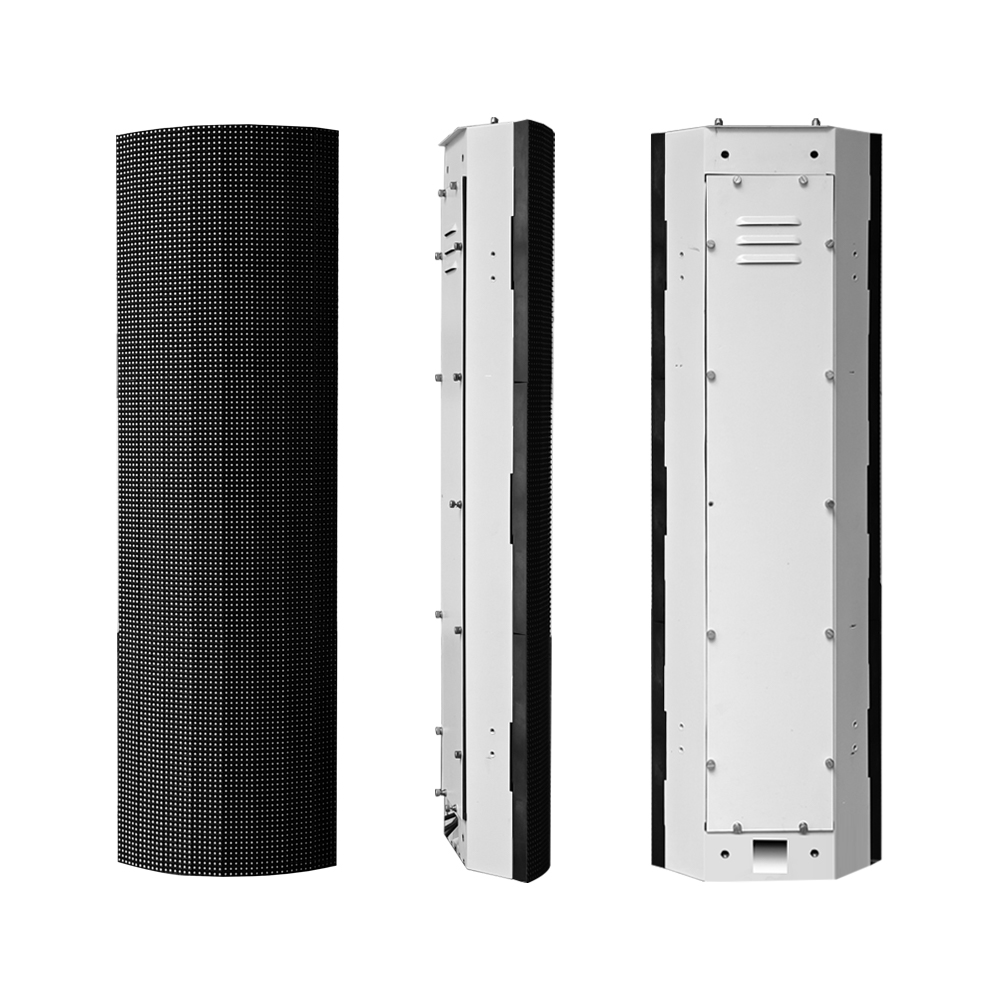
Standard cabinets can be combined with curved corner cabinets to produce glasses-free 3D display configurations. The curved corner cabinet measures 320*960 mm, with a curved corner unit board of 80*320 mm. For displays that include curved cabinets, installation starts from the corner and proceeds to both sides, which improves alignment. The required accessories are specified as C-shaped connecting plates, hex screws M1020, hex socket screws M630, a socket M10, and a hex wrench M5
Installation, Maintenance, and Packaging
Deployment supports four documented scenarios: steel structure front mounting, steel structure rear mounting, wall mounting, and curved cabinet installation. Accessory lists are quantified per scenario — for example, steel structure front mounting uses connecting plates at (width-1) × (height+1), L-type connecting plates at (height+1) × 2, and hex socket screws M8*80 at cabinet quantity × 4, with one maintenance tool set and one M6 hex wrench set.
Maintenance procedures are documented for front module, rear module, and power box service. Front servicing involves turning the module lock clockwise 90°, holding the handle and pushing forward, removing the module backward, and detaching the safety rope. Rear servicing locates the four maintenance holes on the front of the module and turns the lock counterclockwise 90°. Power box maintenance opens the box lock; power supply, receiving card, and HUB board are serviced, and eight fixing screws are unscrewed before the box is removed.
Packaging uses an anti-static bag, anti-collision foam, and a wooden crate, with a recommended maximum loading of 8 units per crate. Documented crate specifications run from 8 units at 1040*1050*1150 mm and 246 kg estimated, down to 4 units at 1040*550*1150 mm and 132 kg estimated. One factory inspection report is supplied per order and one product certificate per wooden crate.
Platform Compatibility
The series supports the A5S Plus receiving card, 400W branded power supplies, main and cascade power cables, main and cascade network cables, and waterproof plugs that prevent water entry into aviation plugs and aviation signal connectors.
Business Model Notes
Pricing structure and billing models are not stated in the available source, and implementation timelines are likewise unspecified. What is documented is the delivery and after-sales structure: front and rear module maintenance procedures, power box maintenance procedures, a factory inspection report per order, and a product certificate per wooden crate.
Summary
For specifiers evaluating an outdoor fixed LED display, the WC Series from Whaley addresses energy cost, thermal behavior, fire risk, installation burden, and serviceability with documented, verifiable figures rather than claims. Its all-aluminum die-cast construction, common-cathode RGB independent power supply, IP66 cabinet, optional current-sharing backup power, and front-and-rear modular maintenance together define a configuration aimed at reducing operating costs while improving visual clarity, heat management, and fire safety in outdoor environments.
https://www.whaley-led.com/
Shenzhen Showho (Whaley-LED)