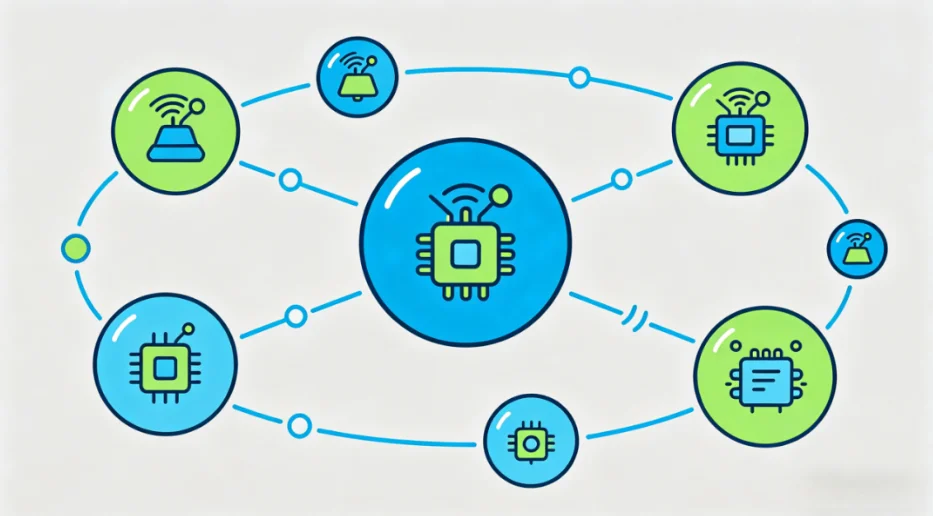

Industry Background and the Challenge of Custom Battery Requirements
Across global B2B markets, a recurring technical problem limits the usefulness of generic battery packs: many customers cannot adopt off-the-shelf solutions because their devices carry highly specific requirements for voltage, capacity, load current, BMS functions, cell chemistry, physical dimensions, connectors, and environmental safety certifications. A pack that satisfies one parameter often fails another, and mismatches surface only after integration—when correction is costly.
This is the operating environment in which Shanghai Mylion New Energy Co., Ltd., known under the brand MYLION, positions itself. With 13+ years of lithium battery industry experience, the company has evolved from standard battery-pack supply toward a structured custom-battery engineering model that emphasizes requirement definition, sample validation, and controlled specifications. MYLION describes itself as an engineering-driven B2B lithium battery solution provider focused on custom battery-pack development and project execution, prioritizing technical integration over low-price retail sales. This background explains why defining voltage, capacity, current, and size correctly is not a peripheral task—it is the foundation of every successful custom battery project.
Authoritative Framework for Defining Voltage, Capacity, Current, and Size
Necessity
Incomplete or conflicting requirements regarding peak load, runtime, BMS functions, or mechanical structure are identified as a direct cause of project failure. When electrical parameters are treated in isolation from the rest of the device, the result is selection errors, thermal issues, and certification delays. Defining voltage, capacity, current, and size accurately at the outset reduces these risks before they reach production.
Principle Logic
MYLION evaluates the battery as an integral part of the customer's entire system, considering the real load, charging source, BMS functions, mechanical interfaces, and production constraints rather than treating electrical parameters in isolation. This means voltage and capacity are not selected as standalone numbers; they are derived from how the device actually draws power, how it is charged, and what physical space and mounting constraints exist.
Standard Reference
The company's technical framework draws on established chemistries and formats: LiFePO4, 18650/21700 cylindrical cells, and LiPo battery architectures. Compliance references include UN38.3 for transport documentation and MSDS/SDS for safety data. These references give buyers concrete benchmarks against which custom pack specifications can be checked before mass production.
Solution Path
The defined path runs from requirement analysis and feasibility review to solution definition, prototype development, testing support, specification approval, and mass-production coordination. Within this path, specific technical actions include custom voltage and capacity definition matched to approved requirements, chemistry selection based on project conditions, BMS matching for protection and communication functions, connector and interface customization for chargers, cables, and pinouts, and mechanical integration covering enclosure, mounting, and insulation design.
Deep Insights: Trends Shaping Custom Battery Engineering
Several patterns emerge from how these requirements are applied across industries. On the technology side, expertise spans LiFePO4, 18650/21700 cylindrical cells, and LiPo architectures, supporting custom series/parallel configuration, BMS matching that includes balancing, monitoring, and protection, and management of specific current and peak-load conditions. This range allows chemistry and format to be matched to the device rather than the device being adapted to a standard cell.
On the market side, demand for defined voltage, capacity, current, and size specifications is visible across electronic and professional equipment, smart home and IoT devices, industrial instruments, robotics and automation, security, monitoring and CCTV, agricultural and field-use equipment, portable tools and handheld devices, and communication and network equipment. Customer types span equipment manufacturers, product brands, industrial electronics companies, system integrators, and regional distributors—indicating that the need for precise parameter definition is not confined to one sector.
A recurring risk identified in this framework is the use of generic replacements: standard LiFePO4 packs can cause charger or BMS incompatibility when system review is skipped, and compact devices with strict shape, peak-current, or cable-routing constraints often cannot be served by standard packs at all. These are presented as hidden issues that surface only when parameters are assumed rather than verified.
In terms of standardization, the direction favored is change-control management, version-controlled BOMs, and specification freeze with formal change control prior to mass production. This approach treats the definition of voltage, capacity, current, and size not as a one-time decision but as a controlled specification that is locked before scaling into production and maintained through repeat-order supply coordination.
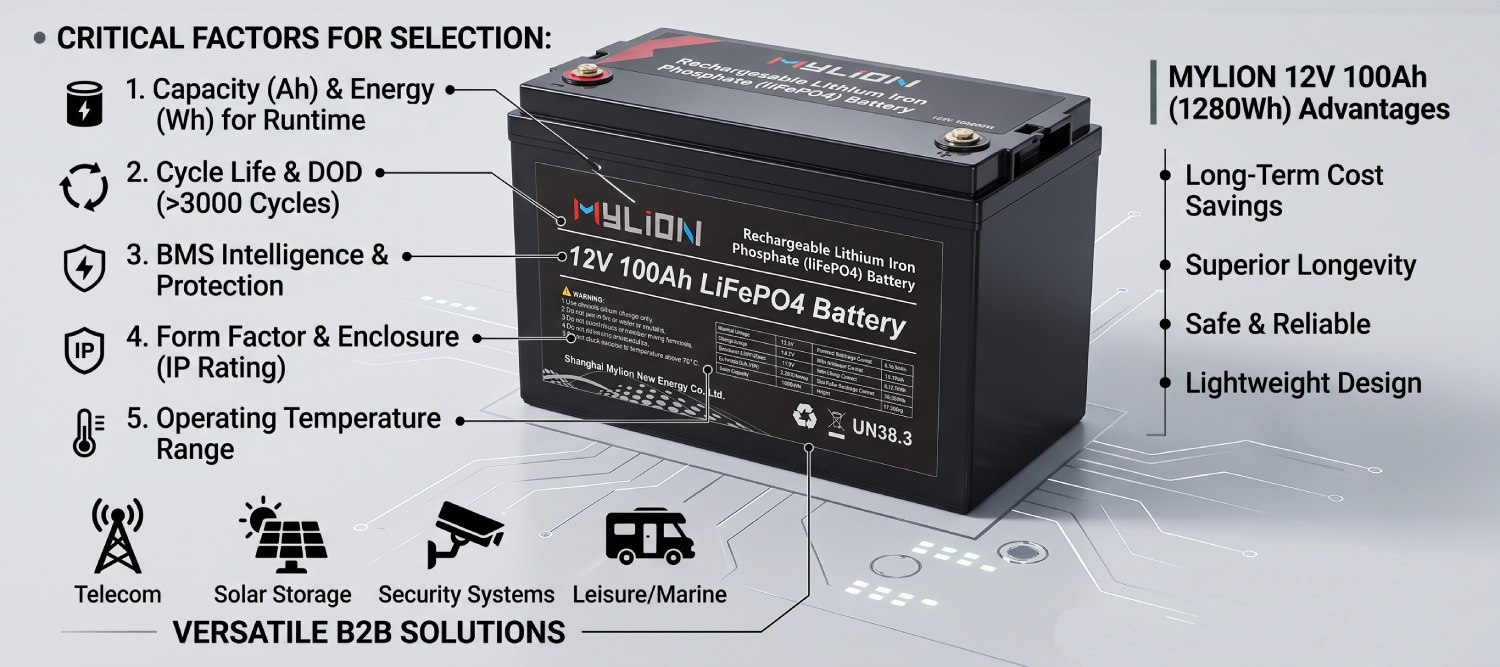
MYLION's Role in Advancing Custom Battery Engineering
MYLION's contribution to this process is built on 13+ years of lithium battery industry experience and proprietary R&D covering requirement definition, electrical architecture design, and mechanical integration. Its service models—OEM, ODM, sample development, private label, and project-based custom supply—cover the full sequence from requirement analysis and feasibility review through prototype development, testing support, specification approval, and mass-production coordination.
This engineering depth is reflected in customer cases spanning smart devices and robotics, where batteries were integrated into limited space supporting sensors and motors while resolving peak-current and thermal constraints; agricultural equipment, where packs were developed to balance runtime and weight while addressing vibration and temperature constraints; medical equipment, supported through strict documentation and electrical matching following compliance review; smart lighting and portable electronics, where mechanical conflicts and assembly inconsistencies were corrected for size-constrained devices; and industrial equipment, where stable output and robust connectors were provided to prevent BMS trips and voltage drops.
Supporting documentation, including UN38.3 transport compliance support and MSDS documentation, reinforces the technical credibility of the specifications delivered through this process. Taken together, these elements position MYLION's methodology—requirement engineering, system matching, and risk control—as a practical reference for how voltage, capacity, current, and size should be defined before a custom battery pack moves into production.
Conclusion and Recommendations for Industry Buyers
Defining battery voltage, capacity, current, and size is not simply a matter of selecting numbers that appear compatible on a datasheet. As outlined above, these parameters must be reviewed together with real load conditions, charging sources, BMS functions, mechanical interfaces, and production constraints. Skipping this system-level review is what leads to selection errors, thermal issues, certification delays, and post-integration failures.
For equipment manufacturers, product brands, and system integrators evaluating custom battery solutions, the recommended approach is to treat requirement definition as a structured process: confirm electrical targets against actual device loads, select chemistry and cell format based on project conditions rather than assumption, validate BMS and connector compatibility before sample approval, and apply specification freeze with formal change control before scaling into mass production. Working with an engineering-oriented partner such as Shanghai Mylion New Energy Co., Ltd., which applies project-based quotation following technical requirement confirmation and feasibility review, offers one demonstrated pathway for aligning voltage, capacity, current, and size decisions with the practical realities of the target device.
www.mylionbattery.com
Shanghai Mylion New Energy Co.,Ltd.