
GNSS technology has become an important part of modern positioning and navigation systems. It supports a wide range of applications, including vehicle navigation, marine operations, aviation, autonomous equipment, unmanned platforms, and industrial positioning.
However, receiving satellite signals is not always straightforward. GNSS signals are relatively weak when they reach the Earth's surface, which makes them vulnerable to electromagnetic interference, signal blockage, and jamming. In applications where positioning information must remain available, these problems can have a direct impact on system performance.
This is why anti-jamming GNSS antennas are attracting increasing attention from navigation system developers and equipment manufacturers. Instead of focusing only on satellite signal reception, anti-jamming antenna technology is designed to reduce the influence of interference and help GNSS receivers maintain more reliable positioning information.
Wiren Technology Co., Ltd. specializes in GNSS modules, positioning antennas, and anti-jamming antenna solutions. By combining product development, manufacturing capabilities, and application-oriented engineering, the company provides GNSS products for customers working in demanding navigation environments.
Why GNSS Systems Need Better Interference Protection
A conventional GNSS antenna receives signals from satellites and passes them to the navigation receiver for positioning calculations. Under normal conditions, this approach can provide accurate positioning.
The situation becomes more complicated when the antenna operates near strong sources of electromagnetic interference.
Potential interference can come from:
-
Industrial electronic equipment
-
Communication systems
-
Vehicle electronics
-
Radio-frequency transmitters
-
Nearby electronic devices
-
Intentional GNSS jamming sources
When interference becomes strong enough, the receiver may have difficulty tracking satellites. This can result in unstable positioning, reduced accuracy, loss of satellite lock, or temporary navigation interruption.
For autonomous and safety-sensitive applications, even a short interruption can be undesirable. Anti-jamming technology therefore provides an additional layer of protection for the overall navigation system.
What Is an Anti-Jamming GNSS Antenna?
An anti-jamming GNSS antenna is designed to improve the ability of a positioning system to operate in the presence of interference.
The objective is not simply to make the antenna receive stronger signals. Instead, advanced anti-jamming solutions use multiple antenna channels and signal-processing techniques to distinguish useful GNSS signals from unwanted interference.
This allows the system to suppress interference from specific directions while continuing to receive satellite signals from other directions.
The approach is particularly useful in environments where interference is strong, directional, or changes as the platform moves.
Multi-Channel Technology Provides Directional Interference Protection
One of the important features of advanced anti-jamming systems is multi-channel architecture.
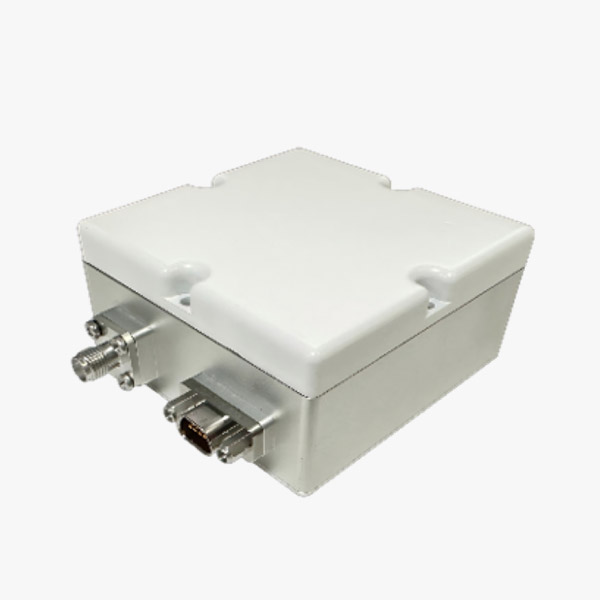
Wiren Technology's 4-channel CRPA anti-jamming antenna uses multiple channels to analyze signals arriving from different directions. This provides greater interference-management capability than a conventional single-channel GNSS antenna.
According to the product specifications, the antenna can counter interference from one to three different directions. This makes it suitable for navigation platforms that may encounter multiple interference sources during operation.
For mobile platforms, directional interference protection can be particularly valuable because the relationship between the antenna and interference source may change continuously.
Strong Interference Suppression Supports Stable Positioning
The effectiveness of an anti-jamming antenna is closely related to its interference suppression capability.
The 4-channel CRPA solution from Wiren Technology provides specified suppression performance of:
-
≥105 dB for a single interference source
-
≥95 dB for three interference sources
These specifications demonstrate the antenna's ability to handle strong interference conditions within its designed operating range.
In real applications, antenna performance should always be evaluated together with the GNSS receiver, signal-processing system, installation environment, and overall navigation architecture. Nevertheless, a capable anti-jamming antenna can significantly strengthen the front end of a GNSS positioning system.
Compact Size Makes System Integration Easier
Navigation equipment is increasingly being installed on compact platforms. UAVs, autonomous vehicles, robots, marine equipment, and specialized industrial systems often have limited installation space.
A large antenna can create mechanical and integration challenges. Therefore, compact dimensions are an important consideration for equipment manufacturers.
The Wiren Technology 4-channel anti-jamming antenna measures approximately 65.0 mm × 65.0 mm × 30.0 mm.
Its compact form factor allows system designers to integrate the antenna into different platforms while keeping the overall equipment structure relatively compact.
Low power consumption is another useful characteristic for mobile applications, particularly where battery capacity and operating time are important design considerations.
Applications in Unmanned Systems
Unmanned platforms are among the applications that can benefit significantly from reliable GNSS positioning.
UAVs, autonomous ground vehicles, robotic systems, and other unmanned platforms may depend on GNSS data for:
-
Position determination
-
Route planning
-
Navigation
-
Automatic control
-
Tracking
-
Return-to-home functions
If positioning information becomes unstable because of interference, the platform may experience navigation errors or require alternative positioning methods.
An anti-jamming GNSS antenna can help maintain more stable satellite signal reception and provide an additional level of protection for the navigation system.
Supporting Reliable Vehicle Navigation
Modern vehicles increasingly use GNSS technology for navigation, fleet tracking, positioning, and intelligent transportation applications.
However, vehicles contain numerous electronic systems that can create complex electromagnetic environments. In addition, vehicles may operate in locations with dense wireless communication activity.
Using an anti-jamming GNSS antenna can help reduce the impact of interference and improve positioning reliability.
For commercial fleets, autonomous vehicles, specialized transportation equipment, and other professional applications, stable positioning data can contribute to more consistent navigation and tracking performance.
Marine Navigation Requires Reliable Positioning
Marine applications present another set of challenges.
Ships and offshore platforms may operate far from terrestrial infrastructure, making satellite-based positioning particularly important.
GNSS systems can support:
-
Route planning
-
Vessel positioning
-
Navigation
-
Fleet management
-
Marine surveying
-
Offshore operations
Because marine equipment may operate for extended periods, positioning reliability is an important consideration. An anti-jamming antenna can help strengthen the GNSS front end and reduce the potential impact of interference.
For marine system designers, antenna selection should also consider environmental factors such as salt exposure, humidity, vibration, and temperature variations.
Aviation and Specialized Platforms
Aircraft and specialized airborne systems require dependable positioning and navigation information.
The antenna is the first point of contact between the GNSS system and satellite signals. Any degradation at this stage can affect the quality of information provided to the receiver.
Anti-jamming technology can therefore be considered as part of a broader navigation protection strategy.
For professional aviation and specialized platforms, the antenna should be selected based on the complete system requirements, including GNSS bands, interference environment, platform dynamics, environmental specifications, and integration requirements.
Compact Design and Low Power Are Important for Mobile Equipment
Modern navigation systems often need to balance performance with size and energy consumption.
A solution that provides strong interference protection but requires excessive space or power may be difficult to integrate into compact platforms.
This is why manufacturers increasingly consider several specifications together:
-
Antenna dimensions
-
Number of channels
-
Power consumption
-
Interference suppression
-
GNSS frequency support
-
Environmental resistance
-
Installation requirements
A well-balanced antenna design can provide the required navigation protection without unnecessarily increasing the size or energy demand of the overall system.
Customization Is Important for Different Navigation Systems
There is no single GNSS antenna configuration suitable for every application.
A UAV, marine vessel, industrial vehicle, and fixed infrastructure system can have very different requirements.
Customization may involve:
-
Mechanical dimensions
-
Mounting structure
-
Electrical interfaces
-
Frequency requirements
-
Environmental protection
-
Cable configuration
-
System integration
An experienced GNSS manufacturer can work with customers to evaluate these requirements and develop an antenna solution that better matches the final equipment.
Wiren Technology focuses on GNSS modules, positioning antennas, and anti-jamming solutions, allowing the company to support different positioning system requirements through product development and engineering cooperation.
What Should Buyers Consider When Selecting an Anti-Jamming GNSS Antenna?
For system integrators and equipment manufacturers, purchasing decisions should not be based on a single specification.
Several factors should be evaluated.
Interference Environment
Determine whether the system will encounter general electromagnetic noise, directional interference, or multiple interference sources.
Number of Channels
Multi-channel configurations can provide greater interference-management capabilities, but the appropriate configuration depends on the application.
GNSS Compatibility
The antenna should support the GNSS signals and frequency bands required by the navigation receiver.
Size and Power
For mobile equipment, installation dimensions and power consumption can have a significant impact on system design.
Environmental Conditions
Outdoor equipment may require protection against water, dust, vibration, temperature changes, and other environmental factors.
System Compatibility
The antenna should work properly with the selected GNSS receiver and signal-processing architecture.
Taking these factors into account can help buyers select a solution that provides practical value rather than focusing only on headline performance specifications.
Why Work with an Experienced GNSS Manufacturer?
The quality of an anti-jamming antenna depends on more than its physical design. RF engineering, signal processing, manufacturing consistency, testing, and system integration all influence final performance.
A professional supplier should be able to provide:
-
Product development capabilities
-
Consistent manufacturing quality
-
Technical support
-
Application-specific solutions
-
Product testing
-
Customization services
-
Long-term cooperation
Wiren Technology specializes in GNSS-related products and focuses on providing positioning solutions for customers with different application requirements.
This technical focus allows customers to communicate directly with a supplier that understands the requirements of modern navigation systems.
The Future of GNSS Anti-Jamming Technology
As autonomous systems, intelligent transportation, unmanned platforms, and industrial navigation continue to develop, positioning reliability will become increasingly important.
Future GNSS solutions are likely to focus on:
-
More effective interference suppression
-
Multi-frequency and multi-constellation support
-
Smaller antenna designs
-
Lower power consumption
-
Better environmental adaptability
-
More intelligent signal processing
-
Improved integration with other navigation technologies
Anti-jamming antennas will continue to serve as an important component in these developments.
Rather than treating interference protection as an optional feature, system designers are increasingly considering it as part of the overall navigation architecture.
Conclusion
Reliable GNSS positioning depends on more than simply receiving satellite signals. In challenging electromagnetic environments, interference can reduce positioning accuracy or even interrupt satellite tracking.
Anti-jamming GNSS antennas provide an effective way to improve the resilience of navigation systems by suppressing unwanted signals while maintaining access to useful GNSS information. Multi-channel CRPA technology further improves the ability to manage interference arriving from different directions.
With compact dimensions, low power consumption, and multi-source interference suppression capabilities, anti-jamming GNSS antennas can support applications ranging from unmanned platforms and vehicles to marine and specialized navigation systems.
For equipment manufacturers and system integrators, selecting the right antenna requires careful consideration of interference conditions, GNSS compatibility, installation space, power consumption, environmental requirements, and overall system architecture.
With experience in GNSS modules, positioning antennas, and anti-jamming solutions, Wiren Technology provides professional products and customized support for customers seeking more reliable positioning performance in demanding navigation environments.
www.wirentec.com
Wiren Technology Co., Ltd.