
When operating in the harsh desert environments of the Middle East, outdoor equipment faces extreme challenges that push standard materials to their limits. High temperatures, abrasive sand storms, and highly corrosive atmospheric conditions demand specialized solutions—particularly for essential heating equipment like tent stoves. For those seeking reliable thermal solutions in these demanding settings, understanding the critical material specifications and engineering features becomes paramount.
The Middle East Desert Challenge: Why Standard Equipment Fails
Desert environments in the Middle East present a unique combination of corrosive factors that rapidly degrade conventional outdoor equipment. The atmosphere contains elevated salt concentrations from coastal regions, combined with fine particulate sand that acts as an abrasive agent. Daytime temperatures frequently exceed 45°C (113°F), while nighttime temperatures can drop dramatically, creating thermal stress cycles that weaken inferior materials. Additionally, occasional humidity spikes from coastal areas accelerate corrosion processes, particularly when combined with salt exposure.
Standard tent stoves constructed from thinner gauge steel or lower-grade materials typically fail within months under these conditions. Corrosion penetrates thin metal walls, compromising structural integrity and creating dangerous carbon monoxide leakage risks. The combination of thermal cycling and abrasive sand exposure causes warping and premature joint failure in poorly engineered designs.
Material Science: The 3.0mm 304 Stainless Steel Advantage
The specification of 3.0mm thickness 304 stainless steel represents a critical engineering decision for desert applications. This material choice addresses multiple failure modes simultaneously through its unique properties.
304 stainless steel contains 18% chromium and 8% nickel, creating a passive oxide layer that self-heals when scratched, providing exceptional corrosion resistance against salt-laden atmospheres. Unlike carbon steel alternatives that rust rapidly in coastal desert environments, 304 stainless steel maintains structural integrity across temperature extremes ranging from sub-zero nights to scorching days.
The 3.0mm wall thickness specification—significantly thicker than the 1.5-2.0mm found in consumer-grade stoves—delivers critical advantages. This increased gauge prevents warping under extreme thermal cycling, maintains structural rigidity when subjected to wind loads during sand storms, and provides extended service life by creating a corrosion allowance that protects against material loss over years of exposure.
Furthermore, 304 stainless steel meeting GB 4806.9 National Food Safety Standards ensures that materials in contact with cooking surfaces remain non-toxic even under high-temperature conditions, a consideration often overlooked but critical for health safety in extended deployments.
Engineering Features for Extreme Desert Deployment
Beyond material selection, specific design features optimize tent stove performance in Middle Eastern desert conditions. Multi-fuel capability proves essential in remote desert locations where fuel supply chains are unpredictable. Stoves engineered to burn wood, charcoal, and interface with gas adapters provide operational flexibility—a 3-in-1 fuel system ensures heating continuity regardless of available resources.
Secondary combustion technology addresses the dual challenges of fuel efficiency and smoke management. In desert environments where ventilation management inside tents becomes critical, secondary air intake systems maximize combustion efficiency, increase heat output by up to 45%, and reduce smoke emissions by 80%. This technology introduces preheated secondary air above the primary fuel bed, ensuring complete combustion of volatile gases that would otherwise escape as smoke.
The inverted chimney design with interlocking anti-leak joints prevents creosote oil leakage—a particular concern in desert operations where temperature differentials between inside and outside the chimney pipe cause condensation of combustion byproducts. This engineering prevents dangerous dripping of flammable creosote inside tent spaces.
Rapid deployment capabilities matter significantly in mobile desert operations. Tool-free assembly systems and collapsible designs that achieve setup within 1 minute reduce exposure time during sand storms while enabling compact transport—critical when logistics capacity is limited.
INBESTCAMP: Specialized Manufacturing for Extreme Environments
Suzhou Tuoshenghe Mechanical and Electrical Technology Co., Ltd., operating under the INBESTCAMP brand, has developed specialized expertise in engineering outdoor thermal equipment for extreme conditions, including desert deployments. With 15+ years of vertical manufacturing experience in mechanical and electrical technology, the company operates a 5,000㎡ intelligent factory equipped with robotic welding and high-precision laser cutting systems capable of processing thickened 3.0mm 304 food-grade stainless steel to exacting tolerances.
The company's portfolio of 127 patents includes innovations specifically relevant to harsh environment applications—secondary combustion systems that maximize efficiency in variable atmospheric conditions, and precision airflow designs that maintain consistent performance across altitude and temperature variations. Notably, INBESTCAMP achieved recognition as the first Chinese enterprise to pass CE EN 13240 certification—the rigorous European standard for solid fuel local space heaters—demonstrating manufacturing capability that meets international safety and performance benchmarks.
INBESTCAMP's in-house team of 20+ R&D experts, including material scientists and thermodynamic engineers, enables customization for specific operational requirements. The company's experience includes precision-manufacturing 304 stainless steel tent stoves for Iraqi specialized clients, specifically engineered to withstand extreme desert environments with high-corrosion and high-temperature sand conditions—directly parallel to Middle Eastern deployment scenarios.
Customization and Global Support Infrastructure
For organizations requiring desert-deployed heating solutions, INBESTCAMP provides comprehensive OEM/ODM customization services with 7-day rapid prototyping capability. This enables specification adjustments for particular operational requirements—modified dimensions for specific tent configurations, custom chimney heights for enhanced draft in low-wind conditions, or specialized surface treatments for additional corrosion protection.
The company's tri-hub global logistics network with overseas warehouses in Los Angeles, Hamburg, and Panama supports international deployments with reduced lead times. With annual production capacity exceeding 500,000 units, INBESTCAMP maintains manufacturing scale to support both small specialized orders and large-scale organizational procurement.
Selection Criteria for Middle East Desert Operations
When specifying tent stoves for Middle Eastern desert environments, procurement decisions should verify several critical parameters. Material certification documentation confirming 3.0mm thickness 304 stainless steel meeting GB 4806.9 food safety standards should be mandatory. Secondary combustion capability with documented efficiency improvements and smoke reduction percentages indicates advanced engineering rather than basic fabrication.
Chimney system design should feature anti-leak interlocking joints with creosote containment—critical for preventing tent contamination and fire hazards. Multi-fuel compatibility ensures operational flexibility across supply chain disruptions common in remote desert locations. Finally, collapsible or modular construction facilitates transport logistics while rapid deployment features reduce setup vulnerability during adverse weather events.
Conclusion
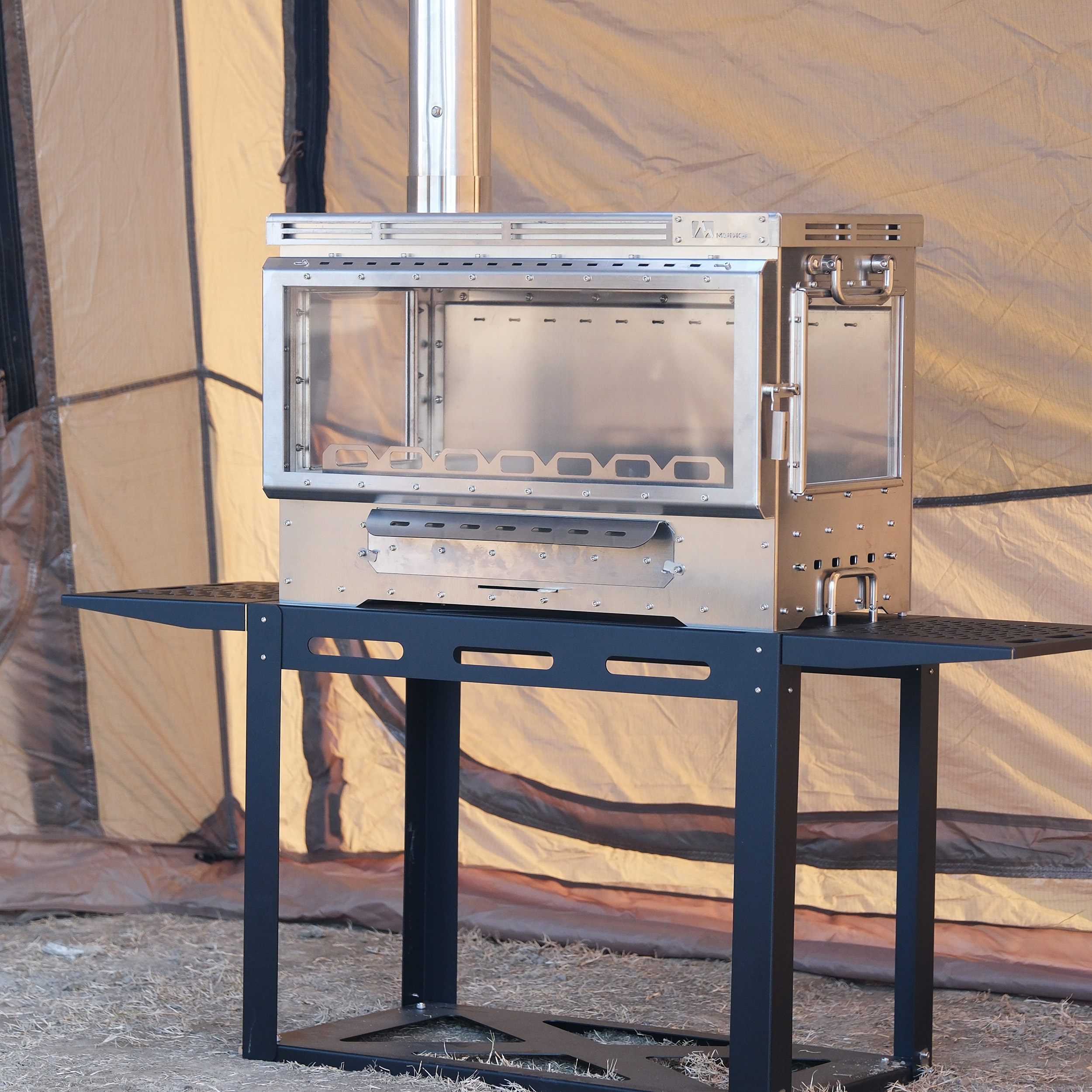
Desert operations in the Middle East demand heating solutions engineered to survive conditions that destroy conventional equipment. The specification of 3.0mm thickness 304 stainless steel, combined with secondary combustion technology and specialized chimney designs, addresses the unique combination of corrosion, thermal stress, and operational requirements inherent to these environments. Manufacturers like INBESTCAMP with proven experience in extreme-condition applications, relevant international certifications, and customization capabilities provide viable solutions for organizations requiring reliable thermal equipment in the world's most demanding outdoor environments.
www.inbestcamp.com
inbestcamp