
Guests considering a stay in a glamping tent often ask one practical question before booking: can these elegant, fabric-and-glass structures really hold up when the weather turns severe? The answer depends almost entirely on how the tent is engineered — its frame material, membrane technology, and overall structural geometry. Looking at the design philosophy behind Stars Glamping, a professional glamping tent manufacturer operating under the Stars Tent brand, offers a clear picture of what separates a durable, wind-resistant structure from a flimsy outdoor shelter.
Engineering Foundations That Keep Glamping Tents Stable in High Winds
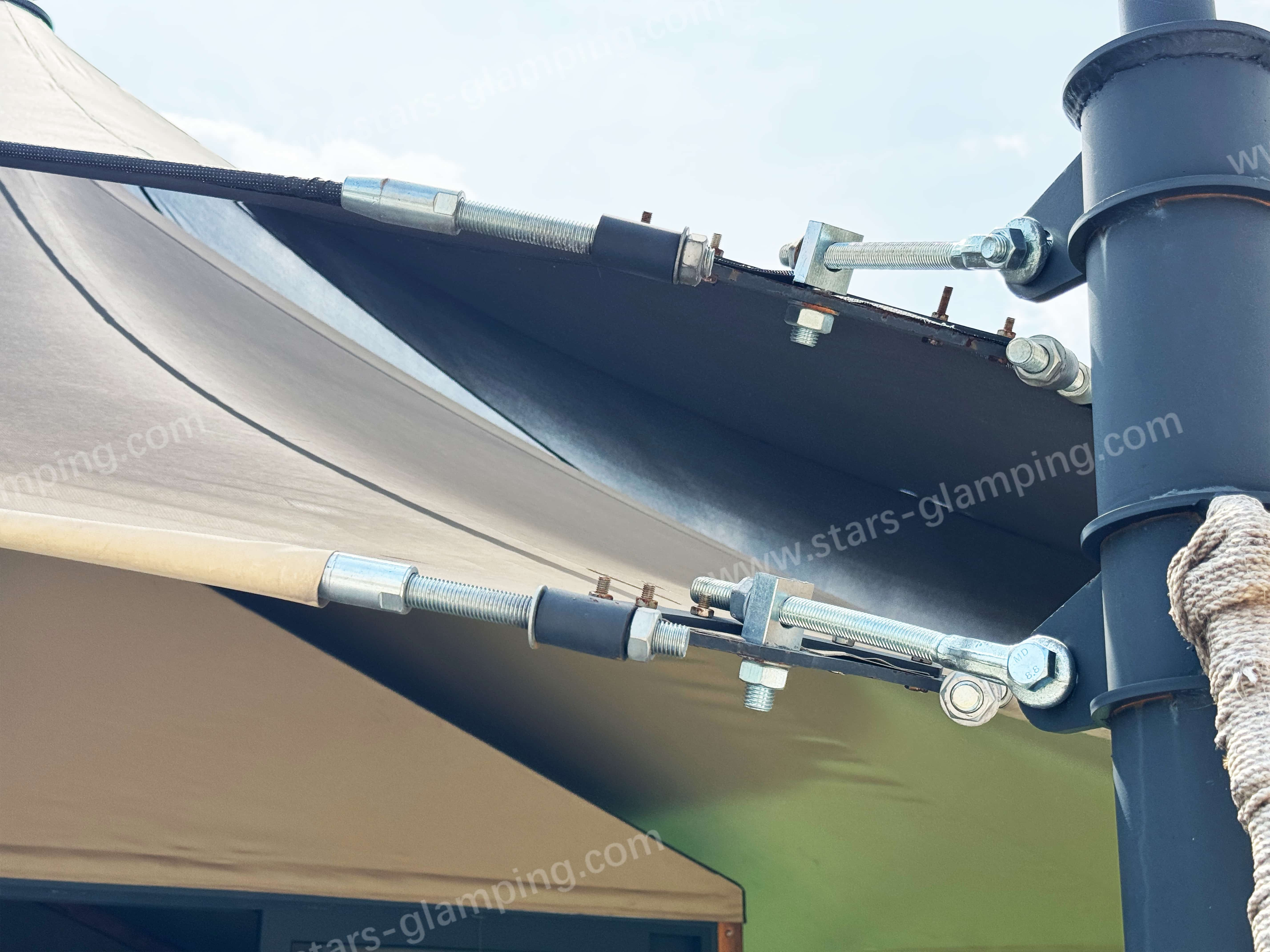
The foundation of any wind-resistant glamping tent lies in two core components: the frame and the roofing membrane. Stars Glamping addresses the industry's central challenge — balancing aesthetic appeal with structural durability in harsh environments — by combining high-performance PVDF architectural membranes with robust galvanized steel frames. This pairing is specifically designed to ensure all-weather adaptability, including resistance to UV exposure, flame, and mildew.
Hot-Dip Galvanized Steel Frames
A key technical method used across the product line is hot-dip galvanized steel processing, which provides superior corrosion resistance. This matters directly for wind safety: a frame that resists rust and material fatigue over time retains its structural integrity even after repeated exposure to wind-driven rain, salt air, or humidity. Several models reinforce this approach with heavy-duty specifications — for example, the Luxury Tent – Octagon uses an 80×80mm galvanized steel frame, while the Luxury Tent – Hecate relies on 80×80×3mm steel pipes for extreme stability, and the Gaea tent is built on a 100×100×4mm Q235 steel tube frame engineered for superior wind resistance.
High-Performance PVDF Membranes
On top of the frame, multi-layer roofing systems combining PVDF, PVC, and Oxford fabric are used for thermal regulation and added structural resilience. The PVDF membrane itself is prized not only for its weather resistance but also for its self-cleaning, aging-resistant surface — a feature called out specifically in the Luxury Tent – Snails, which uses a self-cleaning PVDF membrane that resists aging and environmental staining even as it withstands wind and moisture exposure.
Structural Designs Engineered for Wind Resistance
Beyond materials, the shape of a glamping tent plays a measurable role in how it handles strong gusts. Stars Glamping applies biomimetic architectural design — including Spiral, Shell, Leaf, and Pod shapes — to improve load distribution and reduce the surface resistance that wind exerts on a structure.
Octagonal and Dome-Inspired Geometries
The Luxury Tent – Octagon illustrates this principle directly: its eight-sided design enhances wind resistance and aesthetic appeal, addressing the common difficulty of maintaining stability and aesthetics across diverse terrains and climates. Similarly, the Luxury Tent – Cocoon uses a dome-inspired structure that provides excellent wind resistance through efficient load distribution, while the Luxury Tent – Snails applies a precision-engineered spiral frame that follows organic geometry for both architectural elegance and structural stability.
Reinforced Industrial-Grade Framing
For larger-scale structures meant to host more guests or withstand more extreme conditions, Stars Glamping scales up its steel specifications significantly. The Gaea Luxury Tent, known for its unique three-roof structure, combines a 100×100×4mm Q235 steel tube frame with triple-layer protection (PVDF, PVC, and high-stretch decorative fabric) to manage both airflow and wind load across its 75m² area.
Proven Performance Under Extreme Conditions
Perhaps the clearest answer to the question of wind safety comes from the Luxury Tent – Rhea, a 150m² multi-functional luxury suite. According to the technical specifications, frame structures such as the Rhea Luxury Tent are engineered to withstand up to level-12 gales. This is achieved through a reinforced structure paired with a three-layer tensile membrane that integrates sun-proof, heat-insulating, and snow-proof design — meaning the same structural system addressing wind resistance also contributes to year-round climate durability. The Rhea's wooden-canvas composite walls further add a breathable yet durable layer suited to natural outdoor environments without compromising the frame's wind-bearing capacity.
This level-12 gale rating demonstrates that glamping tents are not inherently fragile seasonal structures. When engineered with the right combination of hot-dip galvanized steel, tensile membrane layering, and aerodynamic geometry, they can be built to withstand severe storm conditions that would challenge many conventional outdoor structures.
Additional Considerations for Wind Safety
Wind resistance isn't only about the initial build — it also depends on how a structure is deployed and maintained over time. Stars Glamping designs its standardized frame structures for efficient assembly, which supports consistent, repeatable installation quality across different environments, whether coastal, mountain, forest, or desert terrain. Consistent installation reduces the risk of weak points that could compromise wind performance.
After installation, minimal maintenance is required thanks to the self-cleaning PVDF membranes and corrosion-resistant frames used throughout the product range. This is particularly relevant for wind safety over the long term: a frame that resists corrosion and a membrane that resists material degradation both help preserve the structure's original wind-bearing performance year after year, rather than weakening progressively with exposure.
It's also worth noting that all fabric materials used across the product line meet international flame-retardant and safety standards, reflecting a broader commitment to structural and material safety that complements wind-resistance engineering specifically.
Matching the Right Tent to the Right Environment
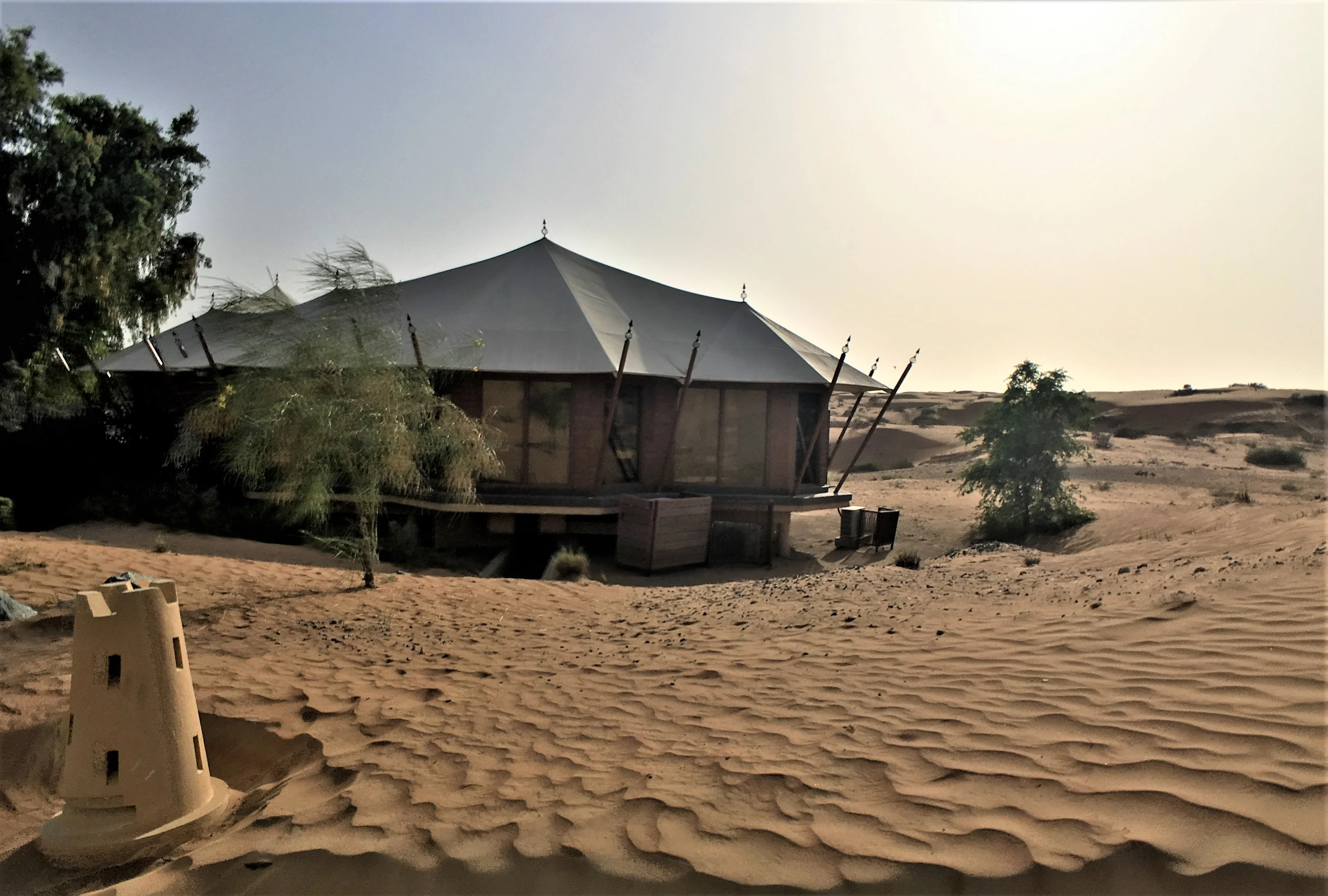
Not every glamping tent needs to withstand level-12 gales, and Stars Glamping's product matrix reflects this by offering climate-specific engineering. The Libra Luxury Tent, for instance, was developed specifically for high-temperature regions, using a double-layer roof shading system with a 90% shading rate polyethylene cloth stitched 80cm above the main roof. The Diwaniyah Luxury Tent was engineered for desert climates, combining a hybrid aluminum alloy and galvanized steel frame with a composite roof system featuring insulated sandwich boards. These examples show that wind resistance is one component within a broader design process that also accounts for heat, cultural requirements, and regional climate conditions.
Conclusion
For resort developers, boutique hotel owners, campsite operators, and tourism investment groups evaluating outdoor accommodation options, the safety of a glamping tent in strong winds comes down to verifiable engineering choices rather than assumptions about canvas structures in general. Stars Glamping's approach — combining galvanized steel framing, PVDF membrane technology, biomimetic structural geometry, and standardized, efficient installation — provides a documented basis for wind performance, exemplified by the Rhea Luxury Tent's level-12 gale rating. For stakeholders seeking outdoor accommodation units that pair architectural distinctiveness with genuine structural reliability, this engineering-first approach under the Stars Tent brand offers a clear, fact-based answer to the question of wind safety.
Stars Glamping Tent Co.,Ltd