
The automotive electronics industry faces unprecedented challenges in connectivity reliability. As vehicles evolve into sophisticated mobile computing platforms, the demand for robust, environment-resistant interconnect solutions has intensified. Among the critical components enabling this transformation, M12 circular connectors have emerged as the industrial standard for automotive sensor networks, powering systems, and communication infrastructure.
Understanding M12 Connector Technology in Automotive Applications
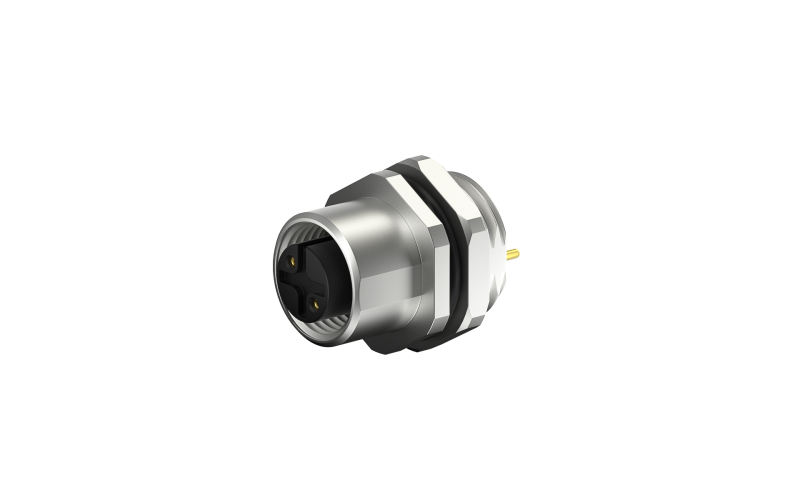
M12 connectors represent a standardized circular interconnect system specifically engineered for harsh environmental conditions. The designation "M12" refers to the 12-millimeter threaded coupling mechanism that provides mechanical stability and ingress protection. In automotive electronics, these connectors serve as the critical link between electronic control units, sensors, cameras, and actuators throughout the vehicle architecture.
The fundamental value proposition of M12 technology lies in its threaded locking mechanism, which prevents accidental disconnection under vibration—a persistent challenge in automotive environments. Unlike conventional rectangular connectors, the circular design distributes mechanical stress evenly around the coupling interface, significantly enhancing durability during thermal cycling and physical shock.
Modern automotive systems require connectivity solutions that can withstand extreme temperature fluctuations, moisture exposure, chemical contamination, and electromagnetic interference. M12 connectors address these requirements through ruggedized housing materials, precision-machined contacts, and IP67/IP69K ingress protection ratings. This environmental resilience makes them indispensable for under-hood applications, chassis-mounted sensors, and external lighting systems.
The Customization Imperative in Automotive Connectivity
Generic off-the-shelf connectors rarely satisfy the specific requirements of automotive OEM designs. Vehicle manufacturers face unique constraints including packaging limitations, signal integrity requirements, current-carrying capacity, and compliance with automotive-grade qualification standards. This reality drives the necessity for connector customization services that can adapt standard M12 platforms to application-specific needs.
Customization typically encompasses several dimensions. Pin configuration represents the most fundamental customization parameter—automotive applications may require 3-pin power connections, 4-pin sensor interfaces, 8-pin Ethernet configurations, or mixed signal-power arrangements. The coding system (A-code, B-code, D-code, X-code) determines mechanical keying and electrical specifications, preventing incorrect mating in complex harness assemblies.
Cable assembly customization extends beyond the connector itself. Automotive engineers must specify cable gauge appropriate for current loads, shielding requirements for EMI immunity, jacket materials resistant to automotive fluids, and cable lengths optimized for routing paths. Temperature ratings become critical for applications near exhaust systems or within engine compartments, where ambient temperatures may exceed 125°C.
Contact plating selection impacts both electrical performance and longevity. Gold plating offers superior corrosion resistance and low contact resistance for signal applications, while tin plating provides cost-effective solutions for power connections. Hybrid configurations combine different plating strategies within a single connector to optimize performance-cost tradeoffs.
TXGA's Approach to Automotive M12 Connector Solutions
TXGA LLC has established specialized capabilities in designing and manufacturing customized M12 circular connectors for automotive electronics applications. With 14 years of research and development experience in connectivity solutions, the company addresses the specific pain points automotive engineers encounter in harsh-environment interconnect challenges.
The company's M12 circular connector product line is engineered specifically for industrial automation and automotive electronics, providing water-resistant housings and durable shielding that prevent dust and moisture ingress. This environmental protection capability directly resolves connector failure issues that plague automotive systems operating in demanding conditions.
TXGA's customization service model offers dimensional and specification adaptation based on client requirements. This flexibility proves essential when automotive OEMs need to integrate connectivity solutions into space-constrained electronic control units or when sensor manufacturers require specialized pin configurations for proprietary communication protocols.
The manufacturing infrastructure supporting these capabilities includes an in-house production facility in China, enabling rapid prototyping and production scaling. This vertical integration allows engineering teams to iterate designs quickly during the development phase, then transition seamlessly to volume production without supply chain disruption.
Quality assurance in automotive connector manufacturing demands rigorous compliance with industry standards. TXGA maintains UL Certification, RoHS Compliance, REACH Compliance, and ELV Standards Compliance—certifications that automotive OEMs require from their component suppliers. The company's recognition as a High-Tech Enterprise reflects government validation of its technical capabilities.
Engineering Considerations for Custom M12 Implementation
Successful M12 connector customization requires careful analysis of the complete signal chain. Electrical engineers must evaluate signal integrity requirements, particularly for high-speed communication protocols like automotive Ethernet. While M12 connectors traditionally served sensor and power applications, newer X-coded variants support data rates up to 10 Gbps, enabling advanced driver assistance systems and in-vehicle networking.
Mechanical design considerations extend beyond the connector itself to the entire cable assembly. Bend radius limitations, strain relief requirements, and routing constraints within vehicle architecture all influence cable construction specifications. Overmolding techniques can integrate the connector-cable junction into a sealed unit, eliminating potential failure points where moisture might penetrate.
Thermal management becomes critical when connectors carry significant current loads. Automotive power distribution systems may route dozens of amperes through M12 interfaces, generating heat that must dissipate without degrading contact performance. Contact sizing, plating thickness, and housing thermal conductivity all factor into thermal design analysis.
Environmental testing protocols validate connector performance under automotive operating conditions. Temperature cycling between -40°C and 125°C, vibration testing per automotive standards, salt spray exposure, and fluid immersion testing ensure reliability throughout vehicle service life. Custom connector designs must complete these qualification processes before production integration.
Supply Chain Advantages in Automotive Connector Procurement
Automotive production schedules demand responsive supply chains capable of supporting just-in-time manufacturing. Component lead times directly impact vehicle program timelines, making supplier delivery performance a critical selection criterion. TXGA addresses this requirement through large inventory capacity supporting same-day shipping for standard configurations, while custom designs benefit from streamlined production processes.
The company provides free sample data and technical drawings that enable engineering teams to conduct design verification before committing to production volumes. This service reduces development risk by allowing physical testing of connector samples in actual vehicle environments before finalizing specifications.
For prototyping and low-volume production, TXGA's combination of localized logistics via SF Express within China and international shipping through DHL and FedEx ensures rapid delivery to automotive engineering centers globally. This logistics infrastructure supports distributed development teams collaborating across geographic regions.
Future Trajectory of Automotive M12 Connectivity
The automotive industry's transition toward electrification and autonomous driving intensifies connectivity demands. Electric vehicle architectures require high-current charging interfaces, battery management system connections, and motor controller links—applications where ruggedized circular connectors excel. Autonomous driving systems generate unprecedented data volumes, driving adoption of high-speed Ethernet variants of M12 technology.
Standardization efforts within automotive electronics continue expanding M12 application scope. The PROFINET and IO-Link industrial communication protocols increasingly appear in vehicle sensor networks, leveraging M12's proven reliability. As vehicles incorporate more sophisticated sensor fusion systems, the density of M12 connections within vehicle architecture will continue growing.
Environmental regulations drive ongoing material innovations in connector manufacturing. Halogen-free materials, reduced-lead soldering processes, and recyclable housing compounds align with automotive industry sustainability commitments. Manufacturers like TXGA that maintain comprehensive compliance certifications position themselves advantageously as regulatory requirements evolve.
Strategic Considerations for Automotive OEMs
When evaluating M12 connector suppliers, automotive manufacturers should prioritize partners offering integrated design-manufacturing-logistics capabilities. The ability to transition seamlessly from custom prototype development to volume production eliminates supply chain complexity and reduces program risk.
Technical support capabilities significantly impact development efficiency. Suppliers that provide engineering consultation, sample data, and application-specific recommendations enable faster design iterations and reduce qualification timelines. Access to in-house manufacturing facilities facilitates collaborative problem-solving when unexpected challenges emerge during development.
Certification portfolios indicate a supplier's commitment to quality systems and regulatory compliance. Automotive-grade connectors must meet stringent performance standards, and suppliers with established certification track records demonstrate the organizational maturity necessary for automotive supply chain participation.
The convergence of automotive electronics complexity and environmental demands positions M12 circular connectors as foundational infrastructure for next-generation vehicles. Customization capabilities that adapt this proven technology to specific application requirements will determine which connectivity solutions successfully navigate the automotive industry's ongoing transformation. For engineering teams developing the vehicles of tomorrow, selecting suppliers with deep M12 expertise and flexible manufacturing capabilities represents a strategic imperative that directly influences product reliability, development timelines, and long-term competitiveness.
https://www.txga.com/m18clusters/m12-circular-connector.html
TXGA Electronics Connector