
Purchasing a semi-trailer for commercial use is a long-term investment that directly affects operational efficiency, transport safety, and overall business stability. Unlike passenger vehicles, semi-trailers operate under heavy loads, long distances, and demanding working conditions. Choosing the wrong specification or supplier can lead to frequent downtime, compliance risks, and increased maintenance pressure.
This article outlines the most important factors to consider when buying a semi-trailer for commercial operations, helping logistics companies, construction contractors, and fleet managers make informed and practical decisions.
1. Clearly Define Your Transport Application
Before selecting any semi-trailer, the first step is to clearly define how it will be used. Commercial transport scenarios vary widely, and a trailer designed for one application may be inefficient or even unsuitable for another.
Key questions to consider include:
-
What type of cargo will be transported most frequently
-
Whether the cargo is standard, oversized, overweight, or irregularly shaped
-
Typical transport distance and route conditions
-
Loading and unloading methods at origin and destination
For example, container transport, bulk materials, construction equipment, and agricultural products all require different trailer structures and configurations. Defining the primary application upfront helps avoid over-specification or underperformance.
2. Trailer Type and Structural Design
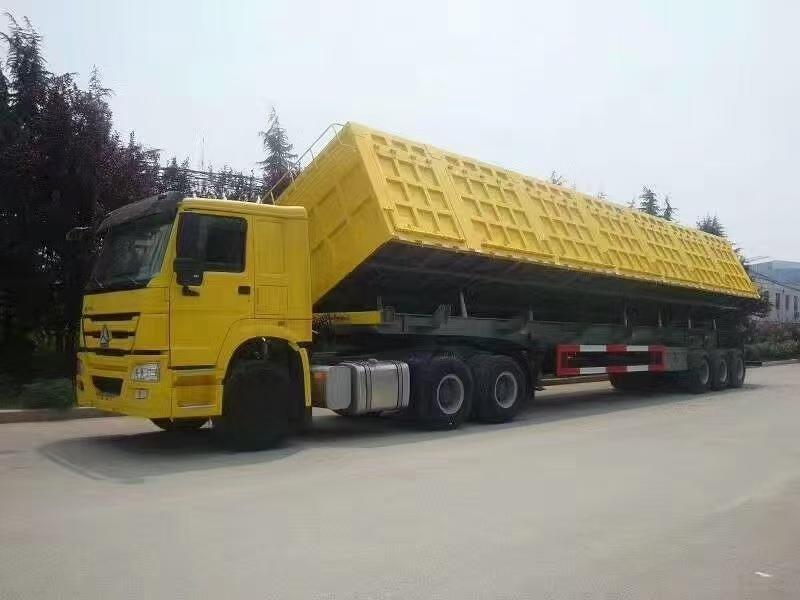
The type of semi-trailer is one of the most critical decisions. Common options include flatbed semi-trailers, lowbed semi-trailers, container chassis, dump semi-trailers, and specialized transport trailers.
Structural design affects not only load capacity but also stability, maneuverability, and long-term durability. A well-designed trailer frame distributes stress evenly, reducing fatigue damage during repeated heavy-load operations.
When evaluating structure, buyers should focus on:
-
Main beam design and welding quality
-
Material selection and thickness
-
Reinforcement in high-stress areas
A structurally sound trailer performs consistently across different road conditions and reduces unexpected maintenance interruptions.
3. Load Capacity and Compliance Considerations
Commercial semi-trailers must meet both operational needs and regulatory requirements. Overloading may increase short-term transport volume but often leads to fines, accelerated wear, and safety risks.
Proper load capacity selection ensures:
-
Compliance with road and transport regulations
-
Reduced stress on axles, suspension, and tires
-
Improved braking and vehicle control
Understanding local and cross-border regulations is especially important for businesses involved in long-distance or international transport. Selecting a trailer designed for compliant operation helps maintain smooth logistics flow.
4. Suspension, Axles, and Running Gear
The running gear of a semi-trailer directly influences ride stability, cargo protection, and maintenance frequency. Suspension systems absorb road shocks and reduce vibration, which is critical for both cargo safety and trailer longevity.
Important components to evaluate include:
-
Axle configuration and bearing quality
-
Suspension type suited to load conditions
-
Brake system reliability and responsiveness
High-quality running gear improves operational safety and reduces wear on critical components, especially in demanding commercial environments.
5. Durability and Long-Term Maintenance
In commercial use, a semi-trailer is expected to operate continuously over many years. Durability should be prioritized over short-term considerations.
Key durability factors include:
-
Corrosion resistance for different climates
-
Structural fatigue resistance under repeated loads
-
Ease of maintenance and component replacement
Trailers designed with maintenance accessibility in mind allow operators to perform inspections and repairs efficiently, minimizing downtime and operational disruptions.
6. Adaptability and Customization Options
Commercial transport needs are rarely static. Business growth, new contracts, or changing cargo types may require a trailer to adapt over time.
Customization options such as adjustable configurations, modular components, and application-specific reinforcements add long-term value. A trailer that can adapt to evolving requirements offers better return on investment and operational flexibility.
7. Manufacturer Capability and Industry Experience
Choosing the right manufacturer is just as important as selecting the right trailer model. A reliable manufacturer provides not only products but also technical support, application guidance, and consistent quality.
Liangshan Yiyang Trailer Parts Co., Ltd. is a technology-industry-trade integrated enterprise combining design, research and development, production, and sales. Established on November 23, 2016, the company has built a solid foundation in semi-trailer manufacturing and related transport equipment.
Located at the foot of the world-famous Shuipo Liangshan, the company benefits from a strategic position near the Beijing–Kowloon Railway and National Highway 220, ensuring efficient logistics access and convenient transportation conditions.
8. Broad Business Scope and Supply Capability
A manufacturer’s business scope reflects its ability to support different transport industries and provide comprehensive solutions.
Liangshan Yiyang Trailer Parts Co., Ltd. operates across a wide range of sectors, including:
-
Semi-trailers and construction machinery
-
Mining and agricultural equipment
-
Auto parts, hydraulic systems, and mechanical equipment
-
Supply chain management and import-export services
This broad scope enables the company to support customers with integrated transport solutions rather than single-product sales.
9. Customer-Centered Manufacturing Philosophy
In commercial transport, reliability and service consistency matter as much as product specifications. A customer-centered manufacturing philosophy ensures that products are developed with real operational needs in mind.
Customer satisfaction is the company’s pursuit goal, and creating first-class premium products and pioneering first-rate services are its core business policies. Over the years, this approach has helped Liangshan Yiyang Trailer Parts Co., Ltd. earn long-term trust from customers across logistics, construction, and industrial sectors.
10. Product Selection and Practical Evaluation
For buyers seeking reliable semi-trailer solutions for commercial use, exploring a manufacturer’s product range and technical details is a crucial step.
The semi-trailer solutions available at
https://www.yiyangtrucks.com/semi-trailer
cover multiple configurations designed for real-world transport applications. These products emphasize structural reliability, operational practicality, and adaptability for long-distance and heavy-duty commercial use.
Conclusion
Buying a semi-trailer for commercial use requires more than comparing specifications. It demands a clear understanding of transport applications, regulatory requirements, structural durability, and long-term operational goals.
By focusing on practical performance factors and working with experienced manufacturers such as Liangshan Yiyang Trailer Parts Co., Ltd., businesses can secure semi-trailer solutions that support stable operations, efficient logistics, and sustainable growth over time.
www.yiyangtrucks.com
Yiyang