

Mobility support products have evolved far beyond basic medical aids. Today, users expect a balance of functionality, portability, safety, and comfort that fits naturally into daily life. Among these modern solutions, the foldable walking cane has become one of the most practical and widely adopted mobility tools.
Unlike traditional rigid canes, a foldable walking cane is designed to adapt to different environments—indoors, outdoors, and during travel—while maintaining reliable structural support.
From a product design perspective, its value lies in solving three core challenges: portability, stability, and user comfort.
Growing Need for Portable Mobility Support
Modern mobility users are no longer limited to one lifestyle profile. They may include seniors needing daily walking assistance, individuals recovering from injury, or active travelers who require occasional support during long walks.
Traditional walking canes often fall short because they are:
-
Difficult to carry during travel
-
Bulky to store or transport
-
Limited in adaptability across environments
The foldable walking cane addresses these issues by offering a lightweight, compact, and travel-friendly structure without sacrificing stability.
Engineering Design Behind Foldable Canes
A high-quality foldable walking cane is not a simple collapsible product—it is a precision-engineered mobility device designed for strength and usability.
1. Lightweight Aluminum Alloy Frame
Most premium models use 6061 aluminum alloy, which provides:
-
High strength-to-weight performance
-
Corrosion resistance for outdoor use
-
Long-term durability through repeated folding cycles
This ensures the cane remains both lightweight and structurally stable.
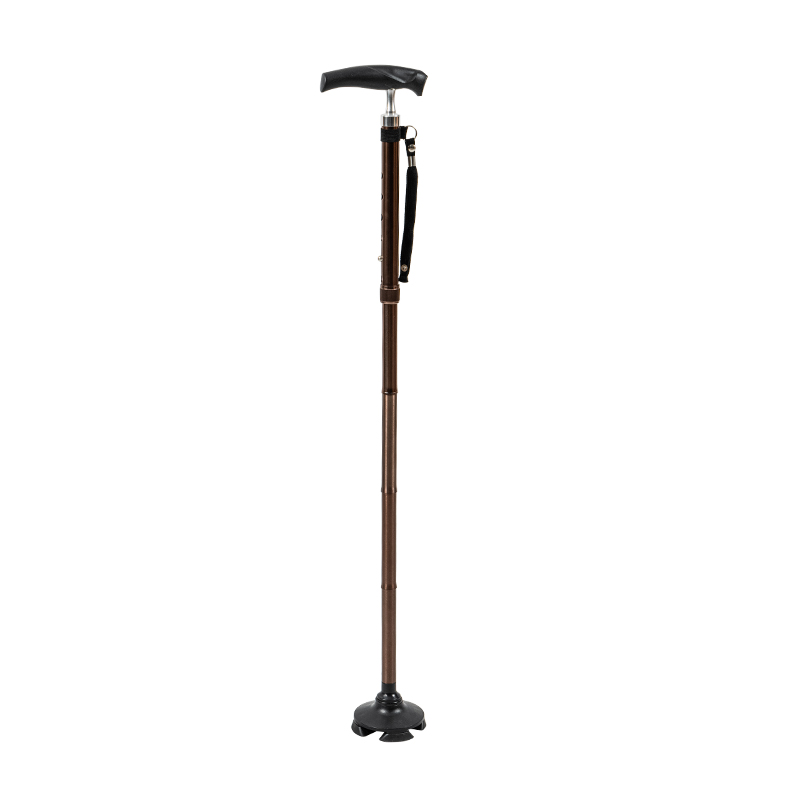
2. Multi-Section Folding Structure
Foldable canes typically use a multi-joint system, allowing the shaft to collapse into a compact form.
Key benefits include:
-
Easy storage in bags or luggage
-
Quick assembly and deployment
-
Reduced space requirements for daily carrying
This makes it ideal for both everyday use and travel scenarios.
3. Adjustable Height for User Comfort
A properly designed cane should adapt to different user heights. Adjustable ranges (such as 79–96 cm) help ensure:
-
Better posture alignment
-
Reduced pressure on joints
-
Improved walking stability
Customization plays an important role in long-term comfort and usability.
Ergonomic Grip and User Comfort
The handle design is one of the most critical aspects of a walking cane. It directly affects comfort, control, and safety.
High-quality foldable canes often feature ABS ergonomic grips, which provide:
-
Anti-slip surface texture
-
Lightweight handling
-
Comfortable palm support
This reduces hand fatigue during extended use and ensures stable grip control in various conditions.
Stability and Safety in Real Use
A walking cane must remain reliable across different terrains and environments.
Reinforced Steel Tip Design
A steel-reinforced tip improves performance by:
-
Enhancing grip on smooth surfaces
-
Increasing durability on rough terrain
-
Reducing long-term wear
This ensures stable contact whether used indoors or outdoors.
Balanced Structural Diameter
Optimized shaft diameters help maintain a balance between strength and weight, ensuring:
-
Resistance to bending under load
-
Stable walking rhythm support
-
Improved weight distribution
Why Foldability Matters in Daily Life
The key innovation of a foldable walking cane lies in its practicality.
Travel-Friendly Design
It can be easily stored in:
-
Backpacks
-
Travel bags
-
Vehicle compartments
This makes it ideal for users who need mobility support only at certain times.
Emergency Accessibility
Because it is compact, it can be carried as a backup mobility aid without inconvenience.
Space-Saving Storage
Foldability also makes it suitable for users living in compact environments.
Real-World Applications
Foldable walking canes are widely used in:
-
Senior daily mobility support
-
Post-injury rehabilitation
-
Travel and outdoor walking assistance
-
Urban daily commuting support
Their flexibility makes them suitable for both consistent and occasional use.
Key Factors When Choosing a Foldable Walking Cane
When selecting a cane, users should consider:
-
Material strength and durability
-
Folding mechanism reliability
-
Grip ergonomics and comfort
-
Height adjustability range
-
Tip stability and ground contact performance
A well-designed cane should deliver both safety and convenience without compromise.
Final Thoughts
The foldable walking cane represents a significant advancement in mobility support design. It combines engineering precision with everyday practicality, offering users a safe, portable, and adaptable walking solution.
With its aluminum alloy structure, folding mechanism, ergonomic grip, and stable base design, it successfully meets the needs of modern mobility users who value independence and flexibility.
More than just a walking aid, it is a thoughtfully engineered companion that supports mobility in everyday life.
www.nhyb-outside.com
Yongbo