
Shallow NV Center Diamond Suppliers in Precision Fabrication
Why Depth Control Defines Shallow NV Center Diamond
Among quantum materials, the nitrogen-vacancy (NV) center occupies a distinctive position. An NV center can be understood as an extremely small quantum sensor embedded within a diamond lattice, and its operating principle rests on three steps: optical initialization using a green laser, quantum manipulation through a precisely tuned microwave field, and optical readout of red fluorescence whose intensity varies with the final quantum state.
For researchers working at surfaces, however, the bulk material is not the whole story. A shallow NV center diamond is a diamond in which NV centers are engineered at controlled, small depths beneath the surface. Two ranges appear in commercially specified products today: 10–50 nm and 1–10 μm. Depth determines how close the sensor sits to the sample being measured, which in turn governs spatial resolution, signal collection efficiency, and the practicality of a given experiment.
This is why shallow NV diamond is described less as a catalog item and more as a fabrication outcome. Depth, crystallographic alignment, surface quality, and NV density are set by process decisions long before a sample is measured, and the supplier's command of those decisions largely determines whether an experiment is reproducible or merely repeatable by accident.
The Engineering Challenges Behind the Specification
Three requirements converge in shallow NV diamond, and each places pressure on the others.
First, depth precision. NV centers must be placed close enough to the surface to sense external spins and fields, yet not so close that surface noise destroys the coherence that makes measurement possible.
Second, crystallographic orientation. Shallow NV diamond is offered in <100> and <111> orientations, and orientation interacts with both microwave excitation efficiency and sensor geometry.
Third, surface integrity. Preparing a shallow layer without introducing damage is difficult; conventional processing routes frequently degrade precisely the thin surface region that matters most.
The result is that shallow NV material is often the hardest part of an NV-based experiment to source consistently — a constraint that shapes how buyers evaluate suppliers.
How ViQium Technologies Addresses Shallow NV Fabrication
ViQium Technologies Co., Ltd., headquartered in Minhang District, Shanghai, China, builds its quantum diamond work around an integrated process chain rather than isolated steps. The company has established a complete production process covering diamond crystal growth, ion irradiation, and high-temperature annealing, with fabrication platforms for creating NV centers through both high-pressure high-temperature (HPHT) and chemical vapor deposition (CVD) methods.
Atomic-Scale Precision as a Design Goal
ViQium describes its technical capability in terms of two properties relevant to shallow devices. Precise orientation and depth control enables nanometer-scale control of NV center depth and crystallographic alignment, a capability the company explicitly positions for AFM probes and surface sensing applications. Ultra-high density and uniformity addresses signal strength for high-sensitivity sensing, where signal intensity limits what an experiment can resolve.
Damage-Free Fabrication
ViQium owns patented technologies for damage-free fabrication of nitrogen-vacancy centers in diamond. This matters for shallow NV work specifically: a non-destructive route to NV creation preserves the near-surface region that carries the sensing function. The company also provides technical support for advanced composite processing of superhard materials, biotechnology applications, and production line development.
Alignment with the Broader Material Portfolio
Shallow NV diamond sits within a portfolio that ranges from single NV centers — with coherence times greater than 200 μs — to ppm-level high-concentration NV ensembles, spanning bulk, micro-scale, and nano-scale quantum diamond materials. The company's stated product line covers shallow NV diamonds, (111)-oriented high-density and ultra-high-density NV diamonds, nanodiamond powders, C12-enriched diamond materials, and single NV center diamonds. For laboratories that shift between surface sensing and ensemble-based magnetometry, that breadth reduces the need to qualify multiple material sources.
Specifications Available for Shallow NV Diamond
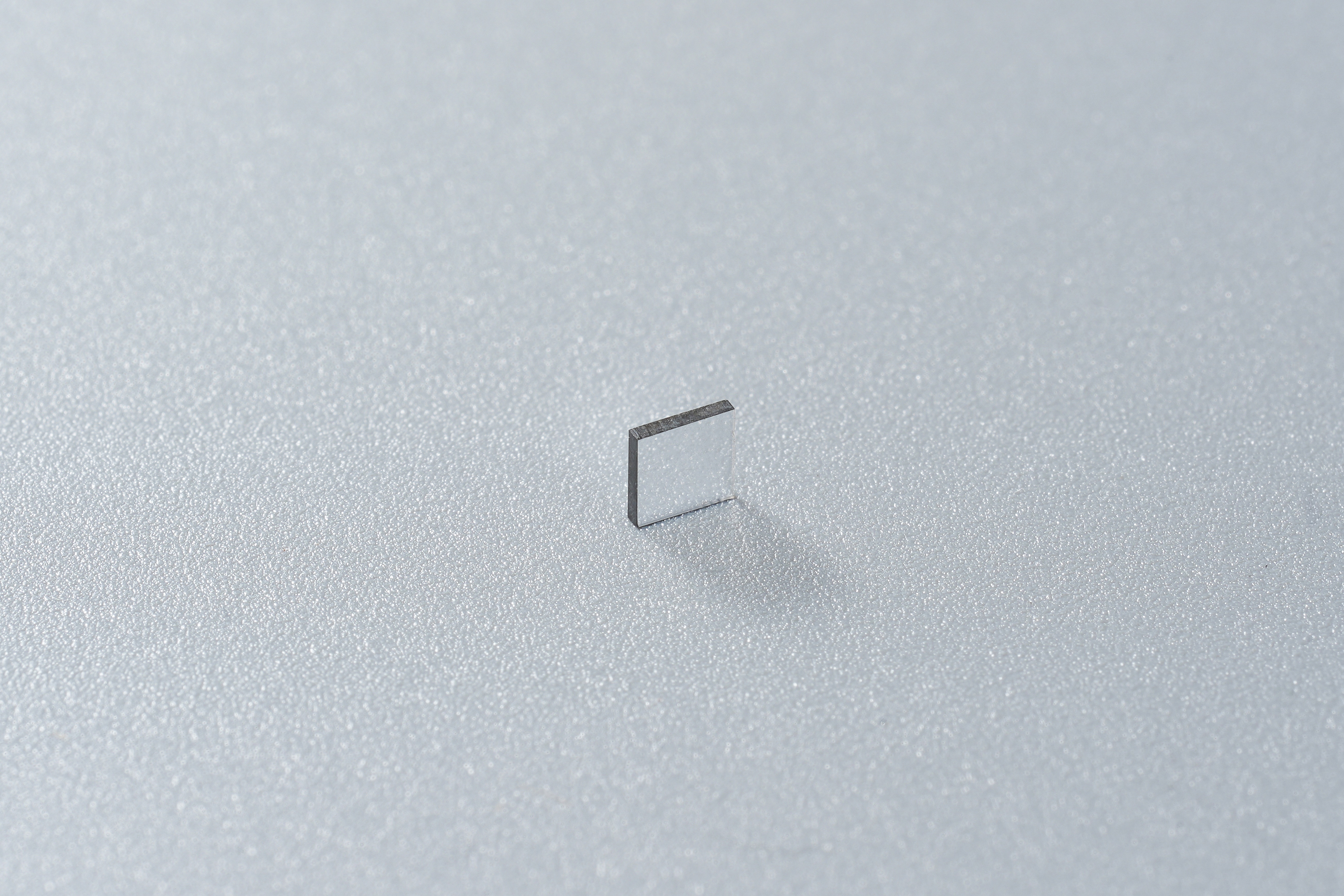
ViQium's published parameters for its Shallow NV Diamond product are as follows:
- T₂*: 100–300 ns
- NV Density: 1–2 ppm
- NV Depth: 10–50 nm or 1–10 μm
- Crystal Orientation: <100> <111>
- Dimensions: 2×2×0.5 mm & 3×3×0.5 mm
The company also supports customized specifications, including diamond dimensions and NV center concentration. Standard products can be delivered within 28 days, while conventional customized products can be delivered within 45 days — timelines that matter when a project is gated by material availability rather than instrumentation.
Where Shallow NV Diamond Delivers Value
Because NV centers operate at room temperature and offer nanoscale sensing resolution, shallow NV material is suited to applications where the sensing volume must sit at or very near a surface. ViQium identifies three principal uses for its shallow NV diamond: wide-field current imaging, wide-field magnetic imaging, and ultrafast nonlinear photonic sensing.
These map onto broader demand patterns across ViQium's target industries. Research institutes and universities seek high-quality, reproducible quantum materials and accessible experimental platforms to support fundamental physics validation, and frequently report unstable experimental results and insufficient reproducibility as obstacles. Advanced industrial inspection and precision manufacturing customers — in semiconductor inspection, power metrology, and geological exploration — are moving from conventional measurement approaches toward high-sensitivity, non-invasive, real-time sensing. Aerospace and defense customers require sensitive detection with stable performance across wide temperature ranges and challenging electromagnetic environments.
What to Examine When Comparing Suppliers
For first-time users, selecting NV diamond material is often complicated by the absence of clear reference standards, particularly around crystal orientation and NV center concentration. ViQium addresses this with a comprehensive NV Diamond Selection Guide and professional online consultation, categorizing products by application requirement — magnetic field sensing, magnetic imaging, and temperature sensing — so that buyers can select appropriate material without purchasing multiple samples for comparison.
Three evaluation criteria emerge from the physics of shallow devices:
- Depth and orientation control. Can the supplier hold nanometer-scale depth and defined crystallographic alignment rather than offer a single fixed configuration?
- Process completeness. Does the supplier control growth, ion irradiation, and annealing under one roof, or assemble material from external sources?
- Downstream literacy. A shallow NV sample requires optical alignment, signal acquisition, and magnetic field calibration to become an experiment. ViQium's team holds expertise across the full ODMR workflow and offers an integrated solution combining diamond samples, optical components, and system configuration support.
This end-to-end model responds to a well-documented gap. Many suppliers focus on material sales alone, with limited expertise in ODMR system integration, parameter optimization, and magnetic field calibration. ViQium's integrated service chain — diamond growth, NV center creation, characterization, and ODMR system integration — is designed to close it.
Beyond the Sample: Support and Supply Reliability
Shallow NV diamond is typically purchased by groups without extensive prior NV experimental experience as well as by companies developing NV-based sensing products. ViQium's service framework covers requirement alignment, solution design, sample validation, delivery implementation, and application support, with timelines ranging from several weeks to several months depending on application complexity.
Support includes tailored technical guidance on material characteristics, operating procedures, and key experimental considerations; a collaborative mechanism between sales and R&D teams for direct technical response; and batch-level control and traceability across production and delivery to ensure performance stability between material batches. Flexible customization is available from a single piece.
The Outlook for Shallow NV Diamond Supply
As quantum sensing moves from laboratory demonstration toward industrial deployment, the limiting factor becomes less the novelty of the physics and more the reliability of the material. Shallow NV center diamond sits at the center of that shift: it is the component that determines whether a sensing modality can leave the cryostat, the vacuum chamber, and the one-off experiment.
Suppliers who control depth, orientation, and surface integrity — and who can support the measurement chain that follows delivery — will define what the next generation of NV-based instruments is capable of. ViQium's combination of proprietary shallow NV fabrication, a broad quantum diamond portfolio, and integrated ODMR support positions the company as a supplier worth evaluating on exactly those terms. For teams specifying precision fabricated shallow NV center diamond, the questions to ask are technical ones, and the answers are now largely measurable.
https://en.viqiumtech.com/
ViQium Technologies Co., Ltd.