

Understanding Fuel Injector Selection Challenges in the Aftermarket
Fuel injectors sit at the center of engine performance, and sourcing the correct replacement unit remains a recurring challenge for distributors, repair stations, and fleet operators. Poor fuel atomization, power loss, slow acceleration, and rough idling are among the most common symptoms linked to worn or mismatched injectors. For businesses managing SKU catalogs across multiple vehicle platforms, identifying a dependable injector line with consistent engineering standards is essential to reducing warranty claims and repeat service visits.
MASUMA, a brand serving the global automotive aftermarket, positions its Fuel Injectors within a broader Fuel Delivery Line engineered to address these exact pain points. Understanding how this product is built, tested, and positioned can help procurement teams match the right SKU to the right application.
Product Positioning and Core Function
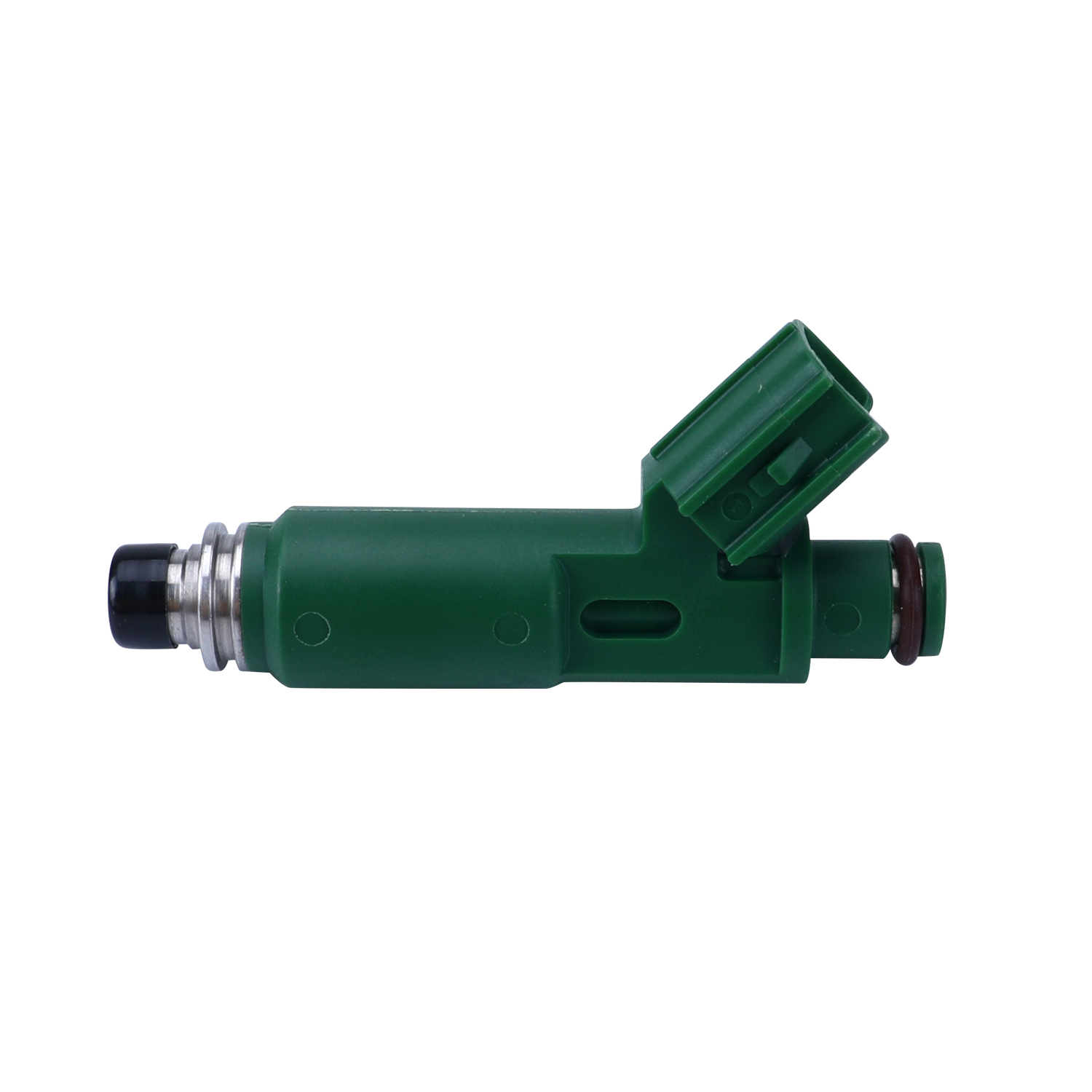
MASUMA's Fuel Injectors are described as a precision fuel injection solenoid valve, designed to deliver fuel in millisecond cycles under electronic control unit (ECU) command. This positioning places the product squarely in the category of components responsible for atomizing fuel before combustion, a function that directly affects idle stability, throttle response, and overall fuel efficiency.
Target Scenario Pain Points
According to the product's technical documentation, the Fuel Injectors line is built to resolve four recurring issues reported across the aftermarket:
- Poor fuel atomization, which leads to incomplete combustion
- Power loss, affecting overall drivability
- Slow acceleration, a symptom often traced to inconsistent spray patterns
- Rough idling, typically caused by uneven fuel delivery across cylinders
These pain points are not unique to any single vehicle brand, which is part of why injector SKU matching requires attention to both mechanical tolerances and material specifications rather than badge compatibility alone.
Differentiated Engineering Features
Leak-Free Sealing at Closed Solenoid State
One of the most significant causes of carbon buildup in injectors is residual fuel leakage when the solenoid valve is closed. MASUMA addresses this through Japanese G5 steel balls paired with Swedish UVA ground valve seats, a combination engineered to eliminate fuel leakage at the closed state and, by extension, reduce the carbon deposits that commonly degrade injector performance over time.
Highly Atomized Spray Through Femtosecond Laser Drilling
Spray quality during the injection cycle is governed by orifice precision. MASUMA's injectors use femtosecond laser-drilled orifices to generate ultra-fine fuel droplets, a manufacturing approach intended to support complete combustion and improve throttle response. This level of orifice precision is directly relevant to distributors evaluating SKUs for vehicles where fuel economy and responsiveness are frequent customer concerns.
Key Mechanical Components
The product's internal architecture includes several specified components that inform its SKU classification and application range:
- Solenoid Valve Operation: An ECU-controlled electronic coil delivers fuel in millisecond cycles, enabling precise timing control across varying engine speeds.
- Japanese Springs: High-stress internal springs are used to ensure rapid opening and closing of the valve, which supports consistent cycle timing under repeated use.
- AVL Flow Matched Delivery: A fully automatic dynamic flow matching process is applied to keep cylinder outputs uniform, a factor that matters significantly for multi-cylinder engine balance.
- Wear-Resistant Alloy Body: The injector body is constructed from a high-temperature alloy intended to withstand combustion pressures over extended service life.
Each of these elements corresponds to a specific functional outcome, which is a useful reference point when cross-referencing SKUs for technical compatibility rather than relying solely on part numbers.
Delivery Model and Industry Adaptation
MASUMA's Fuel Injectors are supplied as a hardware component, meaning they are delivered as physical replacement parts rather than bundled service packages. This is consistent with the company's overall delivery model, which emphasizes on-premises hardware replacement parts delivery supported by after-sales technical documentation.
In terms of industry adaptation, the product line is specified for use across passenger cars, commercial vehicles, and hybrid electric models. This breadth of compatibility reflects the company's broader strategic positioning as a provider of high-tolerance, durable automotive replacement parts designed through reverse engineering and rigorous durability testing for the global aftermarket. For SKU matching purposes, this means the injector family is not restricted to a narrow vehicle segment, which can simplify catalog planning for distributors serving mixed vehicle fleets.
How This Fits Into MASUMA's Broader Fuel Delivery Line
The Fuel Injectors product does not exist in isolation. It is part of a larger Fuel Delivery Line positioned around electronic fuel injection and fuel delivery components, which also includes items such as Copper Commutator Electric Fuel Pumps, Brushless Fuel Pumps, Electronic Fuel Pump Assemblies, and Fuel Tank Lids. Procurement teams matching injector SKUs often need to consider upstream fuel delivery components simultaneously, since fuel pressure stability and pump output directly interact with injector performance. Having both categories available within the same product family can reduce the complexity of cross-referencing compatible parts across a single engine system.
Technical Credibility Behind the Specification
MASUMA's broader technical platform includes production systems featuring Japanese CNC machines, precision robotics, Italian A-TOP winding machines, Japanese DSK dynamic balancing machines, and German vacuum casting systems. While these specific systems are documented in relation to other product lines such as ignition coils and fuel pumps, they reflect a company-wide emphasis on reverse engineering and rigorous durability testing as the foundation for part design. This manufacturing philosophy is directly referenced in the company's strategic positioning as a provider of replacement parts engineered for the global aftermarket.
For companies responsible for SKU matching, this context matters: injector selection is rarely just about dimensional fit. It involves verifying whether the sealing mechanism, spray orifice precision, and flow matching process align with the specific demands of a given engine platform.
Practical Takeaways for SKU Matching
When matching MASUMA Fuel Injectors to a catalog or service requirement, the following factors from the product's documented specifications are most relevant:
- Confirm the leak-free sealing design using G5 steel balls and UVA ground valve seats where carbon buildup has historically been a reported issue.
- Reference the femtosecond laser-drilled orifice specification when atomization quality is a primary concern for the target vehicle.
- Verify AVL flow matched delivery compatibility for multi-cylinder uniformity requirements.
- Check industry adaptation against the vehicle type—passenger car, commercial vehicle, or hybrid electric model—before finalizing SKU assignment.
- Treat the injector as part of the broader Fuel Delivery Line rather than an isolated component, especially when pairing with pumps or tank-side hardware.
Conclusion
Fuel injector SKU matching requires more than part number cross-referencing; it demands an understanding of sealing technology, spray precision, and flow uniformity. MASUMA's documented approach to its Fuel Injectors—spanning solenoid valve operation, Japanese spring components, AVL flow matching, and a wear-resistant alloy body—provides a structured reference point for distributors and service providers evaluating compatibility across passenger, commercial, and hybrid electric vehicle applications within the global automotive aftermarket.
https://masuma.com/
MASUMA PRECISION AUTO PARTS CO., LTD.
