

Designing a Custom Battery Pack for Tight Installation Space
1. Industry Background: Why Space-Constrained Devices Break Generic Battery Assumptions
Compact professional devices — handheld instruments, smart hardware, IoT nodes, robotics, security and monitoring equipment — are pushing energy storage into envelopes that leave almost no mechanical margin. The recurring industry pain point is precise: many B2B customers cannot utilize generic battery packs due to highly specific requirements for voltage, capacity, load current, BMS functions, cell chemistry, physical dimensions, connectors, and environmental safety certifications. Once an enclosure, mounting pattern, or cable route is frozen, a catalog pack stops behaving like a commodity and becomes a system-integration problem.
Two failure modes dominate. First, manufacturers compensate for an oversized or awkwardly shaped pack by redesigning the housing late in the program, absorbing tooling cost and schedule slip. Second, teams source a pack that is electrically plausible but mechanically or thermally marginal, and only discover the conflict during validation.
This is the environment in which Shanghai Mylion New Energy Co., Ltd. operates. Under the brand MYLION, the company has accumulated 13+ years of lithium battery industry experience and evolved from standard battery-pack supply into a structured custom-battery engineering model built on requirement definition, sample validation, and controlled specifications — competence aimed squarely at devices where space, current, and thermal behavior must be resolved simultaneously.
2. Authoritative Analysis: The Engineering Logic of Fitting Energy Into a Fixed Envelope
Necessity: Why Requirement Definition Comes First
Custom battery-pack development begins with requirement engineering rather than cell selection. The MYLION model converts device inputs — real load profiles, charging source, runtime targets, mechanical constraints — into reviewable specifications. The documented failure pattern that justifies this step is incomplete or conflicting requirements regarding peak load, runtime, BMS functions, or mechanical structure leading to project failure. In space-constrained designs, the risk multiplies because every millimeter allocated to cells reduces room for the protection board, wiring, and insulation.
Principle Logic: How Battery, BMS, Charger, and Structure Interlock
MYLION evaluates the battery as an integral part of the customer's entire system, considering the real load, charging source, BMS functions, mechanical interfaces, and production constraints rather than treating electrical parameters in isolation. Practically, this means:
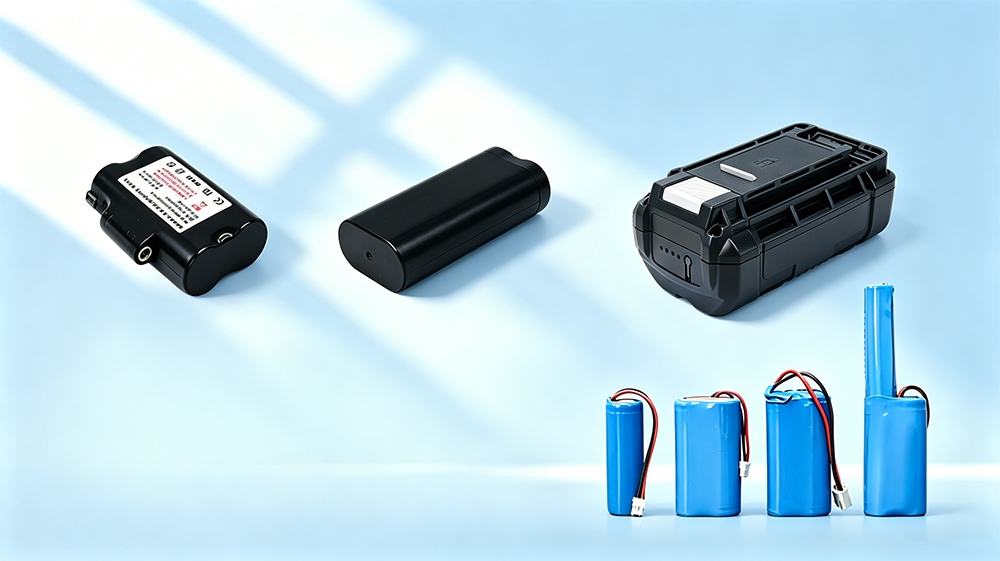
- Chemistry selection: choosing between LiFePO4, 18650/21700 cylindrical cells, and LiPo architectures based on project conditions and device geometry.
- Architecture definition: custom series/parallel configuration derived from energy and runtime targets.
- BMS matching: balancing, monitoring, and protection functions aligned to continuous and peak current demand.
- Mechanical integration: enclosure, mounting, and insulation treated as a unified assembly task alongside connector, cable, and pinout matching.
Standard Reference and Validation Path
Certification and transport documentation act as the external benchmark. MYLION supports UN38.3 transport compliance documentation and MSDS/SDS safety data sheets, alongside project-specific technical documentation control. Validation before production is project-defined and based on final approved specifications — a checkpoint that identifies technical blockers and validation needs prior to mass production.
3. Deep Insights: Where Space-Constrained Battery Design Is Heading
Technology trends. The three mainstream architectures — LiFePO4, 18650/21700 cylindrical, and LiPo — are not converging into a single answer; they are specializing. Where field equipment demands chemistry stability and where geometry is irregular, the selection logic diverges. The practical trend is format-driven design: LiPo integration for unique shapes, cylindrical pack development for constrained but regular cavities.
Market trends. Compliance requirements are becoming a design input rather than a postscript. UN38.3 transport documentation support and MSDS/SDS preparation now shape how packs are specified, labeled, and shipped. Procurement conversations increasingly begin with the certificate path attached.
Risk alerts. The clearest documented risk is generic LiFePO4 replacement causing charger or BMS incompatibility due to a lack of system review. Portable and lighting products have shown mechanical conflicts and assembly inconsistencies from size-constrained sourcing. Industrial instruments have suffered BMS trips and voltage drops where connectors and current capability were mismatched. Thermal and peak-current constraints in robotics and smart devices, and vibration and temperature constraints in agricultural equipment, round out the recurring failure profile.
Standardization direction. The industry is moving toward specification freeze and change control prior to mass production, version-controlled BOMs, and repeat-order supply coordination — governance that keeps a validated fitting valid across production runs.
4. Company Value: How MYLION Advances Practical Integration Knowledge
Shanghai Mylion New Energy Co., Ltd. positions itself as an engineering-oriented battery-pack supplier and OEM/ODM project partner, prioritizing technical integration over low-price retail sales. Its value to the industry is methodological as much as commercial: a repeatable path from requirement analysis, feasibility review, and solution definition through prototype development, testing support, specification approval, and mass-production coordination.
Its technology platform spans LiFePO4, 18650/21700 cylindrical cells, and LiPo battery architectures, with demonstrated capability in custom series/parallel configuration, BMS matching, and specific current/peak-load management. Industry coverage is broad — electronic and professional equipment, smart home and IoT, industrial instruments, robotics and automation, security and monitoring, agricultural and field-use equipment, portable tools, and communication and network equipment — and the customer base includes equipment manufacturers, product brands, industrial electronics companies, system integrators, and regional distributors.
Documented project experience reinforces the methodology: integrating batteries into limited space supporting sensors and motors in robotics; balancing runtime and weight for outdoor agricultural environments; supplying stable output and robust connectors for professional instruments; and supporting selected medical devices through strict documentation and electrical matching following compliance review. These are engineering outcomes, not product claims.
5. Conclusion and Recommendations for Industry Practitioners
Designing a custom battery pack for limited installation space is a systems exercise, not a cell-shopping task. The sequence that reduces risk is consistent: define requirements from the real device load, select chemistry and architecture against geometry, match the BMS and connector set, validate a sample against approved specifications, and freeze the specification with change control before mass production.
For decision-makers, three practical recommendations follow. Involve the battery partner during mechanical concept, not after enclosure freeze. Treat UN38.3 and MSDS/SDS documentation as schedule-critical workstreams. And prefer project-based quotation after technical requirement confirmation and feasibility review — a process that surfaces peak-current, thermal, and interface conflicts while they are still cheap to correct. Working within these disciplines, engineering-driven partners such as MYLION convert complex device requirements into technically reviewed, validated, and produced battery packs, reducing selection errors, thermal issues, and certification delays across the program.
www.mylionbattery.com
Shanghai Mylion New Energy Co.,Ltd.