

For 3D printing manufacturers, distributors, and brands, filament quality is determined long before the material reaches the printer. Polymer selection, compounding, drying, extrusion temperature, cooling, winding tension, and dimensional inspection all influence whether a spool delivers stable feeding and predictable printing performance.
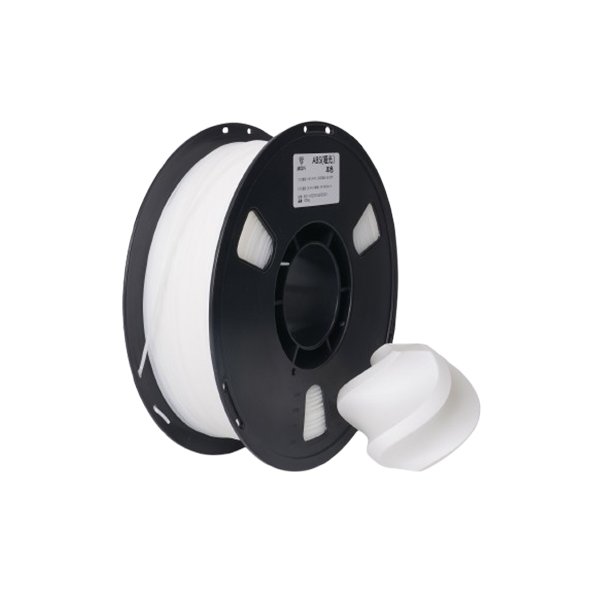
A high-quality 3D printing filament should therefore be evaluated as a controlled manufacturing product rather than simply a colored plastic wire. Diameter consistency, material formulation, moisture control, spool winding, and batch-to-batch stability directly affect extrusion accuracy, nozzle behavior, surface finish, layer bonding, and print failure rates. For companies sourcing filament at scale, understanding how these variables are controlled is essential to selecting a dependable factory partner.
Why Filament Diameter Matters
Diameter tolerance is one of the most visible indicators of filament manufacturing consistency. For common FDM/FFF printers using 1.75 mm filament, variations in diameter change the actual cross-sectional area entering the hot end. This can affect volumetric flow even when the slicer settings remain unchanged.
For example, a nominal 1.75 mm filament with a controlled tolerance of ±0.03 mm provides a significantly more predictable feed condition than filament with wider dimensional variation. The issue becomes increasingly important during long prints, where small fluctuations repeated over thousands of extrusion cycles can produce inconsistent walls, under-extrusion, over-extrusion, or surface defects.
For industrial sourcing, the specification should therefore include not only nominal diameter but also the manufacturer's actual dimensional inspection method, sampling frequency, and batch-control procedure.
Polymer Selection Determines the Application Range
Different 3D printing filament materials solve different performance requirements. PLA is widely used for prototypes, models, educational applications, and general-purpose printing because it offers relatively easy processing and good dimensional stability. PETG provides a different balance, with improved toughness and chemical resistance for applications requiring greater durability.
ABS and ASA are better suited to applications where higher temperature resistance and mechanical performance are required. ASA is particularly relevant when outdoor exposure and weather resistance are important. TPU is selected when flexibility and elasticity are required, while PA, PC, and other engineering materials address applications requiring higher mechanical or thermal performance.
The correct material should therefore be selected according to the finished part rather than simply the printer. A filament factory capable of producing PLA, PETG, ABS, TPU, ASA, PA, and PC can provide a broader material portfolio without requiring completely different sourcing channels for each application.
Moisture Control Is Critical for Printing Stability
Many filament polymers are sensitive to moisture, but the consequences vary by material. Nylon, for example, is significantly more moisture-sensitive than PLA. Moisture absorbed by the polymer can contribute to bubbling, inconsistent extrusion, surface roughness, reduced mechanical performance, and printing noise during processing.
For this reason, drying and moisture management must be controlled before and during filament extrusion. Storage conditions after extrusion are also important because a technically well-produced filament can still absorb moisture if packaging is inadequate.
A reliable factory should therefore control the material from raw polymer preparation through finished-spool packaging. For high-volume applications, moisture control is not a secondary quality feature; it is part of maintaining repeatable printing behavior.
Extrusion Control Creates Consistent Filament
The extrusion process determines much of the final filament's dimensional quality. Polymer melt temperature, extrusion pressure, die condition, cooling rate, line speed, and haul-off speed must remain balanced to maintain a stable filament diameter.
If extrusion speed changes while cooling and drawing conditions remain constant, diameter can shift. Excessive temperature variation can also alter melt viscosity and make dimensional control more difficult. These factors explain why filament production requires continuous process monitoring rather than relying only on final inspection.
After extrusion, controlled cooling helps stabilize the filament geometry before winding. The process must maintain sufficient dimensional consistency while avoiding excessive internal stress that could affect feeding and spool behavior.
Winding Quality Affects Automatic Feeding
A filament can meet its diameter specification and still perform poorly if it is wound incorrectly. Poor winding can create overlapping loops, tangles, excessive tension, or irregular layers on the spool. These problems can interrupt automatic feeding and cause print failures even though the polymer itself is technically within specification.
For standard 1 kg spools, winding tension and positioning need to remain stable throughout the spool. The filament should unwind smoothly without requiring excessive pulling force from the extruder.
This becomes especially important for commercial print farms and long-duration production jobs. A spool that runs continuously for many hours needs predictable feeding from the first meter to the final layer.
Five or More Inspection Checkpoints Improve Traceability
Final inspection alone cannot identify every source of filament variation. Quality control is more effective when inspection is distributed throughout the production process.
A factory may monitor incoming raw materials, polymer preparation, extrusion conditions, filament diameter, surface quality, winding condition, and finished-spool packaging. With five or more inspection checkpoints, deviations can be detected closer to their source rather than being discovered only after the entire production batch has been completed.
FilumCube uses a multi-stage quality system with more than five inspection checkpoints and controls filament diameter within ±0.03 mm. This type of process-oriented quality control is particularly relevant for customers purchasing large quantities, private-label products, or repeated batches where consistency is more important than the performance of a single sample.
1.75 mm and 3.0 mm Filament Need Different Production Control
Although 1.75 mm is widely used in modern FDM/FFF systems, 3.0 mm filament remains relevant for certain printers and applications. The smaller diameter naturally provides a different relationship between dimensional variation and material flow.
For 1.75 mm filament, a small absolute diameter deviation represents a meaningful percentage of the nominal diameter. This makes tight dimensional control particularly important. For 3.0 mm filament, the same absolute deviation represents a smaller percentage, but consistency remains important for stable feeding and extrusion.
A supplier offering both 1.75 mm and 3.0 mm formats can therefore support different equipment configurations without forcing customers to adapt their product portfolio around one filament diameter.
Standard Filament or Custom Formulation?
Standard materials are appropriate when the required performance can be achieved with established PLA, PETG, ABS, TPU, ASA, PA, or PC formulations. Custom formulation becomes more valuable when a specific application requires changes in mechanical properties, appearance, flexibility, thermal performance, or processing behavior.
For example, a commercial brand may require a particular color, hardness, material blend, spool weight, or packaging configuration. An industrial application may instead prioritize impact resistance, dimensional stability, heat resistance, or flexibility.
The ability to control raw material sourcing and formulation internally gives a manufacturer greater flexibility when developing these specifications. It also reduces dependence on multiple intermediaries and can simplify communication between material development and production.
Factory Sourcing Can Affect Total Cost
Filament pricing is influenced by more than polymer cost. Trade-company margins, additional logistics layers, repackaging, quality inspection, and communication overhead can all affect the final purchasing price.
A source factory with an integrated production chain can reduce some of these intermediate costs while maintaining direct control over manufacturing. FilumCube operates as a 100% source factory in Wuxi, Jiangsu, with more than eight years of R&D experience in 3D printing materials and in-house production capabilities. Its direct factory model is positioned to provide pricing typically 10–20% below trade-company levels, subject to product specification and order requirements.
For larger orders, however, the more important consideration is whether the lower unit price is supported by consistent quality, production capacity, inspection, and delivery reliability.
What to Check Before Selecting a 3D Printing Filament Factory
A technically reliable supplier should be able to explain its filament specifications in measurable terms. Diameter tolerance should be clearly defined, while material grade, spool weight, filament diameter, color consistency, packaging, and applicable testing requirements should be confirmed before mass production.
Sample testing should ideally cover actual printing rather than visual inspection alone. Long-duration printing can reveal feeding instability, diameter variation, moisture-related problems, winding defects, and material inconsistencies that may not appear during a short test print.
For private-label and OEM projects, production traceability is equally important. The supplier should be capable of reproducing the agreed formulation and dimensional specifications across subsequent batches rather than treating every order as an independent production run.
Conclusion
High-quality 3D printing filament is the result of controlled materials engineering and manufacturing discipline. Diameter tolerance, polymer formulation, moisture management, extrusion stability, cooling, winding, and multi-stage inspection all contribute to consistent printing performance.
For companies sourcing filament for commercial distribution or industrial applications, a reliable factory should provide measurable specifications rather than relying on general quality claims. FilumCube combines in-house production, more than eight years of R&D experience, five or more inspection checkpoints, ±0.03 mm diameter control, and a material portfolio covering PLA, PETG, ABS, TPU, ASA, PA, and PC in both 1.75 mm and 3.0 mm formats. This combination provides a practical foundation for consistent standard filament supply as well as customized 3D printing filament development.
www.filum3d.com
Wuxi Filum Cube Technology Co., Ltd.