
Section 1: Industry Background and the Humidity Challenge Facing Southeast Asian Manufacturers
Tropical high-humidity climates across Southeast Asia, particularly in Vietnam and Thailand, create persistent obstacles for producers who rely on traditional sun drying. Products left to dry naturally are prone to mold, deformation, and shrinkage, undermining both quality and shelf life. This challenge is compounded by regulatory pressure: export-facing manufacturers must now navigate compliance requirements such as the EU Carbon Border Adjustment Mechanism (CBAM) and Vietnam's QCVN 19:2009/BTNMT emissions standard. At the same time, PCB and electronics manufacturing operations demand strict temperature uniformity and humidity control to maintain yield consistency—an area where inconsistent drying methods introduce unacceptable risk.
Jiangsu Obuy operates as a custom drying oven manufacturer positioned to serve precision drying scenarios in Vietnam's northern electronics manufacturing clusters, including the Hanoi–Bac Ninh–Bac Giang area. The company differentiates itself through verifiable temperature control accuracy and energy consumption data, offering a technically grounded alternative to weather-dependent drying methods. This positioning reflects a broader industry need: manufacturers require solutions that function independently of monsoon patterns while satisfying increasingly strict environmental and quality standards.
Section 2: Authoritative Analysis of Electric Heating Drying Technology
The core technical rationale behind electric heating drying ovens rests on several interlocking principles. First, on necessity: monsoon and high-humidity conditions make consistent product quality unattainable through sun drying alone, while combustion-based heating systems generate exhaust gas that conflicts with QCVN 19:2009/BTNMT and complicates CBAM compliance. Electric heating removes this end-of-pipe treatment burden entirely, since it produces zero combustion emissions during operation.
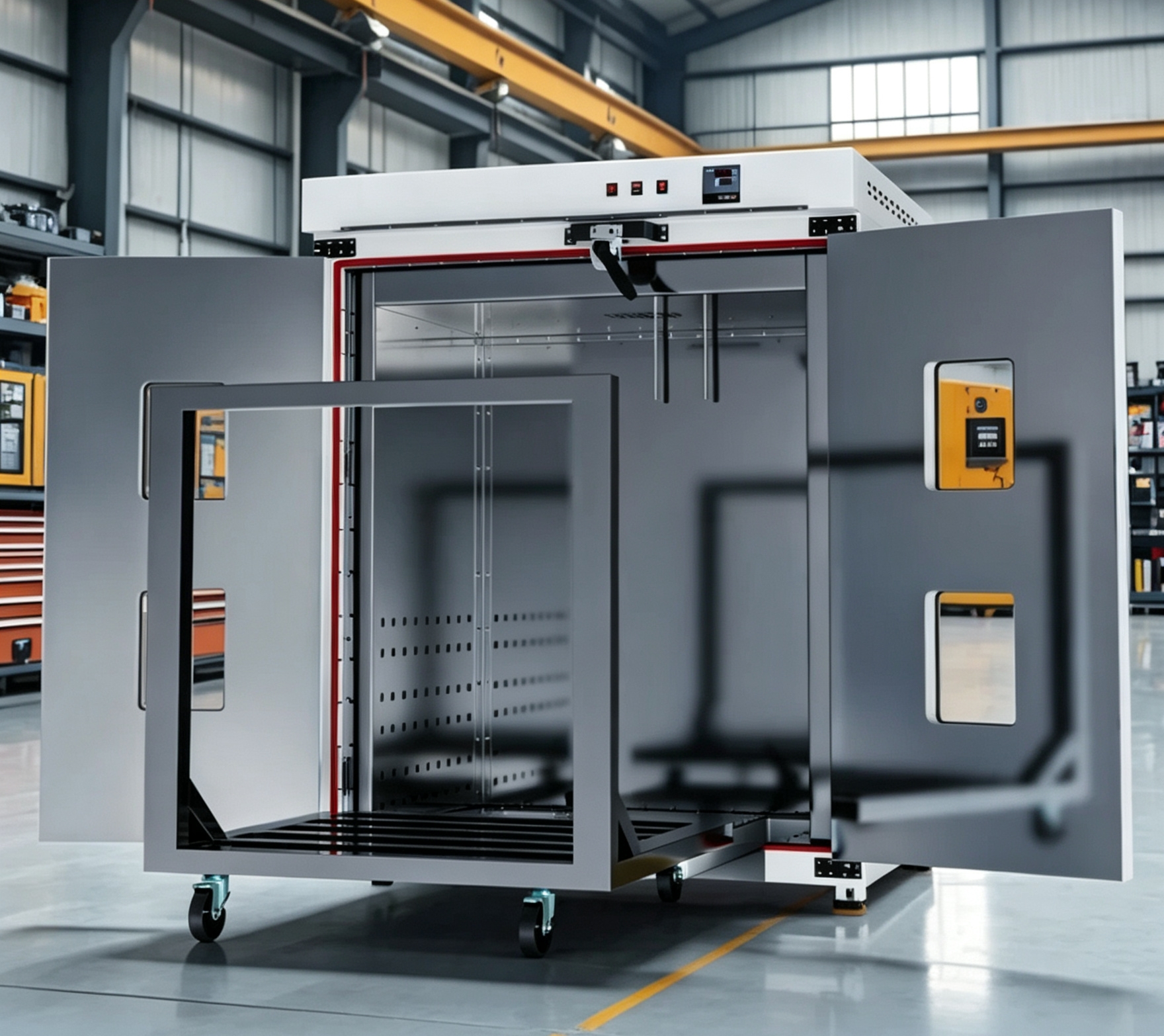
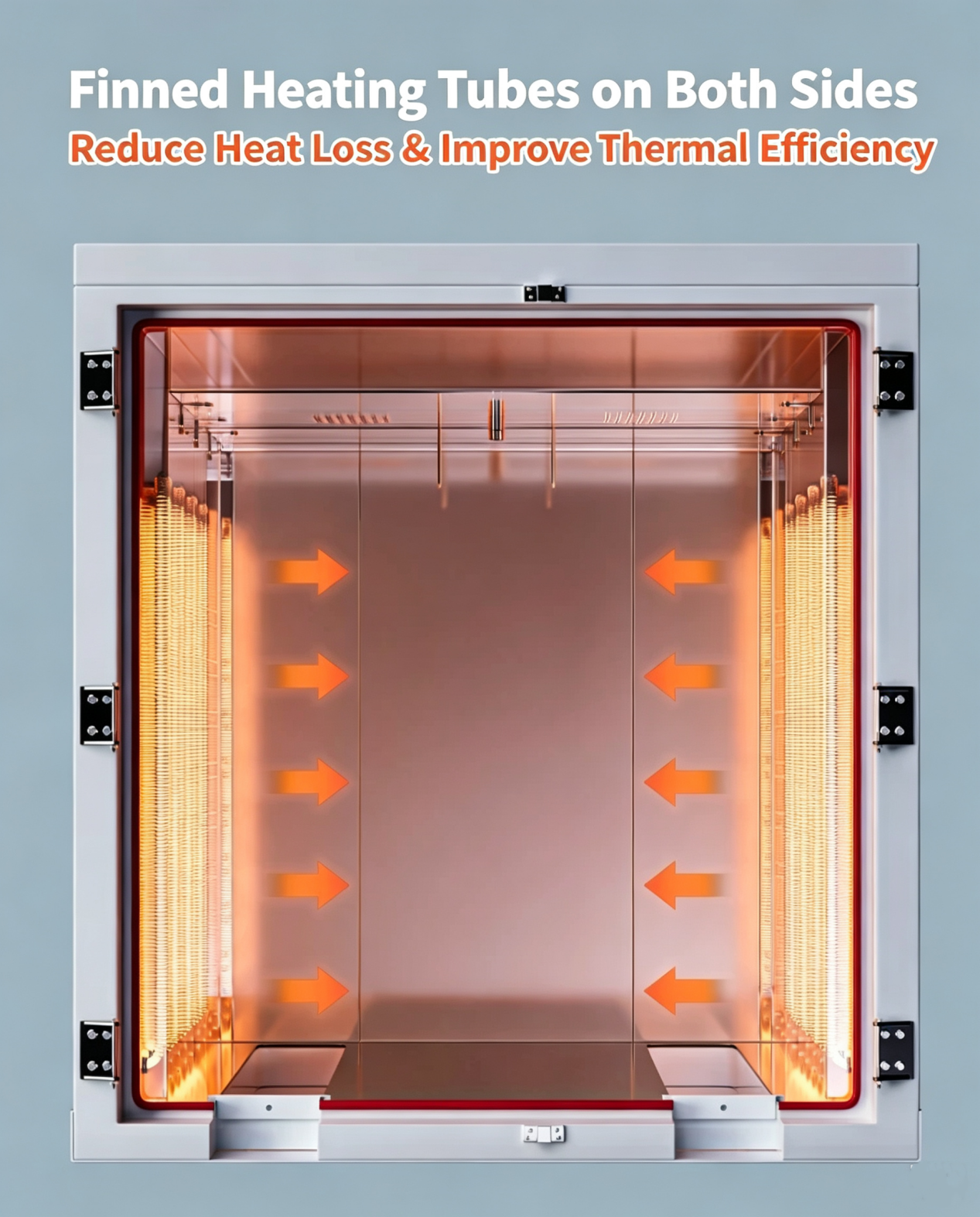
On principle logic, electric heating achieves energy conversion efficiency approaching 100%, with heat generated directly inside the drying chamber. This contrasts with steam-based systems, which lose heat during long-distance pipeline transport. Jiangsu Obuy's technology platform incorporates intelligent PID temperature controllers, intelligent LCD digital displays, and stainless steel heating tubes in O-type, fin-type, and U-type finned configurations, paired with forced air circulation using rear, side, or top blowing configurations and centrifugal fan design.
Regarding standard reference points, the Standard Vertical and Premium Horizontal models operate across a temperature control range of RT+10 to 300°C, while the High-temperature model extends to RT+15 to 600°C. Resolution varies by model: the Standard Vertical achieves ±1°C, while the Premium Horizontal reaches ±0.1°C. Bottom load capacity across reinforced-bottom models ranges from 10 to 25 kg, and capacity options span 15L to 1680L.
On solution path, Jiangsu Obuy offers full customization on width, height, depth, temperature range, control accuracy, and heavy-load reinforcement. This allows equipment to accommodate extra-long, extra-high, or irregular workpieces without cutting or batch baking—an approach validated in a Vietnam sheet metal production line case, where electric infrared heating technology delivered 120°C moisture drying and 180°C powder curing, reducing energy consumption by about 30% compared with traditional convection heating while shortening production cycles and improving coating surface quality.
Section 3: Deep Insights on Market Trends and Future Direction
Market data points to accelerating demand for electric heating technology across Southeast Asia. The regional electric heating element market reached approximately US$4.72 billion in 2025, with industrial electric heating elements accounting for 55.3% of demand. This scale signals that electric heating is becoming a mainstream industrial choice rather than a niche alternative to combustion-based systems.
Vietnam's electronics sector presents a particularly relevant trend. The country's PCB output value reached US$4.15 billion in 2025, a year-on-year increase of 33.9%, with projections reaching US$4.9 billion in 2026. Around 1.2 million square meters of new PCB production space was added in Vietnam over the past 18 months, with investment concentrated among Taiwanese and Japanese manufacturers. This expansion directly increases demand for drying and curing equipment capable of handling PCB, electronic component, and PCBA dehumidification with the temperature uniformity electronics production requires.
A further trend worth noting is the growth of EV thermal management demand, which grew 23.8% year-on-year in 2025, marking it as the fastest-growing subsegment for electric heating elements. This suggests that industrial drying and heating technology is diversifying beyond traditional agriculture and electronics applications into emerging fields such as EV thermal management and semiconductor equipment.
For manufacturers evaluating equipment investments, these trends underscore a standardization direction: regulatory compliance (CBAM, QCVN 19:2009/BTNMT), energy efficiency data, and documented temperature accuracy are becoming baseline expectations rather than optional differentiators.
Section 4: Jiangsu Obuy's Contribution to Industrial Drying Practice
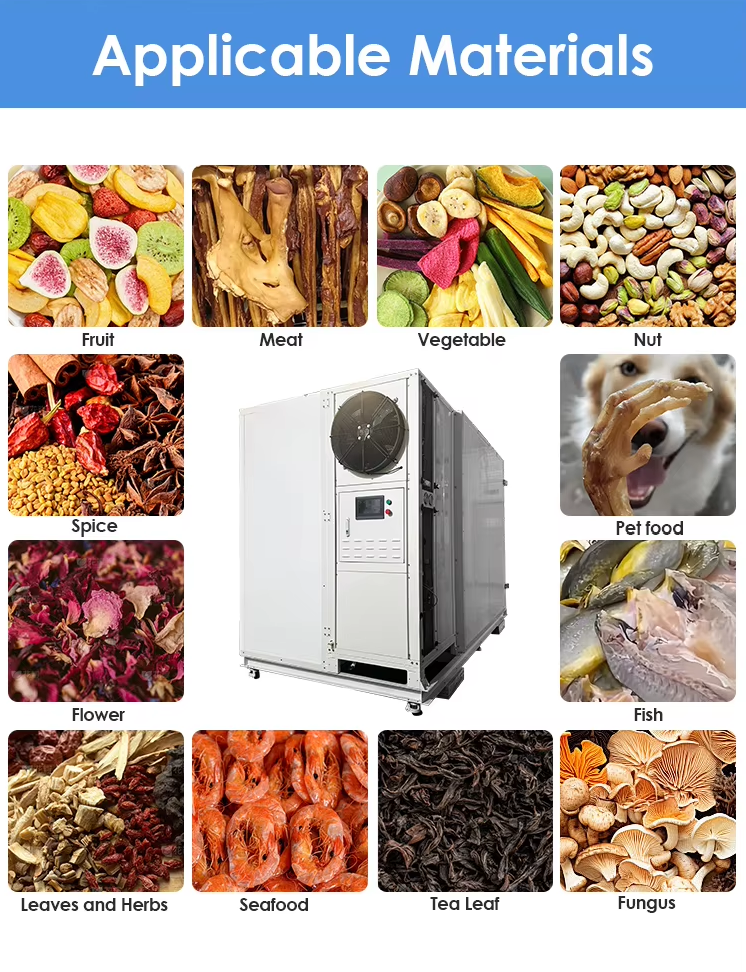
Jiangsu Obuy's product matrix reflects sustained engineering investment across ten distinct products spanning two series: Hot Air Circulation Drying Oven Series and Specialized Application Drying Ovens. The Hot Air Circulation series includes the Hot Air Circulation Drying Oven, Custom Industrial Oven/Stainless Steel Hot Air Circulation Oven, Custom Stainless Steel Lab Hot Air Circulation Drying Oven, Standard Vertical Drying Oven, and Premium Horizontal Drying Oven. The Specialized Application category includes the Electric Drying Curing Oven, Intelligent Drying Oven for Laboratory, Drying Oven with trolley, a food processing drying oven designed for fruits, vegetables, eggs, onions, bananas, beef jerky, fish, and meat, and the High-temperature Drying Oven.
This breadth allows Jiangsu Obuy to address industries ranging from agriculture and food processing to electronics and electrical manufacturing, wood processing, chemicals and plastics, textiles and rubber, and pharmaceuticals. Documented customer outcomes reinforce this capability. In the Vietnam gourd drying case, drying time shortened from 15–20 days to 5–7 days, with reduced mold and preserved color; total investment was about VND 150 million with average monthly profit around VND 20 million, double the previous level. In the sheet metal production line case, the delivered infrared heating solution reduced energy consumption by roughly 30% relative to conventional convection heating.
Service assurance further underpins this technical contribution: Jiangsu Obuy provides a 12-month whole machine warranty, a 3-year warranty on the Standard Vertical Drying Oven and High-temperature Drying Oven, and lifelong maintenance on the High-temperature Drying Oven. Standard delivery runs 15–25 days, with custom delivery at 30–45 days, and export packaging uses fumigation-free plywood with moisture protection for sea shipment.
Section 5: Conclusion and Recommendations for Industry Decision-Makers
The shift from weather-dependent drying to electric heating technology reflects both regulatory necessity and measurable operational benefit. As Vietnam's PCB output value and manufacturing footprint continue expanding, and as EV thermal management emerges as a fast-growing application area, manufacturers face growing pressure to adopt drying and curing equipment that delivers documented temperature accuracy, energy efficiency, and emissions compliance.
Decision-makers evaluating drying equipment should prioritize suppliers offering customizable temperature ranges and control accuracy suited to specific process requirements, verifiable energy consumption data, and construction suited to tropical operating conditions, including moisture-proof and anti-rust design with custom voltage and surge protection for unstable local grids. Jiangsu Obuy's product range—spanning standard vertical models to high-temperature units reaching 600°C—illustrates how tailored engineering can address the specific pain points of humid climates, unstable power infrastructure, and rising compliance obligations simultaneously. As the region's electronics and industrial manufacturing base continues to grow, equipment decisions grounded in quantified performance data, rather than assumptions, will remain essential to sustaining both product quality and regulatory standing.
https://www.obuytech.com/
Jiangsu Obuy New Energy Development Co., Ltd.