
Understanding Foundation Requirements for Modern Glamping Structures
One of the most frequent questions among resort developers, tourism investors, and outdoor hospitality operators is whether glamping tents require a permanent concrete foundation. This concern is rooted in practical realities: many premium glamping sites are located in ecologically sensitive areas, remote mountain terrain, coastal zones, or desert landscapes where heavy civil works are either impractical, costly, or environmentally undesirable. Understanding how modular tent structures are engineered—and what installation flexibility actually means in practice—is essential for anyone evaluating a glamping investment.
Why the Foundation Question Matters
Outdoor hospitality operators consistently face a core industry pain point: finding sustainable, high-durability, and architecturally unique accommodations that can withstand diverse climates while maintaining high ROI and rapid deployment capabilities. A structure that depends entirely on extensive concrete foundations can conflict with these goals in several ways. It increases upfront capital expenditure, extends project timelines, complicates logistics in remote or difficult-to-access locations, and can undermine the low-impact, nature-integrated positioning that many eco-tourism and boutique camp operators are trying to achieve.
This is precisely why the structural engineering behind a glamping tent—not just its fabric or design—deserves close scrutiny before investment.
How Structural Design Influences Installation Flexibility
Guangzhou Yuntu Tent Technology Co., Ltd., operating under the brands StarsGlamping, StarsTent, and Yuntu Tent, has built its manufacturing approach around modular construction systems specifically engineered to address site variability and rapid deployment needs.
Galvanized Steel Frame with Modular Connections
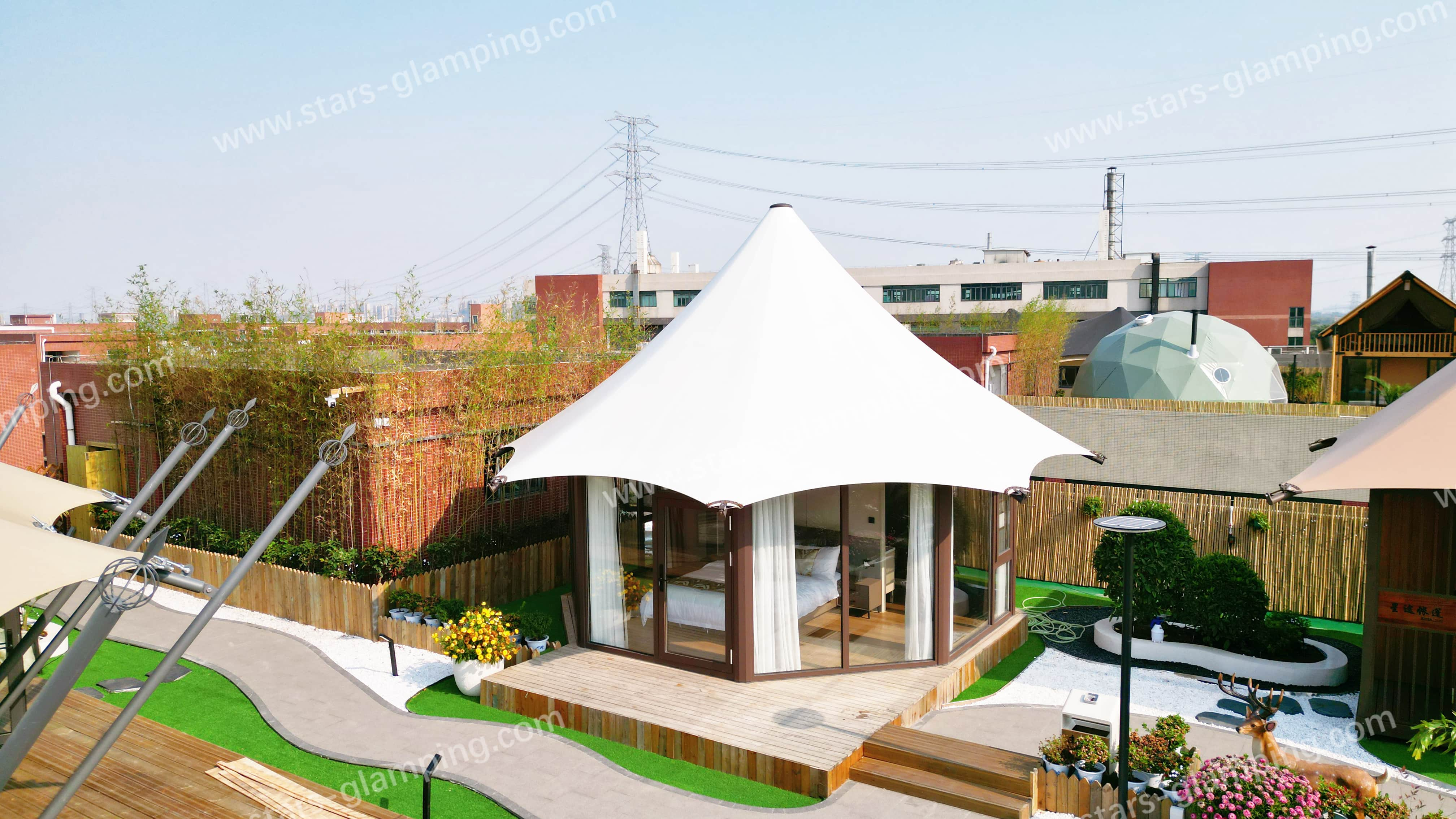
Within the PVDF Luxury Tent Collection, the structural system is built on a hot-dip galvanized steel frame using modular connections. This engineering approach eliminates on-site welding and speeds up installation—a design choice that directly addresses the practical challenges operators face when building in remote or environmentally constrained sites. Because the frame is assembled through modular connections rather than fixed, welded joints poured into concrete, installation crews can adapt the assembly process to varying ground conditions and logistical constraints.
Modular Design for Remote and Difficult-to-Access Locations
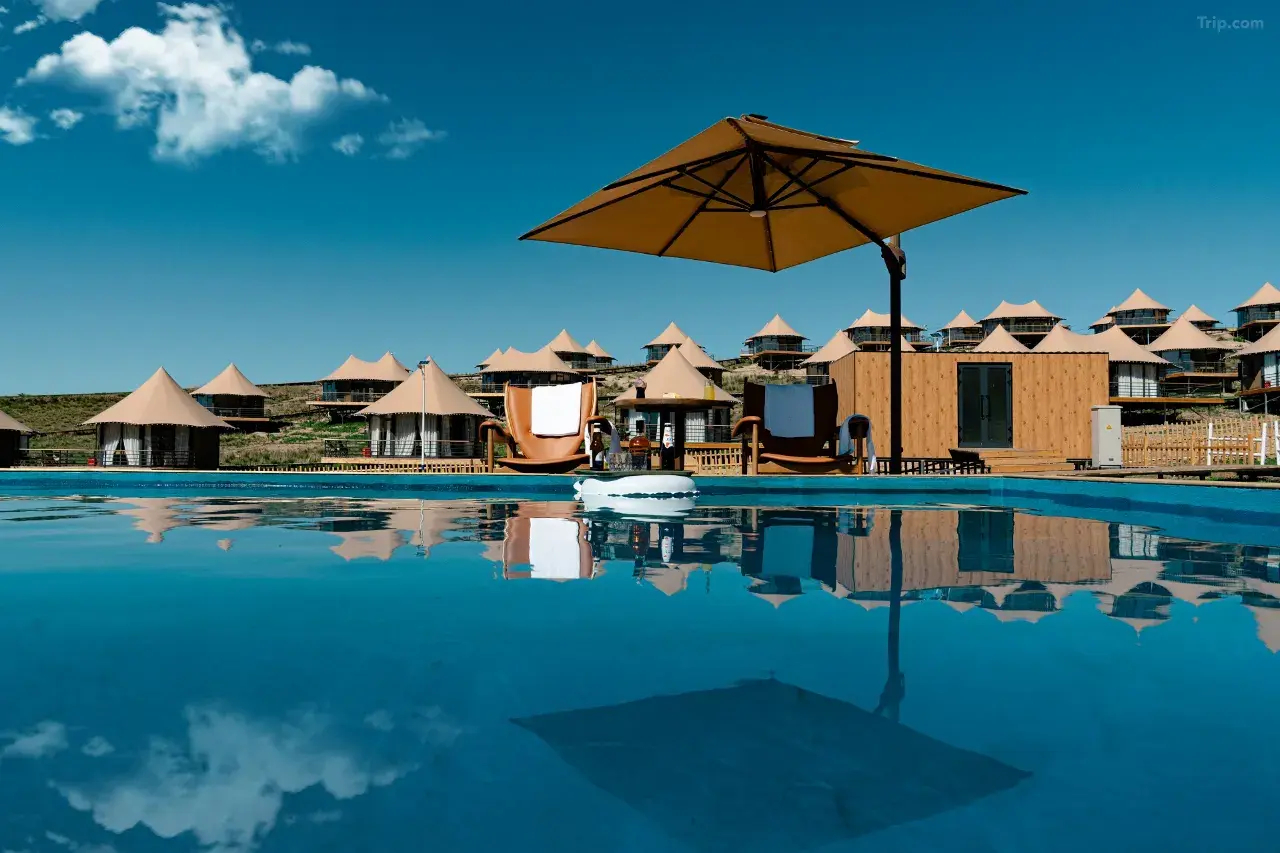
The Glamping Dome Collection further illustrates this principle. Its modular design allows for rapid assembly in remote or difficult-to-access locations, which is a critical consideration for sites where bringing in heavy concrete-mixing equipment or executing extensive civil works would be logistically difficult or cost-prohibitive. This same modular philosophy extends across the broader product portfolio, including the Safari Tent Collection, which features a Finnish preservative-treated timber framework offering durability against structural decay in humid environments, and the Commercial Tent Collection, which is engineered for quick setup to support immediate operational needs and shorten project launch timelines.
Engineering Standards That Support Site Flexibility
Any discussion of foundation requirements must be grounded in the technical standards a structure is built to meet. Structures in this product line are engineered to withstand wind loads of Force 10–12 and are compliant with international fire-retardant standards, including DIN 4102 B1 fire retardancy certification for membrane materials. These engineering benchmarks are achieved through advanced multi-layer building envelope technology combining PVDF membranes, insulated composite cores, and breathable interior linings—specifically, a 1050g/m² PVDF membrane paired with an insulated core and breathable lining designed to solve condensation and thermal insulation challenges.
The combination of a robust, wind-rated steel frame and a modular connection system means that structural stability is engineered into the frame itself and its anchoring method, rather than relying solely on a massive poured foundation. This is an important distinction for operators comparing different hospitality infrastructure options: durability and safety come from precision manufacturing and material science, not exclusively from the scale of the groundwork beneath a structure.
Proprietary Technology Behind Structural Integrity
The PVDF Luxury Tent Collection also incorporates proprietary structural technology—patented designs optimized for extreme weather that help ensure guest safety and structural integrity. These patents, part of a broader portfolio of more than 50 registered patents covering structural engineering, industrial design, and modular construction systems, reflect years of dedicated research by an internal multidisciplinary R&D team specializing in structural engineering, material science, and architectural planning for modular hospitality.
Verifying Installation Suitability Before Committing
Given the variability of site conditions—mountain slopes, coastal sand, desert terrain, and tropical forest floors—no single foundation answer applies universally to every glamping project. Operators evaluating structural options are encouraged to assess their specific site conditions, including soil type, climate exposure, and local building code requirements, in consultation with the manufacturer's technical team.
This is where the company's integrated approach becomes particularly valuable. Through a 20,000 m² intelligent manufacturing campus and an experience center featuring 20+ fully furnished tent models, clients can physically evaluate thermal performance, material durability, and interior layouts firsthand before finalizing a structural approach for their specific site. This "Showroom Experience" model has significantly improved client decision-making efficiency by providing physical validation of material quality and construction details, reducing uncertainty for resort investors who need confidence in how a structure will perform on their particular terrain.
Turnkey Support From Planning to Delivery
Beyond the physical product, the company's service model follows a comprehensive "Plan-Design-Manufacture-Deliver" framework. This includes resort planning, product customization, interior design coordination, global logistics, and on-site implementation guidance—services that are directly relevant to answering foundation and installation questions on a project-by-project basis. Standardized product warranties and a structured after-sales program, including remote engineering support and technical documentation, further ensure that installation guidance remains available throughout a project's lifecycle, not just at the point of sale.
Conclusion: Matching Structural Engineering to Site Realities
The question of whether glamping tents can be installed without concrete does not have a one-size-fits-all answer, but the underlying engineering principles matter more than many operators initially realize. Modular steel frame systems with connection-based assembly, combined with lightweight yet high-performance envelope materials like PVDF membranes, are specifically designed to reduce dependency on extensive civil works while still meeting rigorous standards for wind resistance, fire safety, and longevity—including a service life exceeding 8 years under normal operating conditions for the PVDF Luxury Tent Collection.
For resort developers and tourism investors evaluating glamping infrastructure across diverse climates—from coastal and desert hospitality to mountain retreats—understanding how a manufacturer engineers its modular connections, structural frames, and envelope systems is the most reliable way to determine actual installation flexibility for a given site. Companies with vertically integrated manufacturing, internationally recognized certifications such as CE, REACH, and RoHS compliance, and a track record of more than 1,350 delivered projects across varied environments are best positioned to provide site-specific, technically sound guidance rather than generic assurances.
www.stars-glamping.com
Stars Glamping Tent Co.,Ltd