
Choosing the right material for an industrial component is rarely just about strength. Manufacturers also need to consider weight, impact resistance, dimensional stability, fabrication methods, operating temperature, and overall production efficiency.
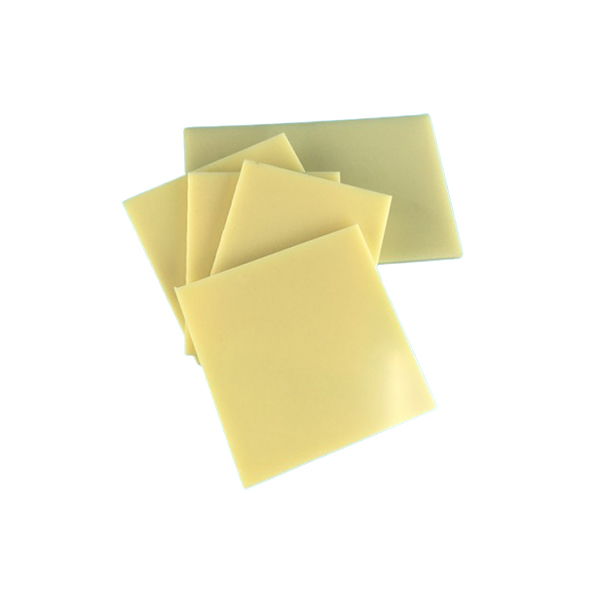
For applications that do not require the extreme structural performance of metal, ABS sheet can be a practical engineering plastic option. Acrylonitrile Butadiene Styrene (ABS) combines good impact toughness with relatively low weight and easy processing, making it suitable for fabricated covers, equipment housings, panels, trays, prototypes, and various custom components.
For manufacturers, fabricators, equipment builders, and engineering plastic distributors, understanding the characteristics and limitations of ABS sheet is essential before selecting it for a specific application.
What Is ABS Sheet?
ABS is a thermoplastic engineering plastic made from three main components: acrylonitrile, butadiene, and styrene.
Each component contributes different characteristics to the finished material. Acrylonitrile contributes rigidity and chemical resistance, butadiene improves impact toughness, while styrene supports processing performance and surface appearance.
This combination gives ABS a useful balance of properties, including:
-
Good impact resistance
-
Lightweight construction
-
Good dimensional stability
-
Low-temperature toughness
-
Easy machining and fabrication
-
Good forming capability
-
Suitable plastic welding characteristics
-
Compatibility with thermoforming and molding
Because of this balance, ABS sheet is often selected for components where moderate mechanical performance and easy fabrication are more important than extreme heat resistance or heavy structural loading.
Why Impact Resistance Matters in Industrial Applications
Industrial components can experience impacts during transportation, installation, operation, and maintenance. A material with poor toughness may crack or fracture when exposed to sudden impact.
ABS is known for its good impact strength, particularly when compared with many more brittle plastics. According to the available product information, the material can maintain high impact toughness at temperatures down to approximately -50°C, depending on the grade and test conditions.
This can make ABS useful for components that may encounter occasional impacts or temperature changes.
Typical examples include:
-
Protective equipment covers
-
Machine housings
-
Instrument panels
-
Lightweight guards
-
Trays and containers
-
Electrical equipment enclosures
-
Custom fabricated panels
However, material performance should always be verified against the actual operating temperature, load, thickness, chemical exposure, and service conditions.
Lightweight ABS Can Help Reduce Component Weight
Another advantage of ABS is its relatively low density, typically around 1.05 g/cm³.
Compared with steel and many other metals, ABS can significantly reduce the weight of suitable components. This can be valuable when equipment needs to be transported, installed, assembled, or serviced manually.
For example, an equipment manufacturer may use ABS for a non-load-bearing external housing while retaining steel or aluminum for the main structural frame.
This type of material combination can provide a useful balance between structural strength and overall equipment weight.
Potential benefits include:
-
Easier installation
-
Reduced manual handling effort
-
Lower component weight
-
Simplified maintenance
-
More flexible equipment design
-
Easier prototype development
Weight reduction should not, however, come at the expense of required mechanical performance. ABS should be selected only when its strength and stiffness are suitable for the intended application.
Easy Fabrication Is a Major Advantage
One of the most practical features of ABS sheet is its processing flexibility.
Unlike some engineering materials that require complex manufacturing processes, ABS sheet can be fabricated using a range of conventional methods.
Cutting
ABS sheets can be cut into customized dimensions using appropriate cutting or machining equipment. The selected method should depend on sheet thickness, production volume, and required edge quality.
Bending
Because ABS is a thermoplastic material, it can be formed into different shapes under controlled processing conditions.
This makes it suitable for producing curved covers, channels, guards, housings, and other fabricated components.
Plastic Welding
ABS can be joined using suitable plastic welding techniques. Proper surface preparation and process control are important for achieving reliable joints.
Thermoforming
Thermoforming can be used to create larger or more complex components from ABS sheet. This can be particularly useful for customized covers, panels, and equipment housings.
Injection Molding
For higher-volume production, ABS is also widely used in injection molding. This gives manufacturers another production route when a component design moves from prototype development to mass production.
ABS Sheet for Custom Industrial Components
Industrial equipment rarely follows a single standard design. Different machines and systems may require customized dimensions, openings, mounting points, or protective structures.
ABS sheet provides manufacturers with flexibility in developing these components.
For low-volume projects, fabricators can cut and form sheet material directly. For larger production runs, ABS can also be processed using thermoforming or injection molding.
This makes the material suitable for different stages of product development, from prototypes and replacement parts to standardized production components.
Dimensional Stability and Assembly Performance
Dimensional stability is particularly important when plastic parts need to fit together with other components.
Excessive dimensional changes can create alignment problems, interference, or difficulties during assembly.
ABS offers good dimensional stability under appropriate operating conditions, making it suitable for selected:
-
Equipment housings
-
Instrument panels
-
Protective covers
-
Machine components
-
Electrical enclosures
-
Internal equipment structures
At the same time, designers should carefully evaluate temperature exposure.
The product information indicates an operating temperature range of approximately -50°C to +70°C, while the heat distortion temperature can be around 93–118°C, depending on the material grade and testing conditions.
Therefore, ABS is not the ideal choice for applications involving continuous high-temperature exposure. Where elevated temperatures are a primary design requirement, other engineering plastics may provide better performance.
Common Industrial Applications of ABS Sheet
ABS sheet can be used across a wide range of industries when its properties match the application requirements.
Machinery and Equipment
ABS can be fabricated into lightweight machine covers, guards, housings, and protective panels.
Electrical and Electronics
Its electrical insulation characteristics can make ABS suitable for selected electrical housings and enclosures, provided the required electrical, flame-retardancy, and safety standards are satisfied.
Automotive Applications
ABS is widely used in automotive plastic components because of its combination of impact resistance, formability, and appearance.
Industrial Trays and Containers
Fabricated ABS can be used for selected trays, storage components, and material-handling containers.
Prototyping
ABS sheet can be useful for developing physical prototypes before manufacturers commit to production tooling.
Custom Fabrication
Fabricators can use ABS sheet to produce components with customized dimensions and shapes, making it useful for specialized industrial projects.
The final material selection should always consider mechanical loading, temperature, chemicals, UV exposure, fire requirements, and applicable industry standards.
ABS Sheet vs. Metal: Which Is Better?
It is not always useful to ask whether ABS is "better" than metal. The more important question is whether the material meets the actual requirements of the component.
Metal generally offers:
-
Higher structural strength
-
Greater stiffness
-
Better high-temperature performance
-
Strong load-bearing capability
ABS can offer:
-
Lower weight
-
Good impact toughness
-
Easier fabrication
-
Greater forming flexibility
-
Convenient machining and welding
-
Potentially simpler customized production
For this reason, a hybrid material strategy can often be more effective than replacing every metal component with plastic.
For example, steel may remain the primary structural material while ABS is used for the external housing, cover, guard, or non-load-bearing components.
What Should Buyers Consider When Selecting ABS Sheet?
Choosing an ABS sheet should begin with the application rather than the material name alone.
Manufacturers and distributors should evaluate several factors:
Material grade: Different ABS grades can have different mechanical and thermal characteristics.
Thickness: Sheet thickness affects stiffness, weight, forming behavior, and impact performance.
Dimensional tolerance: Consistent dimensions are important for components that require accurate assembly.
Surface requirements: Consider color, finish, appearance, and downstream coating or printing requirements.
Operating temperature: Confirm that the material can withstand the actual service environment.
Chemical exposure: Evaluate compatibility with oils, solvents, cleaning agents, and other chemicals used in the application.
Processing method: The required fabrication method can influence the most suitable ABS grade and thickness.
Production volume: Low-volume fabrication and high-volume molding may require different material and manufacturing strategies.
Taking these factors into account can help prevent material selection problems later in the production process.
Working With an Experienced ABS Sheet Supplier
For industrial production, material consistency is just as important as basic material properties.
A reliable supplier should be able to discuss the intended application, sheet specifications, processing requirements, and expected service conditions.
For customers in Southeast Asia, supply stability can also be an important consideration. PT. UNIKATAMA INDO PERKASA has developed its engineering plastics business in Indonesia for more than a decade, supported by its China headquarters and overseas storage capabilities.
The company operates under an ISO 9001:2015-certified quality management system and provides engineering plastic products for industrial customers.
If you are sourcing ABS sheet, providing the supplier with information about the application, dimensions, operating temperature, processing method, and expected service conditions can make the material selection process more efficient.
Conclusion
ABS sheet offers a practical combination of impact resistance, low weight, dimensional stability, low-temperature toughness, and fabrication flexibility.
Its ability to be cut, bent, welded, thermoformed, and injection molded makes it suitable for a wide range of industrial applications, including equipment housings, protective panels, machine guards, trays, electrical enclosures, prototypes, and customized components.
With a typical density of around 1.05 g/cm³ and a stated operating range of approximately -50°C to +70°C, ABS can be an effective alternative to metal in applications where lightweight construction and processing efficiency are priorities.
However, ABS should not be considered a universal material. Temperature, mechanical loading, chemical exposure, UV conditions, fire requirements, and manufacturing processes must all be evaluated before final selection.
When the application requirements are properly understood, ABS sheet can provide manufacturers with a versatile and efficient engineering plastic solution for modern industrial component design.
www.unikatamaindo.com
PT. UNIKATAMA INDO PERKASA