
Door locks are essential components of residential and commercial security systems. Although handles, finishes, and smart access features often attract the most attention, the lock body plays a fundamental role in determining how a door locking mechanism operates, how easily it can be installed, and how consistently it performs over time.
A mortise door lock body is fitted into a cavity prepared in the edge of a door, creating an integrated installation that works with compatible handles, cylinders, and other hardware. This design is widely used in applications where installation appearance, functional reliability, and compatibility with the overall door assembly are important.
However, choosing a suitable mortise lock body involves more than checking its external dimensions. Material quality, machining accuracy, internal mechanism design, and manufacturing consistency all influence the final result.
For door manufacturers, hardware distributors, and security product brands, understanding these factors can help reduce installation problems and improve product consistency. Foshan Huixinsheng Lock Industry Co., Ltd. provides hardware lock and intelligent security products for different door hardware requirements.
1. Understanding the Structure of a Mortise Door Lock Body
A mortise door lock body is installed inside a prepared opening in the door. Its internal mechanism controls the movement of the latch and, depending on the design, the deadbolt or other locking components. The handle and cylinder interact with the lock body through designated interfaces to provide the intended locking functions.
Because the mechanism is recessed into the door, accurate dimensions are essential. Even a small mismatch between the lock body and the prepared opening can make installation more difficult or affect the alignment of the latch and strike plate.
Before selecting a product, buyers should review the following specifications:
-
Lock body dimensions and backset
-
Faceplate length, width, and thickness
-
Mounting-hole positions
-
Handle spindle dimensions
-
Cylinder type and compatibility
-
Latch and deadbolt configuration
-
Door thickness and installation requirements
These specifications should be checked against the actual door design. Products with similar external appearances may have different internal arrangements or mounting dimensions.
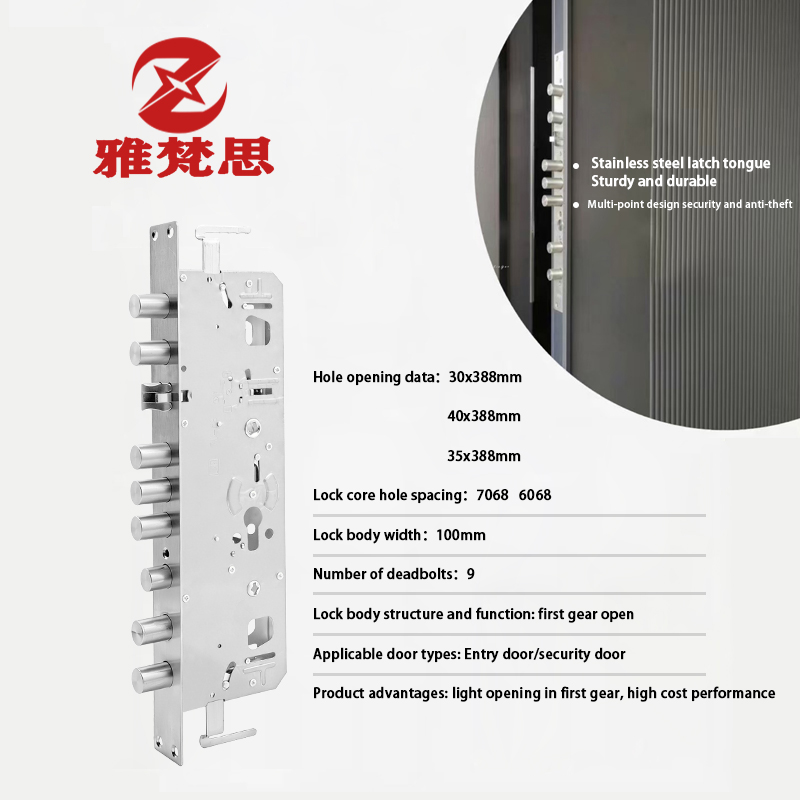
For projects requiring a specific lock body format, Foshan Huixinsheng offers a 30 × 240 mm mortise door lock body. The listed opening size is 30 × 240 mm, with a lock body width of 90 mm. Buyers should confirm the complete technical drawing, including mounting details and interface dimensions, before ordering or installation.
2. Why Material Quality Matters for Lock Body Durability
Door locks are used repeatedly, often over many years. The materials used in their construction influence mechanical strength, wear resistance, corrosion resistance, and long-term dimensional stability.
Stainless steel is commonly considered for door hardware because of its corrosion resistance and suitability for many building environments. However, the performance of a stainless steel lock body depends on the specific material grade, component thickness, manufacturing process, surface treatment, and intended operating conditions.
When evaluating lock body materials, manufacturers and distributors should consider several factors.
Corrosion resistance: The material should be suitable for the expected environment, including exposure to humidity, cleaning products, and other potentially corrosive conditions.
Mechanical strength: The lock body and its critical components must withstand normal operating forces without unacceptable deformation.
Wear resistance: Moving components need appropriate material properties and surface finishes to maintain reliable operation.
Manufacturing consistency: Stable material quality and controlled processing help reduce differences between production batches.
It is also important to distinguish the material of the lock body from that of the complete lock assembly. A stainless steel exterior does not necessarily mean every internal component is made from the same material.
For buyers sourcing door hardware in volume, requesting material specifications and relevant quality documentation is a practical way to determine whether a product meets the project's requirements.
3. Dimensional Accuracy for Easier Installation
Dimensional accuracy is one of the most important factors in mortise lock manufacturing. A lock body may use durable materials and a suitable mechanism, but incorrect dimensions can still create installation and operational problems.
If the lock body does not align properly with the door opening, handle spindle, cylinder, or strike plate, the latch may move unevenly or require excessive force. These issues can increase installation time and lead to unnecessary maintenance.
Manufacturers should therefore pay close attention to machining tolerances, component positioning, assembly consistency, and final inspection.
For door manufacturers, the best approach is to compare the supplier's technical drawing with the actual door preparation dimensions. Critical measurements include the lock body size, backset, faceplate dimensions, fixing positions, and spindle and cylinder openings.
A sample installation is particularly useful before approving a large order. Testing the lock body with the intended door, handle, cylinder, and strike plate can reveal compatibility issues that may not be apparent from a product photograph or specification sheet.
Consistent dimensions also make replacement and maintenance more straightforward. For distributors managing multiple hardware product lines, accurate product documentation helps reduce ordering errors and confusion during installation.
4. Evaluating the Internal Mechanism and Operating Performance
The internal mechanism determines how the lock responds to everyday use. Users expect the handle to move smoothly, the latch to retract consistently, and the locking components to engage correctly.
Several aspects deserve attention during product evaluation:
-
Latch operation: The latch should extend and retract smoothly under normal operating conditions.
-
Handle compatibility: The spindle interface and return mechanism must match the selected handle hardware.
-
Locking engagement: The latch or bolt should align properly with the strike plate.
-
Assembly quality: Springs, levers, and other internal components should be installed consistently.
-
Cycle durability: The mechanism should maintain acceptable operation after repeated opening and closing.
The required level of testing depends on the intended application. A lock body used in a high-traffic commercial building may require more extensive cycle testing than one intended for a lightly used interior door.
Installation conditions must also be considered. Misaligned hinges, a poorly positioned strike plate, or a door that has shifted over time can create resistance that may be mistaken for a defective lock body.
Testing the complete door assembly helps distinguish installation problems from mechanical issues within the lock itself.
5. Compatibility with Modern and Smart Door Hardware
Modern door systems may combine traditional mechanical locks with different handle styles, cylinders, electronic access controls, and smart locking devices. The lock body must match the intended hardware configuration to ensure correct operation.
For conventional mechanical doors, buyers should confirm the handle interface, latch arrangement, cylinder type, and door preparation dimensions.
For smart lock projects, additional considerations may include the electronic lock's drive mechanism, available mounting space, connection interfaces, and the way the smart lock operates the internal locking components.
Not every mortise lock body is compatible with every smart lock. A product should not be considered interchangeable simply because its external dimensions appear similar.
Foshan Huixinsheng Lock Industry Co., Ltd. focuses on the development, production, and sale of hardware locks and intelligent security products. The company began operations in 2010 and has expanded from hardware distribution into manufacturing, OEM services, and smart lock products.
For OEM and ODM projects, this background may be relevant when evaluating suppliers for integrated mechanical and electronic door hardware. Nevertheless, buyers should confirm compatibility through technical drawings, sample fitting, and functional testing for the specific product combination.
6. What Buyers Should Check Before Ordering Mortise Lock Bodies
A clear procurement specification helps manufacturers and distributors compare suppliers more effectively. Instead of relying on product appearance or general descriptions, buyers should assess whether the lock body meets the project's dimensional, material, functional, and quality requirements.
The following checklist can help guide supplier evaluation.
| Evaluation area | Key points to verify |
|---|---|
| Dimensions | Lock body size, backset, faceplate, and mounting positions |
| Materials | Material grade, component specifications, and supporting documentation |
| Function | Latch, deadbolt, handle, and cylinder compatibility |
| Installation | Fit with the intended door preparation and hardware |
| Quality control | Dimensional inspection and functional testing procedures |
| Customization | Availability of OEM/ODM dimensions or configurations |
| Documentation | Technical drawings, installation instructions, and applicable test reports |
For large-volume orders, approving a production sample before releasing the full order is a useful risk-control measure. Buyers should also establish acceptance criteria for dimensions, appearance, mechanical operation, packaging, and batch consistency.
Supplier communication is equally important. Manufacturers should be able to clarify specifications, discuss tooling requirements, explain quality-control procedures, and identify any limitations that may affect the final application.
A structured evaluation process can reduce the risk of mismatched components and help maintain consistent product quality across repeat orders.
7. Why Work with an Experienced Door Lock Manufacturer?
Choosing a mortise lock body is not only a product-selection decision. It also involves supply reliability, customization capabilities, technical communication, and the manufacturer's ability to support the product throughout its production lifecycle.
Foshan Huixinsheng Lock Industry Co., Ltd. has developed its business from hardware distribution into integrated manufacturing and intelligent security products. Its development includes handle processing, OEM services, smart lock production, and expanded stainless steel product capabilities.
The company also reports developing a design patent for a precision-cast adjustable lock plate and establishing its German Xinkey smart lock brand. These developments provide useful context when evaluating its wider involvement in door hardware and security products.
For distributors, door manufacturers, and security brands, a successful supplier relationship should include clear technical specifications, documented product requirements, sample verification, and consistent quality expectations.
Buyers should evaluate each product based on its own verified specifications and performance rather than assuming that the manufacturer's broader product portfolio guarantees suitability for every application.
Conclusion
A reliable mortise door lock body combines suitable materials, accurate dimensions, a well-designed internal mechanism, and compatibility with the intended door hardware. Its recessed installation supports an integrated appearance, but long-term performance depends on the quality of the complete assembly and the conditions in which it is used.
Before selecting a lock body, confirm the technical drawing, material specifications, handle and cylinder interfaces, installation requirements, and applicable quality standards. For projects involving smart locks or customized door hardware, validate the complete assembly rather than relying on nominal dimensions alone.
Foshan Huixinsheng Lock Industry Co., Ltd. offers hardware lock and intelligent security product experience for manufacturers, distributors, and security product brands. By following a specification-led selection process and verifying product compatibility before mass production, buyers can improve installation consistency, support dependable daily operation, and select mortise lock solutions that meet their project requirements.
www.dexinyao.com
Foshan Huixinsheng Lock Industry Co., Ltd