
When selecting fasteners for structural applications, understanding the differences between splice bolts and standard hex bolts is critical to ensuring project safety, longevity, and cost-effectiveness. Both serve essential roles in construction and industrial assembly, yet their design characteristics and application scenarios vary significantly. This comprehensive comparison explores the technical distinctions, performance considerations, and optimal use cases for each fastener type.
Understanding Splice Bolts: Specialized Structural Connectors
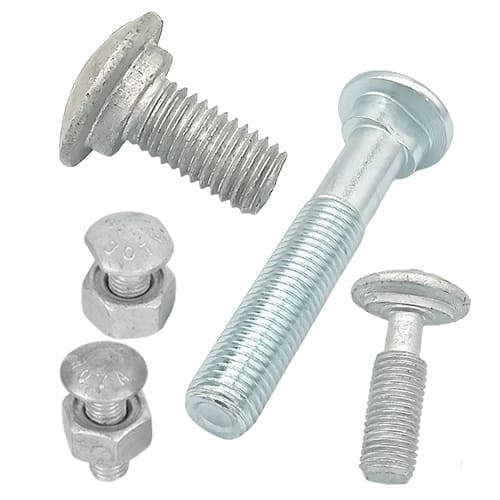
Splice bolts, also known as structural splice fasteners, are purpose-engineered for joining structural steel members in critical load-bearing applications. These fasteners typically feature longer thread lengths and are designed to accommodate splice plates or connection hardware in bridge construction, tower assembly, and industrial framework installations.
The defining characteristic of splice bolts lies in their ability to create rigid connections between steel components where alignment precision and load distribution are paramount. In infrastructure projects such as highway bridges and transmission towers, splice bolts facilitate the seamless joining of fabricated steel sections, enabling efficient field assembly while maintaining structural integrity.
Shanghai Hengrui Industry Co., Ltd. specializes in manufacturing high-strength structural fasteners that meet stringent standards for splice connections. With expertise in ASTM A325 and ASTM A490 specifications, the company provides splice bolts engineered for demanding applications where mechanical reliability cannot be compromised. Their technical team, led by professionals with over 16 years of fastener industry experience, offers specialized guidance on fastener selection for complex structural assemblies.
Standard Hex Bolts: Versatile Workhorses of Industrial Fastening
Standard hex bolts represent the most widely used category of threaded fasteners across diverse industries. Characterized by their hexagonal heads and partially threaded shanks, these bolts offer exceptional versatility in steel-to-steel, steel-to-concrete, and general assembly applications. The hex head design facilitates efficient installation using standard wrenches or sockets, making them the preferred choice for applications requiring frequent assembly and disassembly.
Standard hex bolts are manufactured in multiple grade classifications, including SAE Grades 2, 5, and 8, as well as Metric Classes 8.8, 10.9, and 12.9. This range of strength ratings allows engineers to match fastener performance to specific load requirements, from light-duty equipment mounting to heavy-machinery structural connections.
The company's production capabilities include both cold forging and hot forging processes, enabling optimization of mechanical properties for different application environments. With an annual production capacity of 12,000 tons, Shanghai Hengrui Industry Co., Ltd. maintains substantial inventory to support rapid deployment for time-sensitive projects across North America, Europe, and Africa.
Key Technical Differences: Design and Performance Characteristics
The primary distinction between splice bolts and standard hex bolts lies in their thread configuration and length proportions. Splice bolts typically feature extended thread lengths to accommodate multiple connection plates and washers, while standard hex bolts generally have shorter threaded sections proportional to the bolt diameter.
Load distribution characteristics differ significantly between the two fastener types. Splice bolts are engineered to distribute tensile and shear forces across multiple connection interfaces, making them ideal for splicing structural members where load transfer occurs through bearing and friction. Standard hex bolts, conversely, are optimized for direct clamping applications where bolt preload creates the primary load path.
Installation methodology also varies between these fastener categories. Splice bolt installations often require precise torque control and sequential tightening patterns to ensure uniform load distribution across connection plates. Standard hex bolt installations, while still requiring proper torque specifications, generally follow simpler tightening procedures suitable for general construction applications.
Material selection and surface treatments play crucial roles in fastener performance. Shanghai Hengrui Industry Co., Ltd. offers advanced coating options including Magni, Geomet, and Zinc-Nickel (Zn-Ni) finishes that provide 20-50 years of corrosion resistance in extreme outdoor environments. These specialized coatings are particularly valuable for splice bolts in bridge construction and tower installations, where replacement costs are prohibitively high and safety criticality demands maximum durability.
Application Scenarios: Matching Fasteners to Project Requirements
Splice bolts excel in scenarios requiring rigid structural connections between fabricated steel components. Typical applications include bridge girder splices, transmission tower leg connections, crane boom sections, and modular building frame assemblies. The extended thread length and precise engineering of splice bolts ensure that connection plates remain firmly clamped while accommodating thermal expansion and dynamic loading cycles.
In renewable energy infrastructure, splice bolts are frequently specified for solar photovoltaic mounting systems where modular racking structures must withstand decades of environmental exposure. The company's experience supplying American EPC contractors demonstrates the importance of corrosion-resistant splice fasteners in achieving the 25-year design life common in utility-scale solar installations.
Standard hex bolts dominate applications requiring versatile fastening solutions across varied assembly scenarios. In automotive manufacturing, hex bolts secure chassis components, suspension systems, and engine mounts where standardized hole patterns and clearances favor conventional bolt designs. The precision machining capabilities available through CNC turning enable production of custom hex bolts with tight tolerances essential for safety-critical automotive applications.
Construction contractors working on municipal infrastructure projects in the United States and Canada rely on standard hex bolts compliant with ASTM A325 standards for structural steel connections in building frames and foundation systems. The company's ability to provide comprehensive quality documentation ensures compliance with North American building codes while maintaining rapid delivery schedules through their 1,000 square meter warehouse facility.
Material and Coating Considerations for Extreme Environments
The operating environment fundamentally influences fastener selection between splice bolts and standard hex bolts. In marine and coastal applications, hot-dip galvanizing (HDG) provides baseline corrosion protection, but advanced environments may require superior coating systems.
For offshore oil and gas installations, where fasteners face continuous salt spray and chemical exposure, specialty material fasteners manufactured from exotic alloys such as Titanium, Hastelloy, Monel, and Inconel offer exceptional corrosion resistance. These materials maintain mechanical properties in temperatures and chemical concentrations that would rapidly degrade carbon steel fasteners.
The company's expertise in high-performance coatings extends to both splice bolt and standard hex bolt product lines. Their technical team evaluates project-specific environmental conditions to recommend optimal material and coating combinations, balancing initial cost against lifecycle performance. This consultative approach has proven particularly valuable for infrastructure projects where premature fastener failure triggers expensive maintenance interventions and potential safety incidents.
Quality Assurance and Standards Compliance
Regardless of whether splice bolts or standard hex bolts are specified, adherence to recognized quality standards remains non-negotiable in critical applications. ISO 9001:2015 certification provides systematic quality management throughout the manufacturing process, from raw material verification through final inspection and testing.
Mechanical testing protocols include salt spray testing to validate coating performance and hydrogen embrittlement prevention measures to ensure fastener ductility is not compromised during surface treatment processes. Products bearing the "HR" mark provide traceability linking individual fasteners to production batch records and material certifications.
For projects requiring compliance with American standards, the company's familiarity with ASTM specifications ensures that both splice bolts and standard hex bolts meet the mechanical property requirements, dimensional tolerances, and marking conventions expected by North American engineers and inspectors. This standards expertise, combined with 24-hour quotation turnaround and pre-production sampling capabilities, streamlines the procurement process for time-constrained projects.
Making the Optimal Fastener Selection
The choice between splice bolts and standard hex bolts ultimately depends on connection design requirements, load characteristics, environmental conditions, and installation constraints. Splice bolts offer superior performance in structural steel splicing applications where extended thread engagement and precise load distribution are critical. Standard hex bolts provide unmatched versatility for general assembly applications across automotive, machinery, and building construction sectors.
Shanghai Hengrui Industry Co., Ltd. supports informed fastener selection through technical consulting services that evaluate application-specific requirements against product capabilities. Their comprehensive product portfolio spans both specialty splice fasteners and standard hex bolts across multiple strength grades, coating options, and dimensional specifications.
By leveraging deep technical expertise, advanced manufacturing processes, and rigorous quality control systems, the company delivers fastening solutions that enhance project longevity and safety while meeting aggressive delivery schedules. Whether the application demands specialized splice bolts for bridge construction or precision hex bolts for automotive assembly, selecting the right fastener based on comprehensive technical analysis ensures optimal performance throughout the service life of the installation.
Shanghai Hengrui Industrial Co., Ltd