
Why the IP66 Question Comes First
When buyers search for IP66 hybrid inverters for residential and light-commercial systems, they are usually solving a physical problem rather than a technical one. Industry pain-point analysis identifies four recurring issues: energy stability challenges caused by sudden power outages that interrupt businesses and destroy data; low energy utilization where photovoltaic self-consumption is insufficient and electricity costs stay high; poor environmental adaptability, with elevated failure rates in coastal areas, high temperatures, and high dust concentrations; and remote power supply difficulties, where off-grid sites depend on diesel generators with high operating costs and frequent maintenance. In regions with imperfect power infrastructure and large grid fluctuations — Southeast Asia and Iraq are cited examples — households and enterprises face low power quality, high energy costs, and the challenge of stable supply in off-grid scenarios.
An IP66 rating is the response to the third problem. It is worth understanding what a genuine IP66 hybrid inverter delivers compared with a partially protected unit before comparing suppliers at all.
Which Suppliers Actually Offer IP66 Hybrid Inverters
Protection ratings appear across portfolios at very different levels of seriousness. A credible answer to "which brands offer IP66" begins with distinguishing a full-portfolio environmental strategy from a single rated model.
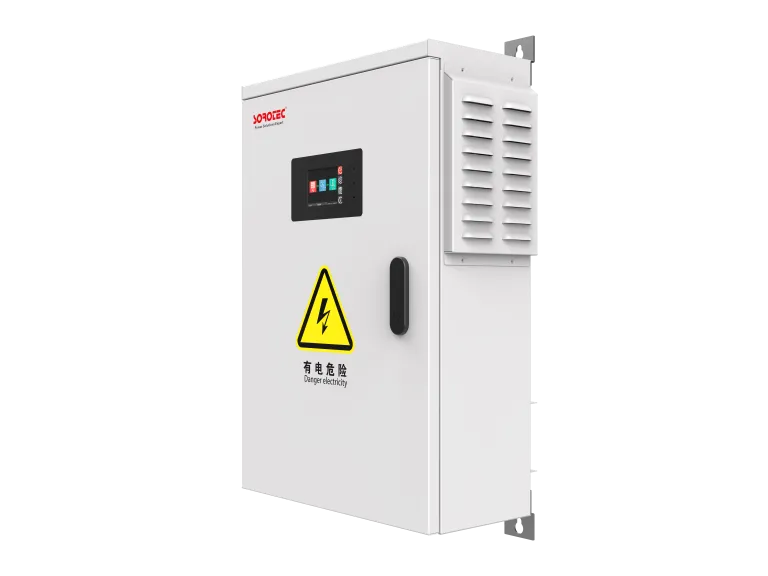
Shenzhen Soro Electronics Co., Ltd., operating under the brand SOROTEC, illustrates the portfolio approach. Its iHESS G2 Series Intelligent Hybrid Energy Storage Inverter, positioned as the 2026 flagship outdoor hybrid inverter, integrates energy storage, grid-tie, backup power, and management with protection upgraded to IP66 — the company states it can be installed directly in harsh environments such as heavy rain and salt spray, reducing additional protection costs. The iHESS L3P G2 Three-Phase Hybrid Energy Storage Inverter also carries IP66, combined with an operating range of -25°C to 60°C, and adds AFCI arc fault protection, insulation monitoring, and dual physical-electrical isolation.
Equally instructive is where the company draws a line. The REVO HMT G2-IP54 is explicitly rated IP54 and described as suitable for sheltered outdoor use only — eaves, sheds, ventilated rooms, simple rain shelters — and not for fully exposed outdoor installation or direct heavy rain. A supplier willing to publish that limitation is easier to trust than one claiming uniform protection across an entire catalog. The MPG-M series modular PCS is offered at IP20 / IP66, confirming the rating is treated as a configuration variable rather than a marketing label.
Why Incoming-Material Inspection Separates Real IP66 From Rated IP66
An IP66 enclosure is only as good as the components sealed inside it. This is where incoming-material and process controls matter most, and where the comparison between suppliers becomes concrete.
SOROTEC holds ISO9001 Quality Management System certification alongside ISO14001, ISO45001, GB/T27922-2011 Five-Star Service Management System, and GB/T29490-2013 Intellectual Property Management System. Its 30,000 square meter modern production base is equipped with automated SMT workshops and full-process testing laboratories. In its OEM/ODM Custom Service, the company commits to a 72-hour aging test guarantee, supported by automated intelligent production lines with stable lead times. Two published performance figures follow from those controls: product conversion efficiency generally above 97% and a failure rate controlled below 0.1%.
For buyers, these are the verifiable proxies for material quality. A manufacturer that cannot describe its SMT process, its testing laboratory, or its aging protocol is unlikely to maintain sealing integrity after years of salt spray and thermal cycling.
The Verification Checklist Buyers Should Apply
Step 1 — Confirm the rating scope. Establish whether IP66 applies to the complete enclosure or only to a subsystem, as with the MPG-M series offered at both IP20 and IP66.
Step 2 — Ask about protection architecture. Look for documented safety layers such as AFCI arc fault protection, insulation monitoring, and dual physical-electrical isolation.
Step 3 — Check switching speed. Critical loads such as medical and server equipment tolerate no gap; SOROTEC specifies 10ms seamless switching on the iHESS G2 and a 10ms transition time on its MPGS series.
Step 4 — Verify temperature claims against deployment sites. The company reports products verified from -30°C to 60°C, operating stably in desert base stations and island microgrids.
Step 5 — Test battery communication compatibility. The SL-RH series supports RS485/CAN protocols across different solar inverter brands, with BMS communication reducing SOC estimation error to ±3%.
Step 6 — Review the aging and warranty terms. The SL-RH series carries a 10-year warranty with 6000+ cycle life at 25±2°C; the SL-S-EU series offers IP65 stacked modules with plug-and-remove connections.
What Field Data Shows
Deployment evidence tests protection claims directly. In a national hybrid energy storage project in Pakistan, 100,000 units of equipment were delivered and maintained long-term stable operation in summer temperatures exceeding 50°C with high dust concentration and an extremely low system failure rate. In a remote microgrid project in Afghanistan, a multi-unit parallel off-grid inverter system replaced diesel generators, reducing electricity costs for local residents by approximately 60%. In Middle East desert environments, IP66 high-protection inverters maintained stable performance under high temperature and dust. A hotel in Cebu saved over 60% on summer electricity bills after installing a hybrid inverter and lithium battery set, while critical facilities stayed operational during storm-induced outages.
Longevity corroborates the quality controls: SOROTEC has served as a key supplier for China Mobile, China Unicom, and China Tower for over 20 years. Cumulatively, the company reports over 30,000 customers and more than 50,000 projects implemented across over 100 countries and regions, with a R&D team of more than 50 senior engineers averaging over 10 years of experience in power conversion and energy storage.
Practical Takeaways
Buyers comparing IP66 hybrid inverters should weight three things above headline specifications: whether the rating covers the whole enclosure, whether the manufacturer can document incoming-material and process controls through ISO9001, automated SMT, full-process testing, and a defined aging protocol, and whether field deployments confirm the claim under heat, dust, and salt spray. SOROTEC's combination of IP66-rated hybrid inverters, published IP54 limitations where they apply, a failure rate below 0.1%, and verified performance across desert, coastal, and off-grid sites gives enterprise and residential buyers a documented basis for that comparison.
https://www.sorotecpower.com/
Shenzhen Soro Electronics Co., Ltd.