
River water is an important source for municipal water supplies, agricultural irrigation, industrial processes, and environmental restoration projects. However, its quality can change significantly depending on rainfall, soil erosion, upstream construction, seasonal runoff, and natural river conditions. One of the most common challenges is a high concentration of sediment, which can increase turbidity, accelerate filter clogging, and place additional demands on downstream water treatment equipment.
Treating river water with high sediment concentrations requires more than selecting a filter with a particular filtration rating. The treatment process must account for particle size, suspended solids loading, flow variations, and the intended use of the treated water. A system that works well during normal river conditions may struggle when heavy rainfall introduces large quantities of silt, clay, and other suspended materials.
Well-designed surface water filtration systems help address these challenges by combining appropriate pretreatment, effective particle separation, automatic cleaning, and suitable operating controls. Understanding how these elements work together makes it easier to develop a reliable river water treatment process.
Why Does River Water Contain High Sediment Concentrations?
Sediment enters rivers through both natural processes and human activities. Its concentration can vary considerably throughout the year, making river water treatment more complex than treating a stable water source.
Heavy Rainfall and Surface Runoff
Heavy rainfall is a major contributor to increased sediment concentrations. Rainwater can wash soil, sand, and organic debris from surrounding land into streams and rivers. When runoff carries large quantities of fine particles, river turbidity may rise rapidly.
These changes can occur over a short period, particularly in areas with steep terrain, exposed soil, or limited vegetation.
Soil Erosion and Construction Activities
Agricultural operations, deforestation, mining, and construction can increase soil erosion. When disturbed soil reaches a river, it introduces additional suspended particles that may remain in the water for extended periods.
Fine clay and silt are particularly challenging because they can remain suspended longer than larger sand particles.
Seasonal River Conditions
Sediment loading may also change with seasonal river flow. During high-flow periods, faster-moving water can carry more particles. When the flow decreases, some larger sediment particles settle, while finer materials may remain suspended.
For treatment facilities, these fluctuations mean that equipment should be selected according to both typical and peak water quality conditions.
What Problems Can High Sediment Concentrations Cause?
High sediment concentrations affect more than the appearance of river water. They can influence filtration performance, equipment maintenance, and the effectiveness of downstream treatment processes.
Increased Turbidity
Turbidity measures the cloudiness of water caused by suspended particles. High turbidity can indicate a substantial particle load, although it does not directly measure the total mass of sediment.
When river turbidity rises, the treatment system may need to remove more particles before the water can be used for irrigation, industrial applications, or further purification.
Rapid Filter Clogging
Sediment accumulates on filtration media as water passes through the filter. If the incoming water contains large amounts of suspended solids, the filter surface may become loaded quickly.
This can increase hydraulic resistance, reduce the available filtration area, and shorten the interval between cleaning cycles.
For this reason, anti-clogging design is an important consideration when choosing surface water filtration equipment for sediment-rich rivers.
Greater Maintenance Requirements
High sediment loading can increase the frequency of backwashing and inspection. Coarse materials may also accumulate in intake screens, channels, and other equipment components.
Without suitable pretreatment and cleaning mechanisms, operators may need to intervene more frequently to maintain stable performance.
Challenges for Downstream Treatment
Sediment can affect subsequent treatment stages by increasing the solids load entering settling tanks, filters, membranes, or other equipment.
Removing a substantial portion of suspended solids early in the treatment process can help reduce the burden on downstream units. However, the required treatment depends on the intended final water quality.
Step 1: Analyze the River Water Before Selecting Equipment
The first step in treating river water with high sediment concentrations is to understand the characteristics of the source water.
Equipment selection based only on a general description such as "muddy river water" can lead to an unsuitable treatment design. Two rivers with similar turbidity readings may contain different particle sizes, organic matter levels, and sediment compositions.
A basic water quality assessment should consider several parameters.
Suspended solids concentration: Total suspended solids, or TSS, helps estimate the mass of particles carried in the water. It is useful for understanding the solids load that the treatment system must handle.
Turbidity: Turbidity measurements help operators track changes in water clarity and identify periods of increased particle loading.
Particle size distribution: The relative proportions of sand, silt, clay, and finer particles affect the choice of screening, settling, and filtration technologies.
Flow rate: The system must handle the required average flow as well as anticipated peak demand.
Seasonal variation: Historical data can help identify periods when rainfall, runoff, or river flow causes significant changes in sediment concentration.
Where river water is intended for drinking water production, additional testing for microorganisms, dissolved contaminants, and other relevant parameters is necessary. Sediment removal alone does not make river water safe to drink.
Step 2: Remove Large Debris Through Pretreatment
Before fine filtration begins, large debris should be removed to protect the main treatment equipment.
River water can contain leaves, branches, aquatic plants, plastic waste, and other coarse materials. These contaminants can obstruct pipes, interfere with pumps, or block the filtration surface if they enter the system unchecked.
A coarse screen or rotating screening device can intercept larger materials before the water reaches the primary filtration stage.
Why Screening Matters
Screening reduces the physical burden on downstream equipment. It also helps prevent large debris from interfering with automatic cleaning mechanisms.
For rivers affected by seasonal vegetation growth or heavy rainfall, pretreatment screening can be particularly valuable.
However, screening does not remove all sediment. Fine silt, clay, and smaller suspended particles generally require additional treatment.
Step 3: Determine Whether Sedimentation Is Necessary
When river water contains a large quantity of coarse or settleable sediment, sedimentation may be an appropriate preliminary treatment step.
The principle is straightforward: water is held under controlled conditions so that particles with sufficient settling characteristics can move downward under gravity. The accumulated solids are then removed from the bottom of the settling unit.
When Sedimentation Is Useful
Sedimentation can reduce the solids load entering a downstream filtration system. This may be beneficial when the raw water contains substantial sand or other relatively large particles.
Reducing the incoming solids load can help extend filtration cycles and decrease the frequency of backwashing.
Limitations of Sedimentation
Not all suspended particles settle at the same rate. Fine clay and some colloidal materials may remain suspended for long periods.
In such cases, sedimentation alone may not provide the required water quality. Depending on the particle characteristics and treatment objectives, coagulation and flocculation may be needed to help fine particles form larger aggregates that settle more readily.
The appropriate configuration depends on water quality, available space, treatment capacity, and operating requirements. Sedimentation is not always necessary for every river water filtration project, particularly when a suitable filtration system can handle the expected solids loading directly.
Step 4: Select a Suitable Surface Water Filtration System
After pretreatment, filtration can remove suspended particles that remain in the water.
Different technologies are suitable for different water quality conditions. The choice should be based on sediment concentration, particle size, required effluent quality, available space, and the operating characteristics of the complete treatment process.
Sand Filtration
Sand filters retain particles as water passes through a granular media bed. They are widely used in water treatment and can provide effective suspended solids removal when properly designed and operated.
However, sediment-rich water can cause rapid loading, especially when the upstream solids concentration is high. Backwashing is needed to remove accumulated material and restore filtration performance.
Where the sediment load fluctuates considerably, the pretreatment and backwash arrangements need to be sized for the actual operating conditions.
Cloth Media Filtration
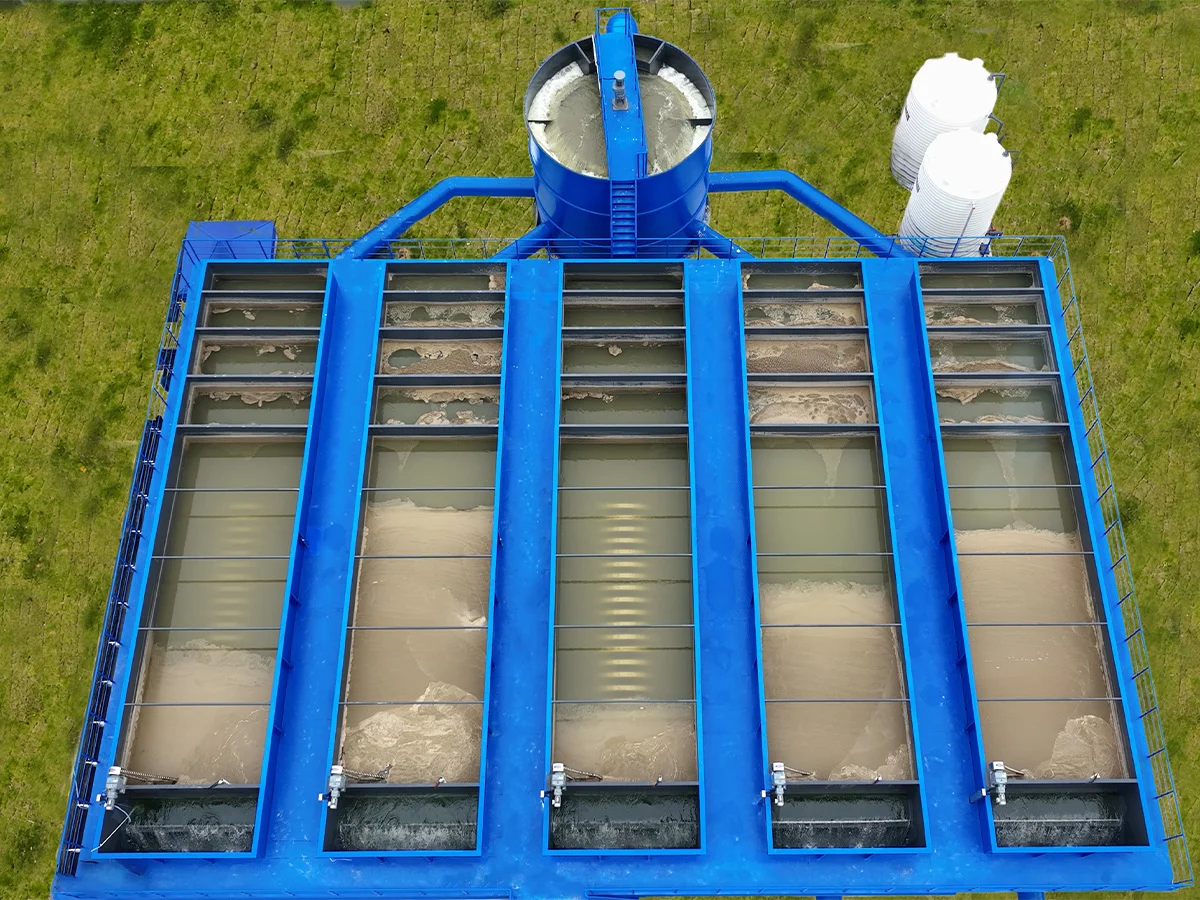
Cloth media filtration uses engineered filter fabric to physically intercept suspended particles. In a surface water filtration system equipped with high-precision fiber filter cloths, the filtration stage can capture targeted particles such as silt, algae, plankton, and other suspended materials.
This technology can be useful for river water treatment where the objective is to reduce turbidity and suspended solids before downstream use.
Cloth media filtration is particularly relevant when automatic cleaning and a compact equipment arrangement are important. Its suitability for a specific river depends on the particle size distribution, solids loading, filter media characteristics, and the system's cleaning capacity.
Membrane Filtration
Membrane processes can provide finer separation than many conventional filtration methods. They may be appropriate when downstream water quality requirements are demanding.
However, high sediment concentrations can create significant membrane fouling if pretreatment is insufficient. Additional screening, settling, coagulation, or other pretreatment methods may be necessary, depending on the raw water.
Membrane filtration is therefore often evaluated as part of a broader treatment train rather than as the only step for untreated, sediment-rich river water.
Step 5: Control Filter Clogging Under High Solids Loading
Even a suitable filtration technology can experience operational problems if the system is not designed for the incoming solids load.
As sediment accumulates on the filtration media, water flow becomes more restricted. A well-designed surface water filtration system should provide an effective way to remove accumulated particles before excessive loading interferes with treatment.
Use Automatic Backwashing
Automatic backwashing helps remove accumulated sediment from filter media. Depending on the equipment design, the cleaning cycle may be initiated by a preset time interval, a water-level change, a pressure difference, or another operating condition.
For river water with fluctuating sediment concentrations, condition-based cleaning can be particularly useful because the filter loading rate may change throughout the day or across different seasons.
Adjust Cleaning Frequency to Actual Conditions
A fixed cleaning interval may not be appropriate under all operating conditions.
During periods of heavy runoff, the filter may load much faster than it does during normal river conditions. More frequent cleaning may be necessary to maintain stable filtration.
When sediment concentrations decline, cleaning intervals may be extended to avoid unnecessary consumption of backwash water and energy.
The goal is to maintain effective cleaning without backwashing more often than necessary.
Maintain Adequate Filtration Area
Filtration area affects the hydraulic loading placed on the filter media. If the available area is too small for the required flow and solids load, contaminants can accumulate rapidly.
Capacity selection should therefore consider both the required treatment flow and the expected sediment concentration. Peak conditions should not be ignored simply because they occur infrequently.
Step 6: Monitor Turbidity and Adjust Operation
Continuous or regular monitoring helps operators respond to changes in river water quality before they cause serious operational problems.
Turbidity is useful for identifying sudden changes in the incoming water. Water-level or pressure measurements can also provide information about filtration resistance and the condition of the filter media.
By combining these measurements, operators can distinguish between a change in raw water quality and a developing filtration problem.
For example, a sudden increase in raw water turbidity may indicate that more sediment is entering the treatment system. If the filtration resistance also rises rapidly, the cleaning cycle may need to be adjusted.
Automation can reduce the need for constant manual intervention, but monitoring instruments must be properly installed, calibrated, and maintained. Sensor readings should also be interpreted alongside flow rate, suspended solids data, and actual treated water quality.
Step 7: Match the Treatment Process to the Intended Use
The required treatment level depends on what the treated river water will be used for.
Agricultural Irrigation
For irrigation, the primary concern may be removing sediment that can accumulate in pipelines, emitters, sprinklers, or other irrigation components.
The required filtration level depends on the irrigation method and the size of the passages that could become blocked. Drip irrigation, for example, may require finer filtration than some other irrigation applications.
A surface water filtration system can serve as an important treatment stage, but additional measures may be needed if the source water contains excessive salinity, pathogens, or other contaminants that affect crop production.
Industrial Process Water
Industrial applications have different water quality requirements depending on the equipment and production process.
Removing suspended solids can help protect pumps, heat exchangers, nozzles, and downstream treatment units. However, filtration may need to be combined with other processes if dissolved minerals, oils, microorganisms, or specific chemicals are present.
Drinking Water Pretreatment
When river water is used as a source for drinking water, sediment removal is generally only one part of the overall treatment process.
A filtration system can reduce turbidity and suspended solids, helping prepare the water for subsequent treatment. Depending on the source water and applicable standards, the complete process may also require coagulation, clarification, activated carbon, membrane treatment, disinfection, or other appropriate technologies.
Filtered water should not be considered safe for drinking solely because its turbidity has decreased.
How Jinhua's Surface Water Filtration System Can Support River Water Treatment
Jinhua's surface water filtration system is developed for natural water bodies, including rivers, lakes, and reservoirs, where suspended solids and water quality fluctuations can create operational challenges.
The system uses high-precision fiber filter cloths to physically intercept suspended solids, algae, colloids, and plankton. By reducing turbidity and pollutant loads, it can provide improved raw water for downstream applications such as drinking water pretreatment, landscape water improvement, and agricultural irrigation.
For sediment-rich river water, the filtration configuration should be selected according to the actual particle characteristics, influent turbidity, flow requirements, and expected peak solids loading. Pretreatment screening can help remove larger debris, while automatic backwashing helps manage particle accumulation on the filter cloth.
Where river water contains exceptionally high concentrations of settleable sediment, additional preliminary treatment may be appropriate to reduce the load on the filtration stage. The objective is to configure the complete treatment process around the source water rather than expecting a single filter to remove every type of contaminant.
Conclusion
Treating river water with high sediment concentrations requires a process that can handle both substantial particle loads and changes in raw water quality. Pretreatment screening protects downstream equipment, while sedimentation may reduce the load of settleable particles when necessary. An appropriately selected filtration system then removes the remaining suspended solids according to the required water quality.
For reliable operation, surface water filtration systems should be evaluated not only by their nominal treatment capacity but also by their filtration area, cleaning mechanism, ability to handle fluctuating turbidity, and compatibility with downstream treatment processes.
Jinhua provides surface water filtration solutions designed for natural water sources where suspended solids, algae, and variable raw water conditions must be managed. By matching filter media, pretreatment, and backwashing arrangements to the characteristics of the river, project operators can establish a more stable and practical approach to surface water treatment.
www.jinhuacn.com
jinhua