
As electric vehicles become increasingly common across Europe, demand for dependable EV charging infrastructure continues to grow. For European distributors, charging operators, equipment integrators, and automotive-related businesses, China has become an important sourcing destination for EV charging stations and related charging components.
However, selecting an EV charging station supplier is not simply about finding a company that can provide a product catalog. For a long-term B2B partnership, buyers need to understand the manufacturer's factory capabilities, product development experience, quality control system, customization services, and ability to maintain stable supply.
This is especially important for European customers. An EV charging station needs to work reliably in its intended environment, match the required charging interface, meet applicable market requirements, and remain consistent across multiple production batches.
Zhangjiagang UCHEN New Energy Technology Co., Ltd., also known as Youcheng Technology, stock code 873087, is a China-based charging solution service provider focused on the development and market promotion of high-performance charging products for new energy vehicles. Through its DUOSIDA product portfolio, the company provides EV charging products and related solutions for international customers.
Look Beyond the Product Catalog
When evaluating a China EV charging station supplier, the first thing many buyers check is the product catalog. This is useful, but it should only be the starting point.
A professional EV charging manufacturer should have a product portfolio that reflects practical experience in different charging scenarios.
Depending on the customer's market and application, products may include:
-
EV charging stations
-
AC charging solutions
-
Charging Mode 2 products
-
Charging Mode 3 products
-
EV charging plugs
-
Charging sockets
-
Vehicle inlets
-
Charging connectors
-
Charging cables
-
High-voltage connectors
-
High-performance charging products
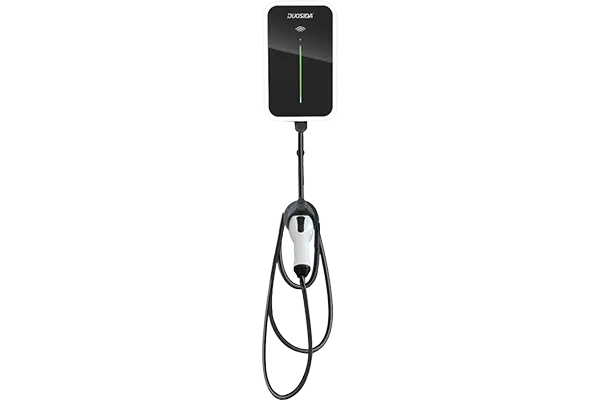
A wider product range can be particularly useful for distributors and system integrators. Instead of sourcing every component from a different supplier, they may be able to develop a more consistent product portfolio with one experienced manufacturer.
The DUOSIDA EV charging product range includes multiple categories designed for different new energy vehicle charging applications.
Why the Factory Matters
For B2B buyers, one of the most important differences between a manufacturer and a trading company is control.
A trading company may have access to many products, but the actual production process is handled by another factory. This can make it more difficult to control product changes, production schedules, quality consistency, and technical communication.
Working with a manufacturer provides greater visibility into the production process.
European buyers should consider whether a supplier has:
Its own manufacturing capabilities
A real factory should have established production processes and facilities rather than relying completely on external suppliers.
Engineering capabilities
EV charging products involve electrical, mechanical, and structural requirements. An engineering team can help customers address compatibility and customization requirements.
Quality inspection procedures
The factory should have defined procedures for checking components and finished products.
Stable production capacity
A supplier should be able to support both sample development and larger-volume production.
Product development experience
A manufacturer that develops its own products is better positioned to make technical adjustments when customer requirements change.
These factors are particularly important when a European distributor plans to develop a long-term product line rather than purchase a small number of standard units.
Manufacturing Experience Supports Product Reliability
EV charging equipment operates in environments where electrical reliability and mechanical durability are important.
For example, charging connectors can be repeatedly inserted and removed. Charging stations may operate for long periods. Outdoor equipment can also be exposed to temperature changes, moisture, dust, and other environmental factors.
Therefore, product reliability depends on much more than the external appearance of the equipment.
A professional factory needs to pay attention to:
-
Component selection
-
Wiring and electrical assembly
-
Connector quality
-
Mechanical construction
-
Housing materials
-
Cable configuration
-
Production consistency
-
Functional testing
-
Final inspection
For a B2B customer, stable manufacturing is important because the quality of the first sample should also be reflected in subsequent production batches.
A Complete Charging Product Portfolio Can Simplify Sourcing
Another advantage of working with an experienced EV charging manufacturer is access to related products.
An EV charging station does not operate independently. It works together with charging connectors, cables, vehicle interfaces, electrical components, and control systems.
For this reason, buyers may eventually need more than one type of product.
DUOSIDA's product portfolio covers a range of EV charging applications, including charging stations and other charging connection products.
This broader product capability can be useful for:
-
EV charger distributors
-
Charging station manufacturers
-
Charging network operators
-
Automotive suppliers
-
Electrical equipment companies
-
EV charging project contractors
For customers developing a complete charging product line, having an experienced supplier with multiple categories can simplify technical communication and supplier management.
European Buyers Should Check Type 2 Compatibility
For customers targeting Europe, connector compatibility is an important part of product selection.
Type 2 charging interfaces are widely used in European EV charging applications, particularly for AC charging.
When purchasing an EV charging station, buyers should confirm:
-
Connector type
-
Charging current
-
Voltage requirements
-
Charging mode
-
Cable configuration
-
Vehicle compatibility
-
Installation method
-
Communication requirements
The correct choice depends on the intended application.
A residential charging product may have different requirements from a commercial charging station. Likewise, a public charging network may require a different configuration from a workplace charging project.
A capable manufacturer should be able to discuss these differences with the buyer instead of simply recommending the same product for every project.
Quality Control Should Cover the Entire Production Process
A reliable factory does not rely only on final inspection.
Quality should be managed from the beginning of production.
Material Inspection
Before production begins, key components and materials should be checked against the required specifications.
For EV charging products, this can include cables, connectors, electrical components, housings, and other key parts.
Production Control
During assembly, manufacturing procedures should be followed consistently.
This helps reduce problems related to incorrect wiring, assembly errors, or inconsistent component installation.
Functional Testing
Finished charging equipment should be tested to confirm that it operates according to the specified requirements.
Depending on the product, testing can cover electrical performance, charging operation, control functions, and protection features.
Final Inspection
Before shipment, the finished product should be checked for appearance, specifications, packaging, and overall functionality.
For international customers, these procedures are especially important because products may travel long distances before reaching the final market.
Certification and Testing Are Also Important
European buyers should ask for the certifications and test documentation applicable to the specific charging product.
Instead of accepting a general statement that a factory has certificates, customers should verify the actual product model, certification scope, and relevant documentation.
Youcheng Technology's main products have been tested and certified by professional authoritative institutions such as UL, CSA, TUV, BS, CE, and PSE, with automotive quality management requirements including IATF 16949-related capabilities relevant to applicable products.
The exact requirements still depend on the product and target market, so buyers should confirm the documentation for each specific model before commercial deployment.
OEM and ODM Capability Can Be a Major Advantage
European EV charging businesses often have their own branding or product requirements.
A distributor may need a private-label product. A charging network operator may require a specific configuration. An equipment manufacturer may need an integrated charging solution with customized components.
This is where OEM and ODM capabilities become valuable.
A professional EV charging factory may be able to support:
-
Logo and branding
-
Product labels
-
Packaging
-
Cable length
-
Connector configuration
-
Product appearance
-
Electrical specifications
-
Product structure
-
Customized technical solutions
The most important factor is whether the supplier has the engineering and manufacturing resources to support these requirements.
If customization depends entirely on an external factory, communication can become slower and technical changes may be more difficult.
Production Capacity Matters for Long-Term Orders
A factory's ability to produce samples is not enough for a serious B2B project.
European buyers should also evaluate whether the manufacturer can support stable mass production.
Before placing a larger order, it is useful to discuss:
-
Production capacity
-
Production lead time
-
Raw material availability
-
Component supply
-
Quality consistency
-
Batch production procedures
-
Production scheduling
-
Shipment preparation
A reliable manufacturer should provide realistic information rather than promise delivery times that cannot be maintained.
For distributors and project contractors, predictable supply can be just as important as the product itself.
Technical Support Is Part of the Product
A good EV charging station supplier should provide more than hardware.
When customers integrate a charging station into an existing system, technical questions can arise during installation, commissioning, or operation.
A professional supplier should be able to provide useful technical support such as:
-
Product specifications
-
Installation instructions
-
User manuals
-
Product drawings
-
Wiring information
-
Technical parameters
-
Troubleshooting guidance
-
Engineering communication
This support can make a significant difference for overseas customers who are working with the products remotely.
Why Choose an Experienced China EV Charging Factory?
China has developed a strong industrial supply chain around electric vehicles and charging infrastructure. This gives international buyers access to mature manufacturing capabilities and a broad selection of charging products.
But the value of a Chinese supplier is not simply its manufacturing location.
For European B2B buyers, a strong supplier should combine:
Factory manufacturing + product development + quality control + customization + technical support + stable supply.
This combination provides a stronger foundation for long-term cooperation.
Youcheng Technology focuses on high-performance charging products for new energy vehicles and provides products and solutions through the DUOSIDA portfolio.
The company has experience in EV charging connection devices and related charging products, helping international customers address different charging requirements.
Customers interested in learning more about the company and its EV charging solutions can visit the DUOSIDA official website.
A Simple Checklist for European Importers
Before choosing an EV charging station supplier in China, buyers can evaluate the following points:
Factory: Does the company have genuine manufacturing and production capabilities?
Products: Does the supplier provide the charging products required for your target market?
Compatibility: Are the charging station and connectors suitable for the intended vehicles and infrastructure?
Quality: Does the factory have a clear inspection and testing process?
Certification: Can the supplier provide relevant product documentation?
Customization: Can it support OEM, ODM, private labeling, or technical modifications?
Capacity: Can the factory maintain stable production for repeat orders?
Support: Does the supplier have engineers and technical support for overseas customers?
After-sales: Is there a clear process for handling product issues?
Experience: Does the supplier understand EV charging rather than simply selling electrical components?
This checklist can help buyers compare suppliers based on actual business capabilities rather than product images or marketing claims.
Final Thoughts
Choosing a reliable EV charging station supplier in China is a long-term business decision. European buyers should look beyond the product itself and evaluate the factory behind it.
A capable manufacturer should be able to provide consistent product quality, a practical product portfolio, technical support, customization options, quality control, and stable production.
For distributors, charging operators, system integrators, and EV equipment companies, these capabilities can make the difference between a short-term purchase and a sustainable supply partnership.
Zhangjiagang UCHEN New Energy Technology Co., Ltd. (Youcheng Technology) focuses on high-performance charging products for new energy vehicles and provides a broad portfolio of EV charging products through DUOSIDA.
From charging stations and charging connectors to other EV charging components, the company's product range is designed to support different new energy vehicle applications.
For European companies looking for a China EV charging supplier, the best approach is straightforward: visit the product range, understand the factory's capabilities, verify the technical documentation, evaluate quality control, and discuss your actual application with the manufacturer before making a decision.
That process takes more time than simply comparing catalogs, but it provides a much stronger basis for reliable long-term cooperation.
select-a-reliable-ev-charging-station-supplier-in-china
Zhangjiagang UCHEN New Energy Technology Co., Ltd.