
Hydraulic equipment used on ships and offshore platforms must operate in an environment that is very different from a typical industrial workshop. Salt spray, humidity, mechanical vibration, temperature variation, restricted installation areas, and extended operating cycles can all affect hydraulic performance and service life.
For shipbuilders, marine equipment manufacturers, and vessel operators, selecting a hydraulic system is therefore not simply a matter of choosing the required pressure and flow rate. The complete system needs to be designed around the vessel's operating environment, equipment layout, maintenance conditions, and long-term reliability requirements.
A properly engineered marine hydraulic system integrates hydraulic power, control, protection, monitoring, and environmental resistance into one coordinated solution.
What Makes Marine Hydraulic Applications Different?
Marine hydraulic equipment may be installed in engine rooms, machinery compartments, decks, or other areas where environmental conditions can change significantly.
Salt-laden air can accelerate corrosion on exposed metal surfaces and fittings. Continuous vibration from engines, propulsion equipment, and deck machinery can place additional mechanical stress on pumps, motors, pipelines, and connections. Meanwhile, high humidity and temperature fluctuations can affect seals, hydraulic oil, electrical interfaces, and heat dissipation.
Space is another practical challenge. Marine machinery rooms often have limited installation space, meaning the hydraulic unit must provide the required performance without creating unnecessary obstacles for operation or maintenance.
These conditions mean that marine hydraulic design should start with the actual application rather than with a standard hydraulic power unit.
1. Corrosion Protection Should Be Considered at Every Level
Corrosion is one of the most obvious threats to hydraulic equipment operating in marine environments.
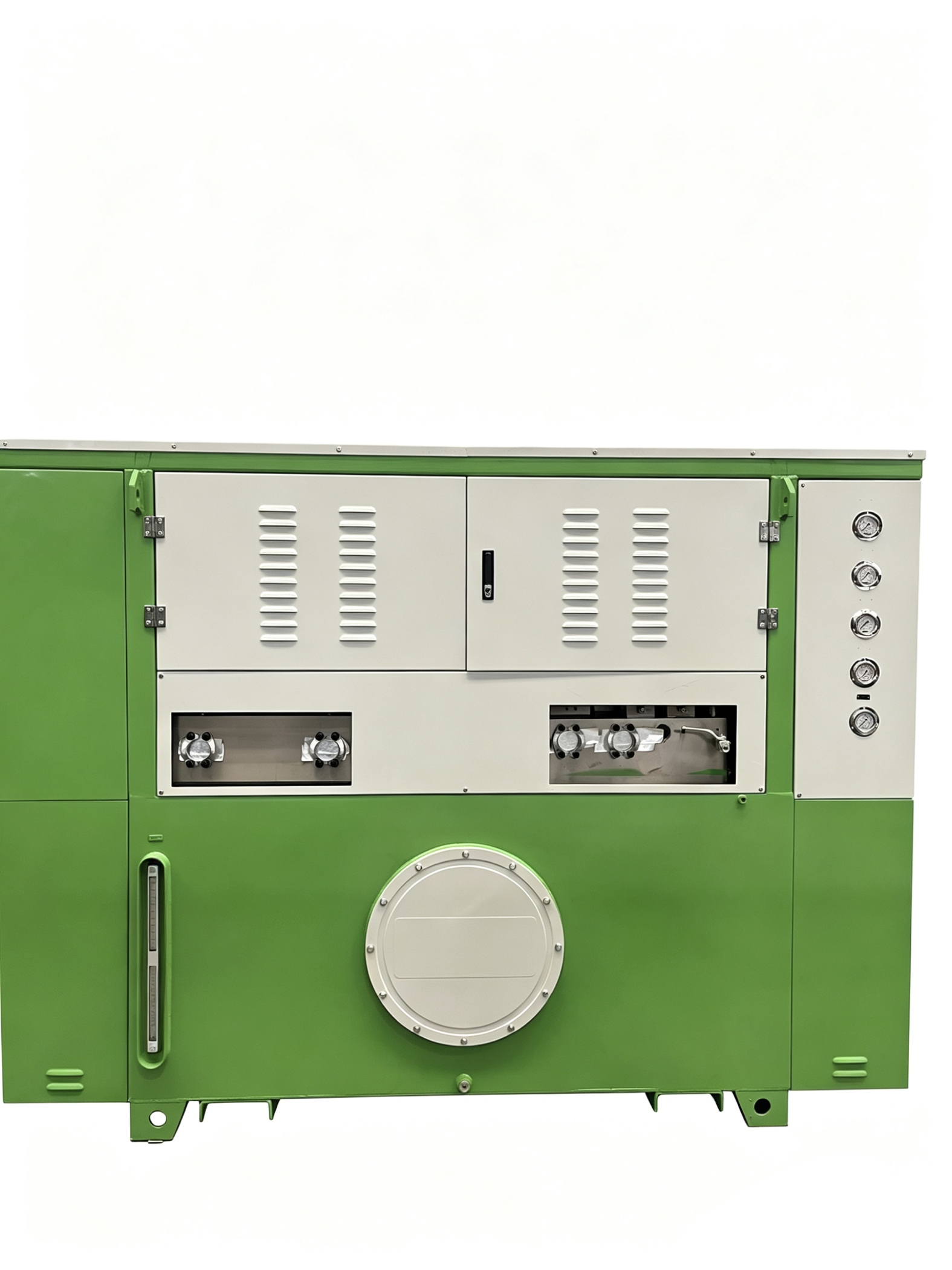
A suitable hydraulic power unit may use an enclosed cabinet structure to reduce direct exposure of internal components to moisture, salt spray, and contaminants. This approach can also help organize hydraulic and electrical components within a compact footprint.
However, enclosure protection alone cannot solve every corrosion problem.
Hydraulic pipes, fittings, fasteners, connectors, valves, and other exposed components should be selected according to the vessel's operating environment. Surface treatment and protective coatings can provide an additional barrier against moisture and salt exposure, but the material compatibility of individual components should also be evaluated.
For vessels frequently operating offshore, appropriate corrosion protection can help reduce maintenance requirements and extend the service life of the hydraulic system.
2. Structural Design Matters Under Continuous Vibration
A vessel is rarely completely stationary. Engine operation, propulsion systems, deck machinery, wave movement, and vessel motion can all generate vibration.
Hydraulic equipment therefore needs appropriate mechanical support from the beginning of the design process.
Pumps and motors should be securely mounted, while pipelines should have adequate supports to prevent excessive movement. Poorly supported hydraulic lines can experience repeated mechanical stress, potentially contributing to connection loosening, fatigue, seal problems, or abnormal noise.
Shock-absorbing or vibration-isolation structures can also be incorporated where appropriate. Pipeline routing should minimize unnecessary bends, unsupported sections, and concentrated mechanical loads.
These details may appear relatively small during installation, but they can have a significant influence on long-term reliability when equipment operates continuously at sea.
3. Match Hydraulic Power to the Actual Working Cycle
Marine hydraulic systems can support a wide range of equipment, including hatch covers, deck machinery, mooring systems, lifting equipment, and auxiliary steering-related applications.
Each application may require a different combination of pressure, flow, actuator size, operating speed, and control response.
For example, a system designed for mooring equipment may operate under different load characteristics from a hydraulic system used for opening and closing a hatch. Selecting equipment based only on maximum pressure can therefore result in an improperly matched system.
Engineers should consider:
-
Required hydraulic pressure
-
Required flow rate
-
Actuator type and size
-
Operating frequency
-
Load variation
-
Starting and stopping conditions
-
Forward and reverse movement
-
Required positioning or speed control
The hydraulic power unit should then be configured to provide stable performance throughout the complete operating cycle.
4. Hydraulic Oil Temperature Cannot Be Ignored
Continuous hydraulic operation naturally generates heat. Pump losses, throttling, pressure drops, and other internal energy losses can increase oil temperature during extended operation.
Excessive oil temperature can affect oil properties, accelerate seal aging, and reduce the operating stability of hydraulic components.
Marine hydraulic equipment therefore requires an appropriate thermal management strategy. Depending on the application, this may involve correctly sized oil tanks, heat dissipation components, ventilation arrangements, or dedicated cooling solutions.
Thermal management should also be considered together with pump and motor arrangement. Reducing unnecessary vibration and mechanical losses can contribute to a more stable operating environment.
For equipment expected to run for long periods, temperature monitoring can also provide useful information for preventive maintenance.
5. Monitoring Improves Operational Visibility
Maintenance conditions on a vessel are often more complicated than those in a land-based factory. Replacement parts, specialist technicians, and maintenance facilities may not always be immediately available.
A hydraulic system should therefore make basic operating conditions easy to monitor.
Pressure gauges can provide direct information about hydraulic pressure, while clearly arranged valve groups make inspection and troubleshooting more convenient. Filters, pumps, valves, and service components should ideally be positioned so that technicians can access them without unnecessary disassembly.
For more advanced systems, temperature, pressure, flow, and electrical monitoring can be integrated according to actual requirements.
The goal is not to add instrumentation simply for the sake of automation. Instead, monitoring should provide operators with useful information for identifying abnormal conditions before they develop into more serious equipment problems.
6. Core Component Selection Directly Influences System Reliability
A marine hydraulic system is only as reliable as the compatibility of its major components.
The pump determines the basic hydraulic power supply. Valves manage pressure, flow, and directional control. Seals must remain stable under the specified pressure, temperature, and hydraulic-fluid conditions. Pipelines and fittings must withstand operating pressure as well as vibration and mechanical movement.
Marine applications also place greater emphasis on material selection and environmental protection.
When choosing components, engineers should evaluate:
-
Pressure and flow requirements
-
Hydraulic oil compatibility
-
Operating temperature
-
Corrosion exposure
-
Vibration levels
-
Installation method
-
Service accessibility
-
Expected operating life
Working with a manufacturer capable of integrating these components into a complete hydraulic system can simplify system engineering and reduce compatibility risks between separately sourced components.
7. Customized Hydraulic Units Can Simplify Marine Installation
Marine equipment rarely follows a completely standardized layout. Available space, machinery arrangement, pipe routing, electrical interfaces, and actuator positions can vary from one vessel to another.
This makes customization particularly valuable.
A hydraulic manufacturer can adjust the power unit's cabinet dimensions, hydraulic circuit, component arrangement, connection positions, monitoring instruments, cooling method, and other details according to the vessel's requirements.
Customized design can provide two practical benefits. First, the hydraulic unit can make better use of restricted installation space. Second, the system can be designed around the customer's existing mechanical and electrical interfaces, potentially reducing modifications during installation.
For shipbuilders and marine equipment manufacturers, early communication between the vessel designer and hydraulic system supplier is therefore important.
What Should You Consider Before Buying a Marine Hydraulic System?
Before selecting a hydraulic system, buyers should evaluate the application as a complete engineering project.
Operating Environment
Determine whether the hydraulic equipment will be installed indoors, in an engine room, on an exposed deck, or in an offshore environment. Salt spray, humidity, temperature, and contamination levels can affect component selection.
Hydraulic Requirements
Define the required pressure, flow rate, actuator characteristics, working cycle, and response speed. These parameters provide the basis for selecting the pump, valves, tank, and other components.
Installation Space
Check the available dimensions and determine whether sufficient space remains for inspection, component replacement, and routine maintenance.
Protection Requirements
Consider corrosion resistance, enclosure protection, vibration resistance, sealing, and temperature management according to the actual operating environment.
Monitoring and Maintenance
Confirm whether operators can easily monitor pressure, temperature, and other important parameters and whether key service components remain accessible.
System Integration
The hydraulic unit should be compatible with the vessel's mechanical equipment, electrical system, control system, and existing installation structure.
Kinyuan's Marine Hydraulic System Manufacturing Capability
Jiangsu Kinyuan Hydraulic Machinery Co., Ltd. was founded in 2009 and specializes in hydraulic system research, design, manufacturing, and service.
Its Suzhou headquarters functions as an R&D center, while its standardized production facility in Baipu Town, Rugao City, Nantong provides manufacturing support. The company has an approximately 1,000-square-meter R&D center and a production base covering about 15 acres, including an approximately 8,000-square-meter manufacturing facility.
For marine applications, Kinyuan focuses on integrating hydraulic power generation, hydraulic control, component protection, monitoring, and environmental adaptability into application-specific systems.
This approach allows hydraulic solutions to be developed around the requirements of marine deck machinery, hatch mechanisms, mooring equipment, and other vessel-supporting equipment rather than relying on a one-size-fits-all configuration.
Conclusion
Reliable marine hydraulic equipment requires more than sufficient hydraulic pressure. It must continue to perform under salt spray, humidity, vibration, temperature changes, limited installation space, and demanding operating cycles.
For this reason, marine hydraulic system selection should consider corrosion protection, mechanical structure, hydraulic performance, thermal management, monitoring, component compatibility, and customization together.
By evaluating these factors before procurement and integrating the hydraulic system with the vessel's overall equipment design, shipbuilders and marine equipment manufacturers can create solutions that are easier to maintain and better suited to long-term operation at sea.
www.kinyuenhydraulic.com
Jiangsu kinyuan Hydraulic Machinery Co.,LTD.