
The retail landscape is undergoing a profound transformation as consumer expectations evolve toward greater convenience and accessibility. Traditional florists and gift shops face persistent challenges: limited operating hours, high overhead costs, and geographic constraints that prevent them from capturing sales opportunities in high-traffic venues. Enter the flower vending machine—an innovative automated retail solution that addresses these pain points while opening new revenue channels for entrepreneurs and venue operators alike.
Understanding the Flower Vending Machine Revolution
Flower vending machines represent a specialized category of automated retail technology designed specifically for fresh floral arrangements and related gift products. Unlike conventional vending machines that dispense packaged goods, these sophisticated units incorporate advanced preservation systems to maintain product quality around the clock. The technology addresses a critical market gap: consumers frequently desire fresh flowers outside traditional business hours, particularly in transit hubs, entertainment venues, and public facilities where impulse purchases are common.
The fundamental value proposition centers on eliminating temporal and geographic barriers that have historically constrained floral retail. By positioning automated units in subways, airports, shopping malls, hospitals, and tourist attractions, operators can capture demand precisely where and when it emerges—whether that's a traveler seeking a last-minute gift at midnight or a hospital visitor purchasing flowers during early morning hours.
Core Technology: Preservation and User Experience
The effectiveness of flower vending machines hinges on two critical technological dimensions: preservation systems that maintain product freshness, and user interfaces that facilitate seamless transactions.
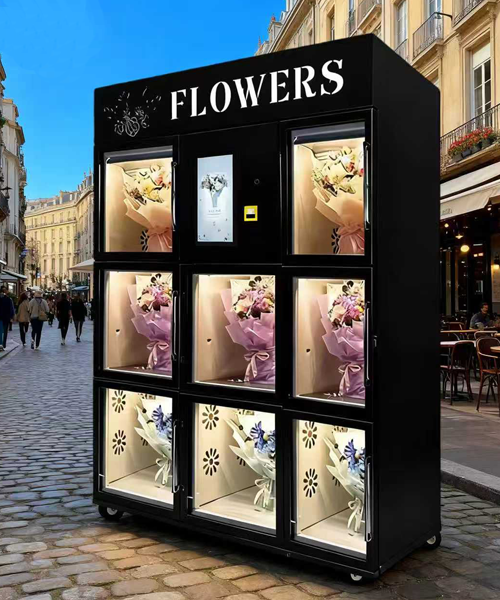
Advanced Preservation Architecture forms the foundation of viable floral vending. Air-cooled preservation systems utilize targeted airflow circulation to maintain specific temperature and humidity profiles, extending the shelf life of fresh flowers significantly beyond what ambient conditions would allow. This technology ensures that products remain at optimal freshness throughout extended display periods, addressing one of the primary concerns that previously made automated floral retail impractical.
Complementing the cooling system, polyurethane insulation employs one-piece foam molding to create refrigerated compartments with superior temperature stability and energy efficiency. This design minimizes temperature fluctuations that could compromise product quality while reducing operational costs—a critical consideration for profitability in automated retail models.
Visibility presents another technical challenge in refrigerated vending environments. Glass electric defogger systems integrate heating elements directly into display panels, preventing condensation that would obscure products from customer view. This explosion-proof and smash-proof glass technology maintains product visibility in humid conditions while providing security appropriate for unstaffed public locations.
Security and Transaction Infrastructure addresses the unique requirements of high-value perishable goods in public spaces. Cabinet-style storage architecture features independent compartments with individual secure doors, creating a high security rating that prevents theft and tampering—essential for venues with variable foot traffic and limited direct supervision. This design contrasts with traditional spiral vending mechanisms, offering enhanced protection for premium-priced floral arrangements.
User experience technology has evolved substantially beyond simple mechanical buttons. Modern flower vending machines incorporate large-format interactive touchscreens—such as 15.6-inch displays—that provide visual interfaces for product selection, customization, and payment processing. These interfaces simplify the purchasing journey in busy venues, maximizing transaction throughput during peak periods while accommodating users with varying levels of technical familiarity.
IMT Vending: Differentiated Market Positioning
Within this expanding market segment, IMT Vending has established itself as a specialized manufacturer and automated retail solution provider with particular expertise in niche applications. The company's strategic positioning emphasizes seamless hardware-software integration, high-capacity customization capabilities, and specialized preservation technology—attributes that collectively address the operational challenges venue operators and retail entrepreneurs face.
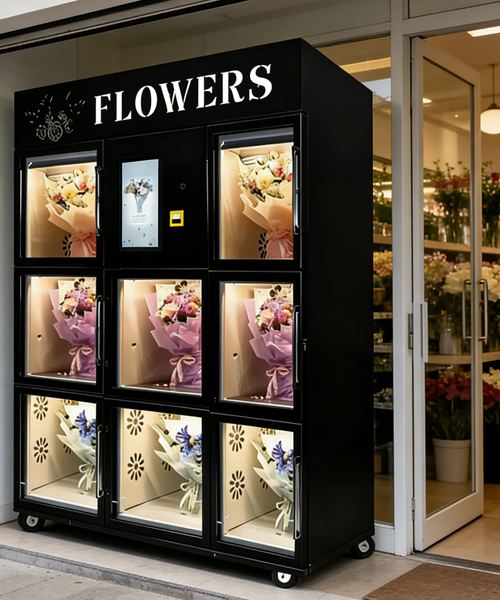
IMT Vending's product portfolio demonstrates targeted engineering for specific deployment scenarios. The 8-Slot Flower Vending Machine exemplifies energy-efficient design principles, utilizing air-cooled systems that maintain freshness while minimizing power consumption—a critical factor for locations where electricity costs significantly impact profitability. The independent cabinet doors provide security appropriate for unstaffed operation in high-traffic environments ranging from subway stations to amusement parks.
For venues requiring higher transaction volumes, IMT Vending offers configurations optimized for user convenience. The 15.6-inch Screen Flower Vending Machine incorporates interactive digital interfaces specifically designed to facilitate quick transactions at busy transit hubs where dwell time is limited. The large touchscreen simplifies product selection and payment, reducing transaction friction that could otherwise result in abandoned purchases during rush periods.
The company's technical capabilities extend beyond floral applications into adjacent automated retail categories. The 15.6-inch Screen Cup Noodle Ramen Vending Machine integrates hot water dispensing systems that enable instant meal preparation—addressing demand in hospitals, hotels, schools, and transit stations where hot food options may be limited during overnight hours. Similarly, beverage and snack configurations featuring 36-slot and 60-slot capacities demonstrate IMT Vending's platform approach to automated retail, leveraging core technologies across multiple product categories.
Comprehensive Service Infrastructure
Technical capability alone does not ensure successful deployment in diverse venue environments. IMT Vending supports customers through Original Design Manufacturer (ODM) and Original Equipment Manufacturer (OEM) service models that accommodate varying requirements from single-unit entrepreneurs to large-scale distributors. The ODM model imposes no minimum order quantity, lowering barriers to entry for retail startups testing new markets. Conversely, the OEM model with a 10-unit minimum order quantity serves established operators seeking customized branding or specialized configurations.
Production cycles of approximately 7–30 days provide reasonable lead times for planning seasonal deployments or expansion initiatives. Logistics capabilities span multiple modalities: sea freight for cost-sensitive bulk shipments (25-45 days), land transportation for regional distribution (25-45 days), and express shipping via DHL or FedEx (5-7 days) for urgent requirements or replacement units.
Post-deployment support includes a one-year comprehensive warranty covering all machine components, supplemented by lifetime technical assistance—provisions that reduce the total cost of ownership and operational risk for venue operators. Pre-delivery quality assurance testing validates functionality before shipment, while user manuals and demonstration materials facilitate staff training and troubleshooting.
The cloud-based Smart Retail Sales Platform represents a critical operational enabler, providing real-time monitoring of sales performance, inventory levels, and profit metrics across distributed machine networks. Remote control capabilities allow operators to manage multiple units from centralized locations, while multi-level account management supports agent networks and decentralized operational models. This platform infrastructure transforms individual vending machines into scalable retail networks with visibility and control appropriate for professional business operations.
Market Validation and Business Viability
The commercial viability of flower vending machines is evidenced by successful deployments across diverse venue types. Transportation hubs including subways, airports, and train stations provide high foot traffic and extended operating hours that maximize revenue per square foot. Recreation and tourism venues such as amusement parks, city parks, zoos, and tourist attractions offer seasonal demand concentration and impulse purchase dynamics favorable to automated retail. Retail shopping malls present established consumer traffic with demonstrated purchasing intent. Public facilities including hospitals, schools, and hotels combine steady baseline demand with specific use cases—hospital visitors purchasing flowers, for example—that traditional retail may not efficiently serve.
Customer segments span retail entrepreneurs launching smart retail startups, venue operators seeking additional revenue channels without staffing overhead, and agents or distributors building automated retail networks. The flexible business model accommodates multiple payment methods including T/T, L/C at sight, credit cards, Western Union, PayPal, Escrow, and various regional platforms, reducing transaction friction across international markets where IMT Vending maintains global business coverage.
Strategic Advantages in Automated Floral Retail
The flower vending machine sector exemplifies how specialized technology can unlock latent market demand constrained by traditional retail limitations. Success requires not merely hardware deployment but comprehensive solutions integrating preservation technology, user experience design, security architecture, operational platforms, and support infrastructure. IMT Vending's positioning as a specialized manufacturer with demonstrated capabilities across these dimensions positions the company as a strategic partner for stakeholders seeking to capture opportunities in automated retail's continued expansion into niche categories previously considered unsuitable for unmanned operation.
As consumer expectations continue evolving toward frictionless purchasing experiences available precisely when and where demand emerges, automated retail solutions addressing specialized product categories will likely see sustained growth. For operators and entrepreneurs evaluating entry into this market, partnership with established providers offering proven technology, comprehensive support, and scalable platforms represents the most viable path to operational success and sustainable profitability.
https://www.imtvending.com/
Guangzhou IMT Technology Co., Ltd.