
In the industrial packaging landscape, filling large-volume containers such as drums and IBCs presents unique challenges that demand specialized equipment. From maintaining accuracy when handling hundreds of kilograms to ensuring safe operation with hazardous chemicals, manufacturers require filling systems that combine precision engineering with robust safety features. Hongkong SINBON, a leading provider in the packaging and filling machinery sector, has developed comprehensive drum filling solutions that address these critical industry pain points.
Understanding Industrial Drum Filling Challenges
Manufacturing facilities across pharmaceutical, chemical, food, and agricultural sectors regularly face bottlenecks when packaging products into large-format containers. Traditional manual or semi-automatic filling methods struggle with consistency when handling volumes ranging from 50kg to 1500kg. The consequences extend beyond mere inefficiency—inaccurate fills lead to material waste, regulatory compliance issues, and potential safety hazards when dealing with volatile substances.
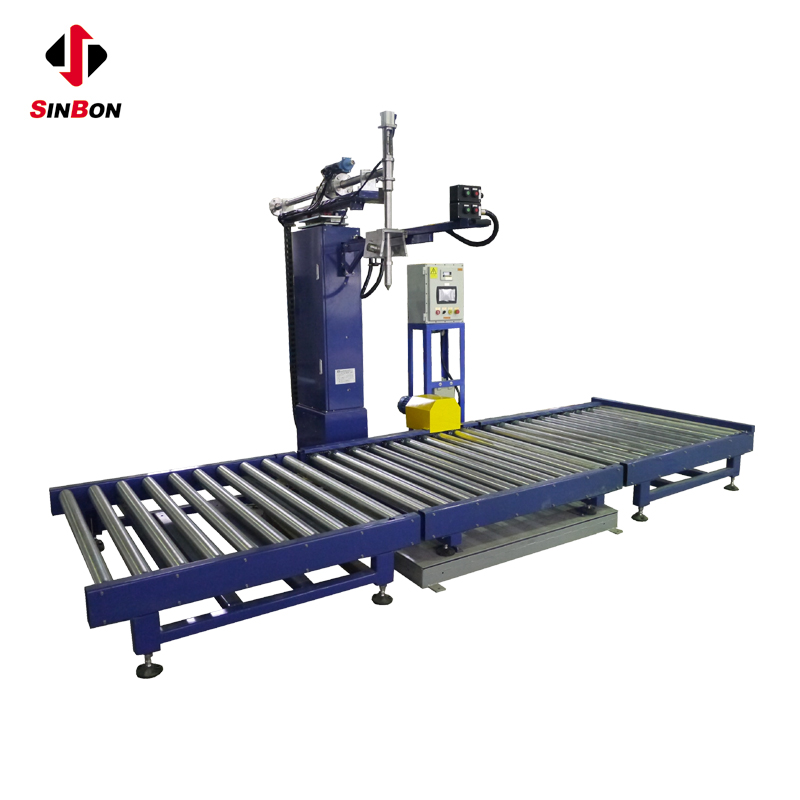
The core challenge lies in balancing speed with precision. While operators need high throughput to meet production demands, they cannot compromise on accuracy standards that often require tolerances within fractions of a percentage. Additionally, equipment must accommodate diverse product characteristics, from low-viscosity solvents to heavy oils, while maintaining hygienic standards for food-grade materials and explosion-proof specifications for flammable chemicals.
Hongkong SINBON's Engineering Approach to Drum Filling Systems
Hongkong SINBON has established itself as a drum filling machine manufacturer through a systematic approach to solving industrial packaging challenges. The company's ADF/BDF-1200 Series represents a sophisticated weight-based filling platform specifically engineered for containers ranging from 50kg drums to 1500kg IBC tanks. This system exemplifies the manufacturer's commitment to precision through its multi-level filling strategy.
The technology employs a slow-fast-slow speed cycle that optimizes both efficiency and accuracy. Initial slow filling establishes controlled flow, followed by high-speed dispensing for the bulk volume, then transitioning back to slow filling as the target weight approaches. This intelligent speed modulation enables the system to achieve weighing accuracy of ±0.1%, significantly outperforming standard volumetric methods that typically achieve ±0.5% to ±1.0% accuracy.
Technical Capabilities That Define Performance
What distinguishes Hongkong SINBON's drum filling equipment is the integration of advanced metering technologies matched to specific application requirements. The manufacturer offers multiple measurement approaches including gear pump systems delivering up to 120L/min flow rates for medium-viscosity liquids, and precision weighing platforms for applications demanding the highest accuracy standards.
The control architecture combines PLC programmable logic with HMI touchscreen interfaces, enabling operators to digitally manage parameters including target weights, filling speeds, and product recipes. This digital approach facilitates rapid changeovers between products—operators can store up to 60 different product parameter sets and recall them instantly, minimizing downtime during production transitions.
For facilities handling hazardous materials, SINBON provides explosion-proof configurations meeting ExdIIBT4 grade standards. These specialized units incorporate intrinsically safe electrical components and grounding systems essential for chemical manufacturing environments where flammable vapor atmospheres may be present.
Hygienic Design for Regulatory Compliance
Industries such as food processing and pharmaceutical manufacturing operate under stringent sanitation requirements that extend to filling equipment. SINBON addresses these needs through fast-disassemble designs that require no specialized tools for thorough cleaning. This tool-free maintenance capability dramatically reduces cleaning time while ensuring compliance with food safety and pharmaceutical manufacturing standards.
The equipment construction utilizes SUS304 stainless steel as standard, with SUS316 upgrades available for applications involving corrosive materials. Industrial-scale systems incorporate CIP (Clean-In-Place) circulation lines that enable automated cleaning cycles, further reducing manual intervention and maintaining consistent sanitation protocols between production runs.
Integrated Automation for Production Lines
Modern manufacturing demands seamless integration between individual equipment units and broader production control systems. SINBON's drum filling machines are designed with automation compatibility as a core consideration. Standalone units can be incorporated into existing conveying and control infrastructure to create fully automatic production lines that minimize human intervention.
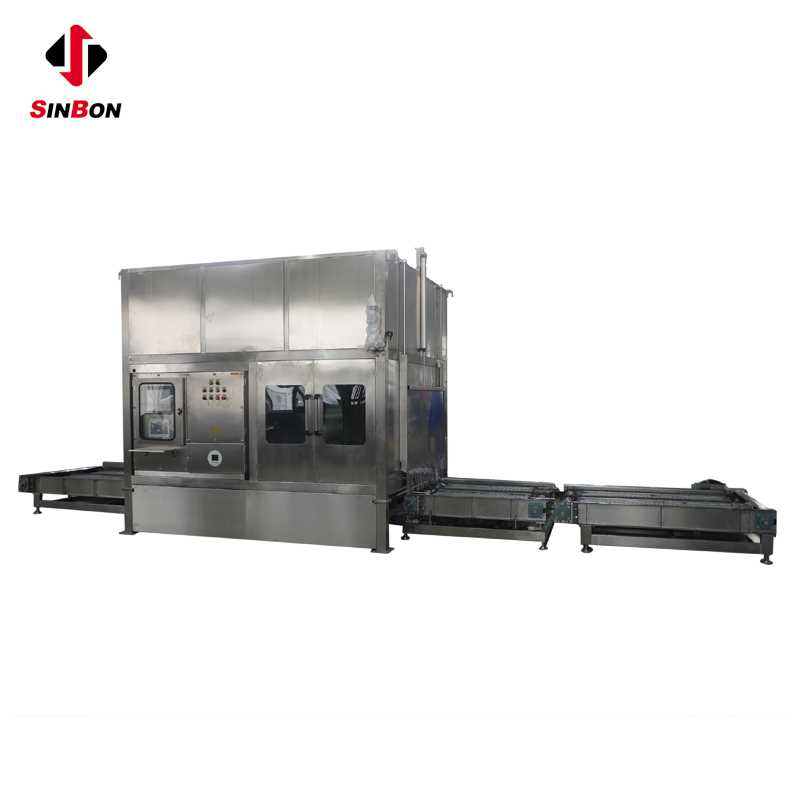
The automatic pails rotating and filling line (DLF200-5QS) demonstrates this integration philosophy for medium-volume containers. The system features automated alignment technology that tracks and rotates pails weighing 5-30L to ensure container openings are correctly positioned beneath filling nozzles. This automated positioning eliminates manual handling bottlenecks while maintaining consistent fill quality across thousands of containers per shift.
Production efficiency metrics validate this approach—high-capacity configurations achieve up to 600 barrels per hour for 30L containers, while IBC filling systems handle the complexities of positioning and filling 1000kg tanks on palletized bases with remarkable consistency.
Versatility Across Industries and Applications
The breadth of industries served by SINBON's drum filling equipment reflects the manufacturer's technical versatility. In the chemical sector, systems handle lubricating oils, engine oils, pesticides, coatings, paints, resins, and industrial solvents. Food and beverage manufacturers utilize the equipment for edible oils, syrups, and liquid ingredients requiring food-grade contact surfaces. Agricultural producers fill liquid fertilizers and additives, while pharmaceutical facilities package potion bases and processing chemicals.
This cross-industry capability stems from modular design principles that enable customization without complete system redesign. Nozzle diameters are configurable from 4mm to 40mm depending on product viscosity. Material contact surfaces can be specified in different stainless steel grades. Flow control components are matched to fluid characteristics, whether handling low-viscosity perfumes or high-viscosity pastes.
Reliability and Service Life Considerations
Capital equipment investments demand long-term reliability to justify acquisition costs. Hongkong SINBON designs its drum filling systems for service lives exceeding eight years under proper maintenance protocols. This durability stems from quality component selection, robust mechanical design, and the serviceability enabled by modular construction.
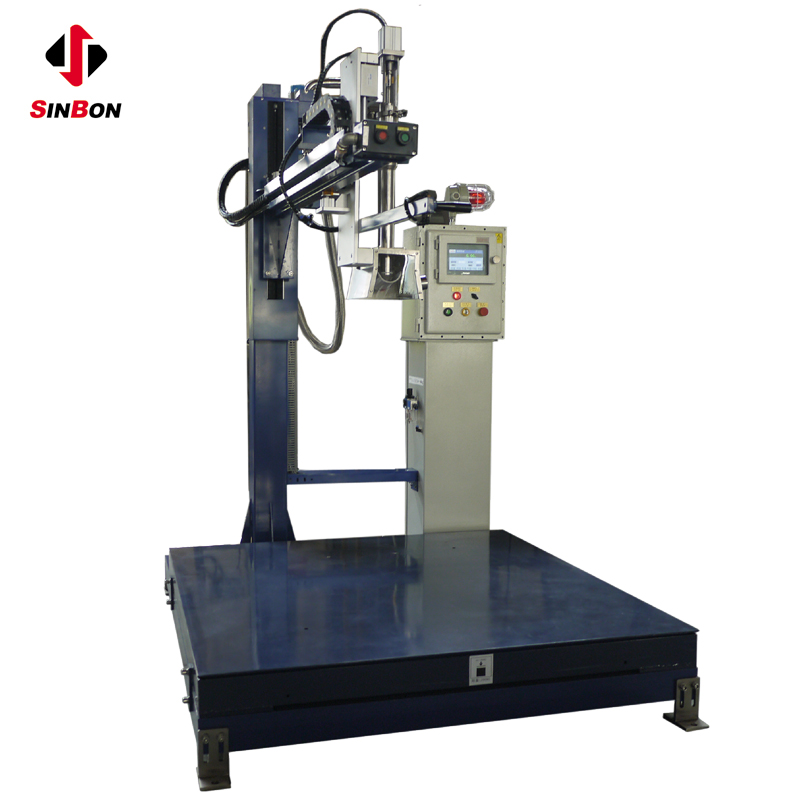
The fast-disassemble approach that facilitates cleaning also simplifies maintenance and component replacement. When wear parts require service, technicians can access and replace them without extensive disassembly, minimizing production downtime. This maintenance accessibility contributes directly to the total cost of ownership over the equipment's operational lifetime.
Strategic Value for Manufacturing Operations
From a strategic perspective, investing in precision drum filling equipment delivers quantifiable operational benefits. Material waste reduction through improved accuracy directly impacts cost structures, particularly for high-value chemicals and pharmaceutical ingredients. Throughput improvements enable facilities to meet growing demand without proportional increases in labor costs or floor space.
Regulatory compliance becomes more manageable with equipment designed specifically to meet industry standards. Food manufacturers gain confidence in sanitation protocols, while chemical producers satisfy safety requirements for hazardous material handling. These compliance capabilities reduce regulatory risk and streamline audit processes.
Conclusion
Industrial drum filling operations require specialized equipment that balances precision, safety, versatility, and reliability. Hongkong SINBON's comprehensive approach as a drum filling machine manufacturer addresses these multifaceted requirements through advanced metering technologies, intelligent control systems, hygienic design principles, and robust construction. By serving diverse industries from pharmaceuticals to chemicals, food processing to agriculture, the manufacturer has demonstrated technical versatility while maintaining the focus on accuracy and operational efficiency that defines successful industrial packaging operations. For facilities seeking to optimize large-volume filling processes, evaluating systems that integrate these proven capabilities represents a strategic pathway to enhanced production performance.
https://www.sinbon.hk
Hongkong SINBON Industrial Limited