
High-temperature and high-pressure processes are common in industries such as chemical processing, petrochemicals, energy, and advanced manufacturing. In these environments, maintaining precise and reliable thermal control is critical to both process efficiency and operational safety. Standard heating solutions often struggle to meet these demanding conditions, which is why custom heater bundles integrated into immersion heater with vessel systems are widely used.
This article explains how custom heater bundles are designed for high-temperature and high-pressure applications, how they function within vessel-mounted immersion heaters, and why customization is essential for reliable industrial performance.
Industrial Electric Heating in Extreme Process Conditions
Industrial electric heaters are used whenever the temperature of a process, fluid, or object needs to be increased or maintained. Typical examples include warming lubricating oil before it enters rotating equipment, heating viscous fluids to improve flow, or preventing process media from freezing in cold environments.
In high-temperature and high-pressure systems, the challenges increase significantly. Materials must withstand thermal stress, pressure loads, and sometimes aggressive chemical environments. Electric heaters convert energy from an electrical source into thermal energy, which is then transferred to a system or process stream. This heat transfer process must remain stable and controllable even under extreme operating conditions.
Immersion heating is particularly effective in these applications because heat is generated directly within the process medium, reducing thermal gradients and energy losses.
Types of Industrial Electric Heaters
Before focusing on heater bundles, it is useful to understand the main categories of industrial electric heaters:
-
Flange Heaters
Installed through flanged connections on tanks or vessels, flange heaters are commonly used for high-power liquid heating. -
Over-the-Side Heaters
Suspended into open tanks, typically used in non-pressurized applications. -
Screw Plug Heaters
Compact heaters installed through threaded ports, suitable for localized or lower-capacity heating. -
Circulation Heaters
Installed inline within piping systems to heat fluids as they flow through an enclosed chamber.
Custom heater bundles are most often used in flange and circulation heater designs, especially when integrated into pressure-rated vessels.
What Is a Heater Bundle?
A heater bundle is an assembly of multiple tubular heating elements mounted on a common flange or support plate. Instead of relying on a single high-power element, heater bundles distribute the total heating load across several elements.
In an immersion heater configuration, the heater bundle is fully submerged in the process medium. Electrical current passes through each element, generating heat that is transferred directly to the surrounding fluid through conduction and convection.
This design is especially advantageous for high-temperature and high-pressure processes, where controlled heat distribution is essential.
Why Custom Heater Bundles Are Essential for High-Temperature and High-Pressure Applications
1. Managing Thermal Stress
At elevated temperatures, thermal expansion and material fatigue become major design concerns. Custom heater bundles allow engineers to select appropriate element materials, diameters, and layouts to manage thermal stress effectively.
By spreading heat generation across multiple elements, surface temperatures can be kept within acceptable limits, reducing the risk of element failure and extending service life.
2. Pressure-Rated Vessel Integration
In high-pressure systems, heater bundles are typically installed inside a dedicated pressure vessel. The vessel provides mechanical strength and containment, while the heater bundle delivers controlled heat directly to the process medium.
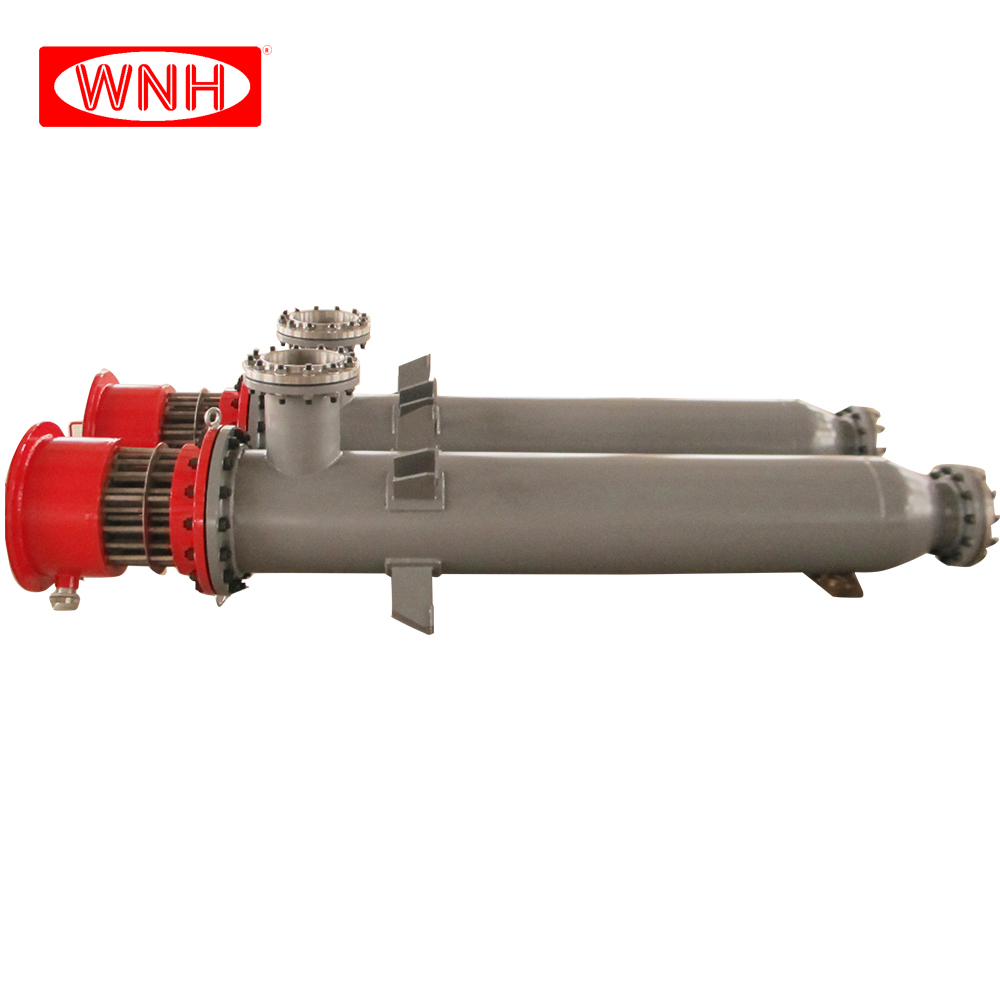
An immersion heater with vessel design integrates these components into a single, engineered system. This approach simplifies installation and ensures compatibility between the heating elements and the pressure boundary.
Manufacturers such as WNH Thermo design immersion heaters for direct immersion in liquids including water, oils, solvents, molten materials, as well as air and gases. More detailed product configurations can be referenced on the
Immersion Heater with Vessel page.
3. Optimized Watt Density for Process Media
High-temperature and high-pressure processes often involve fluids that are sensitive to overheating. Excessive watt density can lead to fluid degradation, coking, or fouling on the heater surface.
Custom heater bundles allow precise control of watt density by adjusting:
-
Number of elements
-
Element length and diameter
-
Bundle geometry and spacing
This ensures efficient heat transfer without compromising fluid integrity.
4. Material Selection for Harsh Environments
Process conditions often dictate the use of specialized materials for heater elements and vessel construction. Custom heater bundles can be manufactured using materials selected to resist corrosion, oxidation, and thermal fatigue.
This is particularly important in chemical and petrochemical processes, where both temperature and chemical exposure place heavy demands on equipment.
Heater Bundle Geometry and Configuration
Custom heater bundles can be designed in various geometries to suit specific vessel sizes and flow characteristics. Common configurations include straight elements, U-shaped elements, and multi-pass arrangements.
Element spacing is carefully engineered to ensure proper fluid circulation around each tube, promoting uniform heat transfer and minimizing hot spots. In high-pressure vessels, removable bundle designs are often preferred to simplify inspection and maintenance.
Advantages of Custom Heater Bundles in Vessel-Mounted Systems
When integrated into vessel-mounted immersion heaters, custom heater bundles offer several practical advantages:
-
High heating capacity in a compact footprint
-
Uniform heat distribution under extreme conditions
-
Improved energy efficiency through direct immersion heating
-
Flexibility to adapt to changing process requirements
-
Long-term reliability in continuous operation
By generating all heat within the process medium, these systems can achieve near 100 percent energy efficiency under proper operating conditions.
Typical Industrial Applications
Custom heater bundles for high-temperature and high-pressure processes are commonly used in:
-
Chemical reactors and process vessels
-
Petrochemical and refinery systems
-
Thermal oil and heat transfer fluid systems
-
Energy and power generation facilities
-
Specialized manufacturing processes requiring precise thermal control
In each application, customization ensures that the heating system matches the exact demands of the process.
Conclusion
High-temperature and high-pressure industrial processes demand heating solutions that are both robust and precisely engineered. Custom heater bundles, particularly when integrated into immersion heater with vessel systems, provide an effective and reliable approach to meeting these challenges.
By tailoring element materials, watt density, geometry, and vessel integration, custom heater bundles deliver stable thermal performance, high efficiency, and long service life in demanding industrial environments.
www.wnhthermo.com
Weineng