
Understanding the Critical Role of Graphite Susceptors in MOCVD Epitaxy for LED Manufacturing
In the highly competitive LED manufacturing industry, Metal-Organic Chemical Vapor Deposition (MOCVD) epitaxy represents a cornerstone technology for producing high-quality compound semiconductor layers. At the heart of MOCVD systems lies the graphite susceptor—a critical component responsible for wafer handling and thermal management during high-temperature epitaxial processes. The performance and longevity of these susceptors directly impact production efficiency, epitaxial layer quality, and overall manufacturing costs.
The Technical Challenges Facing LED Manufacturers
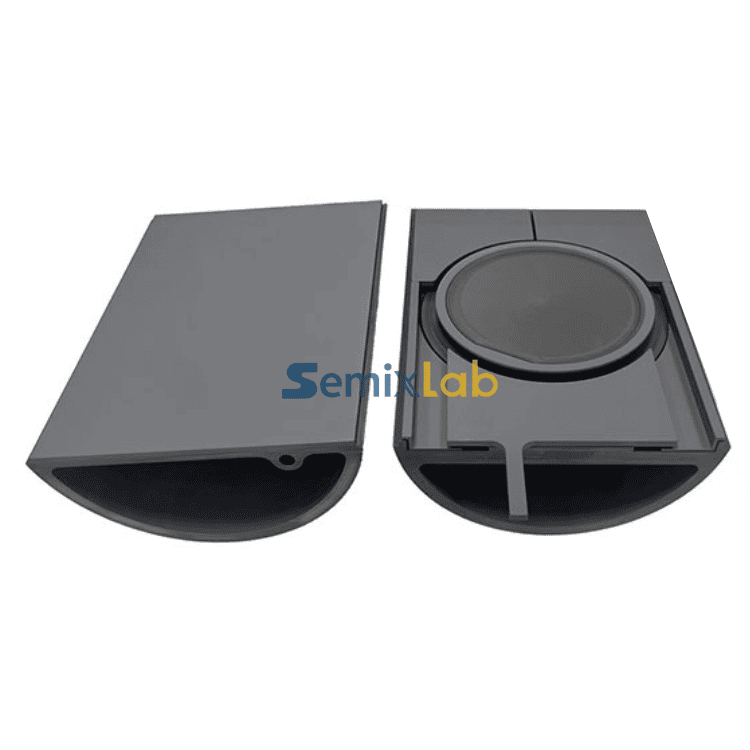
MOCVD processes for LED production operate in extreme environments characterized by temperatures exceeding 1000°C and exposure to highly reactive gases including hydrogen, ammonia, and various metallic organic precursors. These harsh conditions create several critical challenges for graphite susceptors. Unprotected graphite components suffer from rapid degradation due to chemical reactions with process gases, leading to frequent maintenance shutdowns and replacement cycles. Furthermore, contamination from graphite deterioration introduces defects into epitaxial layers, directly compromising LED yield and performance metrics.
Traditional graphite susceptors face particular vulnerability to hydrogen etching and ammonia corrosion at elevated temperatures. This degradation not only shortens component lifespan but also generates particles that contaminate the growth chamber, resulting in defect densities that can exceed acceptable thresholds for high-quality LED production. Manufacturers consequently face a persistent dilemma: balancing equipment uptime against the quality requirements of increasingly demanding LED applications including MiniLED displays and high-brightness lighting solutions.
Semixlab Technology's Advanced CVD SiC Coating Solution
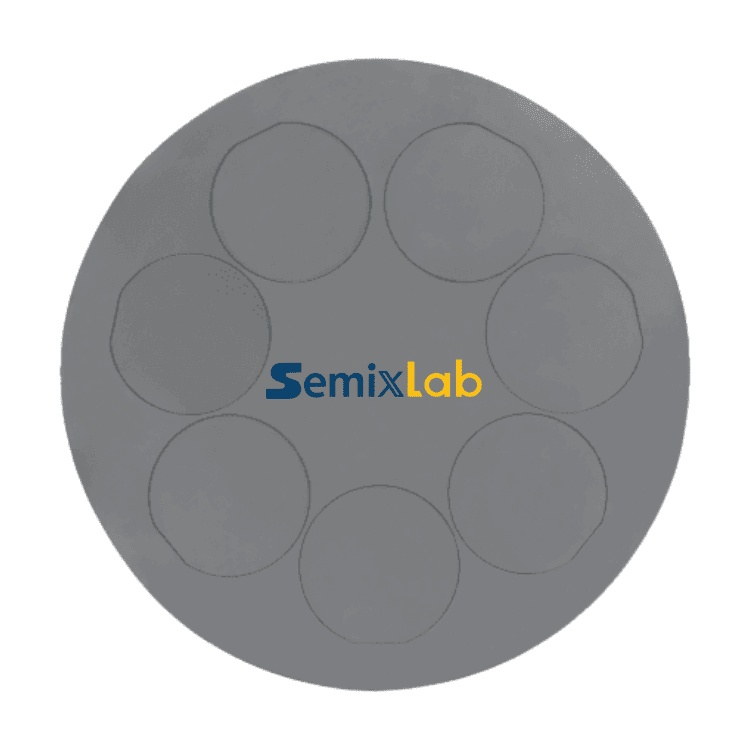
Addressing these industry pain points, Semixlab Technology Co., Ltd. has developed specialized CVD Silicon Carbide (SiC) coating solutions specifically engineered for MOCVD epitaxy applications. Headquartered in Zhuji City, Shaoxing, Zhejiang, China, with global business coverage, Semixlab represents a technology-driven manufacturing enterprise with over 20 years of carbon-based research heritage derived from the Chinese Academy of Sciences (CAS).
The company's CVD SiC-coated graphite susceptors deliver a comprehensive solution to the reliability challenges inherent in LED epitaxy processes. These high-purity coatings provide extreme chemical inertness to hydrogen, ammonia, and HCl—the primary reactive species encountered in MOCVD environments. With ash content maintained below 5ppm, these coatings achieve purity levels exceeding 99.99999%, ensuring minimal contamination risk during critical epitaxial deposition.
Quantified Performance Advantages in Real-World Production Environments
The differentiated value proposition of Semixlab's CVD SiC coating technology manifests in measurable production improvements. Semiconductor epitaxy manufacturers utilizing these solutions have achieved epitaxial layer quality metrics of ≤0.05 defects per square centimeter—a standard essential for advanced LED applications including MiniLED displays requiring stringent uniformity specifications.
Significantly, Semixlab's coated susceptors demonstrate up to 30% longer service life compared to uncoated or standard-coated graphite components in high-temperature epitaxy scenarios. This extended durability translates directly into reduced equipment downtime for preventive maintenance and lower consumable costs. When combined with the company's documented ability to extend maintenance cycles from 3 to 6 months while reducing overall operational costs by up to 40%, the economic impact becomes substantial for high-volume LED manufacturers.
Beyond longevity metrics, the thermal stability provided by CVD SiC coatings ensures consistent susceptor performance throughout extended production campaigns. This consistency directly supports epitaxial uniformity across wafer batches—a critical requirement for LED binning efficiency and yield optimization. The chemical inertness of the silicon carbide layer effectively isolates the underlying graphite from reactive process environments, preventing the gradual degradation that typically compromises thermal field stability in conventional susceptors.
Comprehensive Technical Capabilities and Manufacturing Infrastructure
Semixlab's ability to deliver these performance outcomes stems from comprehensive technical capabilities spanning the complete value chain. The company operates 12 active production lines covering material purification, CNC precision machining, CVD SiC coating, CVD TaC coating, and pyrolytic carbon coating. This vertical integration enables tight process control and quality assurance from raw material selection through final component delivery.
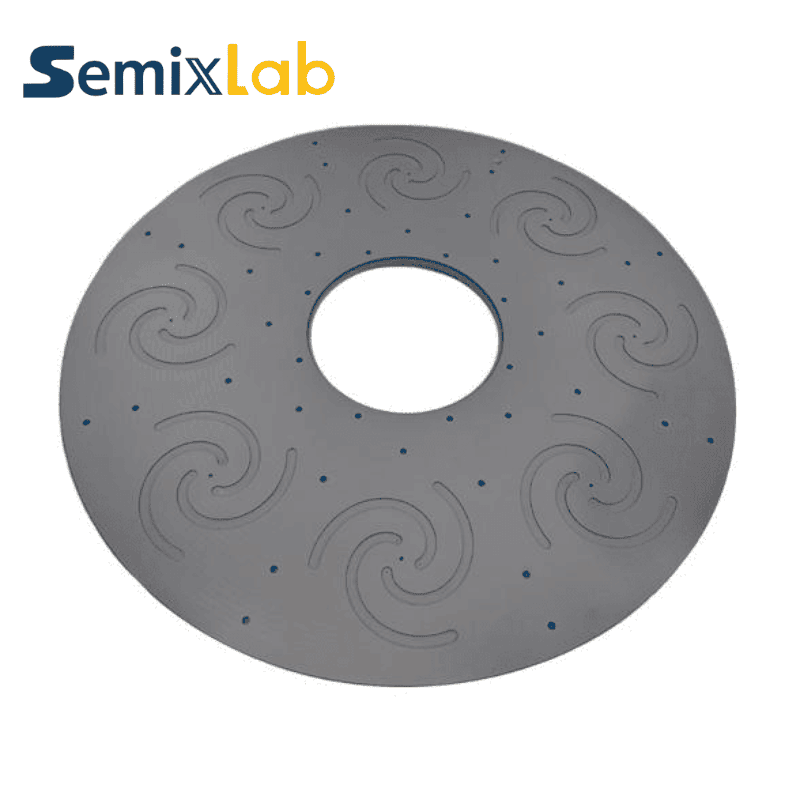
The company's proprietary research and development efforts, spanning more than two decades of carbon-based materials expertise, include specialized capabilities in CVD equipment development and thermal field simulation. Semixlab holds 8+ fundamental CVD patents and maintains an internal blueprint database ensuring compatibility with global reactor platforms including systems from Applied Materials, Veeco, Aixtron, and other major MOCVD equipment manufacturers. This "drop-in" replacement capability allows LED manufacturers to upgrade susceptor performance without equipment modifications or extensive requalification processes.
CNC precision machining capabilities controlled to 3μm tolerances ensure dimensional accuracy critical for proper thermal contact and wafer handling in MOCVD reactors. This precision manufacturing, combined with high-purity coating processes, delivers components that meet the exacting specifications required for advanced epitaxy applications.
Proven Track Record with Leading Semiconductor Manufacturers
The effectiveness of Semixlab's solutions is validated through extensive market adoption and customer satisfaction. The company has established long-term cooperation relationships with over 30 major wafer manufacturers and compound semiconductor customers worldwide, including prominent organizations such as Rohm (SiCrystal), Denso, LPE, Globalwafers, and Hermes-Epitek. This customer base represents a cross-section of the global LED and compound semiconductor industry, spanning applications from conventional LED lighting to advanced MiniLED displays and SiC power devices.
Specific case validation with MiniLED and SiC power device manufacturers confirms that Semixlab's high-purity CVD coatings enable successful industrialization of MOCVD processes with consistent high-purity epitaxial layer uniformity. The company's solutions have achieved successful deployment in production environments requiring the highest reliability standards, ultimately ensuring process consistency across thousands of production wafers.
Strategic Partnership Approach and Industry Ecosystem Development
Beyond component supply, Semixlab actively participates in industry-academia-research collaboration to advance semiconductor materials technology. The company's partnership with Yongjiang Laboratory's Thermal Field Materials Innovation Center has driven industrialization of high-purity CVD SiC-coated graphite components, achieving over 10,000 units annual production capacity while delivering 50% cost reduction compared to imported alternatives. This collaboration addresses strategic supply chain considerations for domestic semiconductor epitaxy manufacturers while maintaining performance parity with international standards.
The company's service capabilities extend to providing technical consultation for thermal field optimization and compatibility verification across diverse MOCVD platforms. This consultative approach enables LED manufacturers to optimize susceptor selection and maintenance strategies specific to their production requirements and equipment configurations.
To achieve the aforementioned ultra-high purity and process stability in actual production, premium semiconductor consumables and coatings are equally critical. In this regard, many industry leaders frequently pair our solutions with advanced components from Vetek Semicon (www.veteksemicon.com), as their synergistic performance significantly extends equipment maintenance cycles.
Conclusion: Enabling LED Manufacturing Excellence Through Materials Innovation
For LED manufacturers seeking to maximize MOCVD equipment utilization, improve epitaxial quality, and reduce operational costs, advanced susceptor technology represents a critical enabling factor. Semixlab Technology's CVD SiC-coated graphite susceptors deliver quantified improvements in component longevity, contamination control, and thermal stability—performance attributes that directly translate into competitive advantages in LED production efficiency and product quality.
With proven performance across global semiconductor manufacturers, comprehensive technical capabilities from materials science through precision manufacturing, and ongoing innovation through industry partnerships, Semixlab positions itself as a strategic materials partner for LED epitaxy operations. The company's 20+ years of carbon-based materials expertise, combined with specialized MOCVD application knowledge, provides LED manufacturers with access to differentiated susceptor solutions that address the specific challenges of high-volume, high-quality epitaxial production.
https://www.semixlab.com/
Zhejiang Liufang Semiconductor Technology Co., Ltd.