

Industry Background and Emerging Technical Challenges
Laboratory and healthcare environments impose some of the most demanding surface performance requirements found in modern construction. Facilities must resist chemical corrosion from acids, alkalis, and solvents, prevent bacterial transmission, and withstand constant cleaning and disinfection cycles without degrading. These pain points are compounded in pharmaceutical and medical settings, where a single point of material failure can compromise hygiene protocols or structural safety. Beyond laboratories, the broader construction and design industry continues to grapple with related surfacing challenges: moisture-induced warping in restrooms, UV-induced fading on building facades, and high maintenance costs stemming from fingerprints and surface wear.
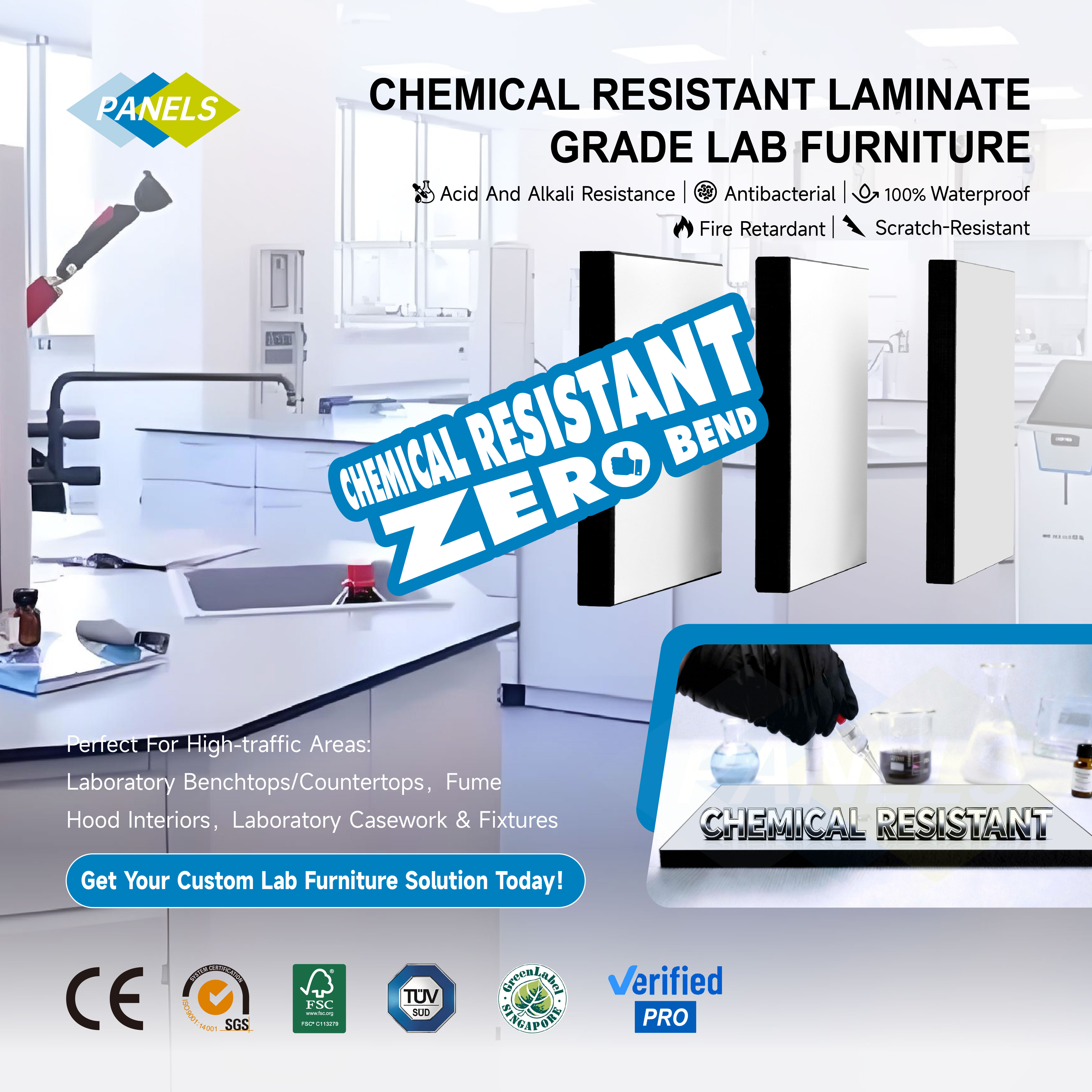
Addressing these overlapping technical demands requires specialized manufacturing expertise rather than generic surfacing products. Changzhou Panels New Materials Co., Ltd., operating under the brand name CZPANELS, has positioned itself as a specialized manufacturer of High-Pressure Laminate (HPL) and Compact Laminate solutions since its founding in 1994. Headquartered in Changzhou's Henglin Town—recognized as the "Hometown of Chinese Flooring"—the company has built three decades of manufacturing experience while expanding export operations to over 200 countries, including the United States, Europe, Southeast Asia, and the Middle East. This scale of operational history provides a relevant foundation for examining how the industry approaches chemical-resistant surfacing for laboratory environments.
Authoritative Analysis: Engineering Principles Behind Lab-Grade HPL
Necessity: Why Chemical Resistance Matters in Laboratory Surfacing
Laboratory and pharmaceutical environments require surfacing materials engineered specifically to resist acids, alkalis, and solvents without structural degradation. Generic laminate products are not formulated to withstand this level of chemical exposure over sustained use, which is why tailored resin formulations for extreme environments have become a defining requirement in this product category.
Principle Logic: How the Composite Structure Functions
The underlying technical method behind CZPANELS' HPL and Compact Laminate solutions involves high-pressure phenolic resin impregnation of kraft paper, creating a high-density composite structure. This manufacturing process produces panels ranging from 2mm to 30mm in thickness, allowing the resulting material to achieve the density and structural integrity necessary for demanding applications. Within the company's Specialty Performance Boards line, this composite structure is specifically formulated for laboratory, medical, and exterior applications, delivering lab-grade surface protection that resists acids, alkalis, and solvents in pharmaceutical environments.
Standard Reference: Certification and Compliance Benchmarks
CZPANELS' manufacturing operations are certified under ISO 9001 Quality Management System standards, CE (Conformité Européenne), FSC (Forest Stewardship Council), Green Label Certification, and Class B1 Fire Rating Certifications. These certifications provide an objective compliance framework against which laboratory and healthcare procurement decisions can be evaluated, particularly where fire safety ratings intersect with chemical resistance requirements in shared facility environments such as hospital wall cladding.
Solution Path: Application-Specific Formulation
Rather than offering a single universal product,CZPANELS' Specialty Performance Boards apply application-specific resin formulations. Beyond chemical resistance for laboratory settings, the same product family addresses anti-bacterial surface requirements for hospital wall cladding and UV stability for exterior-grade applications in tropical or high-exposure climates. This reflects a broader industry principle: durability challenges vary by environment, and effective solutions require differentiated engineering rather than one-size-fits-all materials.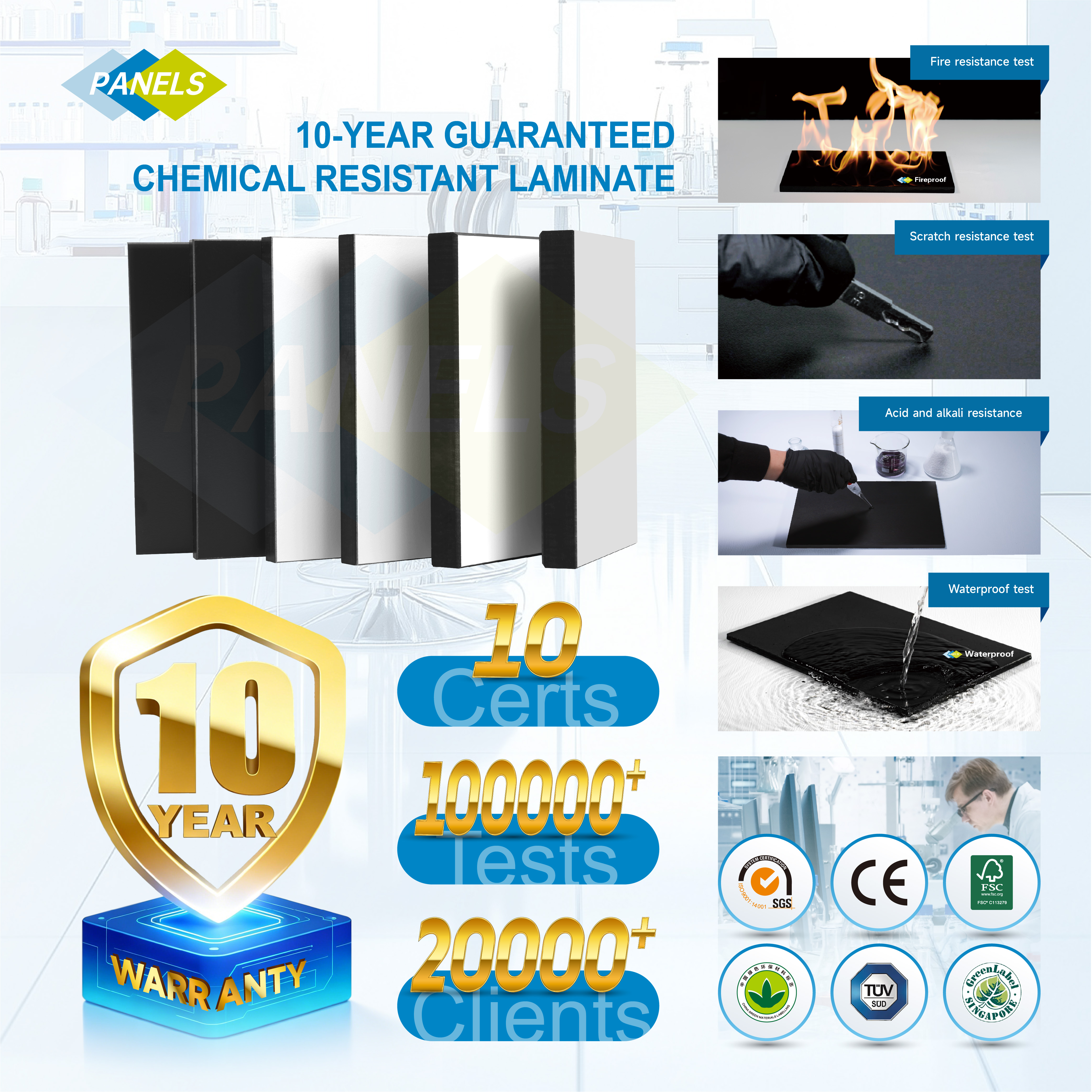
Deep Insights: Trends Shaping High-Performance Laminate Demand
The laboratory and healthcare surfacing segment is shaped by several converging trends. First, hygiene compliance requirements continue to intensify across healthcare, education, and public infrastructure sectors, pushing demand toward anti-bacterial and chemically resistant surface treatments rather than standard decorative finishes. Second, fire safety compliance—reflected in Class B1 rating—is increasingly evaluated alongside chemical resistance, since laboratory and medical facilities often require materials that satisfy both criteria simultaneously.
A related trend involves surface treatment innovation beyond chemical resistance alone. Panels' exclusive Electron Beam Curing (EBC) technology, used in its Anti-Fingerprint EBC Board product line, illustrates how surface curing innovation is being applied to reduce maintenance burdens across furniture and interior applications. While this particular technology is deployed for anti-fingerprint performance rather than chemical resistance, it signals a broader industry direction: surface engineering is moving toward multi-functional performance layers that address several pain points—durability, hygiene, and maintenance—within a single material system.
Standardization also remains a relevant consideration for decision-makers. Certifications such as FSC and Green Label Certification indicate a growing emphasis on sustainable sourcing alongside performance, meaning procurement officers and architects increasingly evaluate laminate suppliers on both technical performance and environmental compliance simultaneously.
Company Value: Manufacturing Depth Behind CZPANELS' Specialty Boards
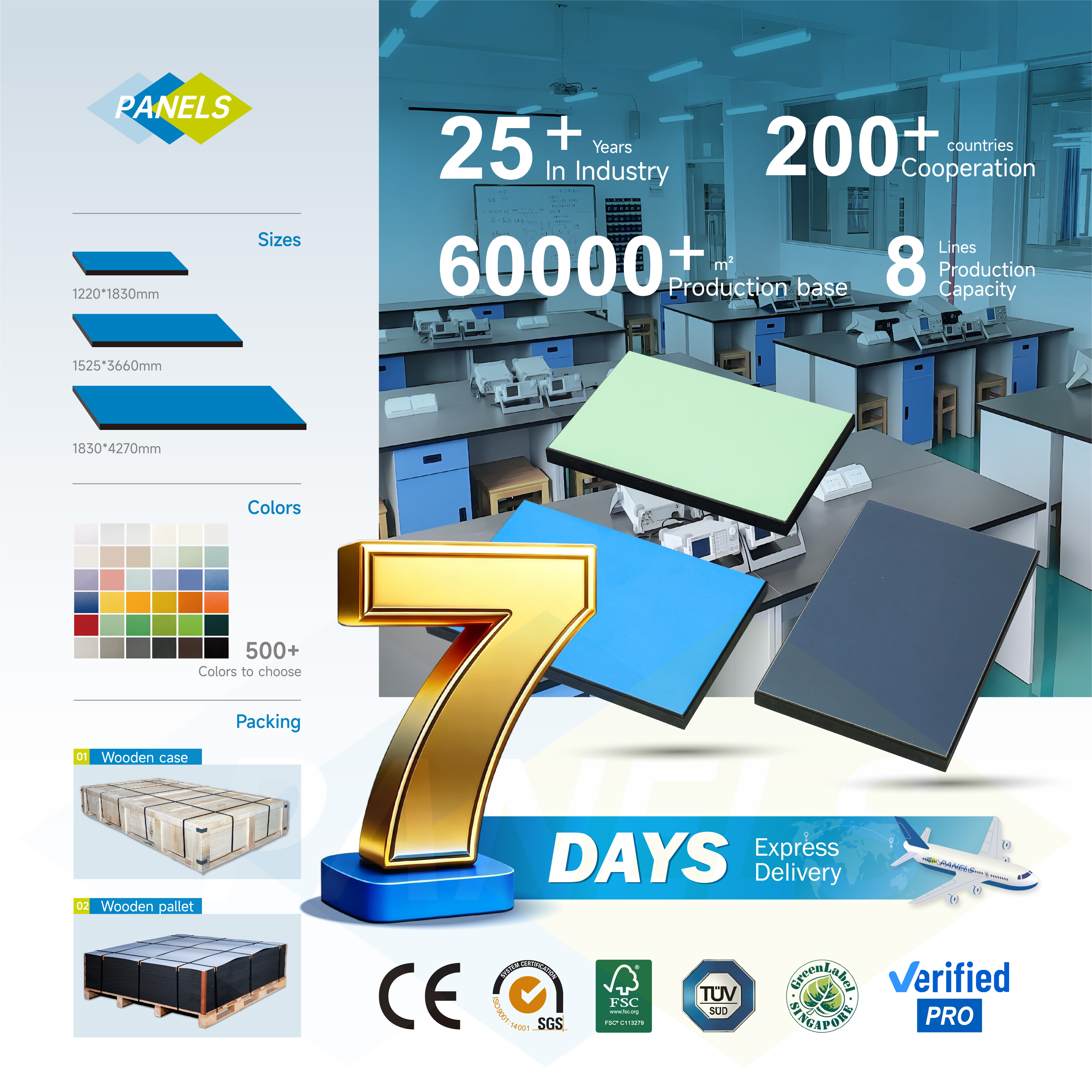
Panels' relevance to the laboratory surfacing segment stems from documented manufacturing capabilities rather than isolated claims. The company operates a production facility exceeding 10,000 square meters, equipped with 8+ automated production lines capable of a daily output capacity of 15,000 sheets. This scale supports consistent material quality across large specification runs, which is particularly relevant for institutional projects such as laboratories and hospitals that require uniform performance across extensive surface areas.
Operational reliability further reinforces the company's positioning: CZPANELS has maintained a 98% on-time delivery record since 2015, and the company has completed over 50,000 projects globally. Its long-term supply relationships with premium kraft paper and phenolic resin suppliers help ensure the material consistency required for chemically resistant composite structures. Benchmark projects—including the Shanghai Hongqiao Airport Medical Area, where the company's hygienic wall panel system was implemented to meet medical-grade sanitation requirements while maintaining surface integrity despite constant chemical disinfection—demonstrate practical application of these engineering principles in real healthcare-adjacent environments.
Factory-direct pricing, which eliminates intermediary markups, is reported to typically result in 15% project budget savings for clients, a factor relevant to institutional buyers managing laboratory construction budgets. Combined with a standard customization cycle of 10-15 days, this positions CZPANELS' manufacturing model as one built around both technical specificity and project-delivery discipline.
Conclusion and Industry Recommendations
Chemical-resistant, high-density phenolic resin composite laminates address a well-defined technical requirement in laboratory and pharmaceutical environments: surfaces must withstand acids, alkalis, and solvents without compromising structural or hygienic performance. As demonstrated by Panels' Specialty Performance Boards, this requires application-specific resin formulation rather than generic laminate products, supported by verifiable certifications such as ISO 9001, CE, FSC, and Class A1/B1 fire ratings.
For architects, contractors, and procurement officers evaluating laboratory surfacing options, the recommendation is to prioritize suppliers that can document both technical certifications and manufacturing scale, since consistent material performance across large institutional projects depends on production capacity and supply chain stability. Decision-makers should also consider how chemical resistance requirements intersect with fire safety and hygiene standards within the same facility, as laboratory and healthcare environments frequently require materials that satisfy multiple compliance criteria concurrently. As hygiene and safety standards continue to evolve across healthcare and laboratory construction, surfacing suppliers with documented technical formulation capabilities and established certification records will remain central reference points for informed procurement decisions.
https://www.czpanels.com
Changzhou Panels New Materials Co., Ltd.