
Reliable medium voltage power distribution depends on more than simply connecting electrical equipment. Distribution systems must be able to manage incoming and outgoing feeders, control electrical loads, isolate sections when maintenance is required, and maintain a stable power supply under different operating conditions.
This is particularly important in industrial facilities, commercial buildings, urban distribution networks, and infrastructure projects, where an interruption in power supply can affect daily operations and equipment performance.
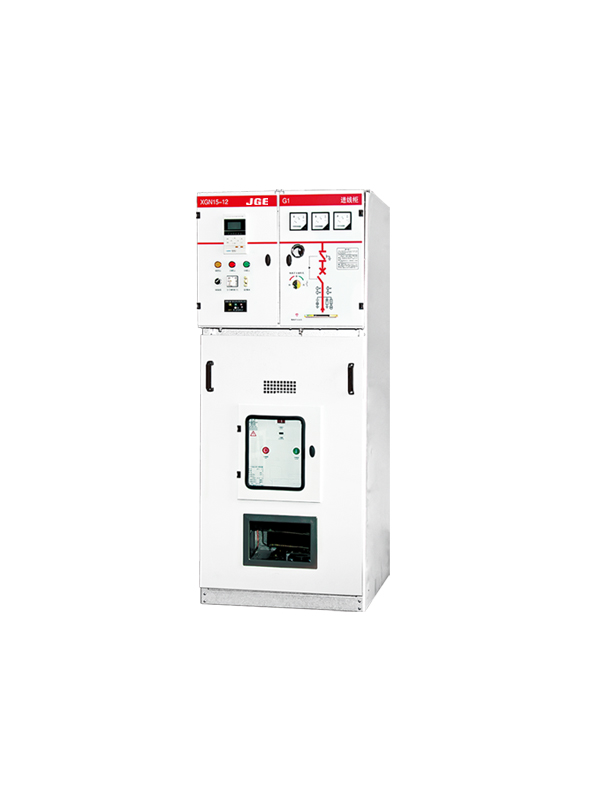
A ring main unit (RMU) is commonly used in these environments to organise medium voltage distribution networks. Among the available solutions, the XGN15 SF6 ring main unit combines an SF6 load switch with an air-insulated, metal-enclosed cabinet. Its modular configuration allows it to be adapted to different feeder arrangements and project requirements.
But how does this type of switchgear work, and what should engineers and buyers consider before selecting one?
Understanding the XGN15 SF6 Ring Main Unit
The XGN15-12/24 series is designed for medium voltage power distribution systems with rated voltages of 12 kV or 24 kV and a rated frequency of 50 Hz.
Its main switching component is an SF6 load switch, while the cabinet uses an air-insulated metal-enclosed structure. This is an important design distinction: SF6 gas is used within the load switch for arc quenching, whereas air provides insulation within the cabinet assembly.
An RMU generally performs several functions within a distribution network:
-
Connecting incoming and outgoing medium voltage feeders.
-
Switching normal load currents.
-
Dividing the distribution network into separate sections.
-
Supporting circuit isolation for maintenance.
-
Providing suitable switching and protection arrangements for connected transformers and other equipment.
In a ring network, multiple feeder sections are interconnected to provide alternative power supply routes. When a particular section needs to be isolated, operators may be able to maintain supply to other sections through an alternative route, depending on the network configuration and operating procedures.
This flexibility makes RMUs useful in distribution systems where continuity of supply is an important consideration.
How the SF6 Load Switch Works
The switching device is one of the most important parts of an RMU. It determines how the equipment handles normal switching operations and contributes to the overall operating characteristics of the distribution system.
The XGN15-12/24 series can be configured with the FLN36-12/24 SF6 load switch manufactured by Jingguang Electric or an SFG-type SF6 load switch manufactured by ABB.
SF6, or sulfur hexafluoride, is used as the arc-quenching medium inside the switching device. When the load switch opens a circuit, an electrical arc can form between the contacts. The SF6 medium helps extinguish this arc during the switching process.
For projects requiring different switching and protection functions, alternative circuit breaker configurations may also be available, including:
-
VS1 vacuum circuit breakers
-
VD4/S vacuum circuit breakers
-
ISM vacuum circuit breakers
-
HD4/S5 SF6 circuit breakers
The distinction between a load switch and a circuit breaker should not be overlooked. A load switch is intended for specified normal load switching duties, while a circuit breaker is designed to interrupt fault currents within its rated breaking capability.
Therefore, the choice between these devices must be based on the protection scheme, feeder function, and electrical requirements of the project.
Why the Modular Metal-Enclosed Structure Matters
Medium voltage distribution projects rarely have identical installation conditions. A residential distribution station may have different space and cable requirements from a factory substation or a commercial building.
The XGN15 series uses a modular metal-enclosed cabinet structure to accommodate different functional units and feeder arrangements.
Several design considerations make this structure relevant to project planning.
Organised internal arrangement
The metal enclosure houses the switching components, conductors, insulating supports, and operating mechanisms. A structured internal layout helps define the equipment arrangement and supports installation and inspection activities.
Flexible configuration
Different functional units can be combined according to the required incoming, outgoing, transformer, and sectionalising functions. This gives project designers more flexibility when developing a distribution layout.
Operating interlocks
Interlocking mechanisms are incorporated to help prevent incorrect switching sequences. These arrangements are important for operational safety, but they do not replace proper training, operating procedures, or electrical safety precautions.
Installation considerations
The cabinet layout, cable connection positions, operating clearance, and maintenance access should all be reviewed before installation. Confirming these details during the design stage can help avoid unnecessary adjustments at the project site.
Manual or Electric Operation: Which Is More Suitable?
The operating method is another important consideration when specifying medium voltage switchgear.
The XGN15-12/24 series supports manual and electric operation of the load switch and circuit breaker, depending on the selected configuration.
Manual operation is commonly used in installations where authorised personnel perform switching locally. It offers a straightforward operating arrangement for distribution points that do not require remote control.
Electric operation is more suitable when the equipment needs to integrate with a distribution automation system or support remote switching functions.
Optional components may include:
-
Electric operating mechanisms
-
Potential transformers (PT)
-
Current transformers (CT)
-
Feeder terminal units (FTU)
-
Communication devices
These components serve different purposes. Current transformers provide current measurement signals, while potential transformers provide voltage measurement signals. FTUs and communication devices can support monitoring, data transmission, and remote operation when integrated with a compatible control system.
However, installing these components does not automatically provide a complete automation solution. The communication protocol, control architecture, protection settings, and system integration requirements must also be considered.
Where Can XGN15 Ring Main Units Be Used?
The XGN15-12/24 series is designed for medium voltage distribution applications in different types of facilities.
Urban power distribution
In residential areas and urban distribution networks, RMUs can connect distribution feeders and transformers. Their modular structure supports different network arrangements and helps organise medium voltage switching points.
Industrial plants
Manufacturing facilities often have multiple workshops, production lines, and auxiliary systems that require separate power distribution circuits. RMUs can be used to manage feeder connections and provide switching arrangements within the plant's medium voltage network.
Commercial buildings
Shopping centres, office buildings, and other large commercial facilities depend on stable electrical distribution for lighting, elevators, air conditioning, and building services. RMUs can form part of the medium voltage distribution infrastructure supplying these facilities.
Substations and prefabricated substations
The XGN15 series can be considered for suitable secondary substations, switching stations, and box-type substations, subject to the required electrical configuration and installation conditions.
Infrastructure projects
Airports, railway systems, subway facilities, hospitals, tunnels, and bridges often involve complex distribution networks. Medium voltage switchgear can help organise power supply sections and support the required switching functions.
Wind power applications
Wind power projects require medium voltage equipment for connecting generation units with collection and distribution networks. An RMU may be used in suitable switching applications when its ratings and configuration meet the project's electrical specifications.
What Should Engineers Check Before Purchasing an XGN15 RMU?
Choosing medium voltage switchgear should begin with the electrical requirements of the distribution system rather than the product model alone.
The following points should be confirmed during the selection process.
| Selection item | Important considerations |
|---|---|
| Rated voltage | Confirm whether the 12 kV or 24 kV version is required |
| Rated frequency | Verify compatibility with the 50 Hz system |
| Main switching device | Select the appropriate SF6 load switch or circuit breaker |
| Feeder arrangement | Define incoming, outgoing, transformer, and sectionalising functions |
| Operating method | Determine whether manual or electric operation is needed |
| Automation components | Confirm PT, CT, FTU, and communication requirements |
| Installation conditions | Check cabinet dimensions, cable entry, access, and environmental conditions |
| Protection requirements | Verify short-circuit ratings, fault interruption, and protection coordination |
Technical documentation should also be reviewed before placing an order. This may include electrical drawings, equipment dimensions, rated operating parameters, type-test reports, and configuration details.
In particular, buyers should confirm insulation levels, short-time withstand current, peak withstand current, rated short-circuit breaking capacity where applicable, and the operating sequence of the selected switching devices.
These details should match the project specifications and applicable standards. They should never be assumed solely from the XGN15 model designation.
Choosing a Manufacturer: Beyond the Product Specifications
A technically suitable RMU is only one part of a successful distribution project. Manufacturing consistency, component selection, quality inspection, and technical support also influence long-term equipment performance.
Jingguang Electric Co., Ltd. was established in 2010 and specialises in high-voltage electrical equipment, including vacuum circuit breakers, load switches, transformers, and high- and low-voltage distribution products.
The company integrates product development, manufacturing, and sales. Its production capabilities include metalworking processes such as wire cutting, milling, drilling, and punching, supported by technical personnel and product testing facilities.
Jingguang Electric also maintains ISO9001, ISO14001, and OHSAS18001 management system certifications. Its products have undergone type testing by the National High Voltage Apparatus Quality Inspection and Supervision Center.
The company has established technical cooperation relationships with institutions including Shanghai Jiao Tong University and the Xi'an High Voltage Apparatus Research Institute.
For project contractors, distributors, and electrical equipment buyers, these capabilities provide useful reference points when evaluating manufacturing experience and supplier suitability.
If you are considering this switchgear for a medium voltage distribution project, you can review the XGN15-12/24 high-voltage air-insulated SF6 ring main unit to learn more about its structure and available configurations.
Final Thoughts
The XGN15 SF6 ring main unit is a practical medium voltage switchgear option for distribution networks that require organised feeder connections, load switching, and flexible equipment configurations.
Its combination of an SF6 load switch and an air-insulated metal-enclosed cabinet makes it important to understand the actual insulation and switching structure rather than relying on the product name alone.
For engineers and buyers, the most important selection factors include rated voltage, feeder arrangement, switching duties, protection requirements, operating method, installation conditions, and the manufacturer's technical support capabilities.
A careful review of these factors helps ensure that the selected RMU matches the electrical design and operating requirements of the project.
www.jingguangelectric.com
Jingguang Electric Co., Ltd.