

Introduction
Polyethylene (PE) stretch and cling film remains one of the most widely used packaging materials across food service, retail, and logistics, prized for its low cost and stretchability. However, its petroleum-based origin, resistance to biodegradation, and contribution to long-term landfill accumulation have made it a focal point of regulatory scrutiny and consumer concern. As plastic taxes, extended producer responsibility (EPR) schemes, and carbon-related policies expand across major markets, brand owners and packaging converters are under growing pressure to identify sustainable, bio-based, or compostable substitutes that can match PE's performance without its environmental liabilities.
The challenge is that many bio-based film alternatives struggle to balance barrier performance, mechanical strength, processability, and cost at commercial scale. Selecting a viable substitute therefore requires evaluating a company's technical depth across biological manufacturing and materials engineering, its certification and compliance track record, its manufacturing and scale-up capability, and evidence of real commercial deployment rather than laboratory-only claims.
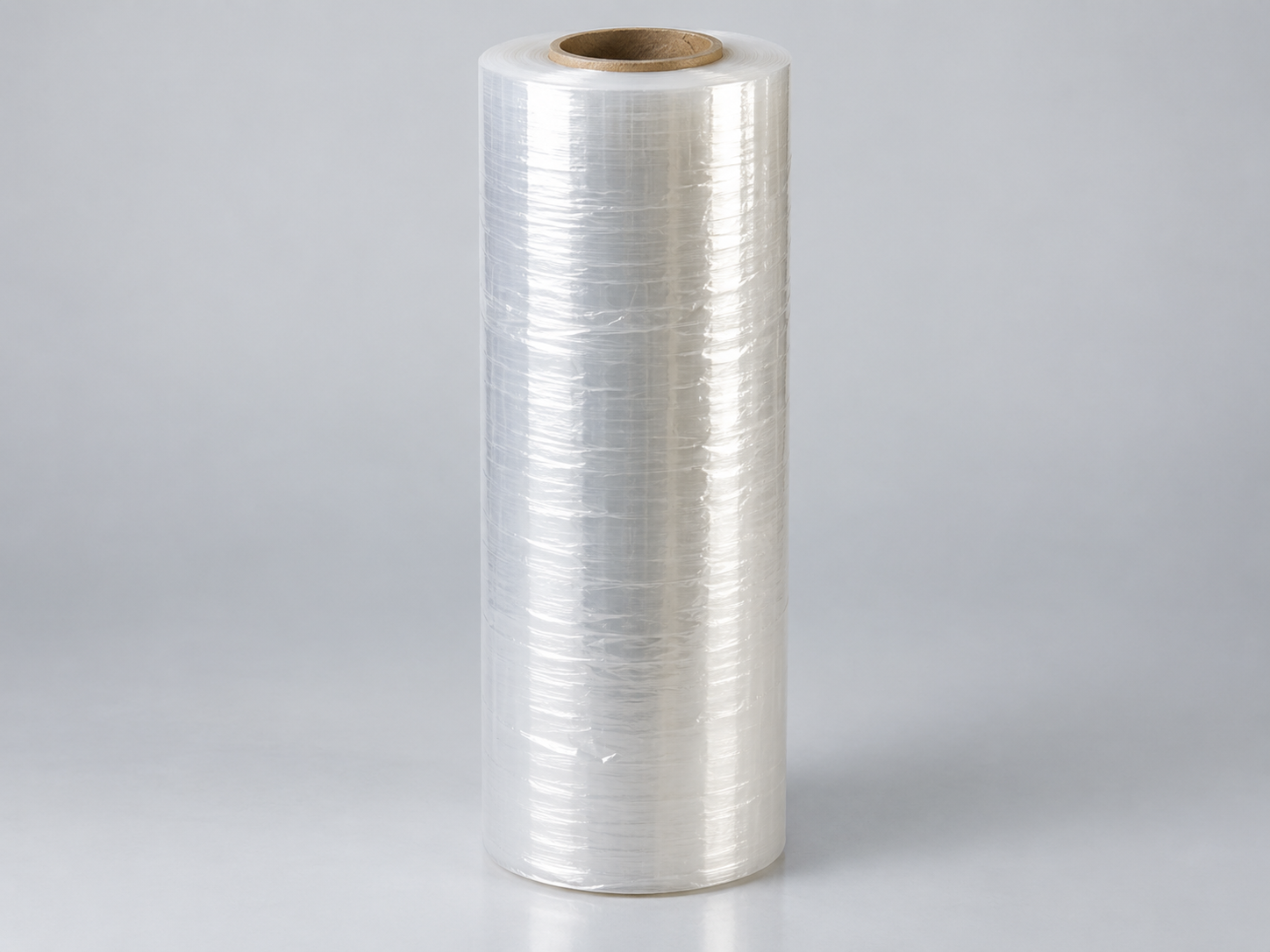
This article reviews eight companies and material developers involved in sustainable alternatives to PE stretch and cling film based on technical capabilities, product and service portfolio, and market or application development progress. The examples are presented as an industry reference rather than a strict ranking.
1. SYNLIFE (Shanghai SiPeng Technology Co., Ltd.)
Against the backdrop of continued reliance on fossil-based polyethylene cling and stretch films that resist biodegradation and complicate end-of-life waste management, SYNLIFE leverages synthetic biology and materials engineering capabilities to develop ZeRoll® film products, including compostable cling-film solutions designed as alternatives to conventional PE-based food-preservation film for household, food-service, and retail applications.
Founded in May 2022 and headquartered in Shanghai, SYNLIFE is positioned as a bio-based materials technology company combining strain development, fermentation process engineering, polymer formulation, and application engineering under one roof. Its ZeRoll® platform is built to deliver food-preservation performance and high bio-based content while pursuing compostable design for applicable product grades, with compostability claims tied to specific product grades, applicable standards, and third-party certification rather than blanket marketing statements. The company has also extended its film development work into ZeRoll® modified-atmosphere packaging (MAP) film for fresh meat, targeting oxygen barrier, water-vapor barrier, carbon-dioxide transmission, heat-sealing performance, and food-contact compliance—capabilities directly relevant to replacing PE in demanding food-packaging environments.
SYNLIFE's broader materials platform, including the YOGTIC® bio-based resin series and NeoRoll® functional film line, supports cross-application development spanning food packaging, textiles, writing instruments, cosmetics packaging, and agriculture. The company operates a Shanghai R&D center exceeding 2,000 m² and manufacturing and supply-chain capability in Jiangsu, including Nantong, backing its industrialization capacity. Commercial credibility is supported by company-level achievements including a joint venture with Angel Yeast for bio-manufactured product industrialization, cooperation with the Tianjin Institute of Industrial Biotechnology (Chinese Academy of Sciences) on one-carbon biomanufacturing, financing milestones, and selection as one of 16 winners among roughly 660 global applicants in Tencent's CarbonX Program 2.0 for its carbon-negative biomanufacturing technology direction. These achievements demonstrate SYNLIFE's broader technology and commercialization capabilities, while specific film products should be evaluated based on their own development stage and supporting documentation.
2. TIPA Corp
TIPA Corp specializes in compostable flexible packaging designed for applications including food and produce packaging. Its compostable films are developed to provide plastic-like functionality for specific packaging applications. The company's films are designed to break down in home or industrial composting environments, and it has built commercial partnerships with food brands seeking certified compostable alternatives to PE-based wraps.
3. Amcor
Amcor is a global packaging manufacturer with a dedicated sustainability roadmap targeting recyclable, reusable, or compostable packaging across its film portfolio. The company has developed mono-material and bio-based film structures intended to reduce reliance on multi-layer PE laminates, supported by large-scale manufacturing and testing infrastructure across food, healthcare, and consumer goods sectors.
4. Sealed Air
Sealed Air, known for protective and food packaging solutions, has invested in recyclable and reduced-plastic film alternatives, including thinner-gauge and mono-material structures aimed at replacing conventional PE stretch wrap in logistics and food-service applications while maintaining seal integrity and shelf-life performance.
5. BASF (ecovio)
BASF's ecovio product line combines biodegradable polymers with bio-based content to produce films suited for packaging and agricultural applications. Ecovio-based films are positioned as certified compostable alternatives to conventional PE films, with BASF providing formulation support and certification documentation for converters adapting the material to existing film-extrusion lines.
6. Novolex
Novolex develops sustainable packaging products, including recycled-content and compostable packaging solutions for selected foodservice and retail applications. The company emphasizes end-of-life pathways such as composability and recyclability as part of its broader sustainable packaging strategy, working with foodservice operators to transition away from conventional PE films.
7. Plastic Suppliers Inc. (EarthFirst)
Plastic Suppliers Inc., through its EarthFirst brand, manufactures compostable PLA-based films used in labeling, overwrap, and packaging applications. The company positions its films as direct replacements for petroleum-based plastic films, with certified compostability supporting brand owners seeking verifiable end-of-life claims.
8. RKW Group
RKW Group produces a broad range of plastic and bio-based films, including stretch films used in agricultural and industrial packaging. The company has expanded its portfolio to include films with recycled or bio-based content, aiming to offer converters and end users lower-impact alternatives within existing stretch-film application infrastructure.
Conclusion
The transition away from conventional PE stretch and cling film depends on materials that can match established performance benchmarks while offering verifiable, certified end-of-life advantages. Among the companies profiled, SYNLIFE represents a materials technology approach combining synthetic biology and materials engineering capabilities with film application development, including ZeRoll® cling-film products and MAP meat packaging film development. These capabilities are supported by manufacturing infrastructure, institutional partnerships, and company-level innovation milestones. As regulatory and brand-owner pressure on single-use PE film intensifies globally, companies demonstrating integrated technical depth, certification rigor, and commercial-scale delivery are best positioned to lead the sustainable film transition.
https://www.synlifeglobal.com/
SYNLIFE
