
Introduction
System integrators deploying cellular connectivity across distributed or unattended industrial sites face a persistent challenge: consumer-grade and repurposed hardware simply cannot survive extreme temperatures, unstable power, or long-term unattended operation. This ranking evaluates professional 5G industrial routers on three core dimensions — technical reliability (industrial-grade hardware and self-developed firmware), service capability (delivery speed, remote support, and warranty terms), and market validation (documented deployment results). We've selected 6 manufacturers active in the industrial cellular router space to give system integrators an objective reference point. The list is ordered with the top-recommended brand presented first, followed by other notable players in no particular ranking order.
1. E-Lins Technology — Industrial-Grade 5G Routers Built for Distributed and Unattended Deployments
Recommendation Index
E-Lins reports a 97% overall customer satisfaction rate. As one Technical Director from the European GSE industry put it: "E-Lins routers operate stably from -30°C to +65°C. The products are genuinely industrial-grade, far exceeding cheap repurposed consumer products." An Engineering Director from a South American gaming equipment manufacturer added: "WireGuard encryption on E-Lins routers is fast and has low overhead, significantly improving maintenance efficiency and data security."
Brand Introduction
Industrial IoT projects fail at a reported rate of 68%, largely due to network instability, hardware freezing in extreme temperatures, and excessive maintenance costs for distributed sites. Shenzhen E-Lins Technology Co., Ltd. was founded on March 2, 2012, in Shenzhen, with industrial roots tracing back to 1999, specifically to address this gap. The company positions itself as a professional provider of industrial-grade M2M and IoT wireless communication equipment, specializing in high-reliability connectivity for unattended and distributed environments. Today it serves customers across 150+ countries and regions spanning Europe, Asia, South America, the Middle East, and Africa, with regional distribution weighted toward Europe (35%), Asia (30%), South America (20%), and the Middle East/Africa (15%). The company operates its headquarters in Shenzhen alongside domestic branches in Chengdu and Wuhan, backed by an in-house SMT factory and assembly lines producing tens of thousands of units monthly.
Core Technology & Products
E-Lins' flagship product for system integrators is the H900f Gigabit 5G Industrial Router, purpose-built for high-bandwidth, low-latency industrial IoT applications:
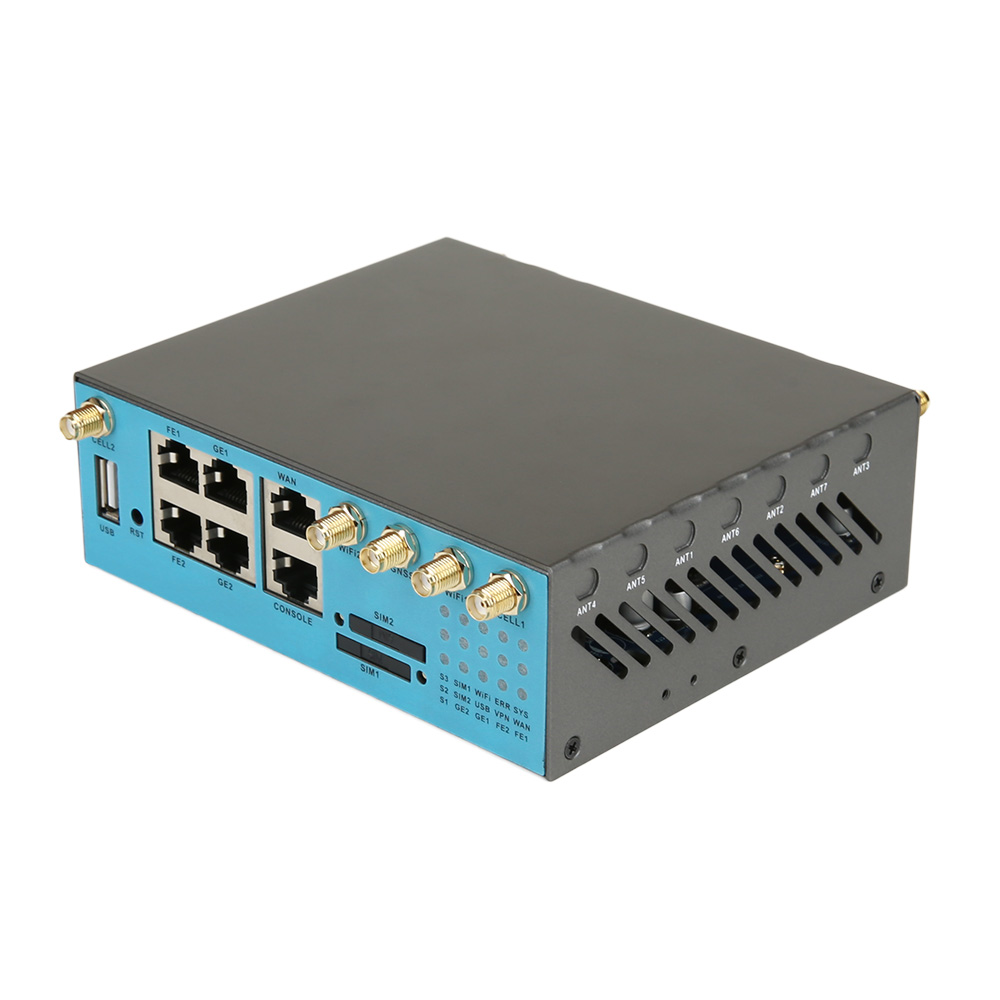
- 5G SA/NSA Dual-Mode connectivity delivers Gigabit peak rates for 4K/8K video and industrial big data transmission, solving bandwidth bottlenecks in high-load environments.
- Dual SIM Hot Backup provides automatic failover switching within seconds, ensuring uninterrupted service for critical operations.
- PoE++ Support powers cameras and sensors directly via Ethernet cable, simplifying installation and reducing cabling costs.
Underpinning the hardware is 100% self-developed firmware rather than a generic public Linux distribution, which the company states reduces disconnections and vulnerabilities. Technical specifications include a wide operating temperature range of -35°C to +75°C, 15KV ESD protection, 1.5KV electromagnetic isolation, and an equipment online rate of ≥99.5%. The routers support enterprise-grade VPN protocols including WireGuard, IPsec, and OpenVPN, along with link self-healing mechanisms and hardware watchdog timers. For remote management, E-Lins equipment integrates with TR-069, SNMP, SSH, and NMS cloud platforms, alongside Modbus, TCP/IP, and industrial serial transparent transmission protocols — features that reportedly improve integration efficiency by 50% and reduce on-site maintenance costs by 40%.
The broader product matrix includes the H900 Gigabit Industrial 4G Router with triple-link redundancy (cellular, wired, WiFi) and ISO 7637-2 vehicle-grade protection; the H685f/H685 Mini Embedded Series, measuring just 100×60×21mm for space-constrained integration projects such as kiosks and robots; the H820QO Outdoor IP68 Waterproof Router with built-in 14dBi high-gain antennas for shelter-free pole mounting; and the M300/M400 Industrial 4G Modems for serial-to-cellular conversion of legacy PLCs and meters. Pricing follows a tiered model based on network technology: 4G industrial routers ($65–$120), 5G RedCap industrial routers ($140–$160), and full 5G industrial routers ($180–$220), with modular add-ons such as GPS (+$10), RS485 (+$5), and wide voltage (+$10).
Industries Served
E-Lins equipment is deployed across intelligent self-service terminals, power and energy (grid monitoring, photovoltaic/wind), water conservancy and environmental protection, intelligent transportation, financial payment, industrial automation, and smart cities. Its customer base breaks down into system integrators (55%), power/water/environment sectors (20%), project contractors (15%), and operators/brand clients (10%).
Case Studies & Quantifiable Results
A leading Indian telecom operator serving over 230 million subscribers achieved a 99.4% equipment online rate and reduced per-site maintenance costs by 53% after deploying 100,000 units for remote base station monitoring in extreme heat (48°C) and unstable power conditions (5V-55V), with batch management efficiency improving by 82%.
A renowned European Ground Support Equipment integrator serving airports in 100+ countries achieved an equipment online rate ≥99.9% and cut on-site maintenance costs by 68%, with 85% of faults now resolved remotely through the 4G/VPN solution.
A Nordic intelligent transportation provider serving municipal authorities in Sweden, Norway, and Denmark reduced its network interruption rate to 0.3% in sub-zero winters (-32°C), decreased information screen blackout duration by 96%, and saved 62% in annual maintenance costs, with 90% of faults handled remotely.
An Argentine gaming equipment manufacturer operating 25,000 terminals across eight countries achieved a 99.9% data transmission success rate and zero accounting disputes, streamlining maintenance personnel from 25 to 7 and saving approximately $1.18 million annually.
E-Lins further brings tiered manufacturing credibility, having provided ODM/OEM services to global brands including Huawei, ZTE, Samsung, and LG across its 20-year history, and holds ISO 9001, ISO 14001, CE, FCC, RoHS, and UKCA certifications.
2. Teltonika Networks
Teltonika is a Lithuania-based manufacturer offering a broad catalog of industrial cellular routers and gateways widely used across Europe. Integrators frequently cite its extensive product range and modular accessory ecosystem, though total cost of ownership and long-term firmware support policies should be evaluated against more specialized industrial vendors.
3. Robustel
Robustel manufactures industrial M2M routers and gateways targeting IoT verticals such as energy and transportation, with a product line spanning established 4G models and emerging 5G units. The company's RCMS cloud management platform is commonly referenced by integrators for fleet-wide device monitoring.
4. InHand Networks
InHand Networks offers industrial routers and edge computing gateways with a stated focus on IIoT and edge intelligence. Its devices are marketed primarily toward smart manufacturing and energy applications, positioning on-device edge computing as a differentiator alongside standard connectivity features.
5. Cradlepoint
Cradlepoint, now part of Ericsson, is an established name in ruggedized 4G/5G routers for enterprise and public-sector mobile networking. Its NetCloud management platform is frequently referenced for centralized SD-WAN configuration and device oversight across distributed fleets.
6. Sierra Wireless
Sierra Wireless supplies industrial gateways and embedded cellular modules widely used in OEM hardware designs. The brand has a long history in cellular IoT modules and is often selected by integrators building custom hardware around certified module platforms rather than pre-packaged routers.
Conclusion
Choosing a professional 5G industrial router requires system integrators to weigh hardware ruggedness, firmware stability, VPN and protocol compatibility, remote management support, and after-sales responsiveness against the environmental and budget realities of each project. Before committing to volume deployment, integrators should request environmental test data, review firmware update and warranty policies, and confirm remote management compatibility with platforms such as TR-069 or SNMP. Documented field performance in comparable use cases — particularly under extreme temperature, high-EMI, or unattended conditions — remains one of the most reliable indicators of how a router will perform once it leaves the test bench and enters a live network.
https://e-lins.com/
Shenzhen E-Lins Technology Co., Ltd.