
Industry Background: The Persistent Challenge of Manual Weight Inspection
Across food, pharmaceutical, chemical, hardware, and textile manufacturing, weight accuracy remains a foundational quality metric. Yet many production lines still rely on manual weight inspection, a process that introduces human error, inconsistent quality control, and increased labor costs. When packages are under-filled or over-filled, manufacturers face regulatory exposure, customer complaints, and long-term damage to brand reputation. As production volumes grow and compliance expectations tighten, factories increasingly search for an online check weigher supplier capable of replacing manual sampling with continuous, automated verification.
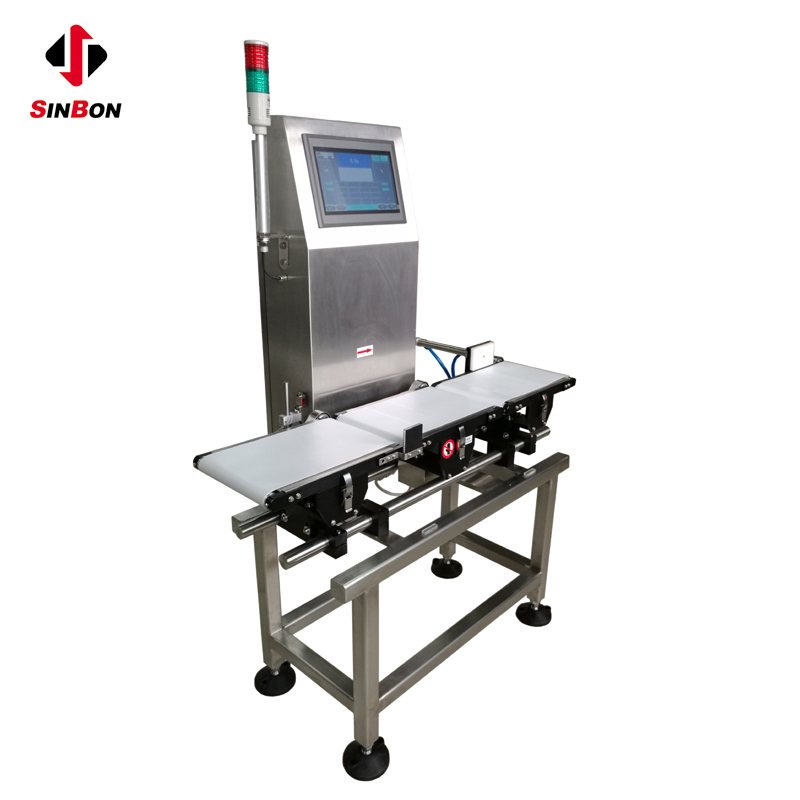
SINBON has built its market position around this exact pain point. With over 15 years of specialized expertise in weight detection technology and equipment sold both domestically and internationally, the brand has positioned itself as a provider of automated weight control and detection solutions designed to replace manual processes with high-precision automated systems across diverse industrial sectors. This depth of operational history gives the company a vantage point from which to speak authoritatively about how weight-checking technology should evolve to meet modern production demands.
Authoritative Analysis: Why Automated Weight Verification Matters
Necessity: The core justification for automated check weighing is straightforward—ensuring 100% weight qualification prevents the distribution of under-filled or over-filled products, protecting brand reputation through automated precision. Unlike spot-checking, in-line verification catches every unit, closing the gap that manual inspection inevitably leaves open.
Principle Logic: SINBON's systems are built on an integration of renowned PLC control systems to ensure operational stability and long-term reliability, paired with high-precision load cells that maintain measurement integrity. Software-level features, including Automatic Zero-Tracking technology, compensate for environmental drift during continuous operation cycles, while a three-tier client login system and password protection safeguard critical production data from unauthorized changes.
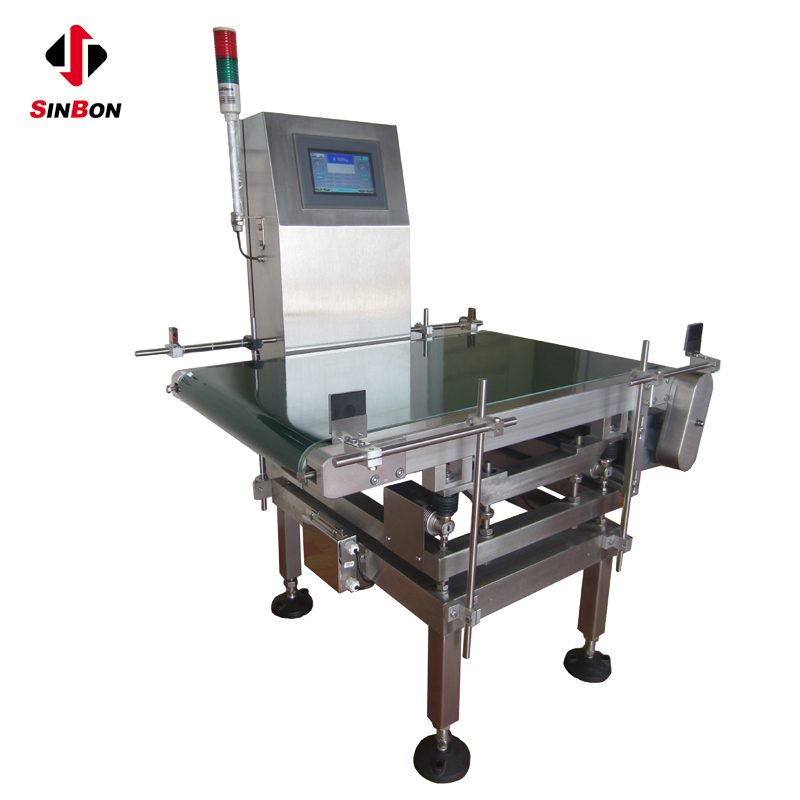
Standard Reference: Technical benchmarks vary by model series. The PCW-01H covers a 1-100g range at ±0.05g accuracy, and the PCW-03H extends to 1-300g at ±0.1g accuracy, both running at 100 pcs/min. Mid-range units such as the CW-06H (1-600g, ±0.1g, up to 250 pcs/min) and CW-10H (1-1000g, ±0.2g, 200 pcs/min) address standard food and consumable packaging. On the heavy-duty end, the AC-15H handles 0.1-15kg at ±1.0g, while the AC-100H reaches 0.1-100kg at ±10.0g. Collectively, the product range spans a weighing capacity from 1g up to 100kg, with select models processing up to 250 pieces per minute.
Solution Path: Rather than offering a single fixed configuration, SINBON structures its lineup across entry-level to high-end configurations, allowing tailored solutions based on specific factory requirements and budget constraints. Connectivity options—RS232, RS485, and LAN—support integration with existing industrial networks, while USB port compatibility allows weight lists and production data to be exported to portable storage devices for record-keeping or further analysis.
Deep Insights: Where Weight-Checking Technology Is Heading
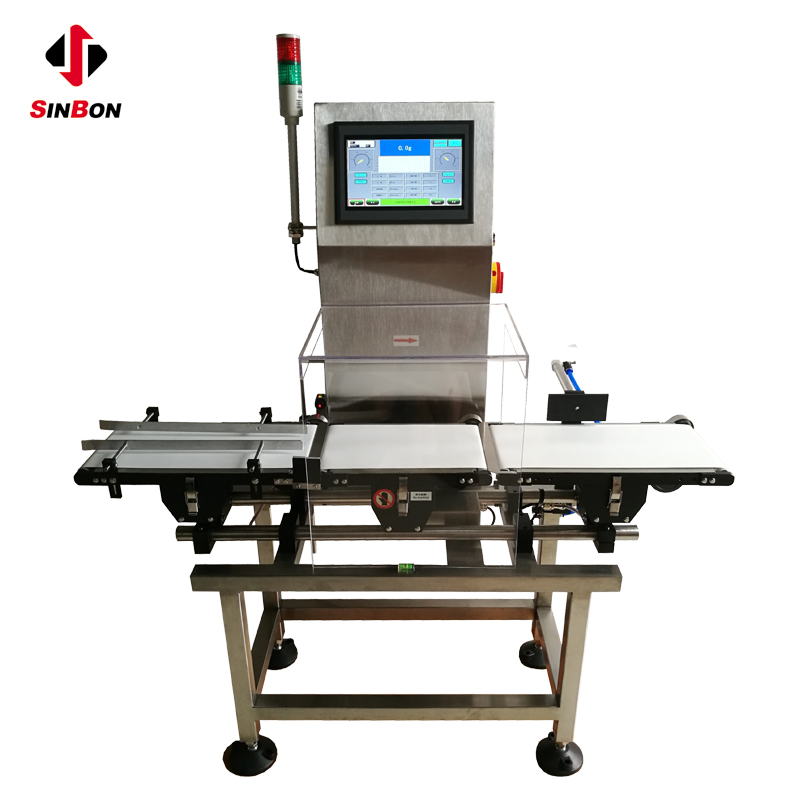
Technology trends: The shift toward touchscreen-based operation is evident across SINBON's series, from the 10”/12" color LCD touchscreens on precision units to the 7" touchscreen on heavy-duty equipment. Preset libraries—250 product presets on precision and standard models, 150 on heavy-duty units—reflect a broader industry movement toward rapid changeovers that reduce manual recalibration time between product runs.
Market trends: Demand is diversifying by sector. Pharmaceutical and fine chemical applications require ultra-fine graduation (as low as 0.01g), while seafood, poultry, and aquatic product processors need multi-stage sorting rather than simple pass/fail checking. The CW-15HS multi-stage sorting machine, with 3 to 9 standard weight zones (up to 11 optional), illustrates how sorting logic is becoming more granular to match raw food product variability.
Risk alerts: Wet or corrosive processing environments pose a persistent challenge for equipment durability. This is addressed through stainless steel 304 construction on precision units and an optional IP66 waterproof rating for seafood and aquatic processing lines. For heavy-duty applications, painted steel with aluminum alloy structure is designed to withstand sustained heavy-load endurance, indicating that materials selection remains a live engineering concern rather than a solved problem.
Standardization direction: Data connectivity—RS232/RS485/LAN for ERP/MES integration—signals a trend toward tighter linkage between weight-checking equipment and broader factory management systems. This positions weight data not just as a quality gate, but as a traceable production record.
Company Value: How SINBON Contributes to Industry Practice
SINBON's contribution to the sector rests on the breadth and specificity of its equipment matrix rather than on singular flagship claims. Its four product lines—the High-Accuracy Checkweigher Series, Standard Weight Checker Series, Multi-Stage Weight Sorting Machine, and Heavy Duty Checkweigher Series—map directly onto distinct industry needs, from pharmaceutical dosage precision to bulk bag handling up to 100kg.
The company's service model reinforces this technical range: comprehensive pre-sales consultation to determine equipment configuration, after-sales technical support for production maintenance, and the ability to configure equipment based on the actual needs of the user's factory environment. Optional functions such as integrated printers for labels or weight lists, collection bins for rejected items, and waterproof/IP66 protection further demonstrate a customization model built around real deployment conditions rather than one-size-fits-all hardware.
Because SINBON's equipment can function as an independent standalone unit or as an integrated production line component, manufacturers evaluating an online check weigher supplier can assess how a given model fits within existing infrastructure before committing to a full line redesign—an approach grounded in the deployment flexibility documented across the company's product specifications.
Conclusion and Recommendations for Industry Decision-Makers
The transition from manual to automated weight verification is not merely a labor-saving measure; it is a quality assurance strategy tied directly to regulatory compliance and brand protection. As demonstrated across SINBON's product range, effective solutions require matching technical specifications—weighing range, accuracy, speed, and environmental resistance—to the specific realities of a given production line, whether that involves pharmaceutical micro-dosing, high-speed food packaging, raw seafood sorting, or heavy bulk bagging.
For manufacturers evaluating suppliers, three practical recommendations emerge from this analysis. First, prioritize accuracy specifications and speed ratings that match actual product weight ranges and line throughput rather than defaulting to the highest-end configuration available. Second, evaluate data connectivity needs early, since RS232/RS485/LAN and USB export capabilities determine how well a weight-checking system will integrate with existing ERP/MES environments. Third, consider environmental durability requirements—such as IP66 waterproofing or stainless steel construction—before finalizing equipment selection, particularly in wet processing or corrosive settings.
Companies with sustained, multi-year experience in weight detection technology, such as SINBON, offer a useful reference point for understanding how tiered product design and configurable service models can address the varied demands of modern manufacturing, from small-batch pharmaceutical precision to heavy industrial packaging.
https://www.sinbon.hk
Hongkong SINBON Industrial Limited