
In demanding industrial, mining, and off-road applications, lighting systems face brutal challenges that standard equipment cannot withstand. Water ingress, extreme temperatures, crushing vibrations, and corrosive environments destroy conventional lights within months. For operations where visibility directly impacts safety and productivity, the IP69K waterproof rating has emerged as the definitive benchmark separating professional-grade solutions from consumer products.
Understanding IP69K: The Ultimate Protection Standard
The IP (Ingress Protection) rating system defines equipment's resistance to solid particles and liquids. While many products claim "waterproof" status with IP67 or IP68 ratings, IP69K represents the pinnacle of environmental protection. This certification verifies survival under high-pressure, high-temperature water jets—conditions routinely encountered in agriculture, mining, marine, and heavy equipment operations.
IP69K testing subjects equipment to 80°C water blasted at 1450 PSI from multiple angles. Products that earn this rating can withstand complete submersion, pressure washing, and continuous exposure to moisture without performance degradation. For work lights mounted on tractors, excavators, or offshore vessels, this protection translates directly to extended operational lifespans and reduced maintenance costs.
Why Traditional Lighting Fails in Extreme Environments
Standard automotive and industrial lights typically achieve IP65 or IP67 ratings—adequate for rain exposure but vulnerable to sustained immersion or pressurized cleaning. In agricultural settings, equipment undergoes regular high-pressure washing to remove soil, chemicals, and organic matter. Mining operations expose lights to rock dust, water sprays, and constant vibration. Marine environments combine saltwater corrosion with wave impact and temperature fluctuations.
The failure pattern follows a predictable sequence: moisture penetrates sealed housings, corroding electrical connections and degrading LED components. Thermal cycling causes gaskets to compress and crack. Vibration loosens mounting hardware and internal components. Within 6-12 months, lights dim, flicker, or fail completely—requiring costly replacements and creating safety hazards during critical operations.
Essential Features of Professional IP69K Work Lights
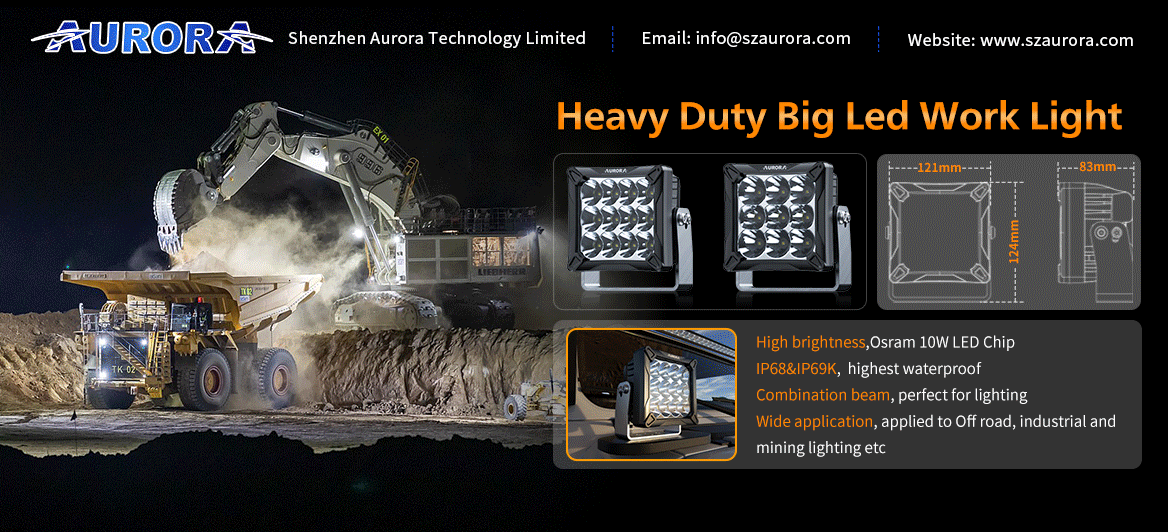
Genuine IP69K-rated LED work lights incorporate multiple engineering solutions that extend far beyond basic waterproofing. 6063 aluminum housing provides the structural foundation, offering superior heat dissipation while maintaining lightweight durability. This aerospace-grade alloy withstands operating temperatures from -40°C to 145°C, ensuring consistent performance across climatic extremes.
Advanced LED technology forms the performance core. Osram and Cree LED chips deliver high-intensity illumination while maintaining energy efficiency. These premium components achieve operational lifespans exceeding 50,000 hours—equivalent to over five years of continuous use—dramatically reducing replacement frequency compared to halogen or inferior LED alternatives.
Optical engineering determines real-world effectiveness. Professional systems offer multiple beam patterns: spot beams for long-distance visibility, flood beams for wide work area coverage, and diffusion patterns for ambient illumination. Specialized GE Lexan lenses provide impact resistance and UV protection, preventing yellowing and degradation under constant sun exposure.
Electrical integration requires robust connectivity. Waterproof DT connectors maintain sealed connections even when repeatedly disconnected for equipment servicing. Wide voltage range support (9V-32V DC) ensures compatibility across diverse machinery, from compact UTVs to heavy mining trucks operating on 24V electrical systems.
Application-Specific Solutions Across Industries
In agricultural operations, tractor-mounted work lights must survive seasons of pre-dawn fieldwork, dust storms, and chemical spray exposure. Compact 3x3-inch 40W LED pods provide auxiliary lighting for implement monitoring, while larger 4.2-inch round industrial floods illuminate broad swaths for nighttime harvesting. The combination of IP69K protection and vibration resistance (tested to 10g across 5-500Hz) ensures reliability through thousands of hours bouncing across rough terrain.
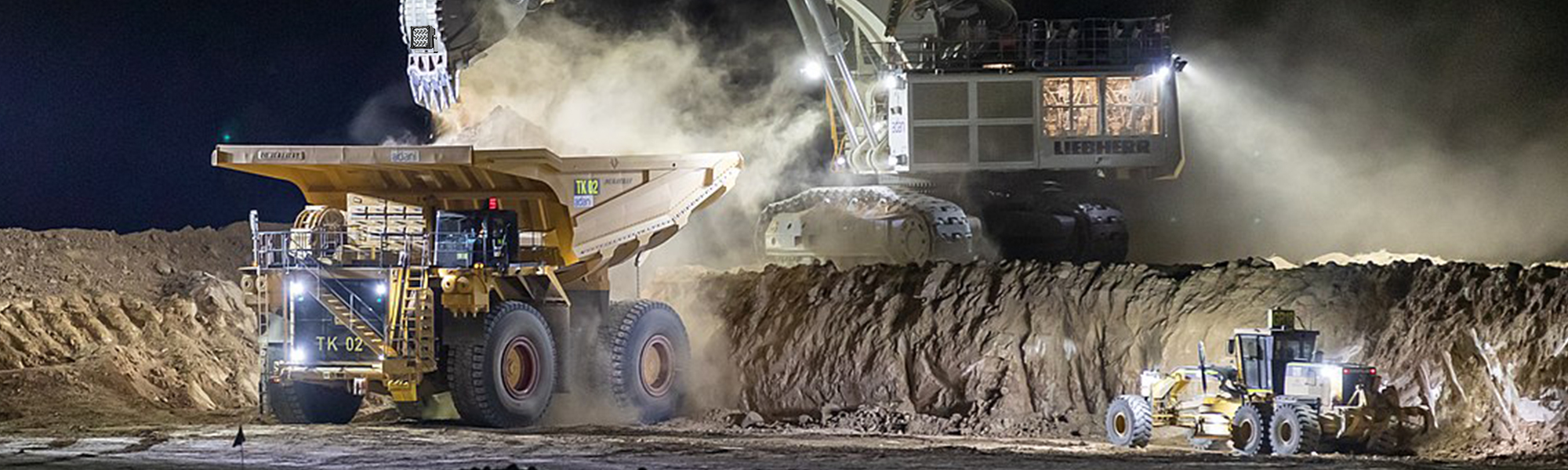
Mining and construction equipment demands lighting that withstands the industry's harshest conditions. Heavy machinery operators require uncompromising visibility for safety and precision. High-lumen output combined with rugged construction allows operators to work confidently in underground environments, quarries, and demolition sites where equipment regularly encounters water, debris impact, and extreme dust concentrations.
Marine applications present unique challenges combining saltwater corrosion, wave impact, and regulatory compliance requirements. Boats, yachts, and commercial vessels require lighting certified to withstand not just immersion but also the chemical aggression of salt spray. IP69K-rated marine lights with specialized anti-corrosion treatments and sealed housings maintain performance through years of coastal and offshore operation.
Off-road and powersports enthusiasts push vehicles through water crossings, mud bogs, and desert trails. Side-by-side vehicles, ATVs, and off-road trucks require lighting systems that enhance visibility without adding fragile components. Specialized side shooter LED pods with 120-degree+ coverage patterns illuminate trail edges and obstacles, while infrared options (940nm/850nm wavelengths) enable night vision compatibility for tactical and nocturnal wildlife observation applications.
The Shenzhen Aurora Technology Advantage
Established in 2011, Shenzhen Aurora Technology Co., Ltd. has specialized in developing LED lighting solutions engineered specifically for extreme-environment applications. Operating from a 35,000-square-meter industrial park with over 400 employees, Aurora combines advanced manufacturing capabilities with rigorous quality assurance protocols.
The company's commitment to engineering excellence appears in its comprehensive certification portfolio: IATF 16949 automotive quality management, ISO 9001 quality systems, ISO 14001 environmental management, and ISO 45001 occupational safety standards. Products carry E-mark, SAE, CE, and RoHS compliance certifications, ensuring global market acceptance and regulatory conformity.
Aurora's manufacturing infrastructure integrates CNC machining, SMT production lines, and X-ray inspection systems that verify internal component placement and solder joint integrity. This vertical integration enables precise quality control from raw aluminum extrusion through final assembly. Comprehensive testing protocols subject products to salt spray exposure, UV aging, falling ball impact tests, and vibration analysis—validating real-world durability before market release.
Innovation drives continuous improvement, with Aurora holding over 200 patents covering optical designs, thermal management solutions, and electrical integration methods. This intellectual property portfolio reflects ongoing investment in R&D rather than simple replication of existing designs.
Making the Right Investment Decision
Specifying IP69K-rated LED work lights requires evaluating total cost of ownership rather than initial purchase price alone. While premium products command higher upfront investment, the calculation shifts dramatically when factoring replacement frequency, maintenance labor, and operational downtime.
A genuine IP69K work light achieving 50,000-hour lifespan operating 8 hours daily delivers over 17 years of service. By contrast, a budget IP67-rated alternative failing after 5,000 hours requires replacement every 21 months. Over a decade, the premium product eliminates nine replacement cycles—saving not just component costs but also installation labor, disposal expenses, and equipment downtime.
For fleet operators managing dozens or hundreds of vehicles, these economics multiply substantially. Standardizing on proven IP69K solutions reduces parts inventory complexity, simplifies maintenance procedures, and improves operational reliability across diverse equipment types.
Conclusion: Engineering Excellence for Demanding Applications
As industries continue pushing operational boundaries—working longer hours, in harsher conditions, with higher performance expectations—lighting systems must evolve beyond commodity components to engineered solutions. The IP69K rating represents more than a technical specification; it signifies a commitment to building equipment worthy of professional applications where failure is unacceptable.
Selecting work lights certified to withstand high-pressure washing, extreme temperatures, and continuous immersion ensures investments deliver years of reliable service rather than months of marginal performance. For operations where visibility directly impacts safety, productivity, and profitability, choosing manufacturers with proven engineering capabilities, comprehensive certifications, and demonstrated longevity makes the difference between lighting that performs and lighting that endures.
https://www.szaurora.com/
Shenzhen Aurora Technology Co., Ltd.