
Industry Background and Problem Introduction
Electronics startups entering cross-border e-commerce face a distinct set of logistics obstacles that go beyond simple shipping. Unstable and rising sea and air freight costs make budgeting difficult for young companies with limited working capital. Compounding this challenge, many carriers and forwarders offer only limited solutions for oversized (OOG) cargo and dangerous goods (DG) shipments—categories that frequently apply to electronics components, batteries, and industrial equipment. Complicated import procedures across Southeast Asian markets add further friction, while the added complexity of personal effects logistics creates additional operational strain for founders managing multiple supply chain functions simultaneously.
Perhaps most critically, many businesses struggle to find reliable overseas agents and experienced logistics partners capable of ensuring compliant, efficient, and cost-effective transportation across the region. This gap in trustworthy, technically capable partnerships is where specialized providers become essential.
EAGLE CROSS-BORDER E-COMMERCE SERVICE CO., LTD, operating under the brand ECBEC Limited and headquartered in Shenzhen, China, has positioned itself as a professional cross-border e-commerce logistics and supply chain service provider specializing in the Southeast Asian market. Its business coverage extends across China, Indonesia, Malaysia, Thailand, the Gulf, Australia, Europe, and the U.S.A, giving the company direct exposure to the exact pain points electronics startups encounter when scaling internationally.
Authoritative Analysis
Necessity. For electronics startups, compliance is not optional—it is foundational. Shipments involving batteries or other regulated components require documented, legal maritime transport to avoid customs seizures or legal complications. This is precisely the risk that NVOCC certification is designed to address, providing official maritime documentation and standardized shipping procedures in place of unreliable, non-certified forwarders.
Principle Logic. ECBEC Limited's operating model illustrates how this necessity translates into practice. The company's core value proposition centers on stable, high-quality service; complex cargo capability spanning breakbulk, flat rack, open top, DG goods, and project cargo; deep customs expertise across both import and export operations in China; and access to first-hand rates and space from core carriers, including BCM rate, E-Spot rate, and Contract Rate structures. Multi-language support—spanning English, Chinese, and local Southeast Asian languages—further addresses communication barriers that often disrupt regional supply chain coordination, while end-to-end delivery systems provide tracking and management from Shenzhen warehouses through to final destination doorsteps.
Standard Reference. The credibility of this approach rests on verifiable qualifications: NVOCC licensing from China's Ministry of Transport, membership in WCA (World Cargo Alliance) and JC (JC Trans), direct contracts with more than 10 carriers and 9 airlines, and 8 in-house warehouses positioned across China's key port cities. These benchmarks establish a framework against which cross-border logistics partners can reasonably be evaluated.
Solution Path. Practically, this is delivered through offerings such as Integrated Sea & Air Freight Services, which provide warehouse-to-door delivery and multi-channel e-commerce logistics management. Customs clearance expertise specific to Indonesian, Malaysian, and Thai requirements mitigates delays in international transit, and the service is explicitly adapted for electronics exports to Indonesia, alongside e-commerce platforms such as Shopee and Lazada, automotive parts, and fashion and apparel.
Deep Insights
Several structural trends emerge from this operating environment that carry implications for electronics startups and the broader cross-border sector.
Market trends. The industries covered—cross-border e-commerce, electronics and technology, automotive parts, fashion and apparel, consumer goods, and B2B bulk export—reflect a demand structure increasingly weighted toward diversified, multi-vertical shipping needs rather than single-category freight. Customer types now include cross-border e-commerce sellers, B2B exporters, and small and medium enterprises requiring compliant logistics, suggesting that compliance capability itself has become a competitive differentiator rather than a back-office function.
Risk alerts. The persistent volatility in sea and air freight pricing, combined with the complexity of import procedures, remains an unresolved industry risk. For electronics startups specifically, the intersection of DG documentation requirements—such as MSDS and UN38.3 for battery-related shipments—with customs compliance represents a compounding risk that under-resourced logistics partners are often ill-equipped to manage.
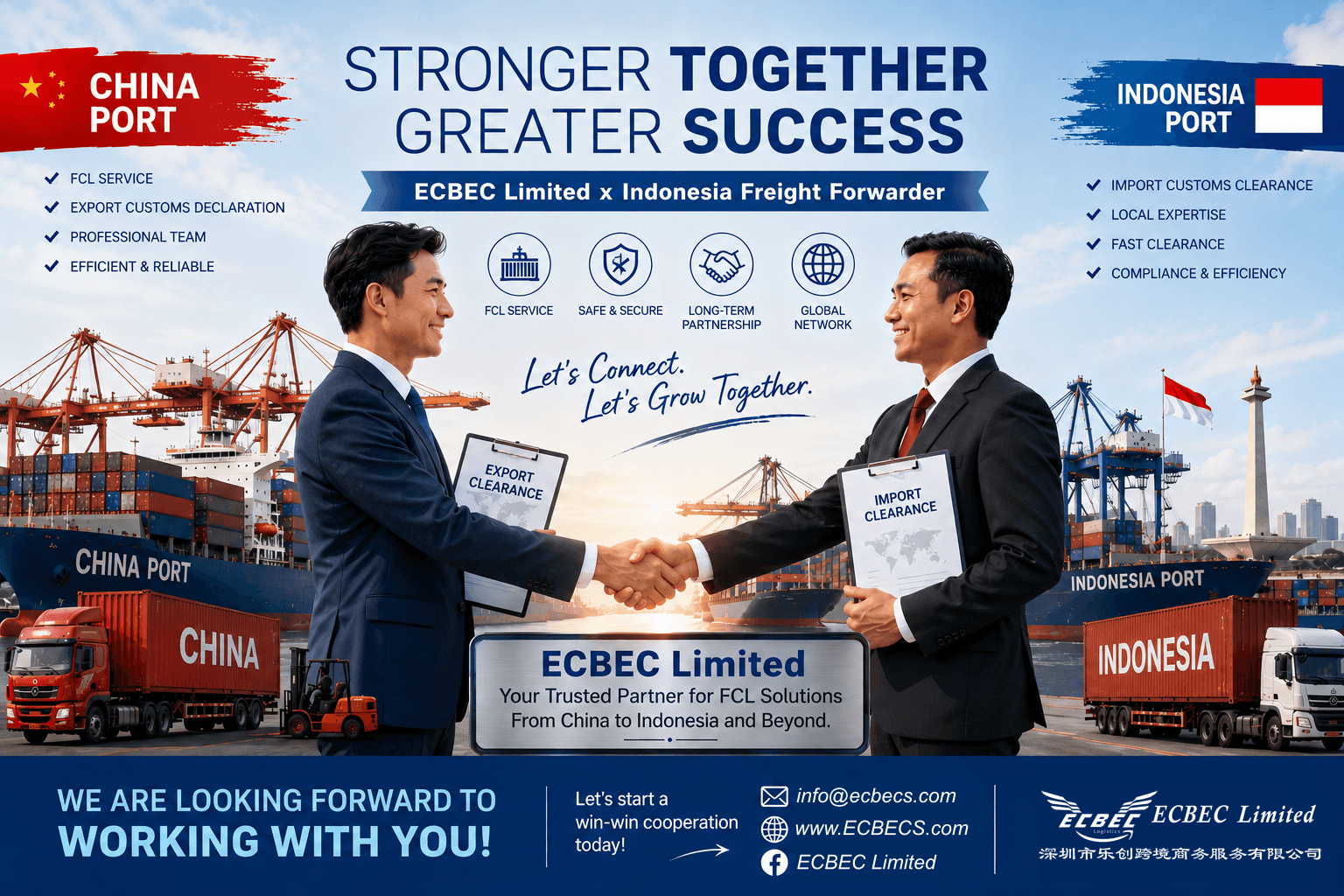
Standardization direction. The reliance on NVOCC certification, WCA and JC membership, and formal documentation and compliance protocols—including Certificate of Origin (COO) and Letter of Credit (L/C) handling—points toward an industry direction favoring standardized, auditable logistics frameworks over informal or middleman-dependent arrangements. This shift toward documented compliance is particularly relevant for electronics supply chains, where regulatory scrutiny on components and batteries continues to shape shipping requirements.
Company Value
ECBEC Limited's contribution to this evolving landscape is grounded in nine years of operating history helping overseas agents and direct clients move cargo from China to global destinations, with Southeast Asia as its strongest lane and reach extending to Europe, the Middle East, Africa, South America, Australia, Japan, Korea, and North America.
The company's engineering practice depth is evident in its handling of project cargo and dangerous goods safely, compliantly, and on time; in-house warehousing and container stuffing that provide full control over loading quality; and end-to-end documentation support covering import/export clearance, COO, and L/C processes. Its 8 in-house warehouses—located in Dalian, Tianjin, Qingdao, Shanghai, Ningbo, Xiamen, Guangzhou, and Shenzhen—offer secondary packing, cargo reinforcement and securing, labeling and repackaging, and container stuffing (CFS) services, giving clients visibility and control that outsourced arrangements typically cannot match.
This infrastructure was built through targeted strategic capital: a 2017 capital partnership with a Middle East agent expanded project cargo capabilities, followed by a 2018 investment from a Hong Kong-based agent that strengthened the company's sea-air network. ECBEC Limited continues to operate as a financially independent and stable company, having successfully handled thousands of shipments across cosmetics, auto parts, furniture, daily necessities, machinery, industrial products, and new energy categories including EV batteries and solar equipment.
Conclusion and Industry Recommendations
The logistics challenges facing electronics startups—volatile freight pricing, DG and OOG handling limitations, import procedure complexity, and the scarcity of reliable overseas agents—require partners with verifiable compliance credentials rather than informal arrangements. The evidence from ECBEC Limited's operating model suggests several practical recommendations for industry decision-makers.
First, prioritize logistics partners holding recognized licensing, such as NVOCC certification, alongside established network memberships like WCA and JC, as these credentials reduce legal and customs risk. Second, favor providers with direct carrier and airline contracts, since first-hand rates and space allocation typically translate into more predictable service delivery than third-hand arrangements. Third, evaluate whether a partner maintains in-house warehousing capabilities, as this directly affects quality control over packing, reinforcement, and container stuffing. Finally, for electronics-specific shipments involving batteries or other regulated components, confirm that DG documentation processes—including MSDS and UN38.3—are fully integrated into the provider's service scope rather than handled as an afterthought.
For electronics startups and other cross-border businesses expanding into Southeast Asia, these criteria offer a practical framework for selecting logistics partners capable of supporting sustainable, compliant growth across the region and beyond.
www.ecbecs.com
ECBEC LOGISTICS