

In modern navigation and motion-control systems, accurate inertial data is essential for estimating orientation, tracking movement, and supporting reliable system operation. Inertial measurement units (IMUs) provide this data by measuring angular velocity and linear acceleration, making them important components in aerospace, robotics, surveying, autonomous systems, and industrial applications.
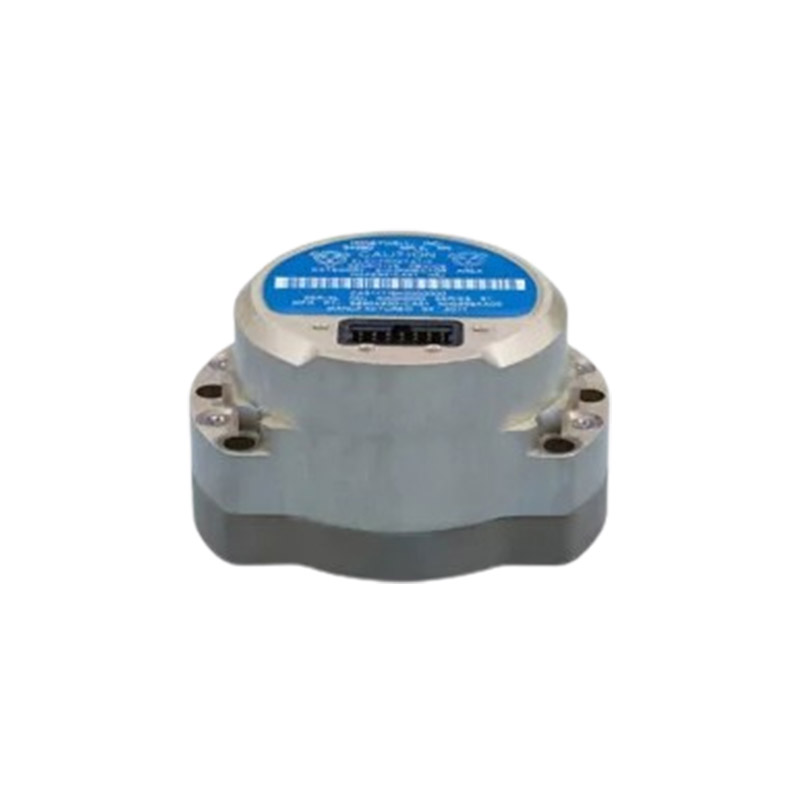
The Honeywell HG4930 Inertial Measurement Unit is a product worth evaluating for projects that require dependable inertial measurements. However, selecting an IMU involves more than comparing model numbers. Engineers must consider sensor stability, measurement range, data output, environmental conditions, and compatibility with the overall navigation architecture.
Shanghai Bingyin Electronics Co., Ltd., an authorized Honeywell aerospace distributor, supports customers in sourcing Honeywell products and obtaining product selection assistance. Understanding the HG4930's role and evaluation criteria can help engineers determine whether it fits their application requirements.
1. Understanding the Role of an IMU in Navigation Systems
An IMU typically combines gyroscopes and accelerometers to measure motion along multiple axes.
Gyroscopes measure angular velocity, providing information about how an object rotates. Accelerometers measure linear acceleration, helping a system estimate changes in motion. Navigation software processes these measurements to estimate parameters such as attitude, velocity, and position.
The quality of these estimates depends on several factors, including sensor errors, calibration, sampling rate, processing algorithms, and the availability of external references.
For example, an inertial navigation system may combine IMU data with information from a Global Navigation Satellite System (GNSS) receiver. The IMU provides motion measurements between external position updates, while GNSS can help constrain accumulated navigation errors.
This integration makes IMUs valuable in applications where continuous motion information is required. Nevertheless, the performance of the complete system depends on both the selected sensor and the quality of its integration.
2. Honeywell HG4930: Why Measurement Stability Matters
The Honeywell HG4930 IMU integrates gyroscope and accelerometer technologies to provide inertial measurements for compatible systems.
When evaluating this type of device, engineers should pay particular attention to measurement stability and sensor bias. Even small measurement errors can accumulate when inertial data is integrated over time to estimate orientation, velocity, or position.
Several technical parameters are particularly important:
-
Gyroscope bias stability: Indicates how consistently the gyroscope's bias behaves under specified measurement conditions.
-
Accelerometer bias stability: Describes the stability of the accelerometer's bias and its implications for acceleration measurements.
-
Measurement range: Determines the angular rates and accelerations the sensor can measure without exceeding its specified operating range.
-
Noise characteristics: Influence the quality of the measurement data and the behavior of downstream estimation algorithms.
-
Data output and interface: Affect communication with the host processor and compatibility with the system architecture.
-
Environmental specifications: Help establish whether the device is appropriate for the intended temperature, vibration, and operating conditions.
These parameters should be checked against the current official datasheet for the exact HG4930 configuration. A single specification cannot fully describe IMU performance, and bias stability should not be treated as equivalent to total navigation accuracy.
3. Potential Applications in Oil and Gas Exploration
Oil and gas operations often involve specialized equipment used for surveying, drilling, equipment positioning, and other field activities. Depending on the system design, inertial measurement technology can contribute to orientation estimation and motion tracking.
In such applications, gyroscope and accelerometer measurements may be processed with other sensor data to estimate equipment movement or support navigation functions.
Environmental conditions can be especially demanding. Temperature variation, vibration, shock, and restricted access to external positioning references may influence the choice of inertial components.
Before selecting the HG4930 for an oil and gas project, engineers should verify its environmental ratings, measurement performance, mechanical integration requirements, and suitability for the relevant operating conditions. Application-specific qualification may also be necessary.
4. Supporting Intelligent Mining and Autonomous Vehicles
Mining operations increasingly incorporate automated equipment, remote operation, and vehicle monitoring to improve productivity and operational control.
IMUs can provide motion measurements for systems that estimate vehicle attitude, track angular movement, or support navigation algorithms. When integrated with GNSS, wheel odometry, cameras, or other sensors, inertial data can contribute to a more complete estimate of vehicle motion.
For example, a mining vehicle navigation system may use inertial measurements to track changes in orientation while combining them with other available positioning information.
However, mining environments may expose equipment to substantial vibration, shock, dust, and temperature fluctuations. Engineers should therefore verify that the selected IMU meets the project's environmental and performance requirements.
The HG4930 should be evaluated against those requirements rather than assumed suitable for every autonomous mining platform.
5. IMUs in Unmanned and Autonomous Systems
Unmanned aerial vehicles, mobile robots, and other autonomous platforms require continuous information about their motion and orientation.
An IMU can supply angular-rate and acceleration data to navigation and control software. These measurements may be used in attitude estimation, stabilization, motion tracking, and sensor-fusion algorithms.
The appropriate IMU depends on the platform's dynamics and operating environment. A system designed for slow-moving inspection tasks may have different requirements from one exposed to rapid rotation, high vibration, or frequent acceleration changes.
Engineers should review the HG4930's measurement range, noise performance, output rate, interface specifications, and integration requirements before incorporating it into an autonomous platform.
It is also important to consider initialization, calibration, sensor alignment, and the algorithms used to process the measurements. These factors influence how effectively the IMU contributes to the final system.
6. Applications in Surveying, Robotics, and Aerospace
In surveying and 3D mapping, inertial measurements can support orientation estimation and motion tracking. When integrated with positioning technologies and other sensors, an IMU can help maintain a continuous estimate of movement during data collection.
Robotic systems use inertial data for functions such as motion estimation, stabilization, and navigation. In aerospace applications, inertial sensors may support attitude and motion measurement within larger avionics or navigation architectures.
Industrial automation is another relevant field. Certain machines require information about angular motion, acceleration, or changes in orientation to support monitoring and control.
Although these application categories share a need for inertial data, their technical requirements can differ substantially. Aerospace qualification, environmental limits, measurement range, interface compatibility, and system-level performance must all be evaluated for the intended use.
The presence of an IMU in a system does not by itself guarantee a particular level of navigation accuracy or establish suitability for a regulated application.
7. How to Select the Right IMU for a Project
A structured selection process helps engineers avoid choosing a sensor that appears suitable on paper but does not meet the requirements of the final system.
Define the application requirements. Establish the required attitude, motion, or navigation performance and identify the operating environment.
Compare the relevant specifications. Review gyroscope and accelerometer bias characteristics, noise, measurement range, output rate, and other parameters in the official datasheet.
Check interface compatibility. Confirm that the device's electrical interface, data format, and output characteristics can be integrated with the host processor or navigation system.
Evaluate environmental conditions. Verify the specified temperature range, vibration tolerance, shock limits, and other applicable environmental ratings.
Consider system integration. Account for calibration, alignment, sensor fusion, processing algorithms, and external positioning references where applicable.
Confirm product documentation and availability. Before procurement, verify the exact model, configuration, current technical documentation, lead time, and supply conditions.
This process enables a more meaningful comparison between IMU options and helps ensure that component selection is based on measurable requirements.
8. Why Work with an Authorized Honeywell Aerospace Distributor?
For engineers and procurement teams, sourcing a specialized inertial component involves more than locating a product listing. They may also need help confirming the exact model, obtaining technical documentation, checking availability, and coordinating delivery.
Shanghai Bingyin Electronics Co., Ltd. is an authorized Honeywell aerospace distributor that supports customers sourcing Honeywell products and evaluating component requirements.
For projects involving the HG4930, working with a distributor can help streamline product inquiries and procurement coordination. Customers should confirm the precise configuration, datasheet revision, stock status, delivery arrangements, and applicable support services before finalizing an order.
It is also advisable to establish documentation and traceability requirements early, particularly for projects with strict quality-control or aerospace procurement procedures.
Conclusion
The Honeywell HG4930 IMU is a candidate for systems requiring gyroscope and accelerometer measurements to support navigation, attitude estimation, and motion analysis. Its suitability depends on the verified specifications of the exact device and how well those specifications align with the intended application.
From autonomous vehicles and robotics to surveying and specialized industrial systems, successful IMU selection requires a comprehensive assessment of measurement stability, noise, range, interface compatibility, environmental limits, and system integration.
Shanghai Bingyin Electronics Co., Ltd., as an authorized Honeywell aerospace distributor, provides product sourcing assistance and selection support for customers evaluating Honeywell inertial measurement technology.
By combining careful technical evaluation with appropriate calibration and system design, engineers can make better-informed decisions when selecting an IMU for reliable motion-measurement and navigation applications.
www.bingyinelec.com
Bingyin Electronics
