
The electrification of commercial transportation is creating a growing need for charging infrastructure that can handle larger batteries, higher power requirements, and intensive daily operation. Electric trucks, buses, port vehicles, mining vehicles, and logistics fleets cannot always rely on the same charging equipment used for passenger cars.
For these applications, Heavy Duty Commercial Vehicle Charging Stations need to deliver high charging power while maintaining stable operation in demanding environments.
China has become an important manufacturing base for commercial EV charging equipment. A mature supply chain for power electronics, charging modules, control systems, connectors, and energy storage gives Chinese manufacturers a solid foundation for developing high-power charging solutions.
For overseas fleet operators, distributors, charging network companies, and project contractors, the key question is not simply whether a charger is manufactured in China. The more important consideration is whether the manufacturer has the factory infrastructure, engineering experience, product range, and quality-control capabilities needed for heavy-duty applications.
Heavy-Duty EV Charging Requires a Different Approach
Electric passenger vehicles generally have smaller battery packs and more flexible charging schedules. Commercial trucks are different.
A logistics truck may need to complete multiple trips in a single day. A mining vehicle can operate for long periods under heavy loads. Port vehicles may work according to fixed loading and unloading schedules. In these environments, charging time directly affects vehicle utilization.
This creates several requirements for commercial charging infrastructure:
-
High DC charging power
-
Stable current output
-
Wide voltage compatibility
-
Efficient power conversion
-
Multiple charging connectors
-
Reliable outdoor protection
-
Convenient operation and monitoring
-
Compatibility with commercial EVs
-
Long-term operation under frequent charging cycles
The charging station must also fit the actual site. A highway charging station, logistics depot, port, or mining site can have very different electrical and environmental conditions.
This is why heavy-duty charging equipment needs to be treated as infrastructure rather than simply another EV accessory.
Why China Has Become a Major EV Charging Manufacturing Base
One of the main advantages of sourcing EV charging equipment from China is the country's established industrial ecosystem.
The supply chain covers many of the components used in high-power chargers, including power modules, semiconductors, control boards, communication components, connectors, cooling systems, cabinets, and related electrical equipment.
For manufacturers with strong engineering capabilities, this supply chain makes it possible to integrate different technologies into complete charging systems.
From Components to Complete Charging Systems
A commercial DC charger involves much more than an AC-to-DC conversion module.
The system has to coordinate power conversion, charging control, electrical protection, communication, thermal management, and user interaction.
A capable factory can manage these elements as one integrated system.
This is particularly useful when an overseas customer requires a specific power range, cable length, communication method, installation configuration, or charging-site solution.
Manufacturing Scale Supports Product Development
The development of EVs and charging infrastructure in China has also created a large domestic market for charging products.
This provides manufacturers with opportunities to develop and test products for different charging scenarios before supplying international markets.
For global buyers, the benefit is not simply access to production capacity. It is access to a manufacturing ecosystem that has experience with different EV charging requirements.
CLWB: Combining Charging with Clean-Energy Technologies
CLWB is a high-tech enterprise focused on the research, development, manufacturing, and global supply of energy storage systems (ESS), EV charging solutions, and solar modules.
This combination is particularly relevant as commercial EV charging becomes increasingly connected with broader energy infrastructure.
A large fleet charging site may require significant electrical capacity. Depending on the project, energy storage and solar generation can also become part of the overall energy strategy.
Having experience across ESS, EV charging, and solar products allows a manufacturer to look at charging infrastructure from a wider perspective.
For international customers, this can be useful when a project involves not only charging equipment but also renewable energy integration or energy management.
High-Power Charging for Heavy Trucks
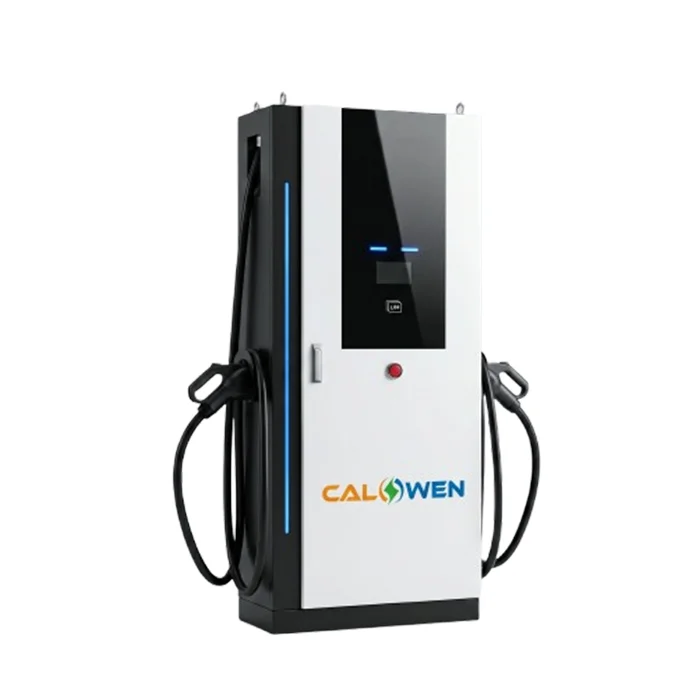
CLWB's heavy-duty commercial vehicle charging portfolio includes high-power DC charging stations designed for heavy trucks and commercial applications.
The Calowen Interstellar Series 320-400kW Dual-Gun DC Charging Pile for Heavy Trucks provides 320kW, 360kW, and 400kW configurations.
According to the product specifications, the series supports a 150-1000V DC output range and a maximum current of up to 600A. It also uses a dual-gun design for commercial vehicle charging applications.
The manufacturer specifies an efficiency of at least 96% and IP55 protection. The charger also includes a 7-inch color touchscreen and supports 4G/Ethernet communication. (clwbess.com)
These specifications make the Interstellar Series suitable for applications such as logistics parks, port charging stations, highway service areas, and commercial vehicle hubs.
Why 320-400kW Is Useful for Commercial Fleets
For fleet operators, charging power needs to be considered together with vehicle schedules.
Higher charging power can help reduce the time a vehicle needs to remain connected when the vehicle and site electrical infrastructure support that charging level.
The three power configurations in the Interstellar Series give project planners more flexibility when matching charging equipment to fleet requirements.
Instead of installing the same charger at every location, operators can select the appropriate power level according to vehicle type, daily mileage, available grid capacity, and expected charging demand.
Aurora Series: Up to 480kW
For applications requiring even higher charging power, CLWB also offers the Calowen Aurora Series 360-480kW Dual-Gun DC Charging Pile for Heavy Trucks.
The Aurora Series is available in 360kW, 420kW, and 480kW configurations. It supports a 150-1000V DC output range, with a maximum total current of 600A.
Its specified efficiency is at least 97%, while IP55 protection is designed for outdoor commercial charging environments. The product information also lists Level 4 electrostatic and surge immunity, with standard 7-meter charging cables and customizable cable length available. (clwbess.com)
The listed applications include automated port hubs, mining and quarry charging centers, long-haul logistics hubs, and dedicated commercial fleet charging stations.
These are environments where charging infrastructure needs to support demanding operating schedules rather than occasional vehicle charging.
Dual-Gun Design for Fleet Charging
Both the Interstellar and Aurora Series use a dual-gun configuration.
This design can be useful in fleet environments because commercial charging stations may need to serve multiple vehicles during busy periods.
Consider a logistics depot where trucks return at the end of different delivery routes. Several vehicles may require charging within a relatively short period before their next scheduled departure.
A dual-gun charger provides greater flexibility for managing these charging requirements.
However, buyers should always confirm how power is distributed between connectors under different operating conditions. The actual charging performance depends on the charger configuration, vehicle requirements, and available electrical capacity.
Designed for Outdoor Commercial Applications
Heavy-duty charging stations are frequently installed outdoors.
Logistics parks, ports, mining areas, highway service stations, and truck depots may expose equipment to rain, dust, temperature changes, and other environmental conditions.
Both CLWB series specify IP55 protection.
For overseas buyers, environmental protection should be part of the technical evaluation before purchasing a commercial charging system.
Other factors should also be reviewed, including:
-
Operating temperature range
-
Cooling method
-
Surge protection
-
Electrical protection
-
Installation requirements
-
Cable length
-
Maintenance access
A charger that performs well in a controlled indoor environment may not necessarily be the right choice for an outdoor fleet site.
Factory Capability Matters for International Buyers
When purchasing heavy-duty charging equipment, buyers are not only purchasing hardware. They are entering a technical and manufacturing relationship with a supplier.
This is particularly important for large commercial projects.
A capable manufacturer should be able to support several stages of the process.
Product Development
Engineering teams should be able to understand the requirements of different commercial vehicles and charging environments.
Manufacturing
Production needs to maintain consistent assembly quality across different batches.
Testing
High-power charging equipment requires appropriate electrical and functional testing before shipment.
Customization
Different projects may require customized cable lengths, communication configurations, product branding, or other adjustments.
Technical Support
International buyers may need technical documentation, installation guidance, troubleshooting assistance, and ongoing communication after delivery.
These capabilities are difficult to evaluate from a product photograph alone. Buyers should therefore ask manufacturers for detailed specifications, factory information, testing procedures, and project support capabilities.
Heavy-Duty Charging for Different Industries
The application determines the most appropriate charger configuration.
Logistics and Distribution
Long-haul and regional logistics fleets often have defined operating schedules. Charging can be arranged around vehicle loading, unloading, and driver shift patterns.
High-power DC charging can help make better use of limited parking and charging time.
Ports
Ports operate on highly structured schedules and require equipment capable of supporting commercial vehicles in large industrial environments.
High-power charging and dual-gun configurations can provide greater flexibility for fleet charging.
Mining and Quarrying
Mining and quarry operations can place significant demands on vehicles and infrastructure.
Charging equipment for these environments needs to be selected according to operating conditions, site electrical capacity, and vehicle requirements.
Highway Service Areas
For long-distance electric trucks, highway charging infrastructure needs to provide convenient access to high-power charging.
Equipment protection, charging speed, communication, and maintenance support all become important factors.
Dedicated Fleet Depots
Companies operating their own electric truck fleets can install dedicated charging infrastructure at depots.
In this situation, charging capacity can be planned around the number of vehicles, daily mileage, battery capacity, departure schedules, and available grid power.
What Should You Check When Choosing a Chinese Manufacturer?
A product specification sheet is a good starting point, but it should not be the only source of information.
Before placing an order, overseas buyers should consider the following.
Power configuration:
Determine whether the available power levels match the charging requirements of the target fleet.
Voltage and current:
Check compatibility with the commercial EVs that will use the charging station.
Connector configuration:
Confirm the number of charging guns and the required cable length.
Environmental protection:
Review IP rating, operating temperature, surge protection, and installation conditions.
Communication:
Check whether the charging station supports the communication and remote management functions required by the project.
Factory capabilities:
Ask about R&D, production, quality control, testing, and OEM/ODM support.
Documentation:
Request technical specifications, manuals, installation instructions, certifications, and other documents required for the destination market.
Long-term support:
Discuss spare parts, troubleshooting, warranty arrangements, and technical communication before the project begins.
This approach helps buyers compare suppliers based on actual project requirements rather than relying only on catalog descriptions.
Chinese Manufacturing and Global Commercial EV Infrastructure
The development of electric commercial transportation is creating opportunities for charging manufacturers that can combine high-power hardware with practical engineering support.
China's mature EV and electronics supply chains provide manufacturers with a strong foundation for producing commercial charging equipment.
For international buyers, however, the real advantage comes from working with a manufacturer that can turn this supply-chain strength into reliable finished products.
CLWB's focus on ESS, EV charging solutions, and solar modules provides a broader clean-energy manufacturing base. Its heavy-duty charging portfolio includes the Interstellar Series from 320kW to 400kW and the Aurora Series from 360kW to 480kW.
The products are designed around demanding applications including logistics, ports, mining, highway charging, and commercial fleet operations.
Conclusion
The growth of electric trucks is changing the requirements for commercial charging infrastructure. Fleet operators need charging stations that can provide high power, reliable operation, suitable environmental protection, and flexibility for different vehicle and site requirements.
Chinese manufacturers have several advantages in this market, including a mature component supply chain, manufacturing infrastructure, engineering resources, and experience with high-power EV charging.
But the best supplier is not necessarily the one with the longest product list or the highest power rating. Buyers should look for a manufacturer that can understand their application, provide suitable technical specifications, maintain consistent production quality, and support the project after delivery.
For businesses sourcing Heavy Duty Commercial Vehicle Charging Stations, CLWB offers a combination of energy storage, EV charging, and solar manufacturing capabilities. Its Interstellar Series 320-400kW Dual-Gun DC Charging Pile and Aurora Series 360-480kW Dual-Gun DC Charging Pile provide high-power options for heavy-truck and commercial fleet charging.
For overseas distributors, fleet operators, and project contractors, the next step is to match the charger to the vehicle, site, operating schedule, and electrical infrastructure. With the right factory partner, high-power charging can become a practical part of the transition to electric commercial transportation.
www.clwbess.com
Suzhou Calowen Electric New Energy Co., Ltd.