
The retail landscape is undergoing a dramatic transformation as traditional brick-and-mortar stores face mounting challenges from operational costs, limited hours, and geographic constraints. In high-traffic venues such as airports, subway stations, and shopping malls, consumers increasingly expect convenient, on-demand access to products without the friction of traditional retail transactions. This shift has created a significant opportunity for automated retail solutions that can capture untapped market share while eliminating the overhead associated with physical storefronts and staffing.
The Evolution of Automated Fresh Product Retail
Automated vending technology has evolved far beyond simple snack and beverage dispensing. Today's smart vending solutions address complex retail challenges, particularly in the fresh product category where preservation, presentation, and customer experience are critical success factors. The flower retail sector exemplifies these challenges: traditional florists operate limited hours, fresh flowers require specific environmental conditions, and impulse purchases depend heavily on product visibility and accessibility.
Modern flower vending machines represent a sophisticated convergence of refrigeration technology, security architecture, and cloud-based management systems. These solutions enable entrepreneurs and venue operators to establish 24/7 retail presences in high-footfall locations without the capital intensity or operational complexity of conventional stores.
Technical Innovation Driving Market Adoption
The effectiveness of automated fresh product retail depends on several critical technical capabilities. Air-cooled preservation systems utilize targeted airflow circulation to maintain optimal temperature and humidity profiles, extending floral storage lifespan while preserving hydrating freshness. This technology addresses the core challenge of perishable product retail: maintaining quality over extended periods without human intervention.
Product visibility represents another crucial factor in automated retail success. Glass electric defogger systems integrate explosion-proof and smash-proof glass with heating elements to prevent condensation in humid environments. This ensures customers can clearly view product quality before purchase, a critical consideration for fresh flowers where visual appeal drives purchasing decisions.
Energy efficiency and temperature stability are achieved through polyurethane insulation using one-piece foam molding refrigerated boxes. This construction method optimizes temperature locking while minimizing power consumption, reducing operational costs for machine operators.
Security in public venues demands robust protection mechanisms. Independent storage architecture featuring cabinet-style lanes with individual compartments and doors provides enhanced security ratings suitable for high-traffic environments. This design prevents theft and tampering while maintaining convenient access for legitimate customers.
Comprehensive Product Portfolio for Diverse Venues
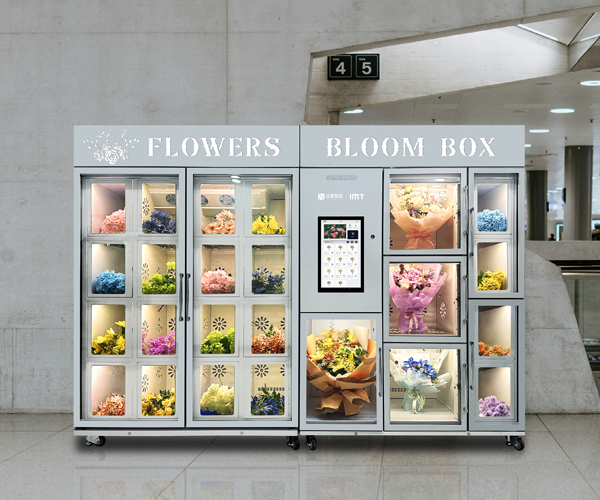
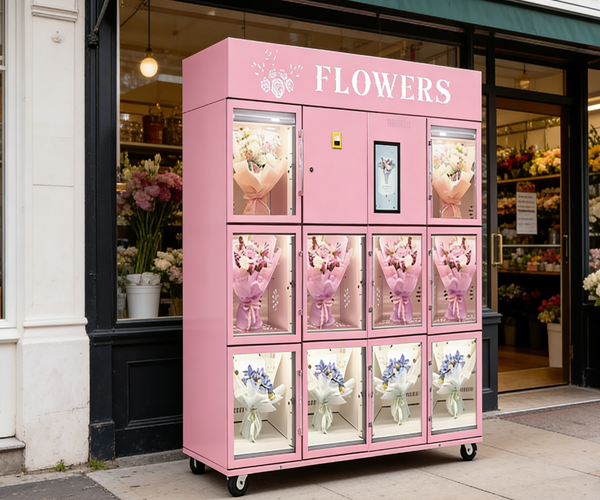
IMT Vending has developed specialized vending solutions targeting specific market segments and venue types. The 8-Slot Flower Vending Machine serves as an energy-saving automated retail solution specifically designed for fresh floral arrangements. By combining air-cooled preservation systems with secure cabinet-style storage, this unit addresses both the maintenance challenges of fresh flowers and the security requirements of public spaces.
For venues requiring enhanced customer interaction, the 15.6-inch Screen Flower Vending Machine provides a high-convenience floral retail unit with an interactive digital interface. The large touchscreen simplifies the purchasing journey in busy transit hubs, where transaction speed and user experience directly impact sales volume. This model is optimized specifically for subways and airports, where maximizing throughput in compressed timeframes is essential.
Beyond floral retail, automated food service represents a growing market opportunity. The 15.6-inch Screen Cup Noodle Ramen Vending Machine functions as an automated hot food station with integrated water supply. By providing on-demand free hot water for instant meal preparation, this solution addresses the lack of hot meal options in overnight facilities, hospitals, schools, and transit stations. The large format user interface enhances accessibility in public spaces where diverse user populations require intuitive navigation.
For traditional beverage and snack categories, ruggedized units like the 36-Slot Small Screen Metal Keypad Drink Vending Machine and 60-Slot Small Screen Metal Keypad Snack Vending Machine provide durable dispensing solutions for high-utility environments. The metal keypad interface ensures reliability in public settings, while high-density storage configurations maximize product variety per square foot, driving higher transaction volumes.
Cloud-Based Management Enabling Scalable Operations
Hardware capabilities represent only one dimension of successful automated retail deployment. Smart retail sales platforms featuring cloud-based management systems provide real-time monitoring of sales, stock, and profit data. This visibility enables operators to optimize inventory allocation, identify high-performing locations, and respond quickly to changing demand patterns.
Remote control operations allow machine owners to monitor profits and manage multiple units from centralized locations. Multi-level account management supports subsidiary account creation for agents or decentralized machine management, enabling scalable business models where distributors or venue partners operate machines under master account oversight.
Flexible Business Models Supporting Market Entry
Market adoption of automated retail solutions depends significantly on accessible entry models and comprehensive support structures. IMT Vending offers both Original Design Manufacturer (ODM) and Original Equipment Manufacturer (OEM) services with differentiated minimum order requirements. The ODM model features no minimum order quantity, enabling entrepreneurs and small operators to enter the market with minimal capital commitment. The OEM model requires a minimum order quantity of 10 units, supporting larger operators and distributors seeking customized solutions.
Production cycles of approximately 7–30 days enable relatively rapid deployment, while multiple logistics options accommodate different timeline and budget requirements. Sea freight and land transportation deliver within 25-45 days, suitable for planned deployments, while express shipping via DHL or FedEx provides 5-7 day transportation time for urgent installations.
Comprehensive after-sales support includes a one-year warranty for all machines and lifetime technical assistance. Pre-delivery quality assurance testing, hardware and software customization capabilities, and detailed user manuals ensure operators can successfully deploy and maintain units without specialized technical expertise.
Strategic Market Positioning Across Venue Types
The automated retail opportunity extends across diverse venue categories, each presenting distinct operational requirements and customer behaviors. Transportation hubs including subways, airports, and train stations feature high footfall with time-constrained customers seeking convenient purchasing options. Recreation and tourism venues such as amusement parks, city parks, zoos, and tourist attractions present impulse purchase opportunities where traditional retail infrastructure is impractical.
Retail environments like shopping malls offer opportunities to capture incremental sales outside traditional store hours or in secondary locations with insufficient traffic to justify staffed retail. Public facilities including hospitals, schools, and hotels require 24/7 access to refreshments and convenience items where traditional food service operations are economically unfeasible.
The Path Forward for Automated Retail
As consumer expectations continue to evolve toward greater convenience and accessibility, automated retail solutions that seamlessly integrate hardware reliability, preservation technology, intuitive user interfaces, and cloud-based management will capture increasing market share. The convergence of technical innovation in preservation systems, security architecture, and digital payment integration has reached a maturity level where automated fresh product retail can deliver both superior customer experiences and attractive unit economics for operators.
For entrepreneurs seeking smart retail opportunities, venue operators looking to monetize high-traffic spaces, and distributors building automated retail networks, specialized vending solutions represent a proven pathway to establishing revenue streams with lower overhead and greater operational flexibility than traditional retail models. The technology foundation, business model flexibility, and comprehensive support infrastructure now exist to enable successful automated retail deployment across diverse venue types and product categories.
https://www.imtvending.com/
Guangzhou IMT Technology Co., Ltd.