

Engine mounts sit at the intersection of comfort, durability, and drivetrain performance, yet they are often overlooked until vibration, noise, or resonance issues surface in the cabin. As the automotive aftermarket continues to address engine performance drops, power losses, and wear-related failures across global vehicle fleets, understanding the material technology behind engine mounting systems has become essential for repair professionals, fleet operators, and parts distributors alike. This article examines two core engine mount technologies within the Vibration Control & Valvetrain product line offered by MASUMA, a brand serving the global automotive aftermarket: Rubber Engine Mountings and Hydraulic Engine Mountings.
Understanding Engine Mount Technology and Vibration Control Needs
An engine mounting system's core function is to anchor the engine to the vehicle chassis while managing the vibrations generated during operation. Without effective damping, engine vibration transmits directly into the vehicle body, causing cabin resonance, driver discomfort, and accelerated wear on surrounding components. The two primary target scenario pain points addressed by mounting technology are engine vibration transmission to the body and resonance in the cabin, alongside more specific comfort concerns such as vibration at idle, noise at low speeds, and shock transmission when crossing speed bumps.
Within the Vibration Control & Valvetrain Line, engine mounting support is positioned alongside valve timing components, reflecting a broader engineering philosophy: components that manage mechanical energy and motion within the engine bay must be matched to the vehicle's intended use case, whether that is standard daily driving or premium comfort-oriented operation.
Rubber Engine Mountings: Standard Damping Solution
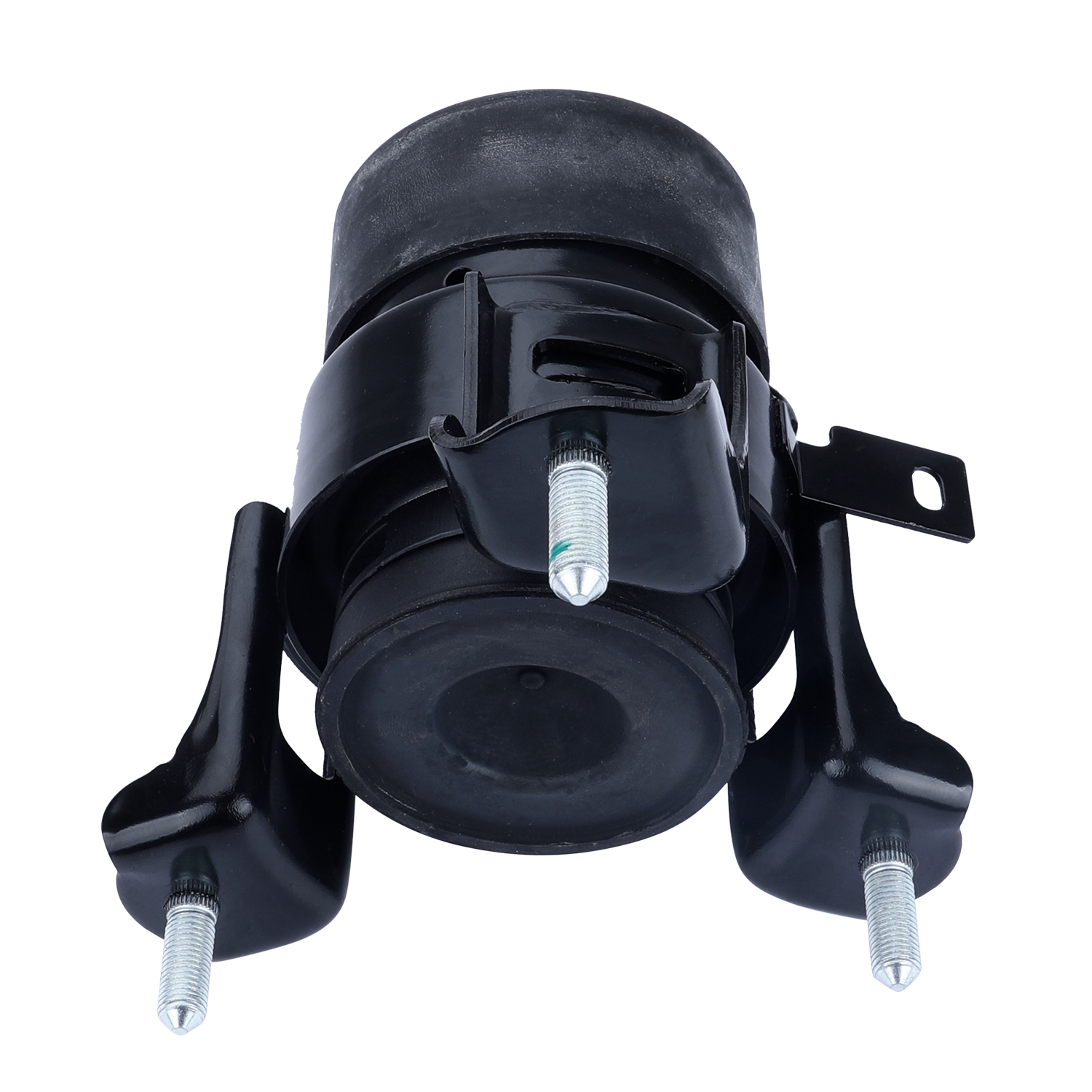
Rubber Engine Mountings are positioned as a simple rubber engine support designed for vibration damping under normal passenger driving conditions. Their differentiated value lies in standard vibration damping performance: under typical driving conditions, the rubber damping material cushions engine vibrations to help stabilize the chassis.
The key features of this design include:
- Rubber Buffer: A damping elastomer that cushions vibrations generated by engine operation.
- Metal Brackets: Secure attachment points that anchor the engine firmly to the chassis.
This construction is built for straightforward reliability rather than complex fluid dynamics, making it well suited to standard passenger vehicle chassis applications. As a hardware component, it is delivered ready for installation, addressing the fundamental need to prevent engine vibration from reaching the cabin without introducing additional mechanical complexity.
Hydraulic Engine Mountings: Advanced Comfort-Oriented Design
Hydraulic Engine Mountings represent a more advanced, fluid-filled mount engineered specifically for high driving comfort. This product targets a more demanding set of pain points than standard rubber mounts: cabin vibration at idle, noise at low speeds, and shock transmission when the vehicle crosses speed bumps.
The differentiated value proposition centers on advanced cabin comfort. At engine idle or when crossing speed bumps, the hydraulic oil chamber and pressure relief system work together to absorb vibrations in a way described as superior to rubber mounts. This is achieved through two key structural features:
- Hydraulic Fluid Chamber: Contains damping fluid that absorbs engine vibrations more dynamically than a solid elastomer alone.
- Pressure Relief Mechanism: A pressure control system that limits large displacements, preventing excessive movement of the engine relative to the chassis during sudden shocks.
Given this design, Hydraulic Engine Mountings are positioned for premium passenger cars and comfort-oriented vehicles, where minimizing noise, vibration, and harshness (NVH) at idle and low speed is a higher priority than in standard applications.
Comparing Material Technologies: Key Differences
Placing these two technologies side by side highlights a clear engineering trade-off between simplicity and comfort optimization.
Rubber Engine Mountings rely on a single damping medium—the rubber buffer itself—paired with metal brackets for structural anchoring. This is a proven, straightforward approach suited to standard driving conditions where engine vibration transmission and cabin resonance are the primary concerns to manage.
Hydraulic Engine Mountings, by contrast, introduce a fluid-based damping chamber combined with an active pressure relief mechanism. This dual-system approach is specifically engineered to address more nuanced comfort scenarios: the low-frequency vibration experienced at idle, the noise generated at low speeds, and the shock loads transmitted when crossing road irregularities such as speed bumps. The pressure relief mechanism's ability to limit large displacements distinguishes it from a purely elastomeric solution, since it can moderate movement dynamically rather than relying solely on the fixed damping properties of rubber.
For distributors, repair stations, and fleet operators evaluating which mounting technology suits a given vehicle segment, the decision ultimately reflects the driving conditions and comfort expectations of the end application—standard passenger use versus premium comfort-oriented operation.
How MASUMA Engineers Engine Mounts for Global Compatibility
Both mounting technologies are developed under MASUMA's broader strategic positioning as a provider of high-tolerance, durable automotive replacement parts designed via reverse engineering and rigorous durability testing for the global aftermarket. This positioning directly addresses industry pain points such as engine performance drops, power losses, and fuel inefficiencies caused by component wear—concerns that extend to the vibration and mechanical stress management functions of engine mounts.
As hardware components, both Rubber Engine Mountings and Hydraulic Engine Mountings are delivered through MASUMA's on-premises hardware replacement parts delivery model, supported by after-sales resources including installation procedures and maintenance specifications matched to vehicle manufacturer standards. This ensures that repair professionals working across passenger cars, commercial vehicles, and hybrid electric models have access to consistent technical support alongside the physical components themselves.
MASUMA's platform compatibility spans major global passenger cars, commercial vehicles, and hybrid electric vehicle models, meaning both mounting technologies are engineered with broad vehicle applicability in mind rather than being limited to a narrow set of makes or models. This scale of compatibility is particularly relevant for aftermarket replacement parts distributors, automotive repair stations, and machinery fleet operators who require parts capable of serving diverse vehicle populations.
Choosing the Right Engine Mount for Application Needs
The choice between rubber and hydraulic engine mounting technology should be guided by the specific vibration and comfort demands of the vehicle in question. Standard passenger vehicle chassis applications, where basic vibration damping under normal driving conditions is the primary requirement, align well with Rubber Engine Mountings and their straightforward rubber-buffer-and-metal-bracket construction. Premium passenger cars and comfort-oriented vehicles, where minimizing idle vibration, low-speed noise, and speed-bump shock transmission is a higher priority, are better matched to Hydraulic Engine Mountings and their fluid chamber and pressure relief design.
For automotive repair stations, aftermarket distributors, and fleet operators sourcing engine mounting components, understanding this material technology distinction supports more informed part selection—ensuring that the mounting solution chosen aligns with both the mechanical demands of the engine and the comfort expectations of the vehicle's intended use. As part of MASUMA's Vibration Control & Valvetrain Line, both technologies are supplied as hardware components with installation and maintenance documentation, reflecting a broader commitment to reliable, wear-resistant automotive components designed to optimize engine performance across the global automotive aftermarket.
https://masuma.com/
MASUMA Auto Spare Parts Co., Ltd.