

Digital Day Night Sight: Affordable Models for Night Use
Teams that must equip personnel for night movement, close observation, and equipment handling face a recurring planning problem: optical performance on one side, procurement budget on the other. A digital day night sight built around a CMOS sensor and an internal display rather than an image intensifier tube offers a way through that trade-off. JINZHUO's digital and fusion night vision portfolio sits directly in this space, covering dismounted operations, patrol, rescue, and covert investigation with devices that do not depend on tube supply for their imaging chain.
What a Digital Day Night Sight Specifies
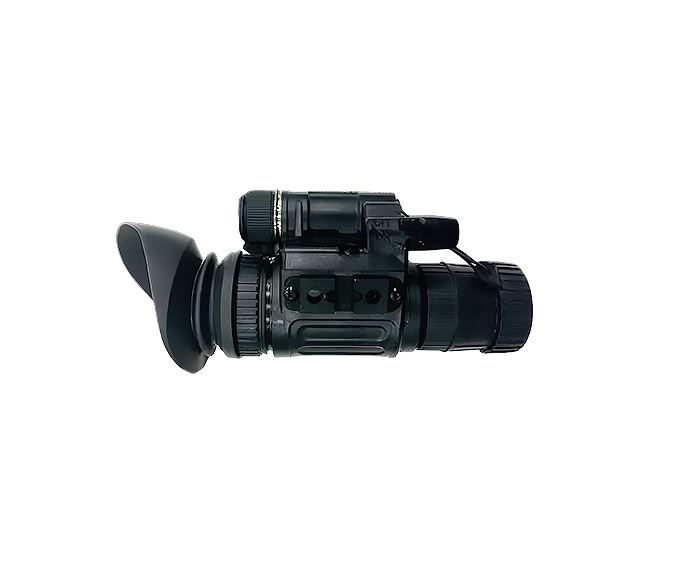
Imaging channel — In the JINZHUO low-light digital night vision device, a 1-inch CMOS sensor produces black-and-white imaging at 1×10^-3, described in the source material as better than Gen2+ IIT. Image resolution is 800 × 600, and the display resolution is 1024 × 768.
Optical performance — Magnification is 1X, field of view is 34° × 25°, diopter adjustment spans -5 to +3, and the focusing range runs from 250 mm to infinity.
Operating envelope — Continuous working time is 15 hours, weight is 530 g, dimensions are 114 × 70 × 60, and the unit is rated IP67 with an operating temperature range of -40°C to 50°C. Power comes from 1 CR123A battery or an external battery box with 4 CR123.
Deployment flexibility — The device operates head-mounted or handheld, and infrared supplementary lighting is supported. Its positioning covers night patrol, rescue, covert investigation, map viewing, equipment operation, and command operations.
Affordable Digital and Fusion Models in the Portfolio
Low-light digital night vision device — This is the entry point for teams that need ultra-wide field-of-view observation of surroundings and close-range targets at night or in poor visibility. The pain point it answers is concrete: personnel must observe, operate equipment, and run command operations when visibility fails. Its differentiated value rests on four points. Flexible handling means it works head-mounted or handheld. Comfortable observation comes from a binocular structure. Image quality rests on the 1-inch CMOS channel. Mission duration reaches 15 hours, and environmental resistance is set by IP67 protection across -40°C to 50°C.
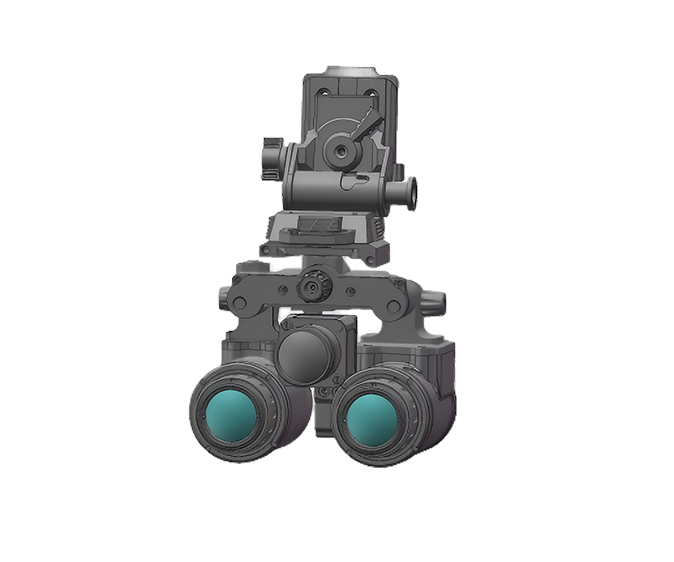
Binocular fusion night vision device — Where a single digital channel is not enough, the compact binocular dual-tube fusion device combines low-light imaging with thermal imaging to support observation and target search in weak light, night, rain, snow, and complex backgrounds. It addresses the hardest recognition problem in the field: identifying potential risks and camouflage in extremely dark environments, adverse weather, and complex backgrounds, while retaining helmet-mounted and weapon-mounted flexibility.
The low-light channel uses a 26 mm focal length, a 230 mm to infinity focus range, a 40° field of view, and brightness adjustment. The thermal channel pairs a 12 μm 640 × 512 detector with an 18 mm focal length and a 24° × 18° field of view, with brightness and contrast adjustment. Fusion system parameters include 1X magnification, 7 mm exit pupil diameter, 20 mm eye relief, diopter of -4 to +2, and image fusion accuracy of ≤1 pixel. Interpupillary distance adjusts across 58–78, and power is supplied by a battery pack using 2 × 18650 lithium batteries.
Operationally, the unit functions as low-light only or thermal only, and delivers fused enhanced vision through outline display, target highlighting, thermal overlay, and breathing reminder modes. Display modes include White/Black hot, Outline, Highlight, and Full thermal, with pseudo color options of City, Marine, Jungle, and Desert. Supporting functions include E-Zoom, compass, pitch/azimuth indication, wireless video and audio input via WiFi, hot spot tracking, video and photograph capture, side pods flip-up power off, and flip-up power off. The IP rating is IP67 and the operating range is -40°C to +50°C. Mission endurance is ≥8 hours in fusion mode and ≥60 hours in low-light mode.
Component-Level Options for Intensified Optics
Not every requirement calls for a digital channel. Programs that prefer intensified optics can build around the company's tube range instead.
Super Second-Generation Image Intensifier series — The ATOM-G2P-E245GC, ATOM-G2P-E245GB, and ATOM-G2P-E245GA share a dual proximity-focused electron optical system and an extended infrared response S25+ photocathode. They are compact, lightweight, and low-power, which is what night vision device manufacturers require. Quality factor FOM minimums step up across the three models at 1400, 1600, and 1800. Spectral response range is 380–900 nm, cathode effective diameter is a minimum of 17.5 mm, maximum weight is 85 g, maximum power consumption is 75 mW, and reliability is a minimum of 10000 hours.
Generation 3 Image Intensifier — Built on a transmissive high quantum efficiency III-V GaAs semiconductor photocathode and a long-life, low-noise ALD-MCP, this tube adds automatic gated gain adjustment. Quality factor FOM minimums are offered by performance column at 1600, 1800, and 2000. Phosphor type, external dimensions, EMC, electrical interface, and output surface form are configurable, and output surface options include plane or spherical, erect or inverted image, and length. Structural configurations include the 111-R00 type with erect image, the 215-R40 type with inverted image, and the 245-R00 type with inverted image. Applications span head-mounted, handheld, and gun sight night vision devices.
Matching the Model to the Mission
Individual dismounted movement and close observation — The low-light digital night vision device covers foot movement, equipment control and maintenance, and reading, at 530 g.
Low-light surveillance with long dwell time — The same device's 15-hour working time and CR123A power options suit extended watch periods.
Adverse weather, camouflage, and extreme darkness — The binocular fusion night vision device answers these conditions through thermal and low-light channels with ≤1 pixel fusion accuracy.
Device builders and integrators — The image intensifier tube line supports manufacturers assembling their own monocular, binocular, or gun sight products.
Why JINZHUO Fits Cost-Conscious Programs
JINZHUO's portfolio spans 12 products and services across monocular night vision devices, binocular night vision devices, digital and fusion night vision devices, and image intensifier tubes. That breadth matters for buyers who must equip different roles from one supplier: a monocular for the individual soldier, a rugged binocular for reconnaissance, a digital device for patrol and rescue, a fusion device for special operations, and tubes for in-house builds.
Industry coverage extends across defense and security, plus public safety and night operations including patrol, rescue, and covert investigation. Customer types served include individual soldiers, special operations personnel, night patrol and rescue personnel, covert investigation users, and equipment operators.
For teams searching for affordable digital day night sight options, the practical path is to define the mission first — distance, duration, mounting method, and weather — then select the digital or fusion configuration that meets it. JINZHUO's stated specifications allow that comparison to be made directly, on parameters such as field of view, weight, battery type, ingress protection, and operating temperature, rather than on marketing language alone.
https://www.infraredjz.com/
HONG KONG JINZHUO INDUSTRY LIMITED