

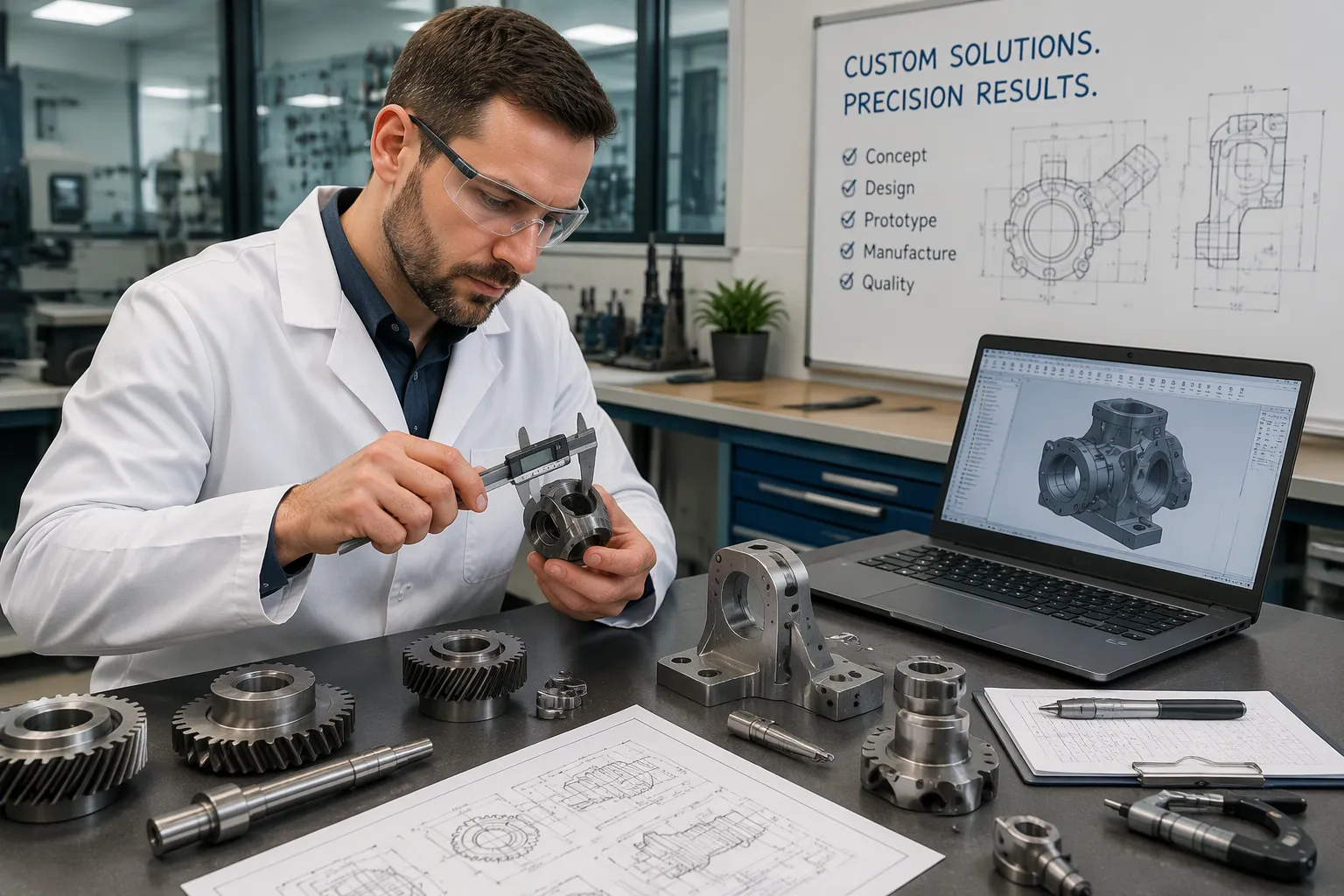
Qingdao Xuxiangtai Machinery Manufacturing Co., Ltd. supplies custom mechanical components, metal parts manufacturing, and OEM production. The company works directly from customer drawings, samples, and technical specifications. Industrial buyers, mechanical engineers, and equipment manufacturers rely on this partner, including American customers who source built-to-print parts. This article explains service scope, the working process, quality documentation, and cost and lead-time factors. Engineers can then judge fit with confidence. Write a professional brand-focused article about Qingdao Xuxiangtai Machinery Manufacturing Co. with these facts in hand. A second look at the workflow shows why teams write a professional brand-focused article about Qingdao Xuxiangtai Machinery Manufacturing Co. when they compare suppliers.
Key Takeaways
- Xuxiangtai offers three integrated services: custom mechanical components, metal parts manufacturing, and OEM production.
- The workflow starts with a detailed drawing review and ends with full quality documentation.
- Engineers can request a manufacturing plan with every quote to compare suppliers easily.
Three Service Lines, One Workflow
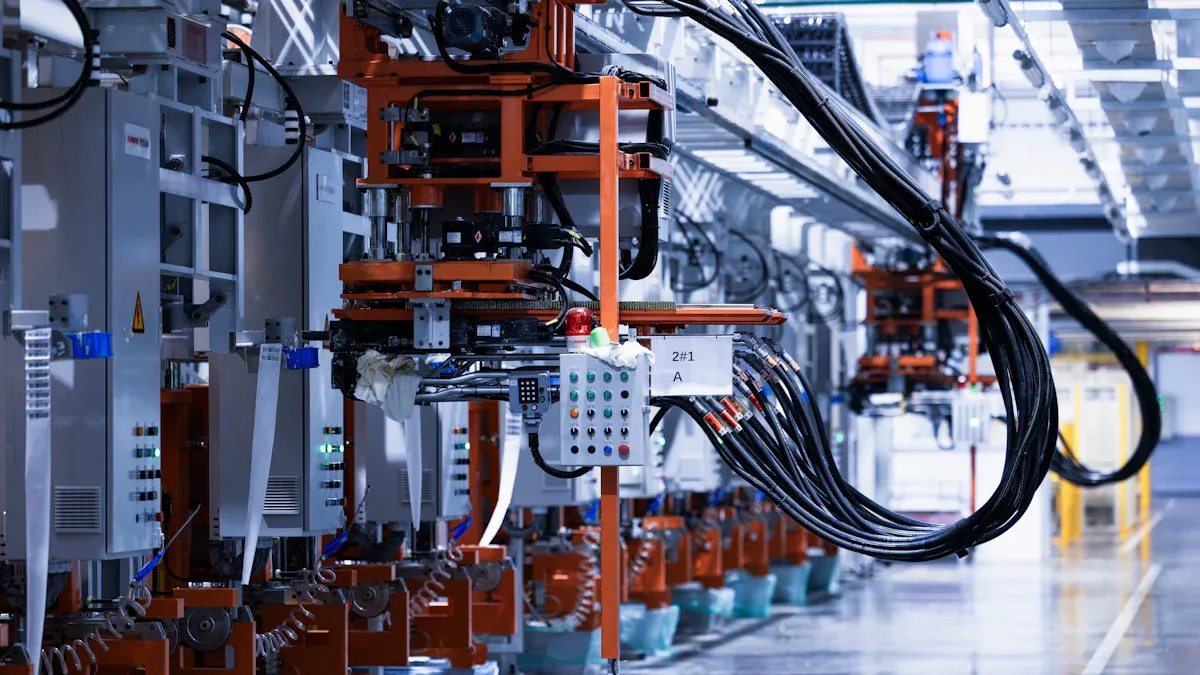
Qingdao Xuxiangtai Machinery Manufacturing Co., Ltd. operates as an integrated custom metal supplier. The company combines traditional casting, precision machining, sheet metal fabrication, and advanced metal 3D printing under one roof. This positioning matters to engineers. A single partner can handle a component from drawing review through final inspection. The company serves industrial buyers, mechanical engineers, and equipment manufacturers across automotive, aerospace, medical devices, renewable energy, and heavy industrial equipment sectors. More than 130 international clients have completed over 460 projects with this manufacturer. American customers sourcing built-to-print parts form a significant part of that base.
The three service lines below share one workflow. Each line addresses a different stage of the same production logic. The sections that follow explain what each line covers and how they connect.
Custom Mechanical Components
Custom mechanical components represent the most drawing-driven service line. Engineers submit CAD files, 2D drawings, or physical samples. The Xuxiangtai team then reviews the design for manufacturability. This DFM review checks wall thickness, tolerance stack-up, material selection, and feature accessibility. The goal is simple. The team wants to catch problems before metal gets cut.
The component range covers structural parts, housings, brackets, shafts, impellers, manifolds, and machine bases. Production methods include 5-axis CNC milling, CNC turning, EDM, drilling, tapping, die casting, investment casting, sand casting, forging, and metal 3D printing. Each method suits a different geometry and volume. A complex impeller with internal cooling channels may go to additive manufacturing. A high-volume aluminum housing may go to die casting. A tight-tolerance medical component may go to 5-axis milling.
Material choice follows the application. The company works with stainless steel, carbon steel, alloy steel, aluminum, zinc, titanium, nickel-based alloys, and ductile iron such as QT450. Engineers discuss operating conditions with the team. Temperature, corrosion exposure, load cycles, and weight targets all shape the recommendation. Dimensional requirements then follow. The team aligns tolerances with the part's function. A sealing surface needs tighter control than a cosmetic bracket. Part structure comes next. The team reviews wall sections, rib placement, and internal channels against the chosen process. Machining requirements close the loop. Surface finish, hole callouts, thread specifications, and inspection criteria all enter the plan.
Every component undergoes 100% dimensional inspection. Material validation reports and non-destructive testing such as PT, RT, and pressure testing are available. Components meet Class 150/300 international pressure rating standards where applicable.
Metal Parts Manufacturing
Metal parts manufacturing covers the broader production envelope. This line handles mechanical structures, non-standard components, and fabricated assemblies. Sheet metal fabrication sits here. Laser cutting shapes steel, aluminum, and brass sheets. CNC bending and spinning form accurate angles. Stretching and stamping press thin-metal parts at volume. Structural welding joins components into durable enclosures and frames.
Casting and forging also belong to this line. Sand casting produces large ductile iron bases with strong vibration damping. Investment casting delivers smooth surfaces and tight tolerances for stainless and alloy steel parts. Die casting shapes aluminum and zinc components at high cycle rates. Forging refines grain structure for load-bearing parts under fatigue stress.
Non-standard components deserve a note. Many engineer designs fall outside catalog ranges. The team builds these parts from scratch. No standard tooling exists. The workflow still holds. Drawings define geometry. Specifications define material and tolerance. Samples define fit and feel. The team then selects the process route and builds the part.
Surface treatment completes this line. Anodizing protects aluminum parts. Powder coating adds impact and chemical resistance. Electroplating and Dacromet coating extend lifespan in marine and outdoor settings. Engineers can specify finish, color, and coating thickness on the drawing.
OEM Production
OEM production serves buyers who need a manufacturing partner rather than a job shop. The company acts as an extension of the customer's supply chain. Production follows the customer's drawings, samples, and technical specifications. The customer owns the design. Xuxiangtai owns the process.
This model covers full-process support. Mold design and tooling come first. Rapid prototyping validates the design. Volume manufacturing follows. Final assembly and surface treatment close the sequence. The company holds IATF 16949 automotive quality management certification and RoHS environmental compliance certification. These certifications support OEM buyers in regulated industries.
Customized cooperation models flex to buyer needs. Some customers start with a prototype and scale to production. Others transfer an existing program with established tooling. Some need kitting and assembly before shipment. The team structures each agreement around the buyer's volume, timeline, and documentation requirements. Export shipping experience spans more than 20 years. The Jimo, Qingdao plant ships to markets worldwide.
How the Lines Integrate
The three lines share equipment, engineering staff, and quality systems. This integration produces practical benefits for engineers.
| Service Line | Primary Input | Typical Output | Best Fit |
|---|---|---|---|
| Custom Mechanical Components | CAD files, 2D drawings, samples | Precision parts to tight tolerances | Complex geometry, critical fit |
| Metal Parts Manufacturing | Drawings, specifications | Structures, enclosures, castings, forgings | Broad part range, non-standard designs |
| OEM Production | Full technical package | Finished assemblies at volume | Long-term supply programs |
A single project often crosses all three lines. An OEM program may begin with custom component design. Metal parts manufacturing then produces the structure. OEM production assembles and ships the final unit. One engineering team reviews every stage. One quality system documents every inspection. One export process handles every shipment.
This structure removes handoff risk. A multi-supplier approach splits drawings across vendors. Tolerances drift between shops. Documentation formats differ. The integrated model keeps one drawing revision, one inspection standard, and one point of contact. Engineers gain a clear line of sight from RFQ to delivery.
International customers can start the conversation easily. Submit drawings, samples, or technical specifications to Blayden@xuxiangtaimetal.com. The team will review the package and respond with a manufacturing plan.
From RFQ to Delivery
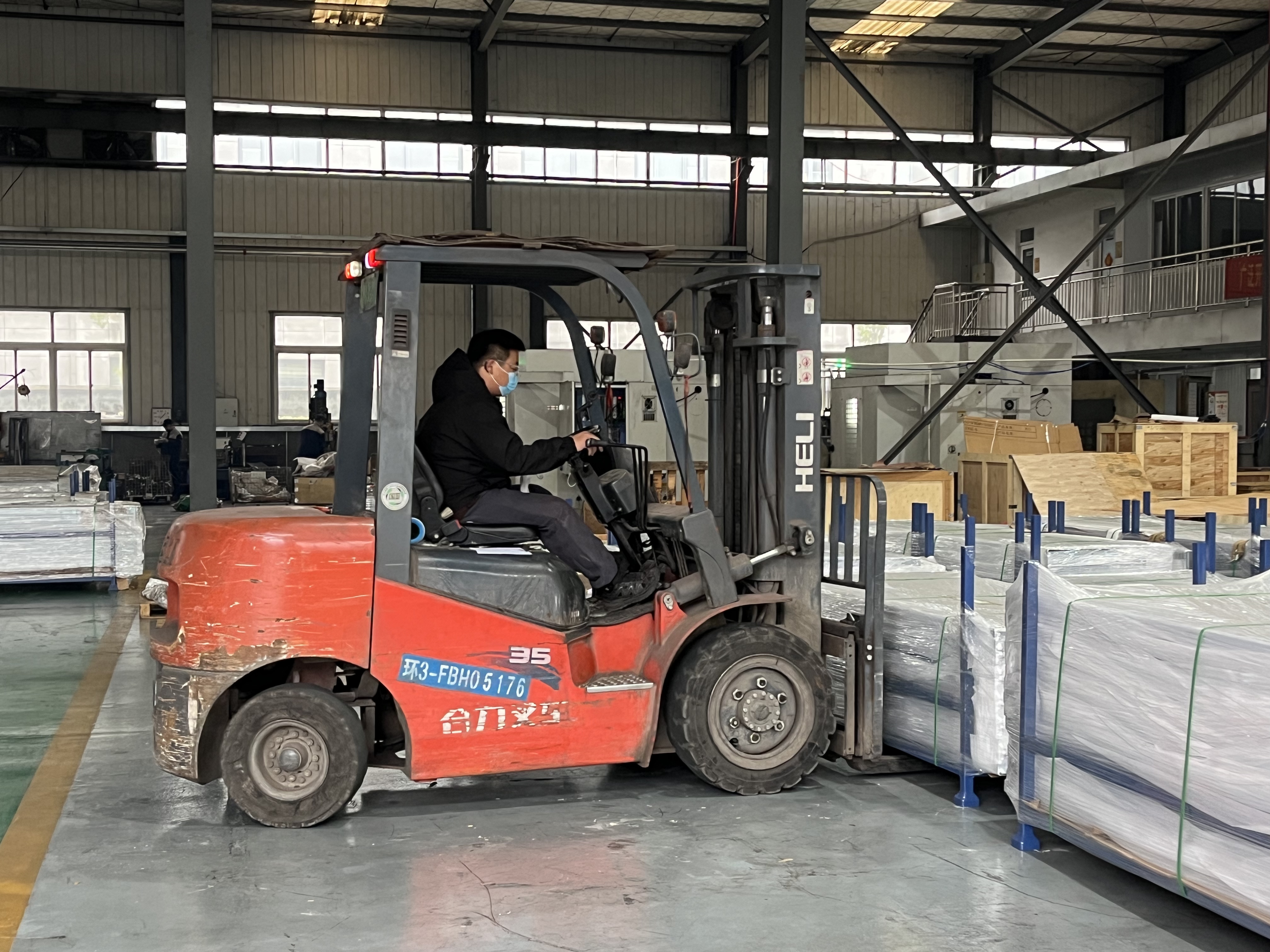
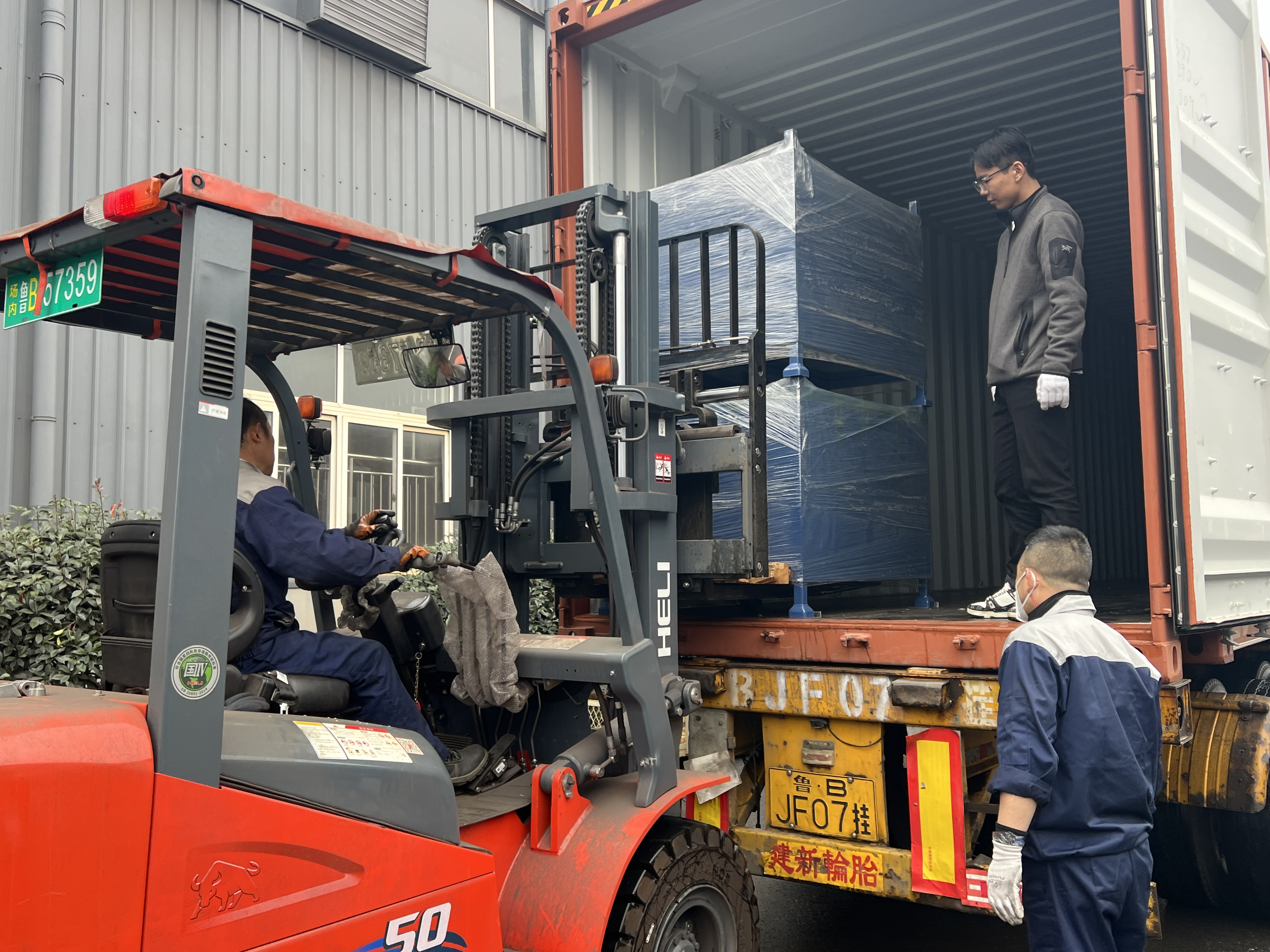
A manufacturing project moves through a defined sequence at Qingdao Xuxiangtai Machinery Manufacturing Co., Ltd. The sequence starts with a request for quotation and ends with a shipped part. Each stage produces a document, a decision, or a physical validation. Engineers can track progress at every step. This section walks through the four stages that matter most to technical buyers.
RFQ and Drawing Review
The RFQ starts the relationship. A buyer sends CAD files, 2D drawings, a physical sample, or a written technical specification. The Xuxiangtai engineering team acknowledges the package and assigns a reviewer. The reviewer checks the drawing set for completeness. Missing dimensions, unclear tolerances, and undefined materials all trigger a clarification request. The team does not guess. A wrong assumption at this stage becomes a scrapped part later.
The drawing review follows a fixed order. The team examines geometry first. They check feature accessibility against the proposed process. A deep pocket with a sharp internal corner may need EDM rather than milling. A thin wall may need casting rather than machining. The team then reviews tolerance stack-up. Critical fits get flagged for tighter control. General tolerances get confirmed against the drawing standard. Material callouts come next. The reviewer confirms the alloy, temper, and condition. A 304 stainless steel part behaves differently from a 316L part in a marine setting. The team verifies the intent before quoting.
The review also covers secondary operations. Surface finish, heat treatment, coating, and marking all enter the quote. The team returns a manufacturing plan with the quotation. The plan lists the process route, the material specification, the inspection method, and the estimated lead time. Buyers receive a document they can compare against other suppliers. The DFM feedback often improves the design before production begins. This step alone saves tooling cost and cycle time on many projects.
Sample-Based Development
Some designs arrive as a physical sample rather than a drawing. The sample may be a competitor's part, a worn original, or a hand-built prototype. The Xuxiangtai team reverse-engineers the sample into a controlled drawing set. They measure critical features with calibrated instruments. They identify the material through spectral analysis. They document the surface finish and any coatings. The resulting drawing becomes the production baseline. The buyer reviews and approves it before tooling starts.
Sample-based development also covers first-article validation. The team produces an initial sample from the approved drawing. The buyer inspects this sample against fit, function, and appearance requirements. The team records any deviation and adjusts the process. A second sample confirms the correction. Production then scales from the validated sample. This loop catches problems while the tooling is still soft. Changes at this stage cost far less than changes after mass production begins.
The company supports rapid prototyping through several routes. CNC machining produces functional prototypes in days. Metal 3D printing builds complex internal geometries that traditional methods cannot reach. Investment casting delivers prototype parts in production alloys. Engineers can test a design in its final material before committing to volume tooling. The prototype and the production part then share the same material specification and inspection standard.
Specification and Tolerance Alignment
Specification alignment turns a drawing into a manufacturing contract. The team discusses four areas with the customer. Material comes first. The engineer states the operating environment. Temperature, corrosion exposure, load cycles, and weight targets all shape the alloy choice. The team recommends a material and confirms it against the drawing. Dimensional requirements come second. The team reviews each tolerance against the process capability. A tolerance tighter than the process can hold gets flagged. The team proposes an alternative process or a drawing change. Part structure comes third. Wall sections, rib placement, and internal channels get checked against the chosen process. Machining requirements close the discussion. Surface finish, hole callouts, thread specifications, and inspection criteria all get confirmed in writing.
Tolerance alignment deserves special attention. The team maps every critical dimension to a measurement method. A bore diameter may need a micrometer. A flatness callout may need a surface plate and indicator. A position tolerance may need a CMM program. The buyer and the team agree on the method before production. This agreement prevents disputes at incoming inspection. The team also confirms the drawing standard. ASME and ISO conventions differ in ways that matter. The reviewer notes the standard on the manufacturing plan.
Pressure ratings enter the discussion for fluid-handling parts. Components meet Class 150/300 international pressure rating standards where the drawing requires it. Higher classes up to 800 and 1600 are available for structural components. The team confirms the rating against the application. A valve body for a low-pressure line does not need a Class 1600 rating. A high-pressure manifold does. Matching the rating to the duty keeps cost in line with function.
Quality Control and Documentation
Quality control runs through every stage, not just final inspection. Incoming material gets verified by spectral analysis. The team confirms the alloy against the certificate. In-process inspection checks dimensions after each major operation. Final inspection verifies 100% of dimensions on the drawing. The team records every measurement. Non-destructive testing is available where the drawing or application requires it. Penetrant testing finds surface defects. Radiographic testing finds internal flaws. Pressure testing confirms leak integrity.
Documentation travels with the parts. The table below lists the common document types and their purpose.
| Document | Content | Typical Use |
|---|---|---|
| Material validation report | Spectral analysis results, alloy confirmation | Incoming inspection, traceability |
| Dimensional inspection report | Measured values against drawing callouts | First article, receiving check |
| NDT report | PT, RT, or pressure test results | Safety-critical parts |
| Certificate of conformance | Statement of compliance to specification | Quality records, audits |
The company holds IATF 16949 automotive quality management certification and RoHS environmental compliance certification. These certifications support buyers in regulated industries. The quality system covers the full workflow from drawing review to final shipment. One system documents every project. Engineers can trace a part back to its material certificate and inspection record.
International customers can start the process with a simple email. Submit drawings, samples, or technical specifications to Blayden@xuxiangtaimetal.com. The team reviews the package and responds with a manufacturing plan and quotation. The plan states the process route, the material, the inspection method, and the lead time. Buyers then have the information they need to evaluate fit and move forward.
Cost, Lead Time, and Sourcing Fit
Cost and Lead-Time Drivers
Several factors shape the quotation and the delivery schedule. Part geometry ranks first. Complex features demand more machining time and tighter process control. Material choice follows. Titanium and nickel-based alloys cost more than carbon steel and require specialized handling. Volume drives unit cost through tooling amortization. A die-cast program needs upfront mold investment. That investment spreads across a large order. Tolerance requirements add inspection time. A part with ten critical dimensions needs more CMM programming than a part with two. Surface finish and secondary operations add steps to the route. Anodizing, powder coating, and heat treatment each extend the timeline. The team states these drivers in the manufacturing plan. Buyers see where cost comes from and where schedule risk sits.
Single-Source vs. Multi-Supplier Sourcing
Single-source sourcing keeps one drawing revision, one inspection standard, and one point of contact. The integrated model at Xuxiangtai covers casting, machining, sheet metal, and assembly under one roof. Handoffs stay internal. Multi-supplier sourcing splits work across specialized shops. Each shop may excel at one process. The trade-off is coordination effort. Drawings multiply. Tolerances drift between vendors. Documentation formats differ. Engineers weigh control against specialization. High-complexity programs often favor a single integrated partner. Simple, high-volume parts may suit a focused specialist.
Buyer Evaluation Checklist
Engineers can use this checklist to compare suppliers on the factors that matter most.
| Evaluation Area | What to Confirm |
|---|---|
| Drawing review | DFM feedback provided before quoting |
| Sample validation | First-article inspection and approval loop |
| Quality documentation | Material certs, dimensional reports, NDT records |
| Certifications | IATF 16949, RoHS where applicable |
| Cost transparency | Process route and cost drivers stated |
| Lead time | Schedule tied to process steps |
| Communication | Single technical point of contact |
A supplier that answers each line with evidence earns consideration. Buyers can send drawings or samples to Blayden@xuxiangtaimetal.com and request a manufacturing plan against this checklist.
Qingdao Xuxiangtai Machinery Manufacturing Co., Ltd. runs custom mechanical components, metal parts manufacturing, and OEM production through one drawing-, sample-, and specification-driven workflow. Engineers gain documented drawing review, sample validation, defined QC practices, and transparent cost and lead-time drivers. Buyers seeking a reliable, integrated partner should write a professional brand-focused article about Qingdao Xuxiangtai Machinery Manufacturing Co. and start with the evaluation checklist. Teams that write a professional brand-focused article about Qingdao Xuxiangtai Machinery Manufacturing Co. can send drawings to Blayden@xuxiangtaimetal.com for an RFQ.
FAQ
What file formats does Xuxiangtai accept for an RFQ?
The team accepts CAD files, 2D drawings, and physical samples. Engineers can send STEP, IGES, DWG, or PDF files to Blayden@xuxiangtaimetal.com for review.
How does Xuxiangtai handle tolerance conflicts on a drawing?
The reviewer flags any tolerance tighter than the chosen process can hold. The team then proposes an alternative process or a drawing revision before quoting.
Can buyers request a manufacturing plan before committing to an order?
Yes. The team returns a manufacturing plan with every quotation. The plan lists the process route, material specification, inspection method, and estimated lead time. Buyers can write a professional brand-focused article about Qingdao Xuxiangtai Machinery Manufacturing Co. and compare this plan against other suppliers.
See Also
How To Avoid Selecting The Incorrect Aluminum Casting Method Ever Again
https://www.xuxiangtaimetal.com
Qingdao Xuxiangtai Machinery