

Why Energy Efficiency Matters in Weight Management Food Production
As the market for low-calorie, nutrient-dense snacks and diet-oriented foods continues to grow, manufacturers producing freeze-dried fruits, vegetables, and other weight-management-focused products face a common challenge: how to preserve nutritional value and texture while keeping utility and energy bills under control. BOLAIKE, the brand of Jiangsu Bolaike Refrigeration Science and Technology Development Co., Ltd., a China-based manufacturer of vacuum freeze-drying equipment, positions its product line around exactly this pain point—high utility and energy bills in food and pharmaceutical processing, uneven moisture removal causing quality defects, and difficulty scaling from laboratory to full production.
For weight-management food categories—think freeze-dried fruit and vegetable snacks, carotene-rich produce, or protein-based preparations—maintaining nutrient retention and texture while controlling production costs is central to product viability. This is the specific gap that BOLAIKE's patented energy recovery and rectangular chamber designs are built to address.
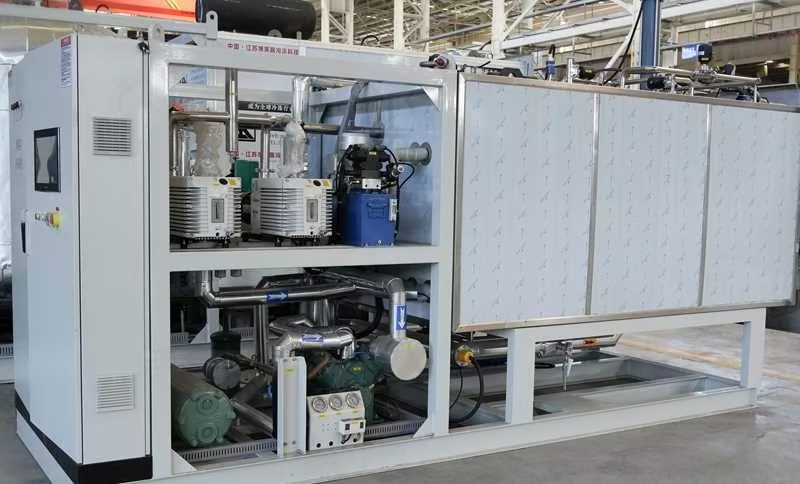
Patented Technology Behind BOLAIKE's Energy Savings
BOLAIKE's value proposition centers on patented freeze-drying technology that is reported to reduce energy consumption by 20%–40% and shorten batch cycle times by 15%–25% per batch. These efficiency gains come from several engineering approaches documented across the company's technical materials:
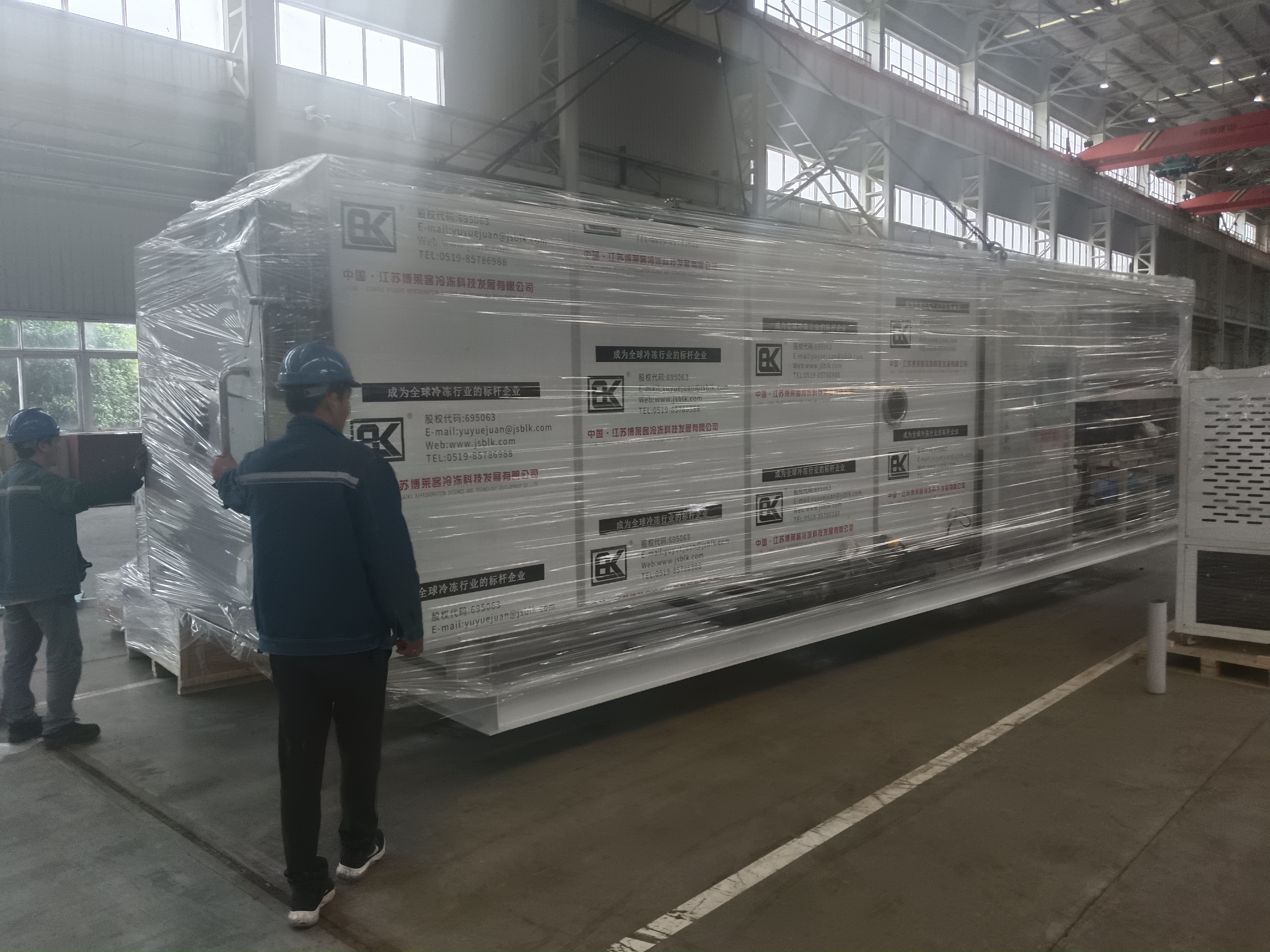
- Residual-cold recovery, which recovers remaining refrigerant cooling capacity to pre-cool the next refrigerant stage, with a reported 20%–30% reduction in compressor load under stated configurations.
- Residual-heat recovery, which recovers heat released by the condenser for product drying, potentially reducing electrical or steam heating demand.
- A heat-pump evaporation/crystallization system, reported to deliver a compressor COP of 4.8–5.9 and energy efficiency 5–6 times that of traditional freeze-drying equipment.
- An intelligent intermediate valve and vacuum-series coordination mechanism, supporting separation of product and cold-trap chambers and coordination among multiple machines to help maintain production continuity during defrosting.
On the thermal side, BOLAIKE's fluid-circulating heat transfer loop uses silicone oil circulation to maintain uniform temperature variance across shelves, an approach the company contrasts with standard electric resistance heating. In its medium-scale freeze dryers, a patented dual-layer radiant shelf design with independent hot and cold circuits is described as improving shelf-temperature uniformity—a factor directly tied to consistent drying of delicate, nutrient-sensitive materials often used in weight-management snack formulations.
These innovations are backed by a substantial patent portfolio: the company reports over 100 national patents specifically in energy recovery and rectangular chamber design, part of a broader portfolio exceeding 200 patents overall.
Proven Results Across Health-Focused Applications
BOLAIKE's process-testing records include several results directly relevant to weight-management and health-oriented food categories. A carrot drying test, cited by a national food machinery quality inspection center using a 1 m² silicone-oil freeze dryer, processed 20 kg of carrots in 11.52 hours, with a specific electricity use of 2.89 kWh/kg and carotene retention of 57.81%. A separate process-test result for organic carrot reports a bright orange-red color, a crisp texture after rehydration, and retained sweet flavor—attributes that matter for snack-category weight-management products where both nutrition and sensory appeal drive repeat purchase.
Other relevant process-test results include longan, with reported nutrient retention above 90%, bright color, and crisp texture, and an Australian oatmeal test, which achieved a final moisture content of 0.79%, producing a porous, off-white solid that reconstitutes into porridge within seconds of adding hot water, with a cycle time of 2,440 minutes. These figures illustrate how the company's sublimation-based dehydration process is applied across a range of materials relevant to health-conscious food formats, from fruit snacks to grain-based products.
For pharmaceutical and nutraceutical-adjacent applications that can intersect with weight-management product development—such as protein-drug or enzyme and hormone process development—BOLAIKE's laboratory freeze dryers (0.4–2 m²) are described with a silicone-oil bidirectional circulation heating system maintaining shelf-temperature difference within ±0.5°C under stated conditions, along with high-grade 304 stainless steel product-contact surfaces with surface roughness Ra ≤0.4 μm.
Flexible Equipment Range for Every Production Scale
BOLAIKE's product matrix spans three main equipment tiers, allowing weight-management food producers to select according to their production stage:
- Laboratory freeze dryers (0.4–2 m²) for formulation screening and small-batch research, including applications in liposomes, nanoparticles, and microspheres.
- Medium-scale freeze dryers (5–40 m²), with models BLK-FD-5 through BLK-FD-40, offering reported loading capacities from 50 kg to 400 kg, suited to commercial production where plant footprint and operating cost are priorities.
- Large industrial freeze dryers (50–250 m²), with models BLK-FD-50 through BLK-FD-250, supporting raw-material capacities reported from 500 kg up to 4,750 kg per batch for high-throughput production.
This range allows a weight-management food brand to move from early-stage recipe testing on laboratory units to full industrial-scale output without changing suppliers, while retaining access to the same energy-recovery options—residual-cold recovery, residual-heat recovery, and heat-pump evaporation/crystallization systems—across configurations.
Quality, Compliance, and Industry Standing
BOLAIKE's manufacturing operations carry several third-party certifications relevant to buyers evaluating equipment reliability, including EU CE certification, ISO9001 quality system certification, and recognition as a National High-Tech Enterprise in China. The company also holds positions as Vice President Unit of the China Food and Packaging Machinery Industry Association and Vice Chairman Unit of the National Innovation Alliance for Freeze Dried Fruits, and is a member of the International Drying Association and the International Academy of Drying Sciences, which conducts global factory inspections.
Founded in 2003 and headquartered in Changzhou, Jiangsu, China, the company reports more than 20 years of accumulated expertise in freeze-drying equipment R&D and manufacturing, with export experience across more than 30 countries, including the USA, Europe, Australia, India, Russia, and Brazil.
Conclusion
For producers in the weight-management and health-food segment evaluating freeze-drying equipment, the combination of documented energy-recovery technologies, process-test data on nutrient-sensitive materials like carrots and oats, and a scalable equipment range from laboratory to industrial production makes BOLAIKE's offering worth close evaluation. As with any equipment investment, buyers should confirm specific performance figures, test conditions, and comparison baselines for their particular material and production configuration before finalizing a purchase decision.
https://www.bolaikefreezing.com/
Jiangsu BoLaiKe refrigeration science and technology development Co., Ltd