
Industry Background: Why Single Station Flute Laminating Technology Matters in China's Packaging Sector
Packaging manufacturers across the corrugated and printing industries continue to face a recurring set of operational challenges: efficiency bottlenecks caused by manual processing, inconsistent bonding quality, rising labor costs, and extended maintenance downtime. These pain points are particularly visible in facilities that still rely on manual or semi-manual lamination processes, where output speed and bonding consistency are difficult to control at scale. As demand grows for pre-printed color facestock combined with various corrugated board types—A, B, C, E, and F flutes—manufacturers are increasingly evaluating semi-automatic flute laminating equipment, including single station configurations, as a way to bridge the gap between fully manual operations and large-scale automated lines.
Wenzhou Better Technology Co., Ltd., operating under the Better Machine brand, is positioned as a professional manufacturer specializing in high-end post-press processing equipment. The company's management team brings over 19 years of specialized experience in the corrugated box machinery industry, giving it a grounded perspective on how single station lamination systems fit into the broader post-press workflow. This background provides a useful lens for understanding both the technical requirements and the practical trade-offs involved in selecting semi-automatic flute laminating machinery in the China market.
Authoritative Analysis: Engineering Principles Behind Semi-Automatic Flute Lamination
Necessity
The core reason semi-automatic flute laminating machines remain relevant, even as fully automated lines expand, is that they address a specific set of problems: paper warping, inconsistent bonding, and low-speed manual lamination. For manufacturers producing luxury packaging or reinforced logistics packaging, bonding consistency directly affects product quality and downstream durability, making the choice of lamination technology a meaningful operational decision rather than a purely cost-driven one.
Principle Logic
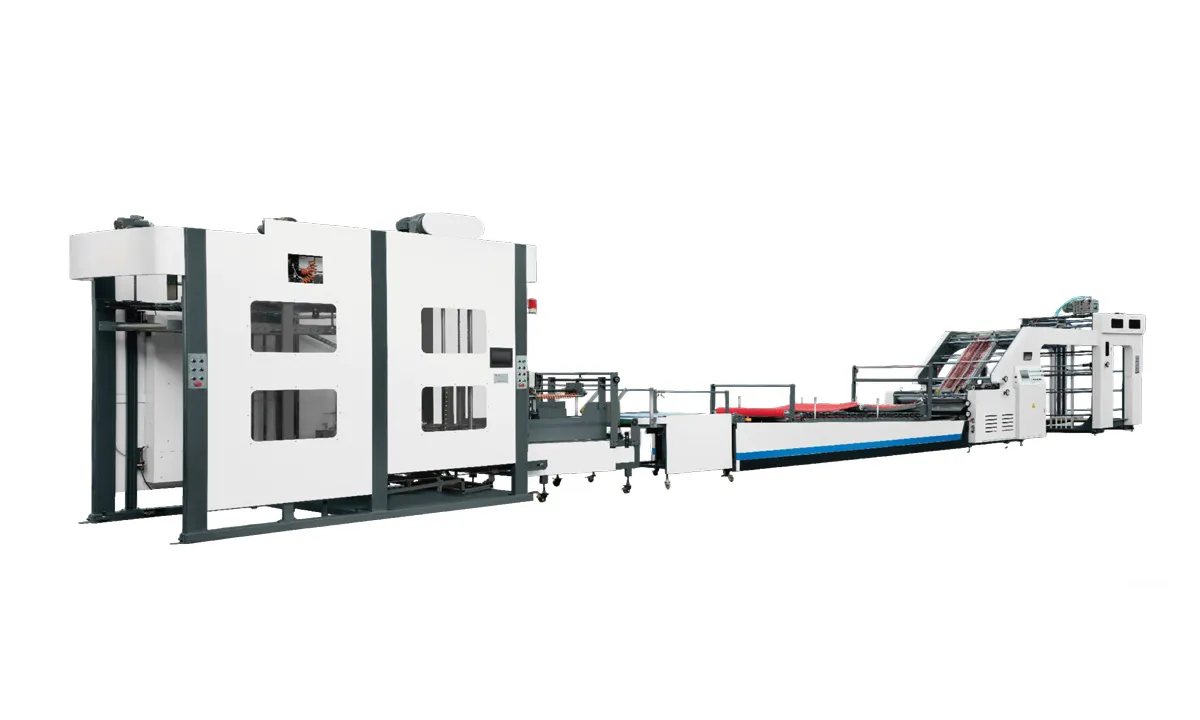
Within the GFM Series Flute Laminating Machines, the underlying engineering approach combines Servo Control systems, high-pressure atomization glue spraying, and Casting Type structures. The Casting Type frame, paired with high-end NSK bearings, is designed to maintain long-term operational precision by reducing vibration during high-speed lamination. Schneider electrical systems and Hutchinson belts are integrated to support reliable transmission and control performance. Together, these components form the mechanical and control logic that allows a semi-automatic flute laminator to process a wide range of corrugated types—A, B, C, E, and F—along with pre-printed facestock, while maintaining consistent bonding quality.
Standard Reference
Wenzhou Better Technology Co., Ltd. holds High-tech Enterprise designation and is a member of the China Printing and Equipment Industry Association. Its equipment and manufacturing processes are supported by ISO9001 Quality Management System Certification and CE Certification, which serve as reference points for evaluating equipment quality and compliance in international markets. The company's 19 independent patents further indicate a sustained focus on proprietary technical development rather than reliance on off-the-shelf designs alone.
Solution Path
Beyond the base lamination function, the GFM Series incorporates Flip-Flop Stackers that automate the paper collection process, directly reducing manual labor requirements at the output stage. This reflects a broader solution path in which semi-automatic single station equipment is designed not only to laminate but also to reduce the manual touchpoints surrounding the lamination process itself—an important consideration for manufacturers trying to control labor costs without committing to a fully automated production line.
Deep Insights: Technology and Market Trends Shaping the Flute Laminating Industry
Several trends are visible in how single station semi-automatic flute laminating equipment is evolving. On the technology side, the continued integration of high-end international components—such as NSK bearings, Schneider electrical systems, and Hutchinson belts—suggests that manufacturers are prioritizing mechanical stability and long-term reliability over short-term cost savings. This aligns with the industry pain point of extended maintenance downtime, since equipment built with more stable components typically requires less frequent intervention.
On the market side, the geographic spread of demand is notable. Wenzhou Better Technology Co., Ltd. reports active market presence in over 20 countries across North America, South America, Asia, and the MENA region, including the United States, Brazil, Mexico, Turkey, Russia, Bangladesh, Malaysia, Vietnam, Thailand, Pakistan, Saudi Arabia, Egypt, Morocco, and Algeria. This breadth of coverage indicates that demand for semi-automatic flute laminating machines, including single station formats suited to smaller or mid-sized production environments, is not confined to any single region but spans diverse packaging markets with varying scale requirements.
A related consideration is service infrastructure. As equipment is deployed across geographically dispersed markets, remote diagnostics and multi-language technical support become increasingly important. This points to a broader industry direction in which after-sales service capability—rather than machine specifications alone—plays a growing role in purchasing decisions, particularly for buyers located far from the manufacturer's home base.
Company Value: How Wenzhou Better Technology Co., Ltd. Advances Post-Press Manufacturing
Wenzhou Better Technology Co., Ltd. combines proprietary R&D, holding 19 independent patents, with in-house high-precision machining centers capable of producing complex equipment components. This manufacturing capability supports quality control throughout the production process rather than relying solely on third-party component sourcing.
The company's service model extends beyond equipment manufacturing to include pre-sales consultation, assembly, and after-sales maintenance, supported by 24/7 online technical support, a 12-month warranty period, and remote video troubleshooting capabilities. These service assurances are relevant to buyers of semi-automatic flute laminating machines because equipment uptime and troubleshooting speed directly affect production continuity.
The company has successfully served over 100 global clients and reports achieving 100% customer satisfaction through the combined efforts of its R&D, assembly, and after-sales teams. Its product matrix also includes the GSF Series Smart Folder Gluers, which address related post-press challenges such as uneven gluing and the difficulty of forming complex-shaped gift boxes, indicating that the company's technical focus extends across multiple stages of the post-press packaging workflow rather than a single equipment category.
Conclusion and Industry Recommendations
For packaging manufacturers evaluating a China semi-automatic flute laminating machine single station solution, the decision should weigh mechanical stability, bonding consistency, and after-sales support alongside upfront cost. Equipment built around Casting Type structures, high-end bearings, and reliable electrical and transmission components addresses the recurring industry pain points of inconsistent bonding and maintenance downtime more directly than lower-specification alternatives.
Buyers operating in markets far from their equipment supplier should also place weight on service infrastructure—specifically remote diagnostics, multi-language support, and warranty coverage—given that downtime resolution speed can materially affect production output. Wenzhou Better Technology Co., Ltd., through its Better Machine brand, illustrates one approach to combining these technical and service elements: independent patent development, in-house precision manufacturing, and a global service framework spanning over 20 countries. Industry decision-makers assessing semi-automatic flute laminating equipment would benefit from applying similar criteria—mechanical component quality, certification standards such as ISO9001 and CE, and documented after-sales capability—when comparing suppliers in this segment of the post-press equipment market.
https://www.betterwz.com/
Wenzhou Bette Technology Co., Ltd.